

$9.830
0.000 (0.00%)終値時点
Loading chart…
- 高値
- 9.875
- 始値
- 9.830
- 出来高加重平均価格
- 9.84
- 出来高
- 38.42K
- 時価総額
- —
- 安値
- 9.820
- 売買代金
- 378.10K
- EV/EBITDA(TTM)
- 0.00
Pine Tree Acquisition Corp. is a blank check company. The Company is formed for the purpose of effecting a merger, amalgamation, share exchange, asset acquisition, share purchase, reorganization or similar business combination with one or more businesses or entities. The Company has conducted no operations and has generated no revenues.
AI分析 of Pine Tree Acquisition Corp. Class A Ordinary Shares (PAXG)
売りPine Tree Acquisition Corp. is not a good buy right now due to its negative financial performance and high risk. The current price is $9.82, and the company has a staggering negative P/E ratio of -7991.66, indicating severe profitability issues. Additionally, the current ratio has dropped to 0.01, suggesting that the company is struggling to cover its short-term liabilities, which total $140,181.00. These factors highlight significant financial distress, making it a risky investment.
バリュエーション指標
Pine Tree Acquisition Corp. Class A Ordinary Shares(PAXG)の現在の予想PERは0.00で、5年平均はです。
PAXG のよくある質問 — Alphio AI が回答
Pine Tree Acquisition Corp. is a blank check company. The Company is formed for the purpose of effecting a merger, amalgamation, share exchange, asset acquisition, share purchase, reorganization or similar business combination with one or more businesses or entities. The Company has conducted no operations and has generated no revenues.
Pine Tree Acquisition Corp. is not a good buy right now due to its negative financial performance and high risk. The current price is $9.82, and the company has a staggering negative P/E ratio of -7991.66, indicating severe profitability issues. Additionally, the current ratio has dropped to 0.01, suggesting that the company is struggling to cover its short-term liabilities, which total $140,181.00. These factors highlight significant financial distress, making it a risky investment.
コミュニティ
もっと見る ↗
I've been feeling lately that there's still a lot worth exploring in the RWA space. When people used to mention RWA, the first thing that came to mind was probably tokenizing real-world assets, but I think just moving assets on-chain isn't enough—how they're used afterward is the key. I recently came across @strato_net, which combines assets like gold and silver with DeFi. For example, GOLDST and SILVST are backed by physical gold and silver respectively, and users can do more than just hold these assets—they can also participate in lending, vaults, and other applications. The project has disclosed that TVL has exceeded $40 million, gold-backed loans issued are close to $5 million, and a points program is already live. Points will be converted into tokens at TGE, though the specific conversion ratio and rules will need to wait for future announcements. Of course, these figures are only for reference—whether they can sustain growth and whether the product has real demand still needs time to verify. Those interested in RWA can look into this project first. Official website: #STRATO #RWA #DeFi #Web3
もっと見る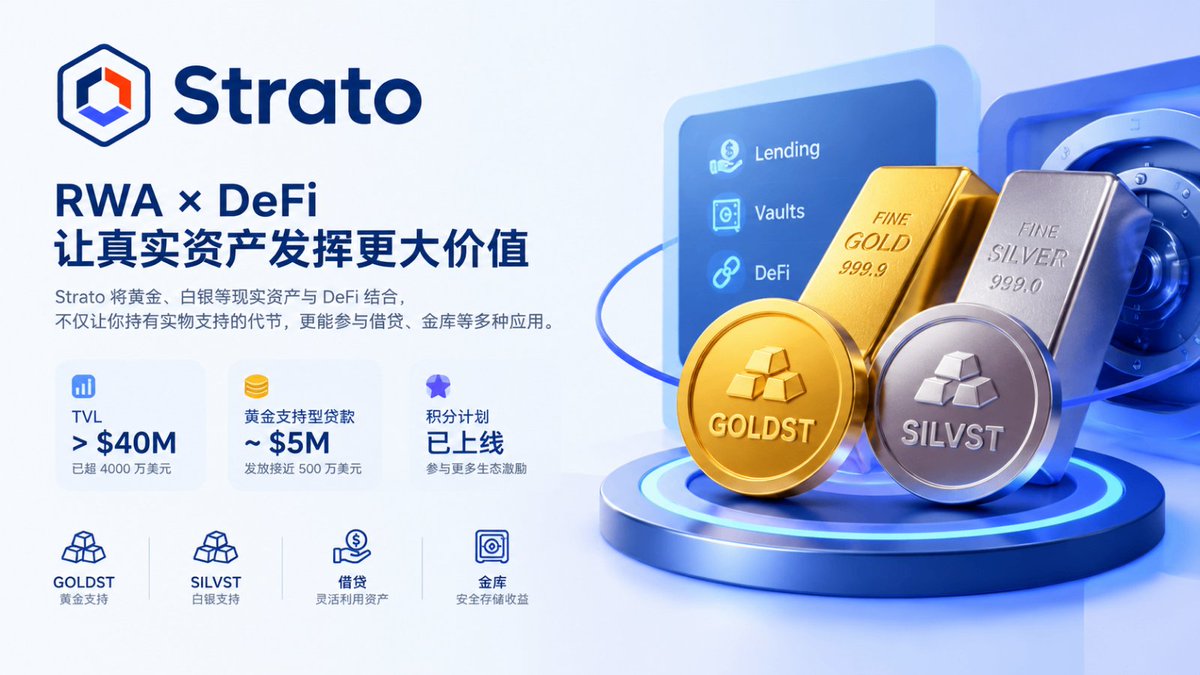

Trump lost both chambers—why did the market rise instead? Trump suffered a major midterm defeat, with Republicans losing both the House and the Senate. Conventionally, markets should have turned turbulent, yet US stocks and gold surged, and Bitcoin climbed to $80,000. The surface reason is that uncertainty was resolved and the market breathed a sigh of relief. But the deeper logic is war and oil prices. After the election, Vice President JD Vance posted a statement putting war first: war pushed up oil prices, which in turn pushed up prices overall. Trump largely agreed. Voters oppose both war and high prices. Once the results came out, the market expected the war to cool, so oil prices fell. The chain is clear: falling oil prices → reduced inflation pressure → weaker case for rate hikes → lower rate expectations → support for risk assets (stocks and crypto). For crypto, regulatory tailwinds are hard to count on in the short term. The earlier friendly bill failed to get enough votes in September, and with Democrats controlling Congress, the probability of passage in the next two years is even lower. But crypto has never risen on legislation—it rises on liquidity. Cheap oil prices are the first step toward recovering liquidity. Whether this rally can last depends on whether the war truly cools. Historically, there are many examples of presidents recovering after midterm losses (Clinton, Obama, Reagan), and the common thread is that they later corrected policies that hurt voters' wallets. Vance's statement is, to some extent, a signal of that kind of correction. The pressure to end the war now comes from the top. Next, watch the war and oil prices. If both loosen, crypto benefits. There is also opposing pressure: Trump's tariffs are still pushing up costs, and it takes time for lower oil prices to reduce inflation. The direction may be up, but the path won't be smooth. The underlying logic hasn't changed: the market ultimately looks at the price of money. Milton Friedman said inflation is always and everywhere a monetary phenomenon. What cost Trump support this time is also what is lifting the market today—it's actually the same thing: money.
もっと見る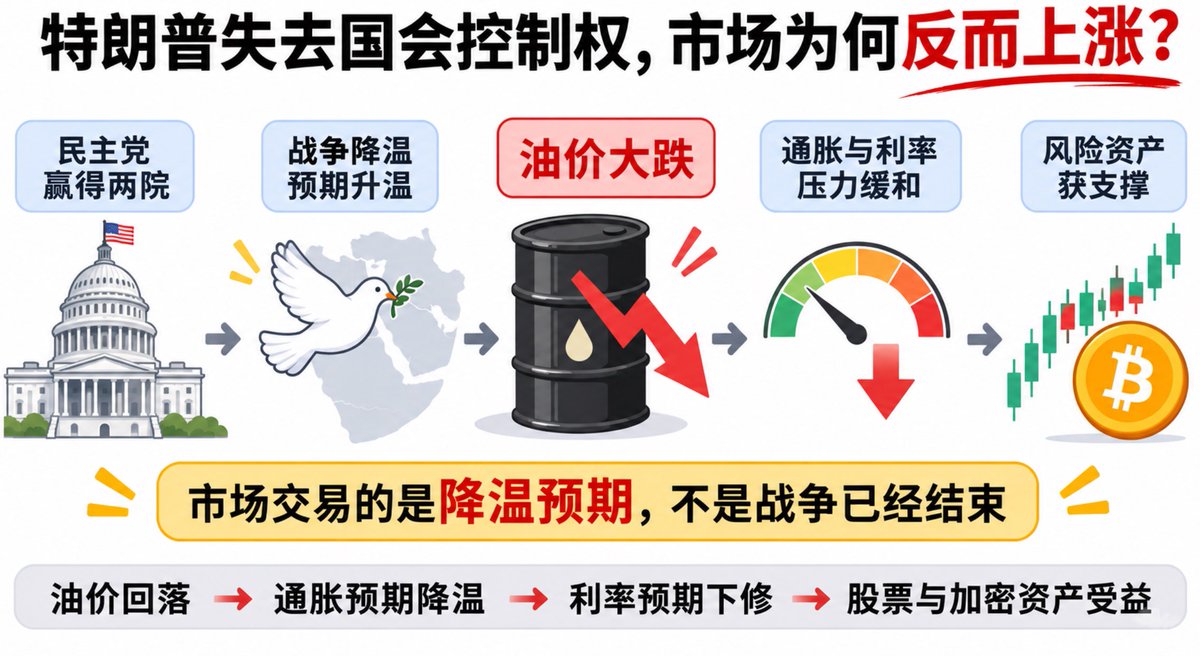

関連記事
- How to Rebalance a Concentrated Stock Portfolio in 2026: Mag7 Drift, Tax-Aware Trims, and Practical Rebalance a concentrated stock portfolio in 2026: Mag7 drift risk, 5pp bands, tax-aware trims, RSP/IWM diversifiers, and single-name caps.
- Small Cap Stocks Investing Guide 2026: Russell 2000, Fed Hikes, and the Financing TradeSmall-cap stocks investing guide 2026: Russell 2000 vs S&P, IWM rate sensitivity, floating-rate debt, Fed hikes, valuation discounts, and a practical checklist.
- Santa Claus Rally and the Year-End Stock Market: Investor Guide for Late 2026Santa Claus rally explained: 7-day window stats since 1950, Nov–Dec seasonality, post-midterm 2026 setup, and a risk-managed year-end investing playbook.
本ページは調査目的であり、投資助言ではありません。モデルは誤ることがあります。過去の実績は将来の成果を保証しません。