

Day Trading Scanners: How to Find Winning Stocks in Real-Time
Discover how day trading scanners help you find high-probability trades in real-time. Learn key parameters, scanner types, and strategies for consistent profits.

Key Takeaway
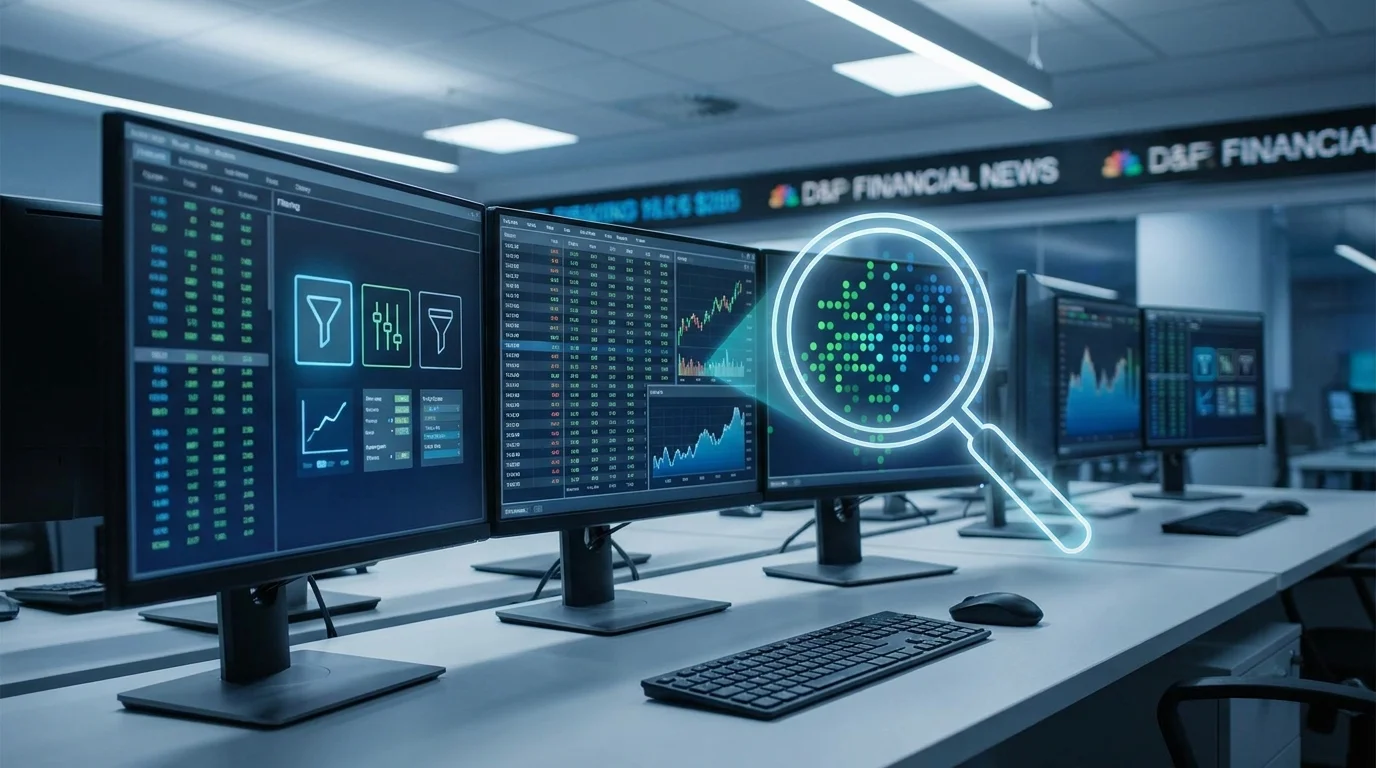
Day trading scanners are essential tools that filter thousands of stocks in real-time to identify high-probability trading opportunities based on specific criteria like price movement, volume spikes, and technical patterns. Unlike static stock screeners used for long-term investing, scanners continuously monitor the market and alert traders the moment conditions are met. For day traders, this real-time capability is crucial because timing is everything—entering a trade even a few minutes late can mean the difference between profit and loss. The most effective scanners combine multiple parameters including price range ($1-$10 for small accounts), volume thresholds (over 1 million shares), float size (under 10 million for volatility), and percentage gains (over 10% for momentum). By automating the stock discovery process, scanners save hours of manual research while ensuring you never miss explosive moves in the market.
What Are Stock Scanners and How Do They Work?
Stock scanners are sophisticated software tools designed to monitor the entire market universe and instantly flag securities that meet predefined trading criteria. Think of them as intelligent filters that continuously sift through thousands of stocks, ETFs, and other instruments to surface only those displaying the specific characteristics you want to trade. For day traders, these tools have become indispensable because manually tracking even a few dozen stocks simultaneously is practically impossible.
The underlying technology behind modern scanners is impressive. They connect directly to market data feeds, processing price quotes, volume information, and order book data in milliseconds. When a stock meets your specified conditions—whether that's a sudden volume spike, a breakout above resistance, or a specific candlestick pattern—the scanner immediately adds it to your watchlist or sends you an alert. This real-time processing capability distinguishes scanners from traditional analysis tools and makes them uniquely valuable for active traders.
Most professional-grade scanners offer extensive customization options. You can create complex filters combining multiple conditions using logical operators. For example, you might scan for stocks trading between $2 and $20, with daily volume exceeding 500,000 shares, showing relative volume greater than 2x the average, and currently up more than 5% from the previous close. The scanner will only display stocks meeting ALL these criteria simultaneously, dramatically narrowing your focus to the most actionable opportunities.
Scanner vs Screener: Understanding the Critical Difference
While the terms "scanner" and "screener" are often used interchangeably, they represent fundamentally different tools with distinct purposes. Understanding this difference is essential for choosing the right tool for your trading style and avoiding costly mistakes.
Stock screeners are designed for end-of-day analysis and long-term investment research. They work with static data—typically the previous day's closing prices, financial ratios, and fundamental metrics. When you run a screener, you're essentially querying a database of historical information. The results don't change until you run the screen again with fresh data the next day. Screeners excel at finding value stocks, dividend payers, or companies meeting specific fundamental criteria, but they're useless for capturing intraday opportunities.
Stock scanners, by contrast, operate on real-time or near-real-time data streams. They're built for active traders who need to identify opportunities as they develop throughout the trading session. A scanner might alert you the moment a stock breaks above its opening range high, surges on unusual volume, or forms a specific technical pattern on the 5-minute chart. This immediacy is what makes scanners essential for day trading, where windows of opportunity often last only minutes.
The practical implication is significant. If you're a swing trader or investor researching stocks for next week's potential buys, a screener is perfectly adequate. But if you're trying to catch a momentum move that's happening right now, only a real-time scanner will do. Many professional traders use both tools—screeners for building their core watchlist of stocks with favorable fundamental and technical setups, and scanners for identifying precise entry points during market hours.
Why Day Trading Scanners Are Essential for Success
The modern stock market generates an overwhelming amount of data. On any given day, thousands of stocks are moving, patterns are forming, and opportunities are emerging across multiple timeframes. Without a systematic way to filter this information, traders quickly become paralyzed by analysis or miss profitable setups entirely. This is where day trading scanners prove their worth.
The first major benefit is time efficiency. Manually scanning charts or watching a watchlist of even 50 stocks is exhausting and inefficient. A well-configured scanner can monitor the entire market—over 6,000 stocks on U.S. exchanges alone—and instantly surface only those meeting your specific criteria. What would take hours of manual work happens automatically in seconds. This efficiency allows you to focus your mental energy on analyzing the best opportunities rather than searching for them.
Scanners also help traders discover early momentum before it becomes obvious to the broader market. By the time a stock appears on mainstream financial news or social media, the initial move has often already occurred. Scanners can catch unusual volume spikes, breakouts, and other early signals of institutional interest while the move is still in its early stages. Getting in early on these moves is often the difference between capturing a 20% gain and chasing a stock that's already extended.
Another crucial advantage is noise reduction. The market is full of random price movements, false breakouts, and low-quality setups that can drain your account if you trade them. Scanners with well-designed filters help you avoid these traps by only showing stocks that meet rigorous criteria for liquidity, volatility, and technical setup. This filtering process naturally improves your win rate by ensuring you're only considering trades with favorable risk-reward characteristics.
For traders seeking to automate their market monitoring, consider using Alphio AI's scheduled task automations to set up conditional workflows that execute based on scanner alerts.
Key Scanning Parameters Every Trader Should Know
Building effective scan criteria requires understanding which parameters actually matter for day trading success. While every trader's strategy is different, certain parameters form the foundation of most successful scanning setups.
Price Range and Position Sizing
The price range filter helps you focus on stocks appropriate for your account size and risk tolerance. Many successful day traders focus on stocks between $1 and $10 because these lower-priced securities offer several advantages. First, they allow for larger share positions with less capital, making it easier to scale in and out of trades. A $5,000 position represents 500 shares of a $10 stock but only 50 shares of a $100 stock. The larger share count gives you more flexibility in position management.
Lower-priced stocks also tend to be more volatile on a percentage basis, creating more trading opportunities. A $5 stock moving 50 cents represents a 10% gain, while a $500 stock moving 50 cents is just 0.1%. For day traders seeking percentage returns, this volatility is essential. However, be cautious with stocks under $1, as they often have liquidity issues and higher risk of manipulation.
Volume and Liquidity Thresholds
Volume is arguably the most important parameter for day traders. Without sufficient volume, you can't enter or exit positions efficiently, and spreads widen dramatically. Most traders set minimum daily volume thresholds of 500,000 to 1 million shares to ensure adequate liquidity. However, raw volume alone isn't enough—you also want to see relative volume spikes indicating unusual interest.
Relative volume compares current trading activity to the stock's average. A scanner filter for relative volume greater than 2.0 means the stock is trading at twice its normal pace, suggesting something significant is happening. This could be news, earnings, institutional accumulation, or technical breakout. High relative volume often precedes sustained price moves and should be a key component of any momentum scan.
Float Size and Volatility Potential
Float refers to the number of shares available for public trading, excluding restricted shares held by insiders and institutions. Float size directly impacts a stock's volatility potential. Stocks with floats under 10 million shares are considered low-float and can experience explosive moves because supply is limited. When demand surges, these stocks can double or triple in a single session.
However, low-float stocks also carry higher risk. The same limited supply that causes rapid price increases can lead to equally rapid declines. Spreads widen, slippage increases, and manipulation is more common. Most traders balance their scans to include a mix of float sizes, perhaps focusing on stocks with 5-50 million shares for a good combination of volatility and tradability.
Percentage Gainers and Momentum
The percentage change filter identifies stocks showing significant price movement. Setting a minimum gain of 5-10% helps you focus on stocks with established momentum rather than those barely moving. However, be careful not to set this threshold too high, or you'll only catch moves after they've already extended significantly.
Many successful traders use tiered approaches, perhaps scanning for stocks up 3-5% for early entry opportunities while maintaining separate scans for stocks up 10%+ to catch stronger momentum. The key is finding the sweet spot where there's enough movement to generate profit potential but not so much that you're chasing extended stocks.
Types of Day Trading Scanners Explained
Different trading strategies require different types of scanners. Understanding the various scanner categories helps you choose the right tool for your specific approach to the markets.
Fundamental Scanners
While day traders primarily focus on technical factors, fundamental scanners still play a valuable role. These scanners filter stocks based on financial metrics like earnings growth, revenue trends, profit margins, and valuation ratios. A day trader might use a fundamental scanner to build a core watchlist of fundamentally sound companies, then apply technical scanners during market hours to time entries.
For example, you might scan for companies with quarterly earnings growth over 25%, revenue growth over 20%, and debt-to-equity ratios under 0.5. This identifies strong businesses likely to attract institutional interest. When one of these stocks triggers a technical breakout during the trading day, you have confidence that the move has fundamental backing and is more likely to sustain.
Technical Scanners
Technical scanners form the backbone of most day trading operations. They monitor price action, volume patterns, and technical indicators to identify setups in real-time. Common technical scan types include breakout scanners (identifying stocks breaking above resistance or below support), gap scanners (finding stocks gapping up or down at the open), and pattern recognition scanners (flagging specific candlestick formations or chart patterns).
Advanced technical scanners can monitor multiple timeframes simultaneously, alerting you when a stock forms a bullish pattern on the 5-minute chart while maintaining an uptrend on the hourly. They can also track indicator combinations, such as RSI breaking above 70 with increasing volume, or MACD crossovers occurring near support levels. The sophistication of these tools has increased dramatically, with some scanners now incorporating machine learning to identify patterns human traders might miss.
Pre-Market and Post-Market Scanners
Extended hours trading presents unique opportunities, and specialized scanners help you capitalize on them. Pre-market scanners monitor activity before the regular session opens, identifying stocks moving on overnight news, earnings releases, or analyst upgrades. These early movers often set the tone for the regular session and can provide excellent opportunities for prepared traders.
Post-market scanners serve a different purpose. After-hours activity often reveals institutional positioning and reactions to earnings reports or significant news events. By scanning post-market movers, you can identify stocks likely to gap the next morning and prepare your trading plan in advance. Many of the biggest gap-and-go opportunities are first visible in post-market scanning.
Intraday Momentum Scanners
These specialized scanners are designed to catch stocks making significant moves during regular trading hours. They continuously monitor for unusual volume spikes, rapid price appreciation, and breaking news. Intraday scanners are essential for momentum traders who seek to ride established trends for quick profits.
The best intraday scanners offer customizable alert thresholds and multiple notification methods. You might want immediate audio alerts for stocks breaking above their daily highs, while less urgent notifications suffice for stocks approaching key moving averages. The ability to tier your alerts based on setup quality helps you prioritize opportunities during fast-moving market conditions.
How to Use Day Trading Scanners Effectively
Having access to powerful scanning tools is only half the battle. Knowing how to use them effectively separates successful traders from those who simply generate endless watchlists without taking action.
Setting Up Real-Time Alerts
Effective alert configuration is crucial for scanner utility. Too many alerts and you'll be overwhelmed with noise; too few and you'll miss opportunities. Start by identifying your highest-probability setups and creating dedicated scans for each. For example, you might have separate scans for opening range breakouts, midday momentum plays, and end-of-day continuation patterns.
Configure alert delivery methods based on urgency. Critical setups that require immediate action should trigger audio alerts and pop-up notifications. Secondary opportunities can use less intrusive notification methods. Most professional platforms allow you to route different scan results to different windows or monitors, helping you organize opportunities by priority and strategy type.
Building and Managing Watchlists
Scanners generate raw opportunities, but watchlists organize them for action. Develop a systematic approach to moving stocks from scan results to your active watchlist. Many traders use a tiered system: Tier 1 stocks are those meeting all criteria and ready for immediate entry if they trigger; Tier 2 stocks are interesting but require further confirmation; Tier 3 stocks are on radar for future sessions.
Regularly review and clean your watchlists. A stock that was setting up beautifully yesterday may have completely changed character overnight. Remove stocks that no longer meet your criteria and add fresh opportunities from your latest scans. This dynamic management ensures you're always focused on the best current setups rather than yesterday's news.
Combining Scanner Alerts with News Analysis
Scanner alerts tell you what is moving; news analysis tells you why. The combination of these two information streams provides the complete picture needed for informed trading decisions. When a scanner flags a stock with unusual volume and price movement, immediately check for news catalysts. Earnings reports, FDA approvals, contract announcements, and analyst upgrades are common drivers of scanner alerts.
Understanding the catalyst helps you assess the sustainability of the move. A stock surging on genuine positive news is more likely to maintain gains than one moving on rumor or manipulation. Many professional traders won't take a scanner alert trade without confirming there's a legitimate catalyst behind the movement. This extra verification step significantly improves win rates and helps avoid traps.
For traders looking to mirror successful strategies, Alphio AI's copy trading feature allows you to follow Hyperliquid Vaults and smart money wallets, automatically replicating their trades in your account.
Essential Features to Look for in Trading Scanners
Not all scanners are created equal. When evaluating scanning platforms, certain features significantly impact your trading effectiveness and should be prioritized.
Pre-Built Scan Conditions
While customization is important, having access to professionally designed pre-built scans accelerates your learning curve and ensures you're not missing common high-probability setups. Quality platforms offer extensive libraries of pre-configured scans covering various strategies: momentum plays, reversal patterns, gap fills, earnings movers, and more.
These pre-built scans serve dual purposes. For beginners, they provide proven templates that can be used immediately while learning the markets. For experienced traders, they offer starting points that can be modified and optimized based on personal preferences. The best platforms regularly update their scan libraries based on changing market conditions and emerging strategies.
Chart Visualization Integration
Scanner results without charts are just lists of symbols. Effective scanning platforms integrate seamlessly with charting tools, allowing instant visualization of any alert. When a scanner flags a stock, you should be able to pull up multiple timeframe charts, apply your preferred indicators, and assess the setup within seconds.
Advanced integration goes further, allowing you to scan directly from charts. Draw a trendline or mark a support level, and the scanner will alert you when price approaches or breaks these levels. This visual approach to scanning is intuitive and helps you identify setups that might be missed by purely numerical filters.
News Feed Integration
Since catalysts drive so many day trading opportunities, integrated news feeds are essential. When a scanner alert triggers, you should immediately see any relevant news items for that symbol. The best platforms offer real-time news feeds from multiple sources, including wire services, company press releases, and social media sentiment.
Some advanced scanners even incorporate news sentiment analysis, automatically categorizing headlines as bullish, bearish, or neutral and factoring this into scan results. This AI-powered analysis helps you quickly assess whether a moving stock has genuine catalyst support or is moving on less substantial factors.
Customization and Flexibility
Every trader has unique preferences, and your scanner should accommodate them. Look for platforms that allow unlimited custom scan creation, complex multi-condition filtering, and flexible alert configuration. The ability to save and organize multiple scan profiles lets you quickly switch between different market approaches—perhaps aggressive momentum scans in the morning and conservative reversal plays in the afternoon.
Export capabilities are also valuable. Being able to export scan results to spreadsheets or trading journals helps with post-market analysis and strategy refinement. Some platforms offer API access, allowing you to integrate scanner data with custom applications or automated trading systems.
Developing Your Personal Scanning Strategy
Successful scanning isn't about running every possible scan and chasing every alert. It's about developing a focused approach that aligns with your trading style, risk tolerance, and market expertise.
Start by identifying your core trading strategy. Are you a momentum trader seeking explosive breakouts? A reversal trader looking for oversold bounces? A range trader capitalizing on support and resistance? Your scanning approach should directly support your primary strategy. Create 3-5 core scans that consistently find setups matching your criteria, rather than running dozens of scans that generate scattered, low-quality alerts.
Paper trade with your scans before committing real capital. Most platforms allow you to simulate scan-based trading, tracking hypothetical entries and exits based on scanner alerts. This testing phase reveals which scans produce actionable setups and which generate false signals. Keep detailed records of scan performance, noting win rates, average gains, and optimal holding periods for different scan types.
Regularly review and refine your scans based on market conditions. What works in a bull market may fail in a bear market or sideways chop. Be willing to adjust parameters, add filters, or temporarily disable scans that aren't performing. The markets evolve constantly, and your scanning approach must evolve with them.
For those interested in automating their trading strategies, explore Alphio AI's agentic trading feature to automate portfolio management with AI-powered strategies.
Common Scanner Mistakes and How to Avoid Them
Even with powerful scanning tools, traders often undermine themselves through poor practices. Recognizing and avoiding these common mistakes will significantly improve your scanning effectiveness.
The most prevalent error is setting scan criteria too loosely, resulting in an overwhelming number of alerts. When everything is an opportunity, nothing is. Tighten your filters until you're getting a manageable number of high-quality alerts rather than dozens of marginal setups. It's better to miss a few good trades than to take too many mediocre ones.
Another frequent mistake is chasing scanner alerts without proper context. A stock hitting new highs on a scanner might look attractive, but if it's already up 50% on the day with no clear catalyst, you're likely buying the top. Always consider where a stock is in its overall move before acting on a scanner alert. The best scanner trades catch moves early, not at their exhaustion point.
Many traders also fail to account for market conditions when interpreting scan results. In strong bull markets, breakout scans produce consistent winners. In bear markets, those same scans generate false breakouts and quick reversals. Adjust your scanning approach based on the broader market environment, perhaps focusing on short setups when indices are weak and long setups when they're strong.
Finally, avoid the trap of constantly tweaking scans during trading hours. Establish your scanning parameters before the market opens and stick to them. Mid-session adjustments often lead to chasing and overtrading. Save your analysis and refinement for post-market review when emotions are neutral and decisions are more rational.
Conclusion
Day trading scanners have transformed from luxury tools to essential equipment for serious active traders. In markets where opportunities emerge and vanish in minutes, the ability to automatically monitor thousands of stocks and receive instant alerts when conditions are met provides a significant competitive advantage. The time savings alone justify scanner adoption, but the real value lies in opportunity discovery—catching moves you would never have seen through manual monitoring.
Building effective scanning skills takes time and practice. Start with simple scans based on the core parameters outlined in this guide: price range, volume, float size, and percentage change. As you gain experience, gradually add complexity and refine your criteria based on what works for your specific strategy. Remember that scanners are tools to support your trading decisions, not replace them. The alert is the starting point of your analysis, not the endpoint.
The traders who thrive in today's fast-paced markets are those who combine technological advantages with sound trading principles. Scanners provide the technological edge by ensuring you never miss an opportunity that fits your criteria. Your job is to apply discipline, risk management, and strategic thinking to convert those opportunities into consistent profits. Master both elements, and you'll be well-positioned for day trading success.
Ready to elevate your trading with intelligent automation? Try Alphio AI's conversational trading interface to execute trades via natural language chat, or explore copy trading to mirror the strategies of successful traders. For hands-off portfolio management, our agentic trading feature automates your strategy execution with AI-powered precision.
FAQs
What is the difference between a stock scanner and a stock screener?
A stock scanner monitors real-time market data and alerts you instantly when stocks meet your criteria during trading hours, making it essential for day trading. A stock screener uses static end-of-day data to filter stocks based on fundamental or technical metrics, making it better suited for long-term investment research and swing trading. Scanners are for immediate action; screeners are for building watchlists.
What are the most important parameters for day trading scanners?
The most critical parameters include: price range ($1-$10 for optimal volatility and position sizing), minimum daily volume (500K-1M shares for liquidity), float size (under 10 million shares for higher volatility potential), percentage change (5-10% to identify momentum), and relative volume (2x average or higher to spot unusual activity). These filters help identify stocks with the best combination of liquidity, volatility, and movement potential.
How much should I expect to pay for a professional day trading scanner?
Professional day trading scanners range from free basic options to $200+ per month for premium platforms. Many brokers offer free scanners with account opening. Mid-tier options like Trade Ideas, Benzinga Pro, or ScanZ typically cost $100-150 monthly. Premium platforms with advanced AI features and institutional-grade data can cost $300-500 monthly. Most traders find that a $100-150 monthly investment pays for itself quickly through improved trade selection.
Can I use stock scanners for swing trading or long-term investing?
While scanners are designed primarily for day trading, they can be adapted for swing trading by adjusting timeframes and parameters. For swing trading, you might scan for stocks breaking above 20-day highs with increasing volume over multiple days. However, for long-term investing, traditional stock screeners are more appropriate as they focus on fundamental metrics like earnings growth, P/E ratios, and debt levels rather than intraday price movements.
How do I avoid false signals and overtrading with scanners?
To avoid false signals, combine scanner alerts with additional confirmation: check for news catalysts, verify volume is genuinely unusual (not just pre-market noise), confirm the technical setup on multiple timeframes, and ensure the stock hasn't already moved excessively. To prevent overtrading, set a daily trade limit, only take A+ setups that meet all your criteria, and avoid chasing stocks that have already moved more than 15-20% from their opening price. Quality always beats quantity in scanning.