強
強気
強気 · 25%NVDA
$275.47
シナリオ価格
$214.130
-3.062 (-1.43%)終値時点
NVIDIA Corporation is an artificial intelligence (AI) infrastructure company. The Company is engaged in accelerated computing to help solve the challenging computational problems. Its segments include Compute & Networking and Graphics. The Compute & Networking segment includes its Data Center accelerated computing and networking platforms and AI solutions and software, and automotive platforms and autonomous and electric vehicle solutions, including software. The Graphics segment includes GeForce GPUs for gaming and personal computers (PCs), and Quadro/NVIDIA RTX GPUs for enterprise workstation graphics. Its technology stack includes the foundational NVIDIA CUDA development platform that runs on all NVIDIA GPUs, as well as hundreds of domain-specific software libraries, frameworks, algorithms, software development kits (SDKs), and application programming interfaces (APIs). Its platforms address four markets, which include Data Center, Gaming, Professional Visualization, and Automotive.
NVIDIA Corp is currently trading at $229.28, which is below the average analyst price target of $300. However, the RSI is at 42.53, suggesting it is nearing oversold territory, but the recent insider selling has increased by 1856.07%, indicating potential caution. The company has shown strong revenue growth, with a projected revenue of $108 billion for the upcoming quarter, reflecting an 89% year-over-year increase. The main risk is the significant insider selling, which could indicate a lack of confidence among company executives.
BNP Paribas
$345
2026-10-05
BNP Paribas
2026-10-05
目標株価
$345
Barclays
$275
2026-10-01
Barclays
2026-10-01
目標株価
$275
Truist
$346
2026-08-27
Truist
2026-08-27
目標株価
$346
Needham
$300
2026-08-27
Needham
2026-08-27
目標株価
$300
RBC Capital
$330
2026-08-27
RBC Capital
2026-08-27
目標株価
$330
シナリオ価格は本年の最終月次予想レンジです。確率はモデルの固定ウェイト(25 / 50 / 25)であり、保証ではありません。
NVIDIA Corporation is an artificial intelligence (AI) infrastructure company. The Company is engaged in accelerated computing to help solve the challenging computational problems. Its segments include Compute & Networking and Graphics. The Compute & Networking segment includes its Data Center accelerated computing and networking platforms and AI solutions and software, and automotive platforms and autonomous and electric vehicle solutions, including software. The Graphics segment includes GeForce GPUs for gaming and personal computers (PCs), and Quadro/NVIDIA RTX GPUs for enterprise workstation graphics. Its technology stack includes the foundational NVIDIA CUDA development platform that runs on all NVIDIA GPUs, as well as hundreds of domain-specific software libraries, frameworks, algorithms, software development kits (SDKs), and application programming interfaces (APIs). Its platforms address four markets, which include Data Center, Gaming, Professional Visualization, and Automotive. It operates in the Technology sector (SEMICONDUCTORS & RELATED DEVICES industry).
NVIDIA Corp is currently trading at $229.28, which is below the average analyst price target of $300. However, the RSI is at 42.53, suggesting it is nearing oversold territory, but the recent insider selling has increased by 1856.07%, indicating potential caution. The company has shown strong revenue growth, with a projected revenue of $108 billion for the upcoming quarter, reflecting an 89% year-over-year increase. The main risk is the significant insider selling, which could indicate a lack of confidence among company executives.
38 analysts cover NVDA: 21 rate it Buy, 15 Hold and 2 Sell. The average price target is 264.97.

Is the high valuation of storage stocks the key to this pullback? Previously, AI computing power became a major theme in the capital markets, and storage chips, high-performance flash memory, and data center hard drives also attracted capital flows. As shares of Kioxia, SanDisk, Western Digital, Seagate, and others pulled back one after another, the market began to re-examine a question: was the earlier rally built on real earnings, or on overly optimistic expectations? AI development does require large amounts of data storage, but investors cannot simply equate demand growth with profit growth. Companies still face equipment investment, production costs, industry competition, and product price changes. If the market has already assigned high valuations based on future high growth, then even if company earnings continue to grow, the stock price may still adjust as long as results do not exceed market expectations. I prefer to view this pullback as an opportunity to reassess risk and reward. For investors, what matters is not guessing the bottom, but judging whether the current price has fully reflected future growth potential. Next, I will focus on corporate earnings forecasts, storage product price trends, cash flow, and valuation levels. Opportunities may gradually emerge when the decline in stock prices is greater than the deterioration in fundamentals. Conversely, if earnings expectations continue to be revised downward, every decline should not be treated as a signal to buy the dip. In investing in AI storage, what ultimately matters is the purchase price and the ability to deliver earnings. $NVDA #USStocksStorageSectorDeclineWidens
もっと見る

Explosive signal! The median US stock has plunged 15%, AI's fig leaf is about to give way, and crypto should watch out for a catch-down hit! Don't just stare at BTC moving sideways—the real risk is in US stocks! On October 17, US Treasury yields, the dollar, and oil prices all rose together, an "invisible rate hike" in financial conditions. The median S&P 500 stock is already down 15% from its 52-week high, the equal-weight index has lagged the market-cap-weighted index by about 6% over six months, the equity risk premium has fallen below zero, and AI giants alone are holding up the index. Personal view: this is not an ordinary pullback, but a broad valuation compression for risk assets driven by rising real rates. Bitcoin is now a high-beta tech stock—don't fantasize about an independent move. Market impact: if large tech stocks catch down, BTC will struggle to stay unaffected; if ordinary stocks rebound, that is the real repair of risk appetite. Players shouldn't rush to bottom-fish—watch whether the 10-year Treasury yield has peaked and whether BTC follows tech stocks down; falling together = deleveraging is not over. If 82k gives way, where is the next stop? Follow Mige, next episode breaks down the on-chain leverage map. $SNDK $AAPL $NVDA
もっと見る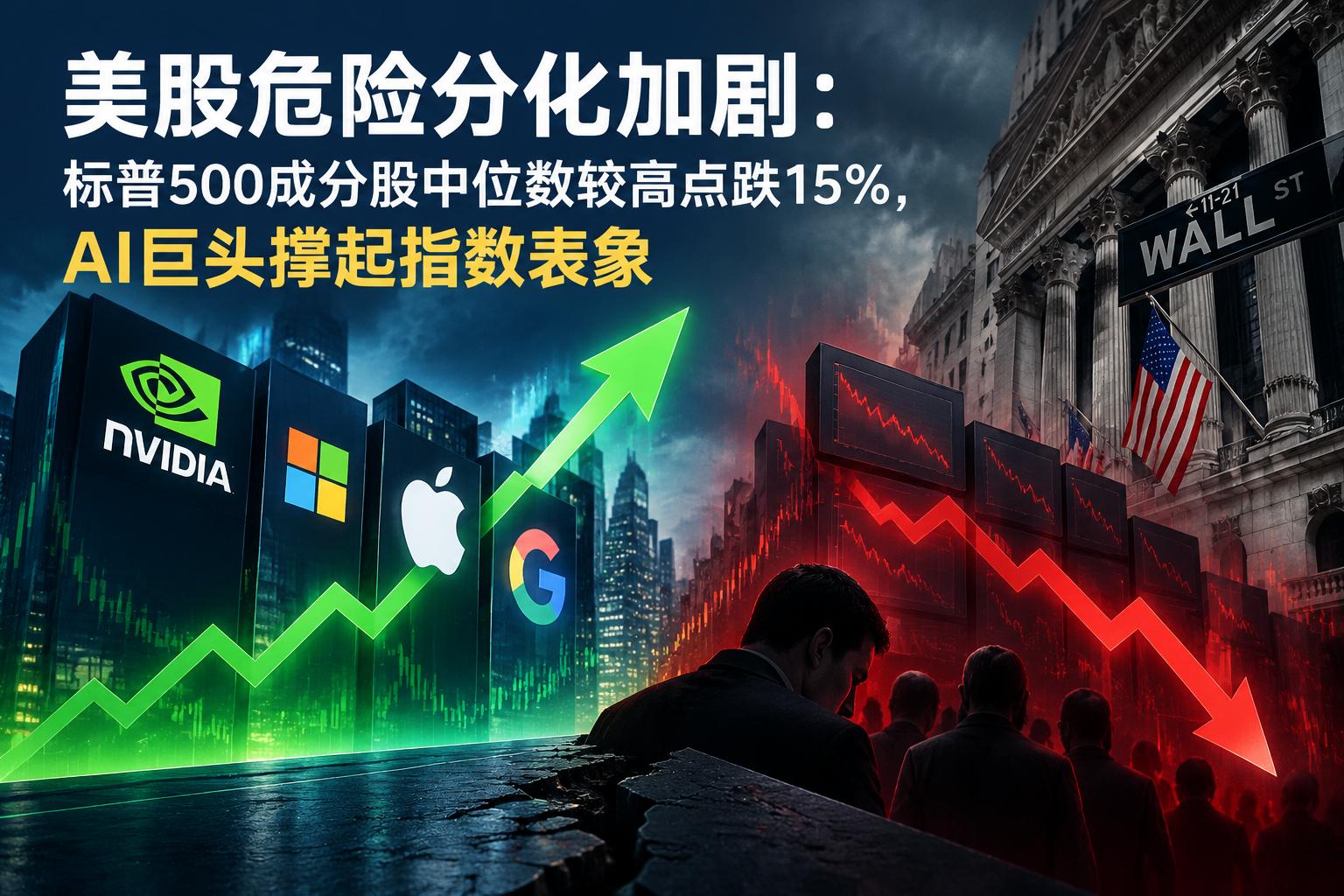

Everyone watching the daily range is going to miss this drop. $NVDA /USDT - Short Trade plan: Entry: 214.15 – 214.81 Stop loss: 217.60 Take profit 1: 212.14 Take profit 2: 210.58 Take profit 3: 208.24 Why this strategy? Why now? The 4-hour trend is range-bound, but the 1-hour RSI is at 36.04, showing bearish momentum is building and not yet overextended. The 1-hour ATR is 1.300023, meaning each candle has enough range to reach take profit 1 at 212.14 from the 214.48 entry zone, or extend down to take profit 2 at 210.58. The daily range keeps price contained until 1-hour momentum breaks it out; the 217.60 invalidation level is the hard line protecting the short position. Discussion: Will we test take profit 2 at 210.58, or is this range about to trap shorts? ⚠️ Personal market analysis only. NFA — manage risk and DYOR. Educational content, not investment advice, and not a recommendation to buy, sell, deposit, or withdraw any asset. No paid promotion or referral/affiliate links.
もっと見る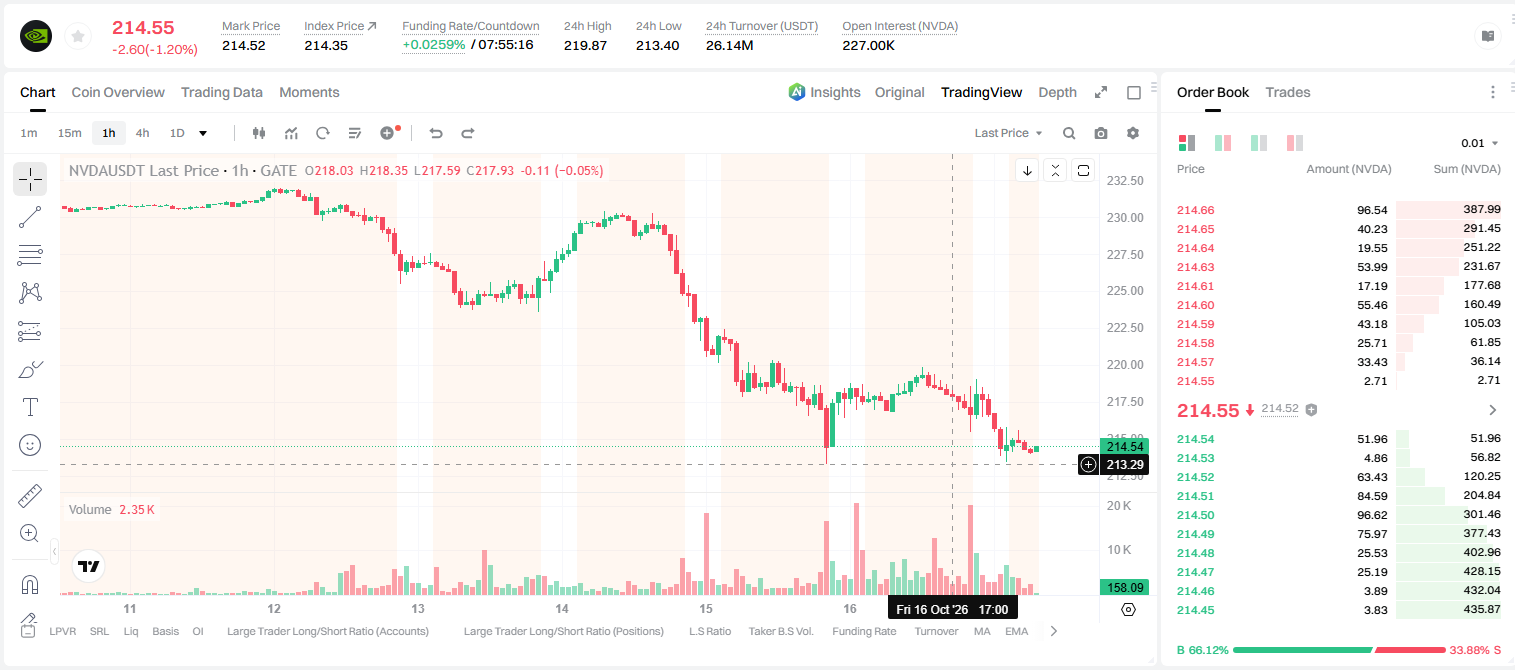

#USSeptemberPPIBeatsExpectations US September producer prices rose 1.3% month over month, far above the 0.6% consensus, and my screen turned red instantly. The annual wholesale inflation rate jumped to 6.3%, forcing a hard look at reality. The market's first reaction was clear: traders rushed to price in a potentially stickier Fed rate path, pushing yields higher and briefly sending risk assets into a sharp selloff. Looking closer at the details, energy costs were clearly the main driver of the spike, with gasoline margins heavily squeezing overall profitability. I did not chase the move and short equity index futures. When supply-side cost pressure lifts headline figures without a matching surge in core consumer demand, the usual hawkish trade often turns into a trap. Sure enough, yields soon pulled back, and Bitcoin recovered its losses. My takeaway? Keep some cash on hand and wait for volatility to settle before building structural positions. Even a strong headline number rarely reveals the true trend on the first candle. How would you adjust your market exposure in response to these inflation figures? $GT $NVDA $AAPL
もっと見る

A few months ago, someone paid me $20,946 to agree to buy their $NVDA shares at $180 in December 2028... Say that out loud. It still sounds crazy! They gave me $20,946 right away, just for a promise A promise to buy a company I already liked at a price I would be very happy to pay Today, that promise is up 35.34% (+$7,401) And that is after all the AI selloff this week. If $NVDA never drops to $180? I keep the full $20,946 and pay nothing If it does? I get to buy an excellent company at a discount... and I still keep the $20,946 And my base portfolio secures the whole trade, so there is no cash drag like with a CSP That is the power of a portfolio-secured put
もっと見る
本ページは調査目的であり、投資助言ではありません。モデルは誤ることがあります。過去の実績は将来の成果を保証しません。