

Small-Cap Stocks in 2026: Can the Russell 2000 Rally Survive Fed Rate Hikes?
Are small-cap stocks still worth buying as the Fed hikes? See why the Russell 2000 beat the S&P 500 in 2026, the valuation gap, and the rate risks to watch.

Key Takeaway
Small-cap stocks are having the kind of year their fans have been promising for a decade. The Russell 2000 was up 13% in 2026 as of November 10, ahead of the S&P 500's gain of nearly 10%, according to CNBC, and the index closed at 2,845.73 on November 11, according to Investing.com's historical data. That is a striking turnaround for an asset class that, by CNBC's count, returned 159% over the past ten years while the S&P 500's total return exceeded 300%. Investors searching for whether small-cap stocks are still worth buying are really asking a harder question: can this leadership survive a Federal Reserve that has started raising rates again?
The tension is real. Small companies borrow more on floating rates, a much larger share of them have no earnings at all, and their interest bills reset faster than those of mega-cap firms sitting on cash and long-dated bonds. Yet the same group trades at a meaningful valuation discount, is more tied to the domestic economy, and has a profit outlook that consensus estimates expect to outpace large caps into 2027, according to AllianceBernstein. Both stories can be true at once, and the investors who do well in small caps tend to be the ones who separate the quality end of the market from the speculative tail.
This guide explains why small caps have outperformed in 2026, how Fed rate hikes affect smaller companies, what the valuation gap actually tells you, how to choose between small-cap index funds, and how to size and manage a small-cap allocation with rules instead of headlines. Market data are as of the close on Wednesday, November 11, 2026 (America/New_York) unless noted. Forecasts and market-implied odds are projections, not guarantees, and nothing here is personalized investment advice.
Why Small-Cap Stocks Are Beating Large Caps in 2026
A rotation years in the making
For most of the last decade, owning small caps felt like a penalty. AllianceBernstein's small and mid-cap investment chiefs, Samantha Lau and James MacGregor, noted in September that from 2021 through 2025 the Russell 2000 returned 6.1% a year on an annualized basis, compared with 14.4% for the S&P 500. Over the ten years through the end of 2025, The Motley Fool calculated that the S&P 500's total return was about 120 percentage points ahead of the small-cap benchmark. Gaps that wide tend to build up a large pool of underweight investors, and when sentiment shifts, the catch-up can be fast.
That catch-up arrived early this year. The Motley Fool reported in July that the Russell 2000 had gained more than 20% in the first half of 2026, its best first half since 1991, and that small caps were beating the S&P 500 by the widest midyear margin since 2003. The index set a high of 2,888.62 on May 6, according to Stoxcraft, then gave back part of that gain as bond yields climbed and the Fed turned hawkish. Even after that pullback, it remains ahead of large caps for the year, which tells you the rally has had more staying power than many skeptics expected.
The economy small companies actually sell into
One reason for the strength is simple exposure. AllianceBernstein points out that 68% of small-cap companies have significant revenue concentration in the United States, compared with 39% of large-cap peers. When U.S. demand is strong, that domestic tilt is an advantage. The Fed's own October 28 statement described economic activity as expanding at a strong pace, with robust capital investment and resilient domestic spending, which is precisely the environment in which regional banks, industrial suppliers, restaurant chains and service businesses see orders grow.
Sector mix matters too. By midyear, AllianceBernstein estimated that almost half of the S&P 500's weight sat in technology and communication services, while almost half of the Russell 2000's weight was in industrials, consumer cyclicals and financials. Lau and MacGregor went as far as writing that "the S&P 500 has now effectively become an AI index." For an investor whose portfolio is already dominated by a handful of AI giants, small caps offer a genuinely different set of economic drivers rather than another version of the same bet.
AI spending is trickling down
The irony is that AI has helped small caps as well. The Motley Fool's Matt Frankel argued in July that "the AI trade has now started to trickle down to small caps," citing rising earnings estimates for companies tied to data-center construction, power equipment and industrial supply chains. AllianceBernstein made a similar point, writing that small caps are not an anti-AI allocation. In practice, many of the electrical contractors, component makers and engineering firms that build the physical infrastructure behind AI sit in the small and mid-cap universe, so the capital-spending boom has broadened beyond the mega-cap chip and cloud names.
How Fed Rate Hikes Hit Small Companies
Where policy stands heading into December
The Federal Reserve raised its target range for the federal funds rate to 3.75% to 4.00% in September 2026, its first hike since 2023, and held it at that level on October 28 in a 10 to 2 vote in which two officials dissented in favor of another increase, according to the Fed's statement. After the October consumer price index showed core inflation rising 0.3% for a third straight month, CME FedWatch data cited by Mortgage Professional America on November 10 put the odds of a quarter-point hike at the December 8 to 9 meeting at 89%. A Reuters poll taken November 6 to 10 found all 101 economists surveyed expecting a move to 4.00% to 4.25%. Those are projections, not certainties, but the direction of travel is clear.
For large companies, a quarter point here or there barely registers on the income statement. Many issued long-term fixed-rate bonds when borrowing was cheap and hold large cash balances that now earn more interest. Small companies are in a different position, and that difference is why the Russell 2000 tends to react more violently to rate news than the S&P 500. The index fell 4.45% on November 5 and rose 3.15% on November 9, according to Investing.com, a reminder of how sensitive small caps remain to every shift in rate expectations.
Floating-rate debt and the refinancing wall
The biggest channel is debt. Smaller firms rely far more on bank loans and leveraged loans whose interest rates float with short-term benchmarks. Published estimates vary, but analyses cited across the financial press this year put the floating-rate share of Russell 2000 debt at roughly a third or more, compared with well under 10% for S&P 500 companies. When the Fed hikes, those borrowers feel it within a quarter or two. As one Kalkine analysis quoted by IBTimes put it, "borrowing costs for smaller businesses adjust almost immediately."
The unprofitable tail
The second channel is profitability. IBTimes reported in June, citing an analysis referenced by Morningstar, that nearly 40% of companies in the Russell 2000 generate no earnings, up from 17% two decades ago. Those companies depend on capital markets to fund themselves, and higher rates make that funding more expensive and harder to find. Wells Fargo analysts warned that strong index performance was "masking weakness in underlying small-cap equity fundamentals," a useful caution for anyone who assumes that a rising index means every small company is healthy.
The practical takeaway is not that rate hikes doom small caps, but that they widen the gap between strong and weak balance sheets. In a hiking cycle, profitable small companies with modest debt can keep compounding, while unprofitable, highly leveraged ones can see their equity value compress quickly. How you get exposure matters as much as whether you get it.
The Small-Cap Valuation Gap Explained
How cheap are small caps?
Valuation is the strongest argument for small caps, and it is also the most frequently misunderstood. CNBC, citing FactSet data, reported on November 10 that the Russell 2000 trades at 16 times trailing 12-month earnings, compared with roughly 25 for the S&P 500. At the start of 2026, The Motley Fool noted that the average Russell 2000 stock traded at about 18 times forward earnings while the S&P 500's forward multiple was above 26, a gap it described as the widest since 1999. Following that 1999 extreme, small caps went on to outperform for more than a decade, though Frankel was careful to add, "There's no guarantee this will happen again."
Quality screens change the picture
The S&P SmallCap 600 is the clearest illustration of why methodology matters. Unlike the Russell 2000, which includes nearly every company in its size range, the S&P 600 requires companies to meet a profitability test before they can be added. That single rule removes much of the money-losing tail and tends to produce a lower valuation multiple and a higher-quality earnings base. Stoxcraft reported that the S&P 600 traded at about a 31% discount to the S&P 500 on forward earnings at the start of the year.
Cheap can stay cheap
A valuation discount is a starting point, not a catalyst. Small caps were cheap relative to large caps for much of the past decade and still underperformed, because large-cap earnings grew faster and investors were willing to pay up for that growth. For the gap to close, small-cap earnings need to deliver. AllianceBernstein reported that consensus estimates expect Russell 2000 profits to outpace S&P 500 profits through the second half of 2026 and 2027, but estimates are not always reliable: Morningstar found that Russell 2000 earnings forecasts fell 7% in the first five months of 2026 while S&P 500 forecasts rose 8%, according to IBTimes. Investors should watch whether estimate revisions hold up through the fourth-quarter reporting season before assuming the valuation gap will close on its own.
Russell 2000 vs. S&P 600: Choosing a Small-Cap Fund
Index construction drives returns
For most investors, a low-cost index fund is the simplest way to own small caps. The two main benchmarks behave differently. The Russell 2000 is broad and mechanical, covering roughly the 1,001st through 3,000th largest U.S. companies and reconstituting on a set schedule. The S&P 600 is smaller, committee-selected and screened for profitability. Over long periods, that quality screen has helped the S&P 600 avoid some of the deepest losses in the speculative corner of the market, though it can lag during junk rallies when unprofitable companies surge.
In a rising-rate environment, the profitability screen arguably matters more than usual. Companies with positive earnings are more likely to be able to absorb higher interest costs without issuing new shares or breaking loan covenants. An investor who wants small-cap exposure but is worried about the Fed might reasonably lean toward a fund tracking a quality-screened index rather than the broadest benchmark.
Costs, liquidity and active management
Small-cap index funds are inexpensive. The Motley Fool's fund data shows the Vanguard Russell 2000 ETF with a 0.06% expense ratio, and iShares and Schwab offer comparable products tracking the S&P 600 and other small-cap indexes. Trading costs matter as well, since small-cap stocks have wider bid-ask spreads than mega caps, which is one reason the asset class is often cited as an area where skilled active managers can add value. CNBC noted that Baron Capital's small-cap fund was up about 3% in 2026 even as the index gained 13%, a reminder that active managers can lag badly in a given year.
Picking Individual Small-Cap Stocks With Discipline
Balance sheet first, story second
If you prefer to own individual small companies, start with the balance sheet. Look at net debt relative to earnings before interest, taxes, depreciation and amortization, the share of debt that is floating rate, the maturity schedule and the interest coverage ratio. A company that covers its interest bill several times over from operating profit is in a very different position from one that barely covers it today and faces a refinancing next year. Only after those checks pass does it make sense to dig into growth, competitive position and management.
Learning from what professionals own
Professional small-cap managers can be a useful source of ideas, though never a substitute for your own work. CNBC reported that Baron Capital's portfolio manager Cliff Greenberg said at the firm's November conference that "the outlook is strong" for small caps, and highlighted holdings including Texas Roadhouse and Shake Shack. Texas Roadhouse shares were up about 17% over the past year, according to CNBC. The examples below are for illustration of how to read valuation and analyst sentiment, not recommendations.
Reading analyst sentiment carefully
Analyst ratings on small companies come from far fewer analysts than mega-cap stocks receive, so a single upgrade or downgrade can swing the consensus. Treat ratings as one input and check how many analysts cover the stock, how recently estimates changed and whether price targets are clustered or widely dispersed. Shake Shack, for example, traded at about 59 times forward earnings in CNBC's report, well below its own five-year average but far above the market, which shows how a stock can look cheap on its own history and expensive on everyone else's.
How Much Small-Cap Exposure Makes Sense
Start with market weight
AllianceBernstein notes that the entire Russell 2000 is worth only about 5.5% of the S&P 500's market value. That means a total-market index fund already holds a small sliver of small caps, and many investors who own only an S&P 500 fund have essentially none. A reasonable first question is whether you want to stay near market weight, which keeps small caps a modest part of your stock allocation, or deliberately overweight them because of the valuation gap.
Phase in rather than chase
Because small caps are so sensitive to rate expectations, timing an entry around a single Fed meeting is close to a coin flip. A more robust approach is to phase into a target allocation over several months, buying on a fixed schedule regardless of headlines. This spreads your entry across different rate scenarios, from a December hike that is already priced in to a surprise that sends the index sharply in either direction.
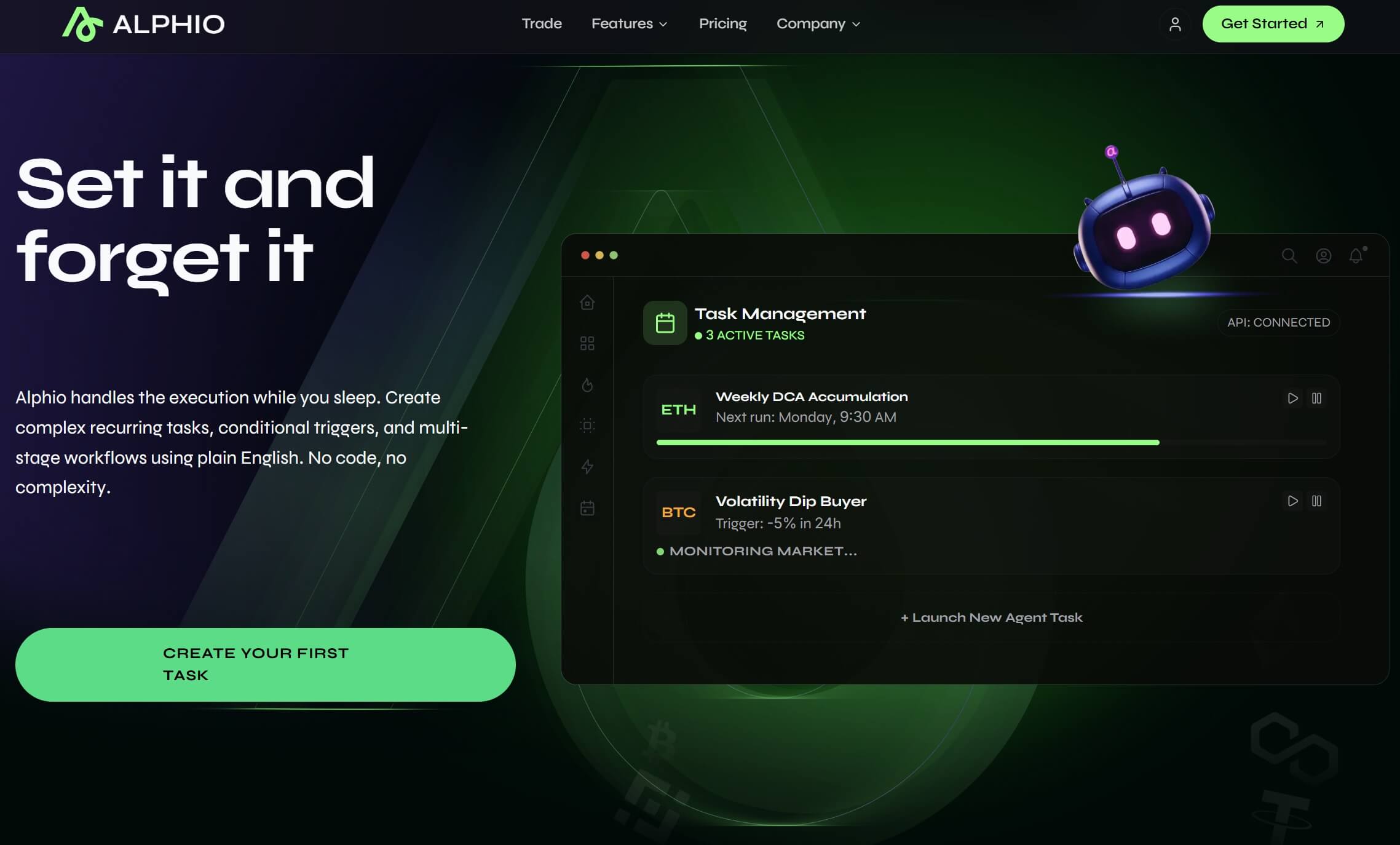
Writing the rules down in advance helps. Decide your target weight, your rebalancing band and the dates on which you will add to the position, then automate the reminders so emotions do not override the plan. Investors who want calendarized check-ins on index levels, Fed dates and position drift can set them up through Alphio's Scheduled Task feature once the rules are on paper.
What to Watch Into 2027
Rate path and the yield curve
The single most important variable for small caps over the next few months is the path of interest rates. Watch the December 8 to 9 Fed decision, the updated projections released alongside it and the tone of the press conference. Long-term yields matter too: the 10-year Treasury yield climbed above 5% in October before easing to about 4.88% by November 9, according to Treasury data. A sustained move lower in yields would ease refinancing pressure, while another leg higher would test small-cap balance sheets.
Earnings revisions and credit spreads
The fourth-quarter earnings season, which runs from mid-January into February, will show whether small-cap profit estimates for 2027 are holding up. Rising estimates would support the valuation case; falling ones would suggest the discount is deserved. High-yield credit spreads are a useful parallel signal, since many small companies borrow in the same markets. Widening spreads often lead small-cap weakness, while stable spreads suggest lenders are still comfortable funding smaller borrowers.
Breadth and seasonality
Finally, watch market breadth. Small-cap outperformance is usually a sign that more stocks are participating in a rally, which is healthier than a market led by a handful of giants. Some investors also note the historical tendency for small caps to do well around the turn of the year, often called the January effect, but that pattern has been inconsistent in recent decades and is not a reason to buy on its own. Investors who want to test questions like these against live data can explore them through Conversational Trading, treating it as a research assistant rather than a substitute for filings.
Conclusion
Small-cap stocks enter the final weeks of 2026 with momentum, a valuation discount and a domestic economic tailwind on their side, and a Federal Reserve that is moving the wrong way for heavily indebted companies on the other. The Russell 2000's 13% gain this year shows that the case for small caps is no longer purely theoretical, but the rate-hike cycle means the asset class is unlikely to rise in a straight line. Daily swings of 3% to 4% in early November are a preview of what investors should expect if inflation stays sticky.
The most durable approach is to focus on quality and process rather than predictions. Favor profitable companies and quality-screened indexes, check balance sheets before stories, size the allocation for its volatility, phase in on a schedule and rebalance with discipline. Watch the December Fed meeting, earnings revisions and credit spreads for evidence that the thesis is strengthening or breaking.
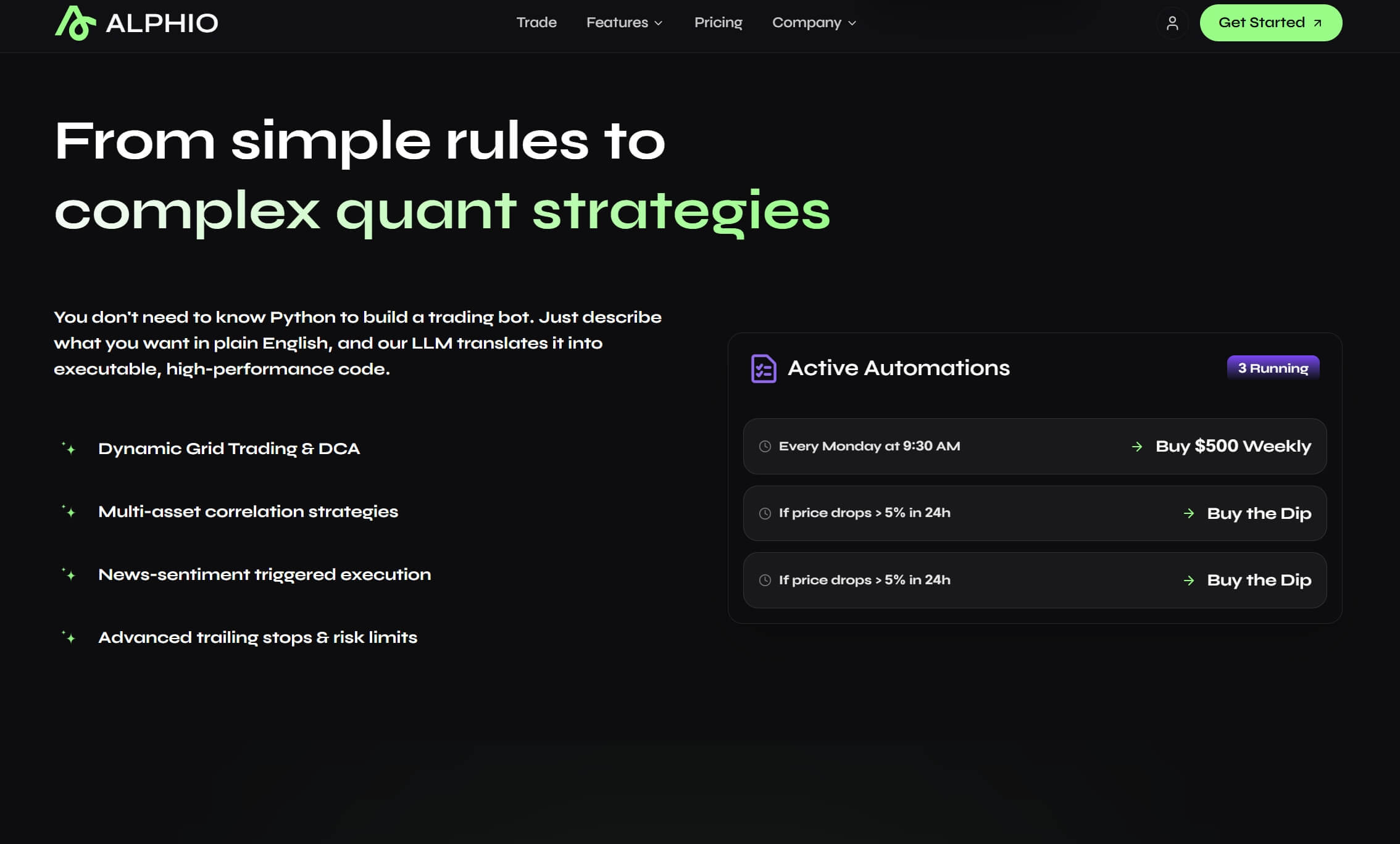
Once your rules are defined, tools can help you stick to them. Investors who want to learn from how experienced traders are positioning across market caps can explore Alphio's Copy Trade feature, while those who prefer rules-based execution within limits they set can look at Autonomous Trading. Neither replaces your own risk limits, and no tool can guarantee that small caps will close the valuation gap, but a written plan gives you the best chance of benefiting if they do.
FAQs
Are small-cap stocks a good investment in 2026?
Small caps have outperformed in 2026, with the Russell 2000 up 13% as of November 10 versus nearly 10% for the S&P 500, according to CNBC, and they still trade at a valuation discount. However, Fed rate hikes raise borrowing costs for smaller firms, so many investors favor profitable, quality-screened small caps and size the allocation for higher volatility.
Why do rising interest rates hurt small-cap stocks?
Small companies carry a much larger share of floating-rate debt than large caps, so their interest costs rise quickly when the Fed hikes. Nearly 40% of Russell 2000 companies have no earnings, according to an analysis cited by Morningstar, which makes them more dependent on outside financing that becomes costlier as rates rise.
What is the difference between the Russell 2000 and the S&P 600?
The Russell 2000 covers roughly the 1,001st through 3,000th largest U.S. companies with no profitability requirement. The S&P SmallCap 600 is committee-selected and requires companies to pass a profitability screen, which removes much of the money-losing tail and typically results in a higher-quality, lower-multiple index.
How cheap are small caps compared with large caps?
CNBC, citing FactSet, reported on November 10, 2026 that the Russell 2000 trades at 16 times trailing earnings versus roughly 25 for the S&P 500. Valuation figures vary by provider and method, so it is best to track a single source over time, and a discount alone does not guarantee outperformance.
How much of my portfolio should be in small-cap stocks?
There is no single right answer, but the Russell 2000 is worth only about 5.5% of the S&P 500's market value, so market-weight exposure is modest. Investors who choose to overweight small caps should size the position so they can hold it through a deep drawdown, phase in over time and rebalance on a set schedule.
Related articles
- Value vs Growth Stocks in 2026: What the Great Rotation Means for Your PortfolioValue vs growth stocks in 2026: why value leads by about 30 points, how Fed rate hikes drive the gap, current valuations, and how to build a balanced portfolio.
- Utility Stocks in 2026: Can AI Power Demand Beat Rising Interest Rates?Are utility stocks worth buying in 2026? How AI power demand, Fed hikes, a near-5% 10-year yield and electricity affordability are reshaping the sector.
- How to Rebalance Your Portfolio Before Year-End 2026: A Practical Guide for a Hiking Fed and a ConceLearn how to rebalance your portfolio before year-end 2026: measure drift, pick a method, cut taxes, and handle bonds, cash and concentrated tech positions.
- EV/EBITDA vs P/E: How Capital Structure Changes What Looks Cheap in 2026EV/EBITDA vs P/E explained with Oct 2026 MSFT, VZ, XOM & CAT figures—when leverage distorts equity multiples, sector medians, and a practical checklist.
- Copy Trading Risk Management: Stop-Loss, Allocation Caps, and Exit Rules for 2026Copy trading risk management: satellite allocation, per-trader caps, copy stop-loss vs max drawdown, diversification, and exit rules for 2026 markets.
- Energy Stocks 2026: Oil Majors vs AI Power Demand—How Investors Should Split the TradeInvest in energy stocks 2026 by separating oil majors' cash returns from AI data-center power demand—allocation splits, falsifiers, and a practical watchlist.