

Copy Trading Risk Management: Stop-Loss, Allocation Caps, and Exit Rules for 2026
Copy trading risk management: satellite allocation, per-trader caps, copy stop-loss vs max drawdown, diversification, and exit rules for 2026 markets.


Key Takeaway
Copy trading feels like outsourcing skill. In practice it is outsourcing entries—while you keep the full balance-sheet risk, the tax lot, and the 2 a.m. decision to add size after a green week. That asymmetry is why copy trading risk management is not a footnote under a leaderboard; it is the product. Investors who treat a hot equity curve as a substitute for stop-loss, allocation caps, and exit rules eventually discover that several “diversified” leads can all be long the same mega-cap momentum tape—and that a calm VIX does not protect a correlated book.
Late October 2026 offered a live classroom. On the October 27 close, NVIDIA finished near $217.94 (+0.90% on the day) but was still roughly −5.2% month-to-date; Tesla closed near $407.46 (+4.04%) and roughly +14.2% for October; AMD closed near $560.26 (+5.45%). The VIX sat near 17.52 after about 18.39 the prior session—hardly panic territory—while SPY hovered near 769.72 and QQQ near 721.24 on that late-October tape. A risk rally in tech can lift several copy strategies at once; the same factor cluster can reverse them together. Caps, copy stop-losses, and style diversification exist precisely for that failure mode.
The investor conflict is familiar: you want the upside of a skilled lead without building the process yourself, yet every unchecked follow imports someone else’s concentration risk into your account. Cause and effect are brutal when the tape is friendly. A calm VIX and a rising QQQ make overlapping tech sleeves look like skill confirmation, so allocation caps feel optional—until the factor reverses and every “independent” lead marks down together. What would falsify the panic narrative is equally clear: if your leads truly differ by style and horizon, a single mega-cap drawdown should not flatten the whole satellite. If it does, your risk rules were theater.
This guide walks through a practical framework investors discuss across social and copy platforms: keep copy capital as a satellite sleeve, cap each lead, set a copy stop-loss as a circuit breaker relative to historical max drawdown, diversify by market and horizon, and follow behavioral exit rules that survive both euphoria and a red month. Figures below are market context as of the October 27, 2026 close—verify live prices before acting. Nothing here is investment advice.
Why a Calm VIX Still Breaks Correlated Copy Books
Momentum sleeves share the same factor
When five leads all lean into AI and mega-cap growth, your “portfolio of traders” is often one portfolio of stocks wearing five avatars. NVIDIA’s October path—still underwater month-to-date near a −5.2% MTD print even after a modest up day into $217.94—reminds followers that a single name’s path can dominate any lead who refuses to leave the same tape. Tesla’s October strength near +14.2% MTD into $407.46 and AMD’s sharp +5.45% session into $560.26 show the other face of the same cluster: when the risk rally is on, correlated sleeves look genius together. Correlation is not diversification; it is synchronized P&L.
Index calm is not sleeve calm
A VIX near 17.52 after 18.39 is the kind of reading that tempts people to loosen stops “because the market is fine.” Sleeve risk is not index risk. Copy books concentrated in the same QQQ-heavy names can draw down hard while broad volatility looks orderly—especially when SPY and QQQ sit near late-October levels around 769.72 and 721.24 and leadership rotates inside tech rather than across the whole market. The falsifier for “VIX is low, so my copy risk is low” is simple: measure the overlapping holdings and factor betas of your leads, not the headline fear gauge.
What the late-October tape teaches about caps
When AMD gaps higher on a +5.45% day while NVIDIA is still repairing an October drawdown, copy followers who sized every lead as if each were independent discover they were levered to the same narrative: AI hardware, mega-cap liquidity, and risk-on flows. That is exactly when copy trading allocation rules and max drawdown copy trading circuit breakers matter more than yesterday’s ROI rank. Allocation is the first stop-loss you set—before any price trigger.
Satellite Allocation: Money You Can Afford to Lose
Treat copy capital as optional, not core
A framework that shows up repeatedly in investor education is to fund copy trading only with a satellite slice of investable wealth—commonly discussed in the rough band of about 5–20%, and always as money you can lose without rewriting your retirement plan. The point is psychological as much as mathematical. Core capital belongs in boring, rules-based beta and savings goals; satellite capital is where you rent someone else’s process. If a total loss of the sleeve would force lifestyle changes, the sleeve is too large—full stop.
Think of the satellite as insurance against identity fusion with a stranger’s P&L. When NVIDIA’s October path and Tesla’s October path diverge inside the same “AI/growth” label, followers who sized the sleeve as discretionary fun money can rebalance or unfollow without touching rent, tuition, or long-term index holdings. Followers who blurred satellite and core discover that a copy relationship has become a second job—and a second source of forced decisions.
Why “I can add later” is not a risk policy
Many followers start small, then add after a hot streak because the equity curve “proved” the lead. That habit converts a satellite into a concentrated bet at the worst moment: after outperformance has already priced optimism into the lead’s style. IOSCO’s 2025 FR/06 note on imitative trading (copy, mirror, and social trading) underscored that these channels are often tied to short-term or leveraged products—and that investor education and risk awareness are not optional extras. Satellite sizing is education made operational: you pre-decide the maximum pain before the product’s dopamine loop asks for more.
Bind the sleeve before you bind the lead
Decide the satellite budget in writing, then choose leads inside that budget—not the reverse. On Alphio, that mindset pairs naturally with Copy Trade when you follow a strategy with a hard ceiling, and with Autonomous Trading when an agent needs an external risk fence before it can act. The tool does not invent discipline; it encodes the satellite you already defined.

Set capped copy sleeves on Alphio Copy Trade

Fence agent risk with Autonomous Trading
Per-Trader Caps: Stopping “Five Leads, One Book”
The 10–20% of copy capital rule of thumb
Inside the satellite, investors often discuss per-trader caps around 10–20% of copy capital per lead. That is not a sacred number; it is a forcing function against hero worship. If one lead gets half your copy book, you do not have a copy portfolio—you have a single manager with marketing. Caps also make unfollow decisions less emotional: a lead who trips their own risk budget exits a defined slot rather than “your whole thesis.”
False diversification looks like five green curves
Five leads who all piled into the same late-October tech rally will print similar weekly screenshots and feel diversified until the factor turns. Check overlapping names, sectors, and holding periods. If three of five are effectively long the same NVIDIA–AMD–Tesla complex that dominated the October 27 tape, your real concentration is higher than your lead count. Diversification is about uncorrelated processes, not avatar count.
What would falsify a cap policy
A cap policy fails if you routinely raise a winner’s share after three good weeks, or if you “temporarily” exceed the cap because a new lead is “different this time.” Write the raise rule in advance: only after a scheduled review, only with evidence of style persistence, and never solely because ROI sparkled. If you cannot obey that, shrink the default cap until obedience is easy.
A useful mental model is to treat each lead like a sub-strategy in a multi-manager book. Institutional allocators do not give one book runner half the risk budget because last quarter sparkled; they rebalance toward policy weights. Retail copy trading fails when the UI makes policy weights optional and leaderboard rank mandatory. Restore the institutional habit with smaller numbers: write the cap, publish it to yourself, and require a calendar trigger before any raise.
Copy Stop-Loss as a Circuit Breaker
Place the stop relative to historical max drawdown
A copy trading stop loss is a relationship-level circuit breaker, not a single-share limit order theater. A common educational approach is to set the copy stop just below the lead’s historical max drawdown—for example, if a lead’s MDD is about 18%, a stop near 25% may give the strategy room to breathe while still ending the experiment before a life-changing loss. A stop at 10% against an 18% historical MDD often stops out noise and churns you into the next hot curve at the worst time.
Platform bands and the tradeoff (without UI cosplay)
On eToro-style platforms, copy stop-loss settings are often discussed across a wide band—commonly cited from about 5% to 95%, with defaults around 40% on some platforms. Tighter stops protect capital and increase false exits; looser stops reduce noise exits and raise tail risk. Explain the tradeoff to yourself in dollars, not percentages alone: a 40% stop on a $5,000 copy relationship is $2,000 of planned pain. Alphio’s surfaces differ by product; the principle travels even when the slider UI does not. Do not assume identical controls—assume you still need a pre-committed exit.
Falsifiers for the stop framework are worth stating out loud. If a lead’s reported MDD is stale or cosmetic—computed on a different product, excluding gaps, or ignoring periods when the lead was inactive—your “25% under an 18% MDD” math is fiction. If the platform’s copy stop only closes the relationship after a delay, or fails to flatten in fast markets, you need a tighter satellite and a manual flatten plan. Circuit breakers only work when the wiring matches the blueprint.
Stops without allocation caps are incomplete
A stop that fires after you already concentrated 60% of the satellite into one lead is late. Pair how to manage copy trading risk layers: satellite size → per-lead cap → copy stop-loss → portfolio review. Each layer catches a different failure. Caps catch concentration; stops catch path dependency; reviews catch strategy drift that neither number sees.
Diversify by Market, Style, and Horizon
Three axes that actually reduce cluster risk
Diversification for copy followers works when leads differ on market (U.S. large-cap vs other regions or asset classes you understand), style (trend vs mean-reversion vs event-driven), and horizon (intraday vs multi-week). Five momentum scalpers in the same Nasdaq names fail that test even if their usernames differ. Use the late-October split inside tech—NVIDIA still negative MTD while Tesla and AMD printed strength—as a reminder that even “tech” is not one risk; but if all your leads still sit inside that complex, you have not left the building.
Avoid the leaderboard as a diversification engine
Leaderboards optimize for recent return, not for orthogonal risk. Sorting by ninety-day ROI and copying the top five is how correlated books get built at scale. Prefer a shortlist built from process notes: what they trade, when they sit in cash, how they behaved in the last meaningful drawdown, and whether their edge requires leverage you refuse. Education beats ranking.
Operationalize diversity with scheduled checks
Once a month, list each lead’s top holdings or factor exposures in one table. If the table collapses into the same five tickers that moved on October 27—NVDA, TSLA, AMD and their cousins—you have homework, not a portfolio. Alphio’s Scheduled Task can force that calendar review, while Conversational Trading helps you interrogate overlap in plain language before you add another lookalike lead.

Schedule monthly copy-risk reviews
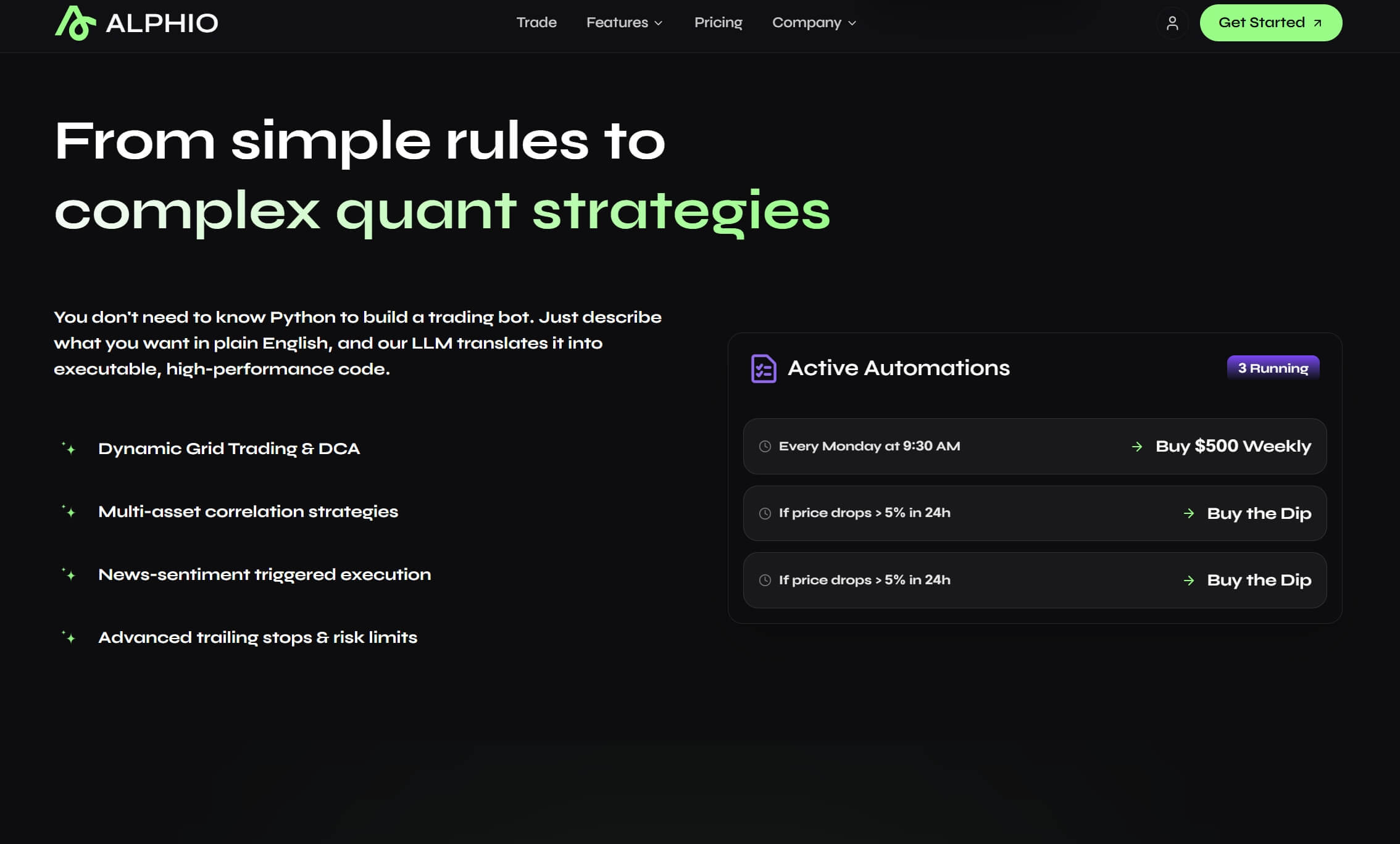
Stress-test lead overlap with Conversational Trading
Behavioral Rules: Hot Streaks, Red Months, and Drift
Do not join after the victory lap
The classic failure mode is onboarding after a parabolic stretch—precisely when mean-reversion risk and crowded positioning are highest. Late-October strength in names like Tesla and AMD can mint fresh leaderboard heroes overnight; joining then without a written thesis and a stop is volunteering to fund someone else’s exit liquidity. A practical rule: if you cannot explain the edge in two sentences without citing last month’s return, you are not ready to allocate.
Do not quit solely because of one red month
The twin failure is abandoning a still-valid process after a single ugly month while historical MDD was always larger. If you set the copy stop using MDD logic, honor the stop—and honor the room you gave the strategy. Exit on evidence of strategy drift, leverage jump, universe change, or risk-policy breach, not on embarrassment. Give most strategies a full quarter of live observation under capped size before you judge competence; judge integrity and risk jumps immediately.
Review cadence beats motivational content
Monthly reviews beat daily chart staring. In each review, ask four questions: Did holdings overlap rise? Did the lead’s risk (leverage, concentration, turnover) jump? Did my fills diverge badly from the lead’s reported path? Did I obey my own caps? Write the answers down. Social feeds optimize for courage; your notebook should optimize for capital preservation. IOSCO’s emphasis on risk awareness in imitative trading is not abstract regulation-speak—it is a reminder that copy products scale behavior, including bad behavior, unless you install friction.
Building an Exit Policy You Will Obey
Pre-commit the exit triggers
List exits that do not require courage in the moment: copy stop-loss hit; per-lead loss budget hit; satellite drawdown threshold hit; documented style drift; unexplained leverage increase; refusal to explain a risk jump; chronic fill divergence. Ambiguous exits (“I’ll know when it feels wrong”) are how people stay in relationships that already failed their own policy.
Re-enable only with a post-mortem
After any breaker trips, require a short written note before size returns: what failed, what changes, what new cap applies. If you cannot write it, you are not ready. Tools can remind you; they cannot want the outcome for you. Use scheduled reviews and conversational notes so the post-mortem lives next to the same workflow where you re-enable risk.
Keep education separate from automation
Automation amplifies whatever policy you actually have. If your policy is “chase green curves,” faster tools make the hole deeper. Encode satellite size, per-lead caps, and stop logic first; only then mirror. That sequence—limits before narrative—is the entire educational edge available to most retail followers in 2026’s copy and social trading landscape.
Conclusion
Copy trading risk management is a stack, not a slogan. Keep copy capital as a satellite (commonly discussed around 5–20% of investable wealth), cap each lead (often ~10–20% of copy capital), set a copy trading stop loss as a circuit breaker just below historical max drawdown rather than at noise levels, diversify by market/style/horizon instead of by avatar count, and exit on drift and risk jumps—not on one red month or one hot streak. Late October 2026’s tape—NVIDIA near $217.94 still roughly −5.2% MTD, Tesla near $407.46 roughly +14.2% MTD, AMD near $560.26 on a +5.45% day, VIX near 17.52, SPY/QQQ near 769.72/721.24—showed how calm headline volatility can coexist with concentrated mega-cap momentum risk that moves many “different” strategies together.
When you are ready to operationalize the stack, use Alphio’s Copy Trade with hard sleeve and lead ceilings, Scheduled Task for monthly overlap and drawdown reviews, and Conversational Trading to interrogate concentration before you scale. Optional agent workflows on Autonomous Trading belong behind the same fences. This article is for educational purposes only and is not investment advice. Verify live prices, platform controls, and your own risk tolerance before acting.
FAQs
What is copy trading risk management?
Copy trading risk management is the set of rules that limit how much capital you allocate to copied strategies, how much each lead can take, when a copy stop-loss ends the relationship, and when you exit for style drift. It treats copying as a satellite risk sleeve, not as a substitute for your own caps and review cadence.
How should I set a copy trading stop loss?
A practical approach is to place the copy stop-loss just below the lead’s historical max drawdown so normal volatility does not churn you out—for example, near 25% if MDD is about 18%. Too-tight stops (such as 10% against a deeper historical path) often exit noise; too-loose stops raise tail risk. Convert the percent into dollars you accept losing before you confirm the setting.
What allocation caps work for copy trading?
Investor education often frames copy capital as a satellite of roughly 5–20% of investable wealth, with per-trader caps around 10–20% of that copy capital. The exact percentages matter less than writing them down and refusing to raise winners solely after hot streaks. Caps prevent five lookalike leads from becoming one concentrated mega-cap book.
Why does max drawdown matter more than a calm VIX for copy traders?
Index volatility can look orderly while several leads share the same factor—such as late-October 2026 mega-cap tech momentum—so sleeve losses cluster even when the VIX is near the high teens. Max drawdown rules and overlapping-holdings checks measure your actual copy book, not the headline fear gauge.
When should I stop copying a trader?
Exit when your copy stop-loss or loss budget hits, when leverage or concentration jumps without a clear policy, when strategy drift appears, or when fills chronically diverge from the lead’s path. Avoid quitting solely after one red month if the drawdown still fits the historical MDD you sized for, and avoid joining solely after a victory-lap streak.
Related articles
- Stock Market Surges After 2026 Midterms: What the Democratic Sweep Means for Your PortfolioThe stock market rallied after Democrats won the 2026 midterms. Discover what the election means for investors, tech stocks, and the S&P 500 outlook.
- Stock Market Surges After 2026 Midterms: What the Democratic Sweep Means for Your PortfolioThe stock market rallied after Democrats won the 2026 midterms. Discover what the election means for investors, tech stocks, and the S&P 500 outlook.
- Oil Prices Surge Above $105 Amid US-Iran Conflict: Energy Investment Opportunities in November 2026Oil prices climb past $105 as US strikes Iran's Qeshm Island. Discover energy investment opportunities, top oil stocks, and market outlook for November 2026.
- Nvidia Stock Earnings August 2026: What Investors Need to Know Before the Q2 ReportNvidia reports Q2 earnings on August 26, 2026. Get the latest NVDA stock analysis, earnings expectations, AI chip demand outlook, and price targets ahead of the report.
- Best AI Trading Bots – Top 12 Tools for Smarter InvestingDiscover the top 12 AI trading bots for smarter investing in 2026. Compare features, pricing, and benefits of leading automated trading platforms for stocks, crypto, and forex.
- 25+ Best AI Trading Bots for Traders and DevelopersDiscover the best AI trading bots for 2026. Compare top platforms for crypto, stocks, and forex trading. Find no-code solutions and advanced tools for developers.