

How to Hedge a Stock Portfolio in the 2026 Sell-Off: Puts, Collars, Cash and What Works
Learn how to hedge a stock portfolio in the November 2026 sell-off with puts, put spreads, collars, inverse ETFs and T-bills, plus how to size and time hedges.

Key Takeaway
Knowing how to hedge a stock portfolio has rarely mattered more than it does in the middle of November 2026. On November 17, the S&P 500 fell 1.03% to 7,340.53, a five-month low, while the Dow dropped 848.75 points and the Nasdaq Composite slipped 0.74%, according to Reuters reporting carried by the Honolulu Star-Advertiser. It was the first four-day losing streak for the S&P 500 and Nasdaq since September, and every sector finished lower. Behind the selling sits a familiar mix: doubts about AI spending, leadership turmoil at Nvidia, a Federal Reserve that is tightening again, and the huge supply of new stock expected from Anthropic's IPO.
What makes this sell-off unusually awkward is that the classic shock absorbers have not worked. The 10-year Treasury yield traded around 5.13% to 5.15% on November 16, near one-month highs, according to Trading Economics, so bond prices fell alongside stocks. Gold futures touched a 52-week low the same day, with December contracts settling at $3,847.40 an ounce, per Barchart data cited by Finviz. Investors who assumed that a simple stock-and-bond mix would cushion every drawdown are learning, as they did in 2022, that correlation can flip when inflation and rate hikes drive the market.
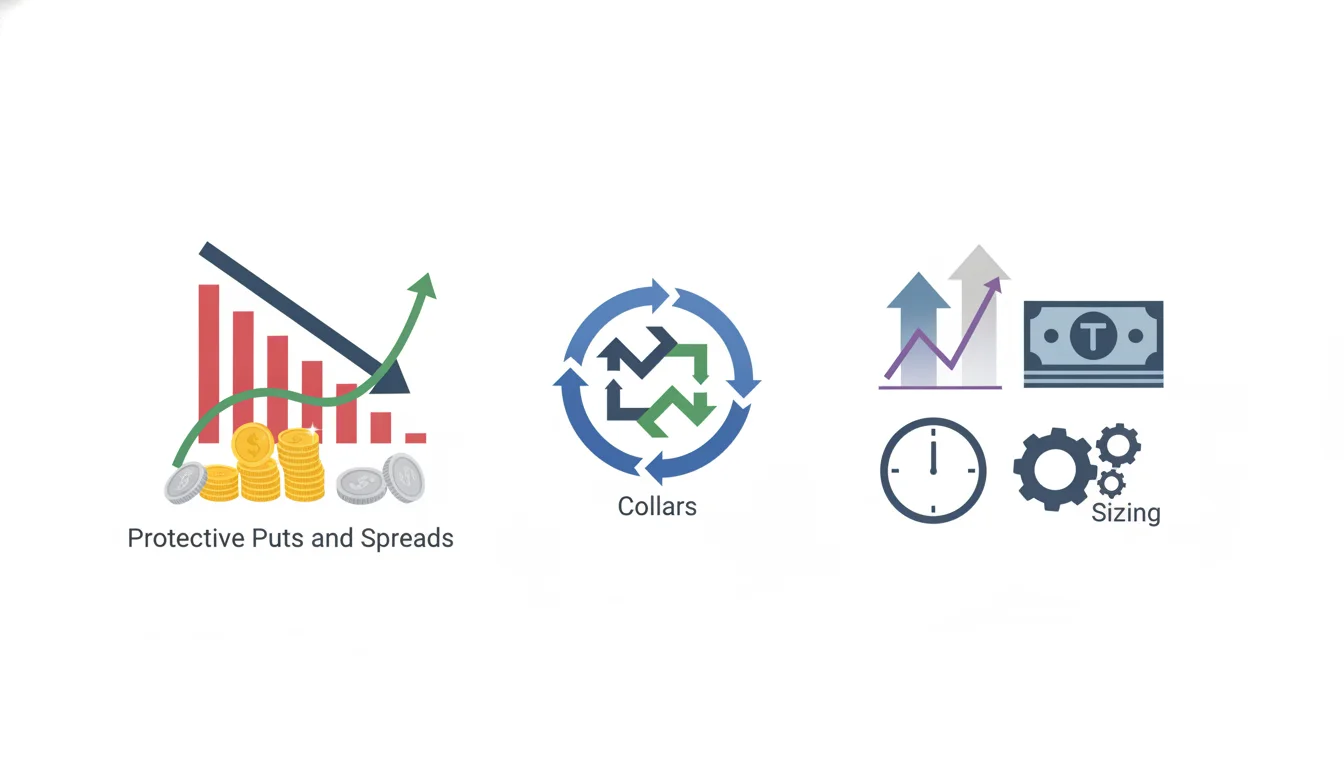
This guide explains what a hedge actually is, how protective puts, put spreads, collars, inverse funds, cash and Treasury bills compare, what each one costs, and how to size and time protection without destroying long-term returns. Market data are as of the November 17, 2026 close (America/New_York) unless noted. This article is general education, not personalized investment advice, and options and leveraged products carry risks that are not suitable for every investor.
Why Hedging Is Back on Investors' Radar
A sell-off with many drivers at once
The November decline is not a single-cause event, which is exactly why hedging questions have surged. Nvidia announced on November 12 that Jensen Huang had resigned as chief executive, and the stock's slide dragged the S&P 500 down 1.9% on November 16, according to La Nacion's daily index recap. Then on November 17, losses spread well beyond chips. "Every sector in the S&P is down," Oliver Pursche of Wealthspire Advisors told Reuters, adding that "It's not all about Nvidia." When selling broadens from one theme to the whole tape, portfolio-level protection becomes more relevant than trimming a single name.
The Fed has changed the backdrop
For most of the past three years, investors could count on the prospect of Fed easing whenever markets wobbled. That assumption is gone. The Federal Reserve raised its target range by a quarter point to 3.75%–4.00% on September 16, its first hike since 2023, and then held steady on October 28 in a 10–2 vote in which two officials preferred another increase. As of November 17, CME FedWatch priced a 95.4% chance of another 25-basis-point hike in December, according to Reuters. A tightening Fed removes the "policy put" that once shortened drawdowns, which shifts more of the burden of downside protection onto investors themselves.
Volatility is rising but not yet extreme
The Cboe Volatility Index closed at 19.30 on Friday, November 13, and was quoted near 21.94 during trading on November 16, according to a market report citing Cboe data. Those readings are elevated compared with calm periods but far below the panic spikes seen in genuine crashes. That middle zone matters for hedgers: option premiums are higher than they were a few months ago, yet not so high that buying protection is prohibitively expensive. The cheapest time to insure a portfolio is before fear peaks, not after.
What a Hedge Is and What It Is Not
Insurance, not a profit engine
A hedge is a position designed to gain value, or at least lose less, when your core holdings fall. Like home insurance, it costs money in most years and pays off only in a minority of scenarios. The goal is not to make the portfolio go up during a sell-off; it is to keep losses within a range you can live with so that you do not sell good assets at the worst moment. Investors who judge every hedge by whether it "made money" usually abandon protection just before they need it.
Diversification versus hedging
Diversification spreads money across assets that you expect to hold for return, such as stocks, bonds and real assets. Hedging adds a position whose main job is to offset a specific risk, and it often has a negative expected return on its own. The two work together, but they are not interchangeable. In the current market, diversification across sectors has offered limited help because, as Reuters noted, all 11 S&P 500 sectors fell on November 17. That kind of correlated selling is when a true hedge earns its keep.
Define the risk before you choose the tool
Every hedging decision should start with a written answer to three questions: what loss would force you to change your plan, over what time horizon, and which holdings drive most of that risk. A retiree drawing income, a concentrated employee shareholder and a young saver adding money every month need very different tools. Many investors find that a portfolio heavy in mega-cap technology has a beta above 1.0 to the S&P 500, which means a hedge sized to the dollar value of the portfolio may underprotect it. Matching the hedge to the actual exposure is the first discipline.
Protective Puts: The Most Direct Hedge
How a protective put works
A put option gives its buyer the right to sell an asset at a set strike price before expiration. Buying a put on an index fund such as SPY, or on an individual stock you own, sets a floor beneath that position for the life of the option. Standard U.S. equity and ETF options cover 100 shares, so an investor holding 300 shares of a stock would need three contracts for full coverage. The maximum cost is the premium paid, which makes the protective put the cleanest hedge to understand and the easiest to size.
Choosing strike and expiration
The strike you choose works like an insurance deductible. A put struck 5% below the current price protects sooner but costs more; one struck 10% to 15% below is cheaper but only pays after a deeper fall. Longer expirations cost more in total but less per month, because time decay accelerates as expiration approaches. Many investors who hedge regularly buy three- to six-month puts and roll them before the final weeks, when decay is steepest. The right combination depends on how large a decline you can tolerate before the hedge must kick in.
Index options versus ETF options
Investors can hedge broad exposure with options on SPY or with options on the S&P 500 index itself, known as SPX. SPY options are American-style and settle in shares, while SPX options are European-style and settle in cash. Broad-based index options such as SPX generally qualify as Section 1256 contracts for U.S. tax purposes, which can receive a blended 60% long-term and 40% short-term capital gains treatment. Because the notional value of a single SPX contract is large, it suits bigger portfolios; SPY or QQQ options allow finer sizing for smaller accounts.
Cheaper Alternatives: Put Spreads and Collars
Put spreads cut the premium
A put spread involves buying one put and selling another at a lower strike with the same expiration. The sold put offsets part of the cost, but it also caps the protection: below the lower strike, the hedge stops gaining. For example, an investor might buy a put 5% below the market and sell one 15% below, protecting the zone where most corrections occur without paying for crash insurance. Put spreads are popular when volatility is elevated, because selling the lower strike captures some of the rich premium that fear has priced in.
Collars trade upside for protection
A collar combines a protective put with a covered call sold above the current price. The call premium can offset much or all of the cost of the put, creating a hedge that is close to free in cash terms. The trade-off is real, however: any gains above the call strike are given away until expiration. Collars suit investors with large unrealized gains in a single stock, such as employees holding company shares, who want to defend a gain without selling and triggering taxes immediately.
The tax and assignment fine print
Collars and other offsetting positions can raise U.S. tax issues, including straddle rules and, for very tight collars, constructive sale rules that may treat the position as sold. Short calls also carry assignment risk, especially around dividend dates, which can force the sale of shares you wanted to keep. Anyone using collars on low-basis stock should review the structure with a tax professional before trading. These details rarely appear in quick hedging guides, yet they often decide whether a collar is worth doing.
Inverse ETFs, Cash and Short-Term Treasuries
Inverse funds are tactical tools
Inverse ETFs aim to deliver the opposite of an index's daily return, and leveraged versions multiply that daily move. Because they reset every day, their returns over weeks or months can differ sharply from the inverse of the index's cumulative performance, particularly in choppy markets. The SEC and FINRA have long warned that these are specialized products that may not suit buy-and-hold investors. They can work for a short, closely monitored hedge, but they demand attention that an option with a defined expiration does not.
Cash and T-bills are underrated hedges
The simplest hedge is owning less of the risky asset. With the federal funds rate at 3.75%–4.00% and markets pricing a December hike, short-term Treasury bills and money market funds now pay meaningful yields while carrying little price risk. Raising a cash buffer does not require options approval, has no expiration date and never loses value when stocks fall. Its cost is opportunity: if markets rebound sharply, the cash portion lags. For many long-term investors, a modest shift toward cash is a more sustainable hedge than a rolling options program.
Why long bonds have disappointed
Long-dated Treasuries hedge well when stocks fall because growth is slowing and the Fed is expected to cut. They hedge poorly when stocks fall because inflation and rate hikes are pushing yields up, which is today's environment. With the 10-year yield above 5% in mid-November, according to Trading Economics, long bond funds have fallen alongside equities. The 2022 bear market showed the same pattern, when the S&P 500 and the Bloomberg U.S. Aggregate Bond Index both posted double-digit losses. Investors should not assume duration will protect them in every sell-off.
Hedging Concentrated Positions in AI Leaders
Single-stock risk is the biggest exposure for many investors
After three years of AI-led gains, many portfolios carry a heavy weight in a handful of mega-cap technology names. Nvidia illustrates the problem. The company reported fiscal third-quarter revenue of $115.84 billion after the close on November 17, ahead of the LSEG consensus of $109.10 billion, and guided fourth-quarter revenue to about $130 billion, yet the stock had already been under heavy pressure following its CEO's resignation. When one holding drives a large share of a portfolio's risk, an index hedge may not protect against company-specific events.
Matching the hedge to the holding
For concentrated positions, a protective put or collar on the specific stock is more precise than shorting the broad market. A put on the stock itself pays off whether the decline comes from earnings, governance or a sector-wide sell-off. Index hedges, by contrast, can leave an investor exposed if the single name falls while the broader market holds up. Reviewing a company's valuation alongside its option prices helps decide whether to hedge, trim, or simply hold through the volatility.
Trimming remains a valid hedge
Sometimes the best hedge for an outsized winner is selling part of it. Reducing a position from a quarter of a portfolio to a tenth removes far more risk than most options strategies can, without ongoing premium costs. The obstacle is usually taxes and emotional attachment rather than logic. Investors can stage sales over time, pair them with losses elsewhere, or use a collar to bridge the gap while they plan a gradual exit.
How to Size, Time and Monitor a Hedge
Size to beta-weighted exposure
A practical starting point is to estimate the portfolio's beta to the S&P 500 and multiply it by the portfolio value to get the dollar exposure you want to protect. A $200,000 portfolio with a beta of 1.2 behaves roughly like $240,000 of S&P 500 exposure, so a hedge sized to $200,000 would leave a gap. Most investors do not need to hedge 100% of their exposure; protecting a portion of it can meaningfully reduce drawdowns while keeping costs manageable. The right percentage depends on how much decline would force a change of plans.
Rules beat feelings for timing
Hedges are usually bought too late and sold too early. Investors buy puts after a big drop, when premiums are highest, then sell them at the first bounce. A rules-based approach helps: decide in advance when to add protection, such as a defined drawdown or a volatility threshold, and when to remove or roll it, such as 30 days before expiration. Writing these rules down before markets move reduces the chance that fear or relief drives the decision.
Investors who want those checkpoints to happen on schedule can use Alphio's Scheduled Task feature to set recurring reviews and alerts, such as a weekly check of index drawdown, volatility levels and the days remaining on each hedge, so rolls and exits are not forgotten when markets get noisy.

Know the total cost
A hedging program that buys three-month index puts four times a year can cost several percent of the protected value annually when volatility is elevated, and that drag compounds. Investors should estimate the annual cost before starting and compare it with the drawdown it is meant to prevent. If the math shows that protection costs more than the investor is realistically willing to lose, a smaller equity allocation may be a cleaner solution than a permanent hedge.
Common Hedging Mistakes to Avoid
Over-hedging and the cost of being wrong
Fully hedged portfolios rarely beat unhedged ones over long periods, because markets rise more often than they fall. Investors who hedge everything, all the time, can turn a sound long-term portfolio into one that barely keeps pace with T-bills. The aim is to cap the damage from a severe decline while staying invested enough to benefit from recoveries, which historically have often followed sharp sell-offs.
Ignoring liquidity, spreads and assignment
Options on thinly traded stocks can carry wide bid-ask spreads that quietly consume much of the protection's value. Sticking to liquid underlyings, such as major index ETFs and large-cap stocks, keeps transaction costs down. Investors should also understand how early assignment works on short options and check their brokerage's options approval level before planning any strategy that involves selling contracts.
Before placing a hedge, it can help to talk through the mechanics. Alphio's Conversational Trading lets investors ask plain-language questions about an idea, such as how a collar on a specific holding would behave if the stock fell 15%, and review the answer before deciding whether to act.
Forgetting what you are protecting
The final mistake is losing sight of the goal. A hedge exists to protect a financial plan, not to win a bet on direction. If the plan relies on withdrawing income over the next two years, a cash buffer may matter more than any option. If the plan is decades long and contributions are steady, a market decline may be an opportunity rather than a threat. The right hedge is the one that keeps an investor following the plan when headlines are at their worst.
Conclusion
The November 2026 sell-off has exposed a hard truth: the traditional cushions of bonds, gold and Fed easing are not guaranteed to work when inflation and rate hikes drive the market. With the S&P 500 at a five-month low, the 10-year Treasury yield above 5% and a December Fed hike widely priced, investors who want protection need to choose it deliberately. Protective puts offer the clearest floor, put spreads and collars lower the cost at the price of capped protection or capped upside, inverse ETFs suit only short and closely watched hedges, and cash and T-bills remain the simplest buffer of all.
Whatever tool you choose, size it to your real exposure, set rules for when to add and remove it, and track the cost. Investors who want help applying rules consistently can explore Alphio's Autonomous Trading, which executes within limits the investor defines, or study how experienced traders manage risk through Copy Trade. No hedge removes all risk, and none guarantees a result, but a written plan with defined protection is far better than reacting to the next headline.
FAQs
What is the simplest way to hedge a stock portfolio?
The simplest hedge is holding more cash or short-term Treasury bills, which do not fall when stocks drop and currently pay meaningful yields. For investors comfortable with options, buying put options on a broad index ETF such as SPY is the most direct way to set a floor under equity exposure.
How much does it cost to hedge with put options?
The cost depends on the strike, the expiration and the level of implied volatility, and premiums rise when markets are fearful. A rolling program of index puts can cost several percent of the protected value per year in volatile periods, so investors should estimate the annual cost before starting.
Is a collar better than a protective put?
A collar is cheaper because the premium from a sold call offsets the cost of the put, but it gives away gains above the call strike. A protective put keeps full upside but costs more, so the choice depends on whether cost or upside matters more for that position.
Why haven't bonds protected stocks in the 2026 sell-off?
Bonds tend to hedge stocks when growth slows and rate cuts are expected, but in November 2026 inflation and a tightening Fed have pushed yields higher. With the 10-year Treasury yield above 5%, bond prices fell alongside stocks, much as they did in 2022.
Should long-term investors hedge at all?
Many long-term investors with steady contributions and long horizons do not need a permanent hedge, because hedging costs compound over time. Hedging makes more sense for investors who need to withdraw money soon, hold concentrated positions, or would otherwise sell in a panic during a sharp decline.
Related articles
- Thanksgiving Week Stock Market 2026: What History Says and How to Trade a Holiday in a CorrectionDoes the stock market rise Thanksgiving week? History, the fading Almanac trade, 2026 holiday hours, and how to use seasonality in a Fed-driven correction.
- Semiconductor Stocks After Nvidia Earnings: Why Chips Are Falling and How to Invest NowNvidia beat with $115.8B in revenue, yet chip stocks sit 34% below their June peak. Why semiconductor stocks fell, memory risk, valuations, how to invest.
- Software Stocks Sell-Off: Are AI Agents Breaking the SaaS Model or Creating a Buying Chance?Software stocks slid again as Salesforce fell 9% on AI agent fears and the Anthropic IPO. Why SaaS is selling off, valuations, and how to pick winners.
- Is S&P 500 Still a Safe Investment in 2026? Historical Evidence and Smart StrategiesDiscover why the S&P 500 remains a cornerstone investment in 2026 despite market volatility. Learn proven strategies, historical insights, and smart allocation tactics.
- NVIDIA Stock Analysis 2026: Navigating the AI Semiconductor Investment LandscapeComprehensive NVIDIA stock analysis for 2026. Explore AI semiconductor investment opportunities, financial metrics, and expert price targets for NVDA shares.
- Berkshire Hathaway Succession: What Abel's $4.5 Billion Bet Means for InvestorsGreg Abel's massive $4.5 billion Berkshire Hathaway stock purchase signals confidence in the post-Buffett era. Discover what this means for long-term investors.