

Software Stocks Sell-Off: Are AI Agents Breaking the SaaS Model or Creating a Buying Chance?
Software stocks slid again as Salesforce fell 9% on AI agent fears and the Anthropic IPO. Why SaaS is selling off, valuations, and how to pick winners.

Key Takeaway
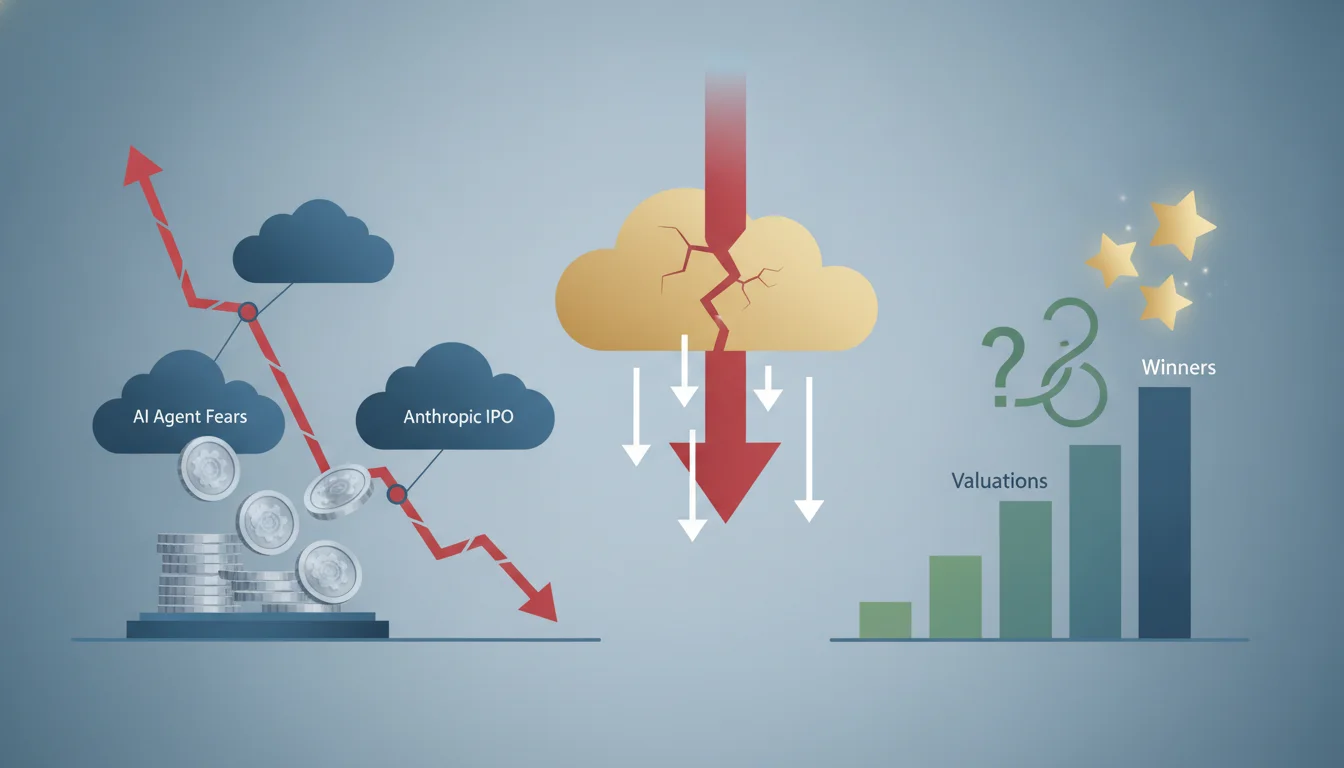
Software stocks just had another brutal day. On Tuesday, November 17, 2026, Salesforce closed down 9.45% at $194.52, according to Motley Fool market data, making it one of the worst performers in the S&P 500. ServiceNow, HubSpot, Intuit and Workday all fell sharply in the same session, as reported by Yahoo Finance and MLQ.ai. There was no company-specific news behind most of the moves. Instead, investors pointed to two familiar fears: that AI agents will shrink the number of paid software seats companies buy, and that funds were raising cash ahead of Anthropic's record-sized IPO, which was expected to price on November 18 and begin trading on Nasdaq under the ticker ANT on November 19.
The broader market fell too. The S&P 500 dropped 1% to 7,340.53, the Dow lost 848.75 points, or 1.6%, and the Nasdaq Composite slipped 0.7%, per the Associated Press. That left the S&P 500 down 2.9% for the week and up 7.2% for the year. Yet the pain in application software is a different story from the broader tech wobble. The iShares Expanded Tech-Software Sector ETF (IGV) showed a year-to-date NAV total return of -6.29% as of November 16, according to iShares, while the S&P 500 was still comfortably positive.
This guide explains why software stocks are selling off again, how the AI agent threat to seat-based SaaS actually works, what the latest earnings say about growth, whether valuations now look cheap, and how investors can tell potential winners from structural losers. Market data are as of the November 17 close (America/New_York) unless noted. This is general education, not personalized investment advice.
What Happened to Software Stocks on November 17
A broad sell-off with software at the center
Tuesday's decline started with chips and spread across technology. The AP reported that Nvidia and other AI stocks led losses, Treasury yields eased as investors moved toward safety, and markets in Europe and Asia also fell. Software then took the heaviest damage. Salesforce's 9.45% drop pushed the stock to its lowest level since mid-August, according to reporting compiled by MLQ.ai. ServiceNow fell about 7%, HubSpot about 7% and Workday about 5%, according to Yahoo Finance. Intuit and Datadog also lost more than 5%, per Investing.com data cited by MLQ.ai. Microsoft, the biggest software company of all, closed down 2.3% at $506.24, according to Motley Fool.
Why the Anthropic IPO matters for flows
The timing was hard to ignore. Anthropic filed its S-1 on October 26 and set a price range of $70 to $78 per share on November 10, offering about 825 million Class A shares, according to RTTNews and the company's own filing announcement. CNBC reported that the deal could raise more than $64 billion at the range, which would make it one of the largest listings ever. When a deal that big arrives, portfolio managers who want an allocation often sell existing holdings to fund it. Software is the obvious source of cash because Anthropic's products are widely seen as competitors to some SaaS workflows. In other words, part of Tuesday's selling may have been mechanical rather than a fresh verdict on fundamentals.
Nvidia's beat did not rescue the application layer
After the close, Nvidia reported fiscal third-quarter revenue of $115.8 billion, up 103% from a year earlier, and guided to about $130 billion for the next quarter, according to the company's release as summarized by StockTitan. The shares rose in after-hours trading. That contrast is the key to understanding 2026. Money keeps flowing to the companies that sell AI infrastructure, while the companies that sell software seats to human workers are being asked to prove AI will not cannibalize them. Investors are no longer treating "tech" as one trade.
The AI Agent Threat to Seat-Based SaaS
How per-seat pricing built the SaaS model
For two decades, software-as-a-service companies grew by selling subscriptions priced per user. A company with 1,000 salespeople bought 1,000 CRM licenses, and when it hired more people, it bought more licenses. That model produced highly predictable recurring revenue, high gross margins and steady net revenue retention, which is why investors were willing to pay premium multiples for it. Seat growth was effectively a bet on white-collar employment growth plus price increases. It worked extremely well when the main way to get more work done was to hire more people.
What changes when an agent does the work
AI agents threaten that link between headcount and revenue. If an agent can resolve customer service tickets, draft legal documents, reconcile invoices or update sales records, a customer may need fewer human users and therefore fewer seats. Commentators have described this as the meter shifting from per-person pricing to per-action pricing. RBC Capital Markets software analyst Rishi Jaluria put the bear case bluntly on a podcast cited by Yahoo Finance: "the AI companies are going to try to destroy Salesforce entirely." The concern is not that software disappears, but that the value of a seat shrinks and that AI model providers capture a larger share of the economics.
The case that the fear is overdone
There is a credible counterargument. Enterprise software is not just a user interface. It is a system of record that holds customer data, permissions, compliance history and business logic, and agents need that data to do anything useful. Incumbents are already selling their own agents. Salesforce reported that its Agentforce and Data 360 annual recurring revenue reached nearly $3.9 billion in its fiscal second quarter, up more than 210%, and ServiceNow raised its 2026 AI new-contract-value target to $1.7 billion from $1 billion. If incumbents can move to hybrid or consumption pricing without losing revenue, the seat problem becomes a transition problem rather than an extinction event.
A Year of Software Sell-Offs: From the SaaSpocalypse to Today
January and February: Cowork plugins hit the tape
November is not the first scare. On January 30, Anthropic added agentic plugins to its Cowork product, according to TechCrunch. On February 3, the reaction hit markets: ServiceNow and Salesforce each fell about 7% and Intuit dropped about 11%, CNBC reported. Information-services companies were hit hardest, with Thomson Reuters falling about 15.8% for its biggest daily drop on record, according to Reuters. By February 9, Reuters noted that software and services stocks had trailed the S&P 500 by nearly 24 percentage points over three months and that short interest in IGV had reached about 19% of its float. Traders nicknamed the episode the "SaaSpocalypse."
The April low and the rebound
The sell-off did not end in February. IGV's 52-week low is $74.62, according to iShares, and the fund closed at $99.00 on November 16, roughly a third above that level. Relief rallies came whenever the narrative softened. On February 24, when Anthropic announced Cowork connections to partners including Intuit, FactSet and LegalZoom, Thomson Reuters jumped more than 11% and Salesforce gained 4%, according to CNBC. The lesson for investors is that this group now trades on headlines about AI capabilities as much as on its own earnings, which makes volatility a feature rather than an exception.
Why November looks different
The February sell-off was about a new product. The November sell-off combines product fear with supply. Anthropic is asking public investors for tens of billions of dollars at once, and a successful debut gives fund managers a direct way to own the disruptor rather than the disrupted. Meanwhile, interest rates are much less friendly. The 10-year Treasury yield was about 5.1% on November 17, according to Motley Fool data. High rates hurt long-duration growth stocks because more of their value depends on cash flows far in the future. Software is being squeezed by its story, its flows and its discount rate all at once.
What the Numbers Say: Growth Is Slowing, Not Collapsing
Salesforce: cheap multiple, slower organic growth
Salesforce's fiscal second-quarter revenue rose 11% to $11.35 billion, according to its investor release, but that included $456 million from the Informatica acquisition, and Yahoo Finance put organic growth at about 6%. Current remaining performance obligation, which tracks contracted revenue over the next 12 months, rose 14% to $33.5 billion. The company guided full-year revenue to $46.1 billion to $46.4 billion. Salesforce also authorized a $50 billion buyback in February and signed a $25 billion accelerated repurchase funded with debt, according to its 10-Q. Its next earnings report is scheduled for December 2 after the close.
ServiceNow, Workday, HubSpot and the guidance problem
ServiceNow's third-quarter subscription revenue rose 21% to $3.99 billion, a growth rate many companies would envy. But on October 28 it guided fourth-quarter current RPO growth to 18.5% in constant currency, below the roughly 19.8% investors expected, and the stock suffered its worst day on record, according to Investing.com data cited by MLQ.ai. HubSpot guided fourth-quarter revenue growth to 12% from 17% in the third quarter, per Yahoo Finance. Workday's subscription revenue grew 13.9% last quarter, and it guided to about 12% growth for the quarter it reports on November 24. The pattern is clear: growth is slowing modestly, and the market is punishing any deceleration because it reads every miss as possible evidence of AI substitution.
Microsoft and the platform advantage
Microsoft shows why the label "software" is now too broad. Its fiscal first-quarter revenue rose 19% to $92.3 billion, with Azure cloud revenue up 48%, according to the company. Microsoft 365 commercial cloud, its closest analog to seat-based SaaS, grew a slower 17%. Microsoft sells seats too, but it also sells the cloud compute and AI services that agents run on. Companies with that kind of infrastructure exposure can win whether customers buy seats or tokens. Pure application vendors do not have that hedge.
Valuation: Are Software Stocks Cheap Now?
Forward P/E versus history
On simple multiples, parts of software look inexpensive. Salesforce traded at about 15 times forward earnings before Tuesday's drop, roughly half its five-year average of 27 times, and ServiceNow traded at about 22 times versus a five-year average of 52 times, according to TIKR data cited by Yahoo Finance. Those discounts are dramatic for companies with high margins and large buybacks. The sector as a whole is less cheap than the headline names. iShares listed IGV's price-to-earnings ratio at 37.98 as of November 16, reflecting the fund's sizable weightings in faster-growing names; mid-2026 holdings reports showed Microsoft, Palantir and cybersecurity leaders near the top.
Value trap or opportunity
A low multiple is only cheap if earnings hold up. The market is effectively pricing in the risk that seat counts decline, pricing power weakens and margins fall as vendors spend on AI. If that happens, today's 15 times earnings could turn out to be a fair or even rich price on smaller future profits. If incumbents successfully monetize agents, the same multiple could look like a bargain in hindsight. Investors should be honest that nobody knows which path will play out. The practical question is not "is software cheap?" but "which business models deserve a discount, and which are being sold indiscriminately?"
How to Separate Software Winners From Losers
Seat exposure and pricing model
Start with how a company gets paid. Businesses that charge per human user in functions where agents can replace work, such as customer support, basic sales administration or routine document processing, face the most direct pressure. Businesses that charge on usage, transactions, data volume or outcomes have revenue that can grow as agents do more work. Read earnings call transcripts for language about hybrid pricing, consumption credits or agent-based licenses, and watch whether net revenue retention holds steady through the transition.
Data, systems of record and distribution
The second filter is how hard a product is to replace. Systems of record for finance, human resources, security and customer data are embedded in compliance processes and are expensive to rip out. Thin workflow tools sitting on top of someone else's data are easier to replicate with a general-purpose agent. Many investors use a short checklist before buying any software name:
- Share of revenue tied to per-seat pricing versus usage or platform fees
- Net revenue retention and current RPO growth trends over the last four quarters
- Evidence of AI product revenue, such as disclosed agent or AI annual recurring revenue
- Free cash flow margin and how much of it goes to buybacks versus debt service
- Dependence on a single AI model provider that could become a competitor
Balance sheet, buybacks and debt
Buybacks can support a falling stock, but they are not free. Salesforce funded its $25 billion accelerated repurchase with debt, which raises the stakes if growth keeps slowing. Workday added a $4 billion authorization and Adobe spent $2.23 billion on repurchases in its latest quarter, according to company filings. Large buybacks at lower prices can create value for long-term holders, but investors should check whether a company is buying back stock out of strength or using financial engineering to offset weakening organic growth.
Catalysts and Risks to Watch Into Year-End
Anthropic's debut and IPO supply
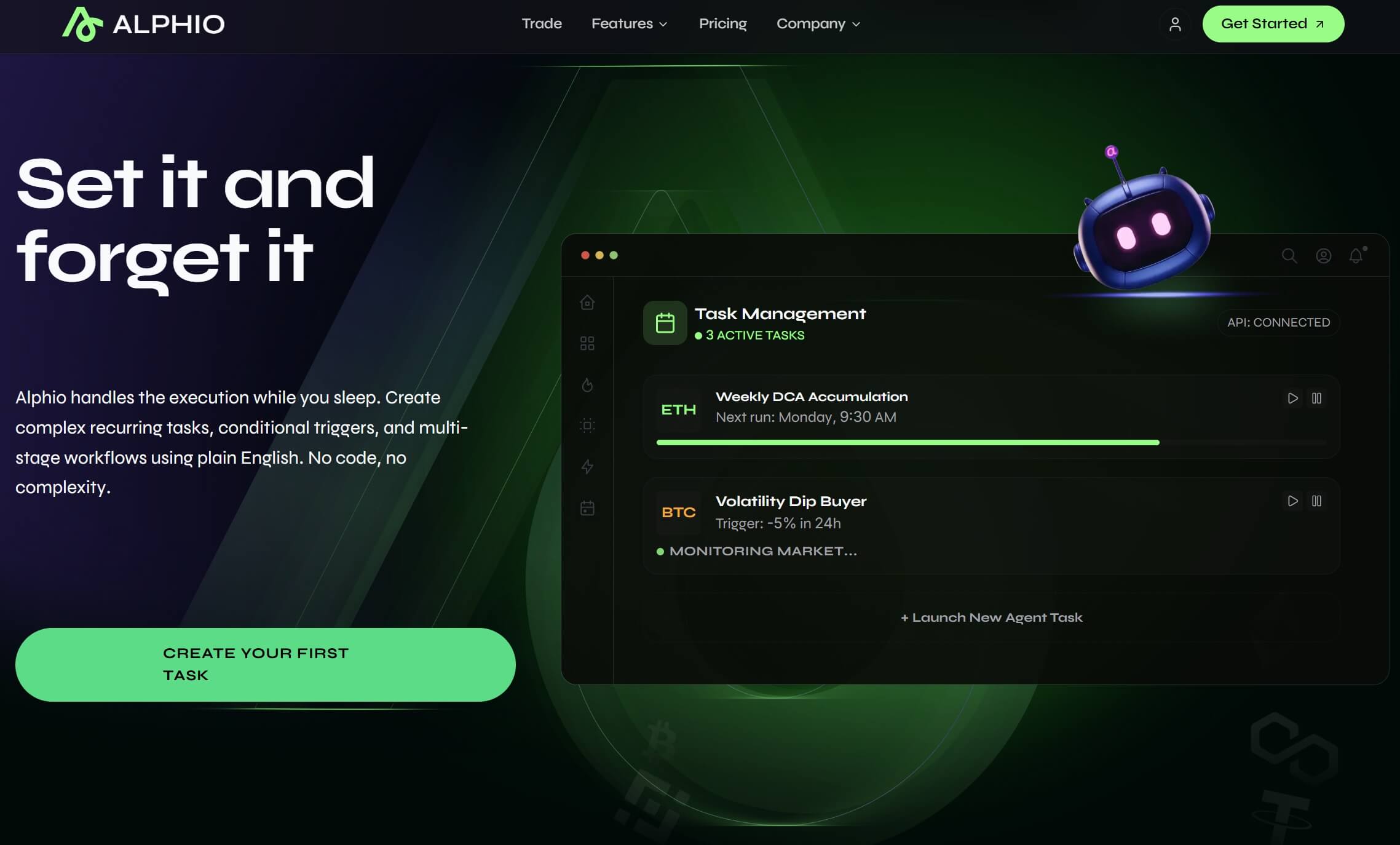
The first catalyst is Anthropic's first trading day, expected November 19. A strong debut could keep pulling money away from incumbents in the short run, while a weak one could ease the pressure on the group. Lockup expirations and future mega-IPOs will add more supply in 2027. If you trade software around these events, having a plan written down before the opening bell matters more than reacting to every headline. Tools such as Alphio Scheduled Task let investors set recurring checks on price levels, earnings dates and watchlists so that reviews happen on a calendar rather than in a panic.
Workday on Nov 24 and Salesforce on Dec 2
Earnings will test the narrative directly. Workday reports fiscal third-quarter results on November 24 after the close, and Salesforce reports on December 2. Investors will focus less on headline earnings per share and more on subscription growth, remaining performance obligations, AI annual recurring revenue and any commentary on seat counts. Adobe also reports its fiscal fourth quarter in December. A string of stable guides could reset sentiment, while another round of deceleration would likely reinforce the AI-substitution story.
Rates, the Fed and long-duration equities
Macro remains a headwind. With the 10-year yield above 5%, long-duration growth assets face a higher hurdle, and any sign of a more aggressive Federal Reserve would add pressure. On the other hand, the S&P 500 was still up 7.2% for the year as of November 17, so the market is not in a broad bear market. Software's problem is relative: investors can earn more than 5% in Treasuries while waiting to see how the AI transition plays out, which raises the bar for owning stocks with uncertain long-term earnings.
How to Position a Portfolio Around the Software Sell-Off
ETF versus single stocks
A software ETF such as IGV spreads risk across about 105 holdings, according to iShares, and charges a 0.38% expense ratio. That diversification helps because the winners and losers of the AI transition are not yet obvious. The trade-off is that the fund mixes infrastructure, cybersecurity and pure application vendors, so it may not express a specific view. Single stocks allow a more precise bet, such as owning platforms with usage pricing while avoiding seat-heavy workflow tools, but they carry far more company risk. Comparing the software group with the broader Nasdaq 100 helps show whether the weakness is sector-specific or market-wide.
Sizing, staging and rebalancing
Catching a falling knife in software has been painful several times in 2026, so position sizing matters. Investors interested in buying the dip can stage entries over several weeks or around earnings dates instead of committing all at once, and set a maximum allocation to the sector in advance. Existing holders who are now overweight technology after years of gains may want to rebalance toward their targets rather than add more. If you want to test a thesis before acting, Alphio Conversational Trading lets you ask questions about holdings, earnings dates and price moves in plain English, which can speed up homework without replacing primary filings.
Conclusion
The November 17 sell-off was another reminder that software stocks are now trading as an AI referendum. Salesforce's near-10% drop, repeated sharp sell-offs across application software this year and the looming Anthropic IPO all point to the same question: will AI agents expand the market for enterprise software, or shrink the value of every seat? The latest earnings say growth is slowing modestly rather than collapsing, and some valuations now sit far below their five-year averages. But low multiples alone do not settle the debate, and investors should expect volatility around every new AI product release, IPO and earnings report.
The most practical approach is to separate business models instead of treating software as one trade. Favor companies with systems-of-record data, usage-based or hybrid pricing and strong free cash flow, size positions conservatively, and let earnings on November 24 and December 2 inform your next move. Investors who prefer a rules-based process can explore Alphio Autonomous Trading to execute strategies within limits they set, or use Copy Trade to study how other investors are positioning. Whatever tools you use, write down your thesis, risk limits and exit plan before the next headline moves the tape.
FAQs
Why are software stocks falling in November 2026?
Software stocks fell sharply on November 17, 2026, as investors worried that AI agents will reduce the number of paid seats companies buy and as funds appeared to raise cash ahead of Anthropic's IPO. Salesforce closed down 9.45%, and ServiceNow, HubSpot, Workday and Intuit also fell, with little company-specific news.
How do AI agents threaten SaaS companies?
Many SaaS companies charge per human user, so revenue grows when customers hire more people. If AI agents handle tasks such as support tickets or data entry, customers may need fewer seats. Vendors that move to usage- or outcome-based pricing could offset that risk, while seat-heavy workflow tools face the most pressure.
Are software stocks cheap after the sell-off?
Some are cheap relative to history. Salesforce traded around 15 times forward earnings versus a five-year average of 27 times, and ServiceNow around 22 times versus 52 times, according to TIKR data cited by Yahoo Finance. Low multiples only signal value if earnings hold up through the AI transition.
Is IGV a good way to invest in software stocks?
The iShares Expanded Tech-Software Sector ETF (IGV) holds about 105 stocks and charges a 0.38% expense ratio, according to iShares, which spreads company-specific risk. It mixes infrastructure, cybersecurity and application vendors, so it offers broad exposure rather than a targeted view on which business models will win.
What catalysts should software investors watch next?
Key near-term events include Anthropic's expected Nasdaq debut on November 19, Workday's earnings on November 24 and Salesforce's earnings on December 2. Investors should focus on subscription growth, remaining performance obligations, AI revenue disclosures and any commentary on seat counts and pricing models.
Related articles
- How to Hedge a Stock Portfolio in the 2026 Sell-Off: Puts, Collars, Cash and What WorksLearn how to hedge a stock portfolio in the November 2026 sell-off with puts, put spreads, collars, inverse ETFs and T-bills, plus how to size and time hedges.
- Thanksgiving Week Stock Market 2026: What History Says and How to Trade a Holiday in a CorrectionDoes the stock market rise Thanksgiving week? History, the fading Almanac trade, 2026 holiday hours, and how to use seasonality in a Fed-driven correction.
- Semiconductor Stocks After Nvidia Earnings: Why Chips Are Falling and How to Invest NowNvidia beat with $115.8B in revenue, yet chip stocks sit 34% below their June peak. Why semiconductor stocks fell, memory risk, valuations, how to invest.
- AI Penny Stocks: Top 10 Artificial Intelligence Stocks to Watch in 2026Discover the best AI penny stocks under $5 for 2026. From defense drones to quantum computing, explore top picks like RCAT, RKLB, BBAI, and more.
- Stocks to Watch: How to Build a Winning Watchlist for 2026Master the art of building a winning stock watchlist for 2026. Learn how to find momentum stocks, manage your watchlist, and discover top stocks to watch including quantum computing and AI chip leader
- Day Trading Scanners: How to Find Winning Stocks in Real-TimeDiscover how day trading scanners help you find high-probability trades in real-time. Learn key parameters, scanner types, and strategies for consistent profits.