

Gold Price Forecast XAU/USD: Can Gold Hit New Highs in August 2026?
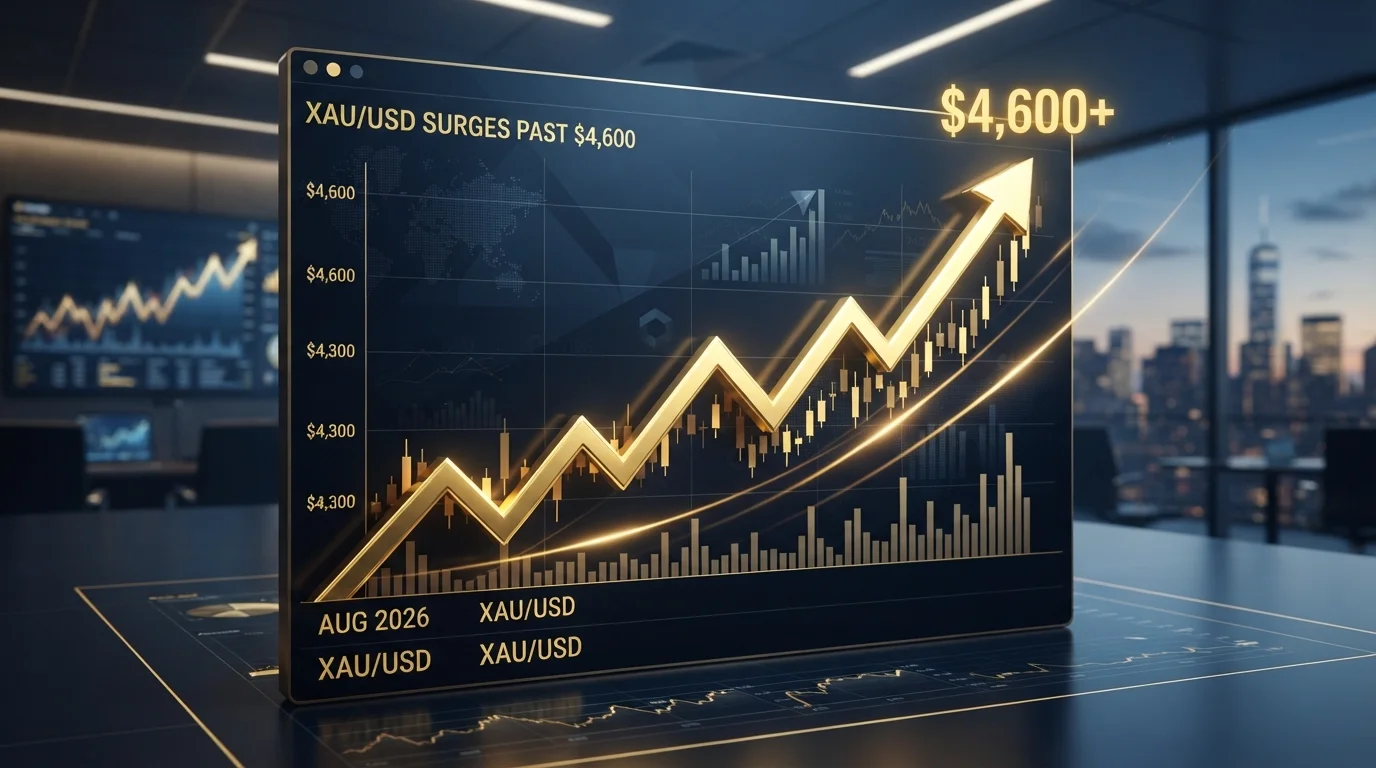
Gold price forecast for August 2026: XAU/USD surges past $4,600 as Fed rate cut odds rise. Analysis of key drivers, technical levels, and investment outlook.

Key Takeaway
Gold has staged a remarkable recovery in August 2026, with XAU/USD surging past the $4,600 threshold to reach levels not seen in months. This rally has been driven by a confluence of factors including weakening U.S. dollar strength, growing expectations for Federal Reserve rate cuts, and mounting concerns over U.S. debt sustainability. The precious metal has gained over 2% in recent sessions alone, demonstrating the powerful momentum behind the current bull run.
For investors and traders, the key question now is whether gold can sustain these gains and potentially challenge all-time highs in the coming weeks. The technical picture has shifted decisively bullish, with prices breaking above key moving averages and resistance levels. However, the path forward will depend heavily on upcoming Federal Reserve communications, particularly Chair Kevin Warsh's speech at the Jackson Hole Economic Policy Symposium, which could provide crucial guidance on the future direction of monetary policy.
The current environment presents both opportunities and risks for gold investors. While the fundamental backdrop remains supportive with central bank buying and geopolitical uncertainties, the speed of the recent rally raises questions about near-term sustainability. Understanding the key drivers behind this move and the critical technical levels to watch will be essential for navigating the gold market in the weeks ahead.
Why Gold Is Surging: The Fundamental Drivers
Federal Reserve Policy Expectations
The primary catalyst behind gold's recent ascent has been the dramatic repricing of Federal Reserve policy expectations. With the federal funds rate currently parked at 3.5%-3.75% following a divided July hold, markets are increasingly betting that the Fed's tightening cycle has reached its peak. The probability of a September rate hike has collapsed to approximately one-in-three, while expectations for rate cuts in early 2027 have gained significant traction.
This shift in rate expectations has profound implications for gold. As a non-yielding asset, gold becomes more attractive relative to interest-bearing investments when rates fall or are expected to fall. Lower rates also tend to weaken the U.S. dollar, making gold cheaper for holders of other currencies and further boosting demand. The market is now treating Fed Chair Kevin Warsh's upcoming Jackson Hole speech as the primary rate-setting signal, with any dovish tilt likely to provide additional fuel for the gold rally.
For investors seeking to capitalize on these macro trends, consider using Alphio AI's copy trading feature to mirror successful traders who specialize in precious metals and forex markets.

Dollar Weakness and Debt Concerns
The U.S. dollar has slid to three-month lows against a basket of major currencies, providing significant tailwinds for gold prices. This dollar weakness reflects not only changing Fed expectations but also growing concerns about U.S. fiscal sustainability. The Treasury's recent debt buyback program and ongoing debates about government spending have raised questions about the long-term trajectory of U.S. debt levels.
Falling confidence in U.S. debt markets has historically been a powerful driver of gold demand, as investors seek alternative stores of value. Gold's role as a hedge against currency debasement and fiscal instability is coming back into focus, particularly among institutional investors and central banks. China's continued gold buying, which has escalated significantly in recent months, underscores this trend and provides underlying support for prices.
The combination of dollar weakness and debt concerns creates a compelling fundamental backdrop for gold. As long as these factors persist, the precious metal is likely to maintain its appeal as a portfolio diversifier and wealth preservation tool.
Central Bank Buying and Physical Demand
Central bank demand for gold has remained robust throughout 2026, with emerging market institutions continuing to diversify their reserves away from U.S. dollar-denominated assets. China has been particularly active, with official gold purchases accelerating as the country seeks to reduce its dependence on the dollar and strengthen the international position of the yuan.
This institutional demand provides a solid floor under gold prices, even during periods of short-term volatility. Unlike speculative flows, central bank buying tends to be strategic and long-term oriented, removing significant amounts of physical gold from the market for extended periods. This structural demand dynamic has been a key factor supporting gold's resilience in the face of various headwinds over the past year.
Physical demand from retail investors and jewelry consumers has also shown signs of improvement, particularly in Asian markets where gold holds significant cultural importance. The combination of strong central bank buying and recovering physical demand creates a favorable supply-demand balance that supports higher prices.
Technical Analysis: Key Levels and Patterns
Breaking Above Critical Resistance
Gold's decisive move above the rising 20-day moving average and subsequent break toward $4,632 represents a significant technical development. This breakout suggests that buyers have regained control of the market and that the corrective phase which began earlier this year has likely concluded. The strength of this move, characterized by strong volume and sustained momentum, indicates genuine buying interest rather than short-term speculative activity.
The break above $4,400 was particularly significant from a technical perspective, as this level had acted as formidable resistance on multiple occasions over the past several months. Clearing this hurdle has opened the door for a potential test of the all-time highs near $4,800, though the path is unlikely to be linear. Technical traders will be watching for any signs of exhaustion or divergence that might signal a near-term pullback.
For those interested in automating their technical analysis and trading strategies, Alphio AI's agentic trading feature offers AI-powered portfolio management that can help identify and act on key technical signals.

Support and Resistance Levels to Watch
On the upside, the next major resistance level sits near $4,750, representing the previous all-time high area. A sustained break above this level would open the door for a move toward psychological resistance at $5,000, which would likely attract significant media attention and potentially trigger additional buying from momentum-driven investors.
On the downside, the $4,400 level that previously acted as resistance should now provide support, with the 20-day moving average currently around $4,350 offering additional protection. A break below these levels would suggest that the current rally has lost momentum and could signal a return to the previous consolidation range. Traders should watch these levels closely for clues about the market's next directional move.
The relative strength index (RSI) has moved into overbought territory, which is not uncommon during strong trending moves but does suggest that some consolidation or pullback could occur in the near term. However, in strongly trending markets, overbought conditions can persist for extended periods, so traders should avoid fighting the trend without clear reversal signals.
The Jackson Hole Factor: What to Expect
Warsh's First Symposium as Fed Chair
The 2026 Jackson Hole Economic Policy Symposium, taking place from August 27-29, assumes particular significance as it marks Fed Chair Kevin Warsh's first appearance at this prestigious event since taking over from Jerome Powell in May 2026. Investors will be scrutinizing Warsh's remarks not only for clues about the economic outlook but also for insights into his communication style and policy preferences.
Markets are expecting Warsh to strike a balanced tone, acknowledging the progress made on inflation while remaining cautious about declaring victory too soon. However, any hints that the Fed is considering rate cuts in the near future would likely be interpreted as dovish and could provide additional support for gold prices. Conversely, a more hawkish stance emphasizing the need for additional tightening could trigger a pullback.
The symposium's theme and the discussions among central bankers will also be closely watched for broader insights into global monetary policy trends. With many major central banks already in easing mode or approaching pivot points, the Fed's position relative to its peers could have significant implications for the dollar and, by extension, gold.
Market Positioning Ahead of the Event
Speculative positioning in gold futures has turned increasingly bullish, with net long positions rising to their highest levels in months. This positioning suggests that many traders are already positioned for a dovish outcome from Jackson Hole, which raises the risk of a "sell the news" reaction if Warsh's remarks fail to meet market expectations.
However, the presence of significant speculative long positions also indicates strong conviction among market participants and could fuel additional buying if the Fed chair delivers a dovish message. The interplay between positioning and event risk will be a key factor determining gold's price action around the symposium.
For investors looking to set up conditional trades around this event, Alphio AI's automations feature allows you to create sophisticated workflows that can execute trades based on specific market conditions or events.

Investment Outlook and Strategies
Near-Term Scenarios
In the near term, gold's trajectory will likely be determined by the outcome of the Jackson Hole symposium and subsequent economic data releases. A dovish Fed message could propel prices toward the all-time high area near $4,800, while a more hawkish stance might trigger a pullback to test support around $4,400 or lower.
The base case scenario appears to be continued consolidation with a bullish bias, as the fundamental drivers supporting gold remain intact regardless of short-term Fed communications. Even if Warsh strikes a cautious tone, the market's conviction that rate hikes are over should limit downside pressure and provide buying opportunities on any dips.
Traders should be prepared for increased volatility around the Jackson Hole event and consider position sizing accordingly. The potential for sharp moves in either direction makes risk management particularly important during this period.
Medium to Long-Term Perspective
Looking beyond the immediate event risk, the medium to long-term outlook for gold remains constructive. The combination of peaking interest rates, ongoing central bank buying, and structural concerns about fiat currency debasement provides a supportive backdrop for the precious metal. As the Fed eventually transitions to rate cuts, the opportunity cost of holding gold will decline further, potentially driving additional investment demand.
Geopolitical risks and economic uncertainties continue to support gold's role as a portfolio diversifier and safe-haven asset. While these factors are difficult to predict, their persistent presence in the global landscape suggests that gold will maintain its appeal as an insurance policy against tail risks.
For long-term investors, the current environment presents an opportunity to build or add to gold positions, either through physical ownership, exchange-traded funds, or exposure to gold mining equities. Dollar-cost averaging into positions can help mitigate the impact of short-term volatility while building exposure to what appears to be a favorable long-term trend.
Risks and Considerations
Potential Headwinds
While the current outlook for gold is predominantly positive, investors should remain aware of potential risks that could derail the rally. A stronger-than-expected economic recovery could prompt the Fed to maintain higher rates for longer, reducing gold's relative attractiveness. Similarly, a significant dollar rally driven by safe-haven flows or relative economic strength could put pressure on gold prices.
Technical risks also exist, as the rapid pace of the recent rally has left gold vulnerable to profit-taking and short-term corrections. The overbought RSI reading suggests that some consolidation may be necessary before the next leg higher can occur. Investors should be prepared for potential pullbacks and avoid excessive leverage or position sizing.
Opportunity Costs and Portfolio Considerations
Investors should also consider the opportunity costs of gold allocation relative to other asset classes. While gold offers diversification benefits and protection against certain risks, it does not generate income like bonds or dividend-paying stocks. In an environment where real yields remain positive, this opportunity cost is worth considering when determining portfolio allocation.
However, for investors concerned about currency debasement, fiscal instability, or geopolitical risks, gold's unique properties as a store of value and portfolio diversifier may justify a meaningful allocation despite the lack of yield. The key is to view gold as a long-term holding rather than a short-term trade, recognizing that its benefits may not be apparent during every market environment.
If you're looking to execute trades efficiently while staying informed about market developments, Alphio AI's conversational trading feature allows you to execute trades via chat and access real-time market insights.

Conclusion
Gold's impressive rally to $4,600+ represents a significant shift in market dynamics, driven by changing Federal Reserve expectations, dollar weakness, and ongoing demand from central banks and institutional investors. The technical breakout above key resistance levels suggests that this move has further room to run, with the potential for a test of all-time highs in the coming weeks.
The upcoming Jackson Hole symposium represents a critical catalyst that could determine the near-term trajectory of gold prices. While the risk of a "sell the news" reaction exists, the fundamental backdrop supporting gold appears robust enough to withstand potential short-term volatility. For investors with a medium to long-term horizon, the current environment presents an attractive opportunity to gain exposure to the precious metal.
As always, risk management and appropriate position sizing are essential when investing in volatile assets like gold. By understanding the key drivers behind the current rally and monitoring critical technical levels, investors can position themselves to benefit from what appears to be a favorable environment for the yellow metal.
Ready to take advantage of opportunities in the gold market and other asset classes? Alphio AI's copy trading feature lets you mirror the strategies of successful traders, while agentic trading automates your portfolio management with AI-powered insights. Start trading smarter today.
FAQs
What is driving gold prices higher in August 2026?
Gold prices are being driven higher by several factors: expectations that the Federal Reserve has finished raising interest rates, a weakening U.S. dollar, concerns about U.S. debt sustainability, and continued buying from central banks particularly China. The combination of lower rate expectations and dollar weakness has created a favorable environment for the non-yielding precious metal.
What are the key technical levels to watch for XAU/USD?
Key resistance levels include $4,750 (previous all-time high area) and $5,000 (psychological level). On the downside, $4,400 now acts as support after being broken, with the 20-day moving average around $4,350 providing additional support. A sustained break above $4,750 would open the door for new all-time highs.
How might the Jackson Hole symposium impact gold prices?
Fed Chair Kevin Warsh's speech at Jackson Hole could significantly impact gold prices. A dovish message suggesting rate cuts are coming would likely support gold, while a hawkish tone emphasizing the need for more tightening could trigger a pullback. Markets are currently positioned for a dovish outcome, creating event risk in both directions.
Is gold a good investment in the current environment?
Gold appears attractive in the current environment due to peaking interest rates, ongoing central bank demand, and concerns about currency debasement. However, investors should consider their risk tolerance, investment horizon, and portfolio allocation before investing. Gold works best as a long-term diversification tool rather than a short-term trading vehicle.
What are the main risks to the gold rally?
Key risks include a stronger-than-expected economic recovery prompting the Fed to keep rates higher for longer, a significant dollar rally driven by safe-haven flows, and technical exhaustion after the rapid price appreciation. The overbought RSI reading suggests near-term consolidation or pullback risk exists.
Related articles
- Stock Market Surges After 2026 Midterms: What the Democratic Sweep Means for Your PortfolioThe stock market rallied after Democrats won the 2026 midterms. Discover what the election means for investors, tech stocks, and the S&P 500 outlook.
- Stock Market Surges After 2026 Midterms: What the Democratic Sweep Means for Your PortfolioThe stock market rallied after Democrats won the 2026 midterms. Discover what the election means for investors, tech stocks, and the S&P 500 outlook.
- Oil Prices Surge Above $105 Amid US-Iran Conflict: Energy Investment Opportunities in November 2026Oil prices climb past $105 as US strikes Iran's Qeshm Island. Discover energy investment opportunities, top oil stocks, and market outlook for November 2026.
- Netflix Q3 2026 Deep Dive: Beat the Quarter, Lose the Narrative — Ads Cut to ~$2.7BNarrative sell-side deep dive into Netflix Q3 2026: EPS beat, ad guide cut to ~$2.7B, margin path, India engagement, buybacks, Needham downgrade, and falsifiable 2027 watchpoints.
- AI Tech Stocks Selloff October 2026: Inside the $2 Trillion Market RoutThe AI tech selloff wiped out $2 trillion in October 2026. Discover what's driving the crash, which stocks are most affected, and how investors should respond.
- AI Spending Fears Rattle Wall Street: Inside the Tech Selloff of October 2026Wall Street is shaken as AI spending concerns trigger a massive tech selloff. Learn how Meta, Nvidia, and Microsoft capex is reshaping markets and what investors should watch.