

Fed Interest Rate Outlook 2026: A Comprehensive Guide for Investors
Explore the Federal Reserve's interest rate outlook for 2026. Learn how Fed policy decisions impact stocks, bonds, and your investment portfolio.

Key Takeaway
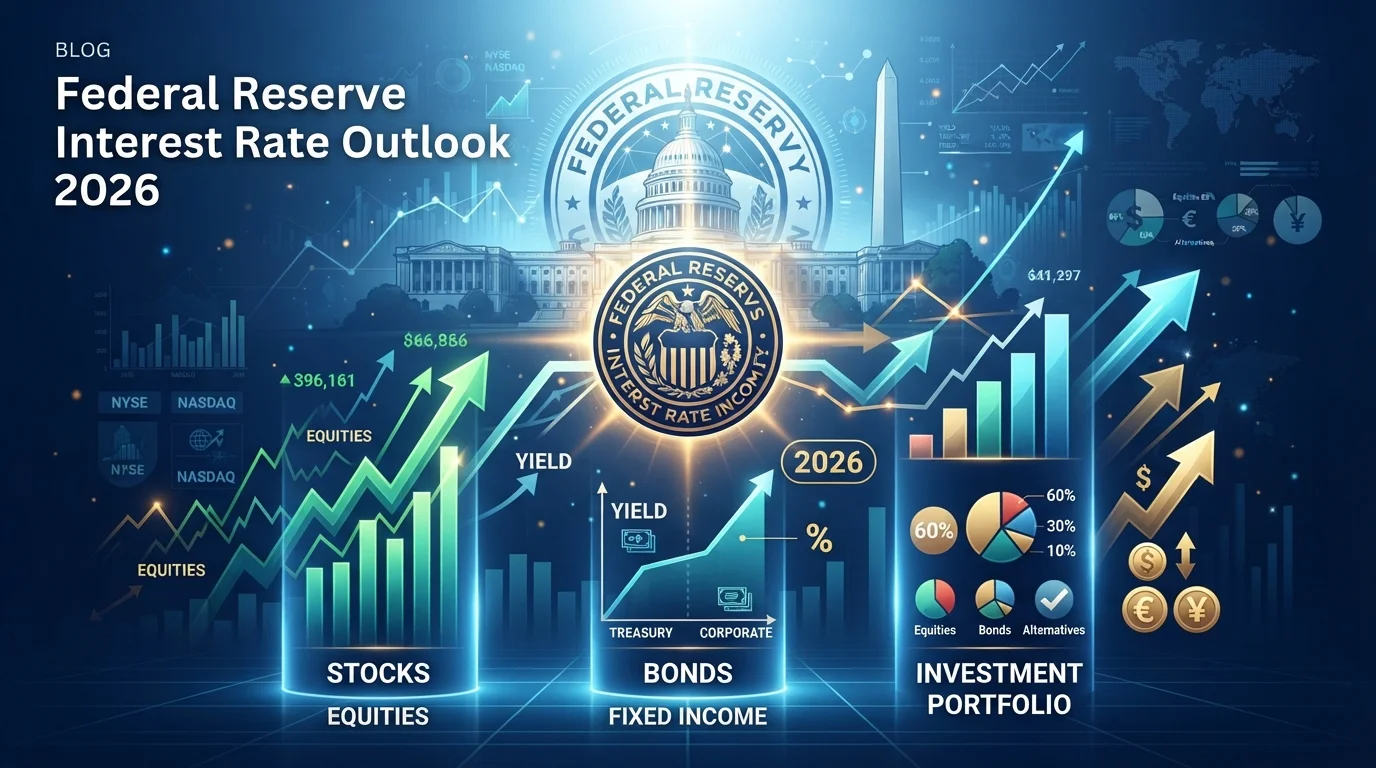
The Federal Reserve's interest rate policy remains the most influential force shaping global financial markets in 2026. After navigating through aggressive rate hikes in previous years to combat inflation, the Fed now faces the delicate challenge of balancing price stability with economic growth. Current market pricing suggests expectations for a measured approach to monetary easing, with potential rate cuts contingent on sustained progress toward the Fed's 2% inflation target and stability in labor market conditions.
Investors should prepare for a data-dependent policy trajectory that could see significant volatility around each Federal Open Market Committee (FOMC) meeting. The interconnected nature of global economies means that Fed decisions will continue to reverberate across equity markets, fixed income yields, currency valuations, and commodity prices. Understanding the Fed's dual mandate and the key economic indicators that drive policy decisions has never been more critical for portfolio positioning.
Understanding the Federal Reserve's Dual Mandate
The Federal Reserve operates under a congressional mandate to promote maximum employment and stable prices. This dual mandate creates inherent tensions in policymaking, as actions to address one objective may conflict with achieving the other. In 2026, the Fed's challenge lies in determining whether inflation has been sufficiently contained to justify lowering borrowing costs without risking a resurgence in price pressures.
The employment component of the mandate has shown resilience despite higher interest rates, with unemployment remaining near historically low levels. However, the Fed remains vigilant about potential cracks in the labor market that could signal broader economic weakness. Meanwhile, inflation metrics have moderated from their 2022 peaks but remain sticky in certain categories, particularly services inflation, which tends to be more responsive to wage growth and less affected by supply chain improvements.
The Role of the Dot Plot
The Summary of Economic Projections, commonly known as the dot plot, provides crucial insights into Fed officials' expectations for the future path of interest rates. These anonymous projections from FOMC members offer investors a roadmap for understanding the central bank's collective thinking. In 2026, analysts are scrutinizing each quarterly update for shifts in the median projection that might signal a change in the policy trajectory.
Market participants should pay particular attention to the dispersion of dots, as wide spreads indicate disagreement among policymakers about the appropriate policy stance. Such disagreements often precede periods of heightened market volatility as investors attempt to determine which faction's view will ultimately prevail. The dot plot also includes projections for GDP growth, unemployment, and inflation, providing a comprehensive picture of the Fed's economic baseline scenario.
Current Economic Indicators Driving Fed Policy
Several key data releases carry disproportionate weight in shaping Fed policy expectations. The Consumer Price Index (CPI) and Personal Consumption Expenditures (PCE) price index serve as the primary inflation gauges, with the latter being the Fed's preferred measure. Monthly releases of these indices routinely trigger significant market movements as traders adjust their rate expectations based on upside or downside surprises.
Employment reports from the Bureau of Labor Statistics, particularly the monthly nonfarm payrolls figure and the unemployment rate, provide crucial insights into labor market health. The Fed has emphasized that it seeks "substantial further progress" toward its employment goals before considering policy normalization complete. Wage growth metrics, including average hourly earnings, help policymakers assess whether labor market tightness is translating into inflationary pressures through increased consumer purchasing power.
The Importance of Core Inflation
While headline inflation captures the overall price level, core inflation—which excludes volatile food and energy prices—provides a clearer signal about underlying inflation trends. The Fed focuses primarily on core PCE inflation when assessing whether price stability has been achieved. In 2026, shelter costs and services inflation remain the primary drivers of core price pressures, while goods inflation has largely normalized following post-pandemic supply chain disruptions.
Housing costs, particularly owners' equivalent rent, tend to lag market developments by several months due to the methodology used in calculating these components. This lag means that even as spot market rents have moderated, the measured contribution of housing to inflation may remain elevated for an extended period. Understanding these measurement dynamics helps investors avoid overreacting to headline numbers that may not reflect current economic realities.
Global Context and International Considerations
The Federal Reserve does not operate in isolation, and global economic conditions significantly influence its policy calculus. Central bank coordination, or the lack thereof, creates spillover effects that can either amplify or dampen the impact of Fed decisions. In 2026, the European Central Bank and Bank of England have pursued their own rate trajectories, creating divergences that impact currency markets and capital flows.
The strength of the U.S. dollar, partly driven by interest rate differentials, affects American export competitiveness and the cost of imported goods. A stronger dollar tends to suppress inflation by making foreign goods cheaper but can also pressure corporate earnings for multinational companies with significant overseas revenue exposure. The Fed must consider these exchange rate effects when calibrating domestic monetary policy.
Emerging Market Vulnerabilities
Higher U.S. interest rates create particular challenges for emerging market economies that have borrowed heavily in dollars. As the Fed maintains elevated rates, the cost of servicing dollar-denominated debt increases for these countries, potentially triggering balance of payments crises or forced austerity measures. The Fed's global mandate considerations extend beyond pure economics to encompass financial stability concerns that could indirectly impact the U.S. economy through trade and financial channels.
Impact on Fixed Income Markets
Bond markets serve as the primary transmission mechanism for Fed policy to the broader economy. Treasury yields across the curve reflect market expectations for the path of short-term rates plus term premiums that compensate investors for interest rate and inflation risk. The shape of the yield curve—specifically the spread between 2-year and 10-year Treasury yields—has historically served as a reliable recession indicator, with inversions preceding most economic downturns.
In 2026, fixed income investors face the challenge of navigating a potential shift in the rate cycle while managing duration risk and credit exposure. Corporate bond spreads reflect market assessments of default probabilities, which tend to widen during periods of economic uncertainty or restrictive monetary policy. Understanding the relationship between Fed policy and credit conditions helps investors identify opportunities in both investment-grade and high-yield bond markets.
The Mortgage Market Connection
Housing represents one of the most interest-rate-sensitive sectors of the economy, with mortgage rates closely tracking movements in Treasury yields. Higher rates have already significantly reduced housing affordability, leading to declines in transaction volumes and cooling home price appreciation in many markets. The Fed's policy decisions directly impact millions of homeowners with adjustable-rate mortgages and influence the housing decisions of prospective buyers.
For investors seeking to automate their trading strategies in fixed income markets, consider using Alphio AI's copy trading feature to mirror successful traders who specialize in bond market analysis.

Equity Market Implications
Stock markets respond to Fed policy through multiple channels, including discount rate effects on valuation multiples, borrowing cost impacts on corporate profitability, and economic growth implications for revenue expansion. Technology and growth stocks, whose valuations depend heavily on distant future cash flows, tend to be most sensitive to changes in the rate outlook. Conversely, financial stocks often benefit from higher rates through improved net interest margins, though this benefit can be offset by recession concerns.
Sector rotation dynamics accelerate during periods of Fed policy transition as investors reposition portfolios based on shifting relative attractiveness. Defensive sectors such as utilities, consumer staples, and healthcare typically outperform during late-cycle environments when recession risks rise. Cyclical sectors, including industrials, materials, and energy, tend to lead during early-cycle recovery phases when the Fed begins easing policy.
Small-Cap vs. Large-Cap Dynamics
Small-capitalization stocks generally exhibit higher sensitivity to domestic economic conditions and interest rate changes than their large-cap counterparts. These companies typically carry more floating-rate debt and have less diversified revenue streams, making them more vulnerable to borrowing cost increases and economic slowdowns. However, small-caps also tend to outperform during periods of Fed easing as lower rates reduce debt service burdens and stimulate domestic demand.
Large-cap multinational companies, while less directly exposed to domestic rate cycles, face their own challenges from currency fluctuations and global growth dynamics. The relative performance of small-cap versus large-cap indices provides valuable insights into market expectations for domestic economic strength and the trajectory of Fed policy.
Currency Market Effects
Foreign exchange markets provide perhaps the most direct and immediate reflection of shifting interest rate expectations. The dollar's value against major currencies like the euro, yen, and pound largely reflects relative interest rate differentials and growth outlooks. When the Fed maintains rates above those of other major central banks, the dollar typically strengthens as investors seek higher yields on dollar-denominated assets.
Currency movements create winners and losers across the economy. Exporters face headwinds from a stronger dollar, while importers benefit from lower costs for foreign goods and services. Multinational corporations must navigate complex hedging decisions to manage currency risk in their global operations. For investors with international diversification, currency effects can significantly impact returns when converted back to dollars.
Carry Trade Dynamics
Interest rate differentials between countries fuel carry trades, where investors borrow in low-yielding currencies to invest in higher-yielding assets. These trades can amplify currency movements and create feedback loops that extend beyond fundamental economic factors. When the Fed shifts policy direction, unwinding of carry trades can generate significant volatility in currency markets and spill over into other asset classes.
For sophisticated traders looking to capitalize on currency market movements, Alphio AI's agentic trading capabilities can automate portfolio management with AI-powered strategies that respond to Fed policy shifts.

Commodity Market Responses
Commodity prices respond to Fed policy through both demand-side and supply-side channels. On the demand side, higher interest rates tend to slow economic activity, reducing consumption of raw materials and energy. On the supply side, the cost of financing inventory and production increases with higher rates, potentially constraining supply and supporting prices. The net effect depends on the relative strength of these competing forces and commodity-specific supply dynamics.
Gold occupies a unique position in the commodity complex as a non-yielding asset that competes with interest-bearing investments for portfolio allocation. Higher real interest rates typically pressure gold prices by increasing the opportunity cost of holding the metal. Conversely, expectations for Fed easing or concerns about currency debasement can drive demand for gold as a store of value and inflation hedge.
Energy Market Considerations
Oil and natural gas prices reflect a complex interplay of geopolitical factors, production decisions by major exporters, and global demand conditions. While Fed policy influences demand through its impact on economic growth, supply-side factors often dominate short-term price movements. The transition to renewable energy sources creates structural headwinds for fossil fuel demand over longer time horizons, though this transition plays out over decades rather than quarters.
Investment Strategies for the Current Environment
Navigating Fed policy uncertainty requires a flexible approach that can adapt to changing market conditions. Diversification across asset classes, sectors, and geographies remains the foundation of sound portfolio construction. However, within this diversified framework, investors should consider tactical adjustments based on the prevailing rate environment and economic cycle positioning.
Duration management in fixed income portfolios allows investors to adjust sensitivity to interest rate changes based on their outlook for Fed policy. Shortening duration reduces volatility when rates are rising or expected to rise, while extending duration captures income and potential capital appreciation when rates fall. Laddering bond maturities provides a mechanical approach to duration management that removes the need to time rate movements precisely.
Active vs. Passive Considerations
Periods of Fed policy transition often create dispersion in security returns that favors active management over passive indexing. Skilled managers can identify mispriced securities and sector opportunities that index funds must ignore in their quest to match benchmark returns. However, active management introduces manager selection risk and typically entails higher costs that must be justified by outperformance.
For investors seeking to automate their trading strategies without sacrificing sophistication, Alphio AI's automation features enable conditional workflows that execute trades based on predefined rules and market conditions.

Risk Management in Uncertain Times
Uncertainty surrounding Fed policy creates both risks and opportunities for investors. Effective risk management begins with understanding one's investment time horizon, liquidity needs, and risk tolerance. Short-term traders may embrace volatility as a source of profit opportunities, while long-term investors should focus on maintaining strategic asset allocation through market fluctuations.
Position sizing and stop-loss disciplines help limit downside exposure when trades move against expectations. Hedging strategies using options, futures, or inverse ETFs can provide insurance against adverse market movements, though these protections come at a cost that erodes returns over time. The appropriate level of hedging depends on the investor's specific circumstances and market outlook.
The Importance of Liquidity
Maintaining adequate liquidity provides flexibility to take advantage of market dislocations without being forced to sell assets at depressed prices. Cash and cash equivalents also serve as a volatility dampener in portfolios, reducing overall risk while preserving optionality for future investment opportunities. The opportunity cost of holding cash varies with the level of interest rates, making cash management decisions particularly relevant in the current environment.
Conclusion
The Federal Reserve's interest rate policy will continue to dominate market narratives and drive asset price movements throughout 2026. Investors who understand the Fed's mandate, follow key economic indicators, and maintain flexibility in their portfolios will be best positioned to navigate the uncertainty ahead. While the precise timing and magnitude of rate changes remain uncertain, the direction of policy normalization appears increasingly likely as inflation moderates and economic growth stabilizes.
Successful investing in this environment requires balancing the risks of acting too early against the costs of reacting too late. Those who maintain disciplined approaches, diversify across asset classes, and remain alert to changing conditions will find opportunities even in challenging markets. The key is to remain data-dependent in your own decision-making, just as the Fed remains data-dependent in setting policy.
For investors looking to streamline their trading experience and execute trades via natural language commands, Alphio AI's conversational trading platform offers an intuitive interface that simplifies complex trading operations.
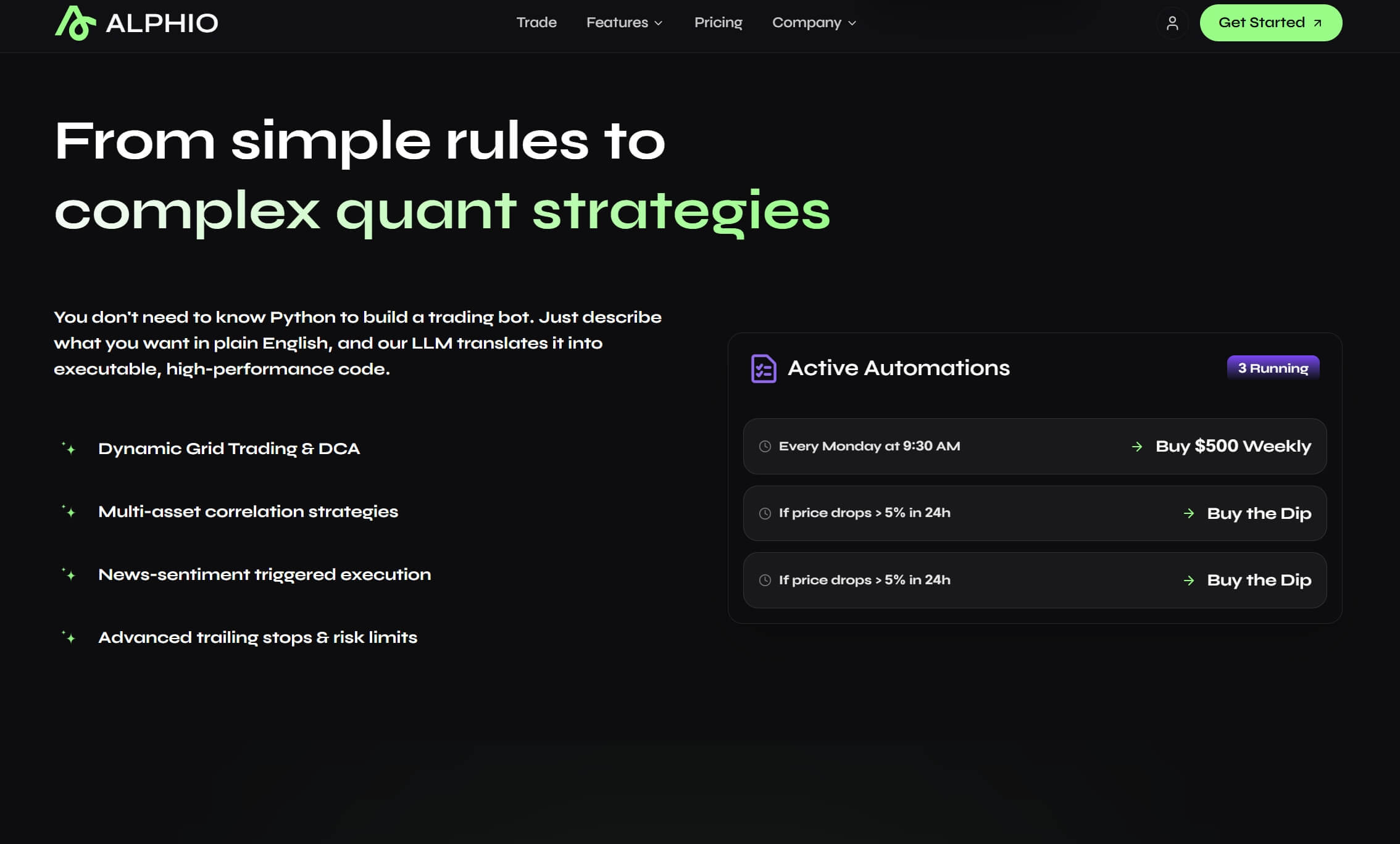
Additionally, explore Alphio AI's copy trading feature to mirror the strategies of successful traders and smart money wallets, or leverage agentic trading to automate your portfolio management with cutting-edge AI technology.
FAQs
What is the Federal Reserve's dual mandate?
The Federal Reserve's dual mandate refers to its congressional directive to pursue two main objectives: maximum employment and stable prices. This means the Fed aims to keep unemployment low while maintaining inflation around its 2% target. Balancing these sometimes conflicting goals requires careful calibration of interest rate policy based on prevailing economic conditions.
How do Fed interest rate decisions affect the stock market?
Fed interest rate decisions impact stocks through multiple channels. Higher rates increase borrowing costs for companies, potentially reducing profitability and expansion plans. They also raise discount rates used to value future cash flows, particularly affecting growth stocks with distant earnings. Additionally, higher rates make fixed income investments more attractive relative to equities, potentially shifting investor allocations away from stocks.
What economic indicators does the Fed focus on most?
The Fed primarily focuses on inflation metrics (particularly the Core PCE price index), employment data (nonfarm payrolls and unemployment rate), and wage growth indicators. The central bank also monitors GDP growth, consumer spending, housing market activity, and financial conditions more broadly. These indicators help policymakers assess progress toward their dual mandate objectives.
How can investors protect their portfolios from Fed policy uncertainty?
Investors can manage Fed-related uncertainty through diversification across asset classes, careful duration management in bond portfolios, and maintaining adequate liquidity. Tactical adjustments to sector allocations based on the interest rate cycle, hedging strategies using options or futures, and maintaining a long-term perspective through market volatility are also effective approaches.
What is the dot plot and why does it matter?
The dot plot is the Federal Reserve's Summary of Economic Projections, showing where each FOMC member expects interest rates to be in the future. It matters because it provides insight into the central bank's collective thinking and potential policy trajectory. Markets closely watch changes in the median dot for signals about the timing and magnitude of future rate moves.
Related articles
- How to Rebalance a Concentrated Stock Portfolio in 2026: Mag7 Drift, Tax-Aware Trims, and Practical Rebalance a concentrated stock portfolio in 2026: Mag7 drift risk, 5pp bands, tax-aware trims, RSP/IWM diversifiers, and single-name caps.
- Small Cap Stocks Investing Guide 2026: Russell 2000, Fed Hikes, and the Financing TradeSmall-cap stocks investing guide 2026: Russell 2000 vs S&P, IWM rate sensitivity, floating-rate debt, Fed hikes, valuation discounts, and a practical checklist.
- Santa Claus Rally and the Year-End Stock Market: Investor Guide for Late 2026Santa Claus rally explained: 7-day window stats since 1950, Nov–Dec seasonality, post-midterm 2026 setup, and a risk-managed year-end investing playbook.
- NVIDIA Earnings & Jackson Hole: Two Market-Shaking Events Collide in Late August 2026NVIDIA reports record Q2 2026 earnings as Fed Chair Warsh signals rate hikes at Jackson Hole. Analysis of AI chip demand, Blackwell ramp, and monetary policy impact.
- Crude Oil Price Forecast August 2026: Supply Constraints Drive Brent Toward $85-86 TargetExpert analysis of crude oil price forecast for August 2026. Discover Brent oil targets, supply-demand dynamics, and top energy stocks to watch including XOM and CVX.
- Nvidia Earnings August 2026: $89B Data Center Revenue Signals AI Boom ContinuesNvidia's Q2 FY2027 earnings beat expectations with $89B data center revenue. Analysis of NVDA stock outlook, AI chip demand, and investment strategy for August 2026.