

AI Stocks Correction: How to Invest After the November 2026 Tech Selloff
The Nasdaq slid into correction as AI and chip stocks plunged in November 2026. Learn what drove the selloff, how valuations compare, and how to invest now.

Key Takeaway
The AI trade that carried the stock market for three years just had its roughest stretch of 2026. On Thursday, November 5, the Nasdaq Composite fell 5.5% to 24,315.00 and the S&P 500 dropped 4.4% to 7,353.73, the worst day for the S&P 500 since the April 2025 "Liberation Day" tariff shock, according to the Associated Press. AP noted that the Nasdaq closed 11.9% below the record it set in October, putting the tech-heavy index firmly in correction territory. Nvidia fell 9.3% that day and AMD dropped 17.3%, as worries about slower data-center construction, expensive borrowing and possible political pushback after the Democratic midterm sweep piled on top of each other.
Then the market did what corrections often do: it bounced hard. On Monday, November 9, the S&P 500 rose 2.3% to 7,549.94 and the Nasdaq Composite gained 2.7% to 25,253.14, according to AP closing data, helped by a sharp drop in oil prices and a rebound in chip stocks. That whipsaw is the defining feature of an AI stocks correction. The long-term story about artificial intelligence spending has not disappeared, but the market is now demanding proof that hundreds of billions of dollars in capital spending will turn into profits.
This guide explains what actually triggered the selloff, how today's valuations compare with past tech busts, which parts of the AI ecosystem carry the most risk, and how to build a rules-based plan instead of guessing the bottom. All market data is as of the close on Monday, November 9, 2026 (America/New_York), unless otherwise noted. Nothing here is a forecast or a recommendation to buy or sell any security.
What Triggered the November 2026 AI Stocks Correction
Doubts about the return on AI spending
The first crack was not political at all. According to Reuters, third-quarter results from Alphabet and Meta in late October failed to reassure investors about the returns on their enormous AI budgets, and the Nasdaq lost more than $2.5 trillion in market value during October. Reuters also highlighted that several large technology companies are now borrowing in debt markets to fund data centers, chips and power infrastructure. When the biggest spenders shift from paying for AI out of free cash flow to financing it with bonds, investors naturally start asking harder questions about payback periods.
That is a meaningful change in tone. For most of 2024 and 2025, every increase in capital spending guidance was greeted as good news for the suppliers of chips, networking gear and electricity. In the autumn of 2026, the same headlines started to be read as a cost problem for the spenders and as a concentration risk for the suppliers, who depend on a handful of very large customers.
The midterm and regulation overlay
The second layer came from Washington. Democrats won control of both chambers of Congress in the November 3 midterms, according to AP projections, and Reuters reported that investors began weighing greater scrutiny of the AI infrastructure buildout. AP added that voters have grown wary of AI and of rising power bills, and that some investors worried governments could pressure or pause data-center construction. None of those risks has turned into legislation yet, and the new Congress will not be seated until January, but markets price possibilities long before bills pass.
Wells Fargo Investment Institute strategist Sameer Samana told Reuters the shift to single-party control of Congress "can also represent quite a bit of uncertainty." For a sector priced on long-dated growth, uncertainty about permitting, power pricing and data-center rules translates directly into a higher discount rate.
Rates, oil and a crowded trade
The third ingredient was the macro backdrop. AP reported that the 10-year Treasury yield stood at 4.84% on November 5, still elevated after a volatile autumn, and that Brent crude traded near $98 a barrel amid the Iran conflict. Expensive money makes it harder to finance multi-year data-center projects, and high energy prices raise the operating cost of running them. Add a trade that had become extremely crowded after Nvidia's gains of roughly 39%, 171% and 239% over the prior three calendar years, as AP tallied, and it did not take much to tip the market into forced selling.
Correction, Bear Market or Bubble Bursting?
Getting the definitions right
A correction is conventionally defined as a decline of at least 10% from a recent closing high, and a bear market as a decline of at least 20%. Reuters put the Nasdaq Composite's record close at 27,599.89 on October 6. At the November 9 close of 25,253.14, the index was roughly 8.5% below that peak, which means Monday's rally lifted it back out of the 10% zone. Investors should not read too much into that line in the sand: a few volatile sessions can push the index back and forth across it, and the label matters far less than the underlying earnings trend.
Why 2026 is not a replay of 2000
The obvious comparison is the dot-com bust, when the Nasdaq Composite lost close to 78% of its value between March 2000 and October 2002. The difference today shows up in valuations and in profits. FactSet reported that the S&P 500 traded at a forward 12-month price-to-earnings ratio of 17.7 on November 5, 2026, below its five-year average of 19.8 and its ten-year average of 19.1, and the lowest reading in more than three years. Much of that compression came because earnings estimates have run far ahead of prices: FactSet calculated that the index price had risen about 7.4% year to date while forward 12-month earnings estimates had climbed about 33.6%.
In 2000, many of the most popular internet companies had little or no revenue to support their valuations. In 2026, the largest AI spenders are among the most profitable companies in the world, and FactSet reported that 84% of S&P 500 companies reporting third-quarter results through November 6 had beaten earnings estimates, above the ten-year average of 77%. That does not make stocks immune to a deeper decline, but it changes the nature of the risk from "no earnings at all" to "earnings that might disappoint very high expectations."
What 2022 teaches about duration risk
A more useful template may be 2022, when the Nasdaq Composite fell about 33% for the full year as the Federal Reserve raised rates aggressively. Companies with strong profits still saw their share prices fall because investors applied a higher discount rate to distant cash flows. With a December 8–9 Fed meeting ahead where a rate hike is being debated, that mechanism is very much alive. An AI stocks correction driven by rates can hurt high-quality companies alongside weaker ones, which is exactly when disciplined investors find opportunities, but only if they can tolerate further volatility first.
The AI Capex Cycle Behind the Selloff
How much the hyperscalers are spending
The scale of the buildout explains why the market is so sensitive to every comment from the largest cloud providers. Based on their third-quarter reports, as summarized by CNBC and company statements, Amazon expects 2026 cash capital expenditures of approximately $220 billion, Alphabet held its 2026 range at $195 billion to $205 billion, and Microsoft projects calendar-2026 capital spending of about $170 billion, slightly lower than before because of delays in third-party data-center capacity. Amazon chief executive Andy Jassy said the company expects to spend meaningfully more in 2027, and Alphabet's finance chief signaled a significant increase next year as well.
Why spending guidance cuts both ways
For chipmakers, memory producers, networking vendors and power equipment suppliers, those budgets are revenue. For the hyperscalers themselves, they are cost, depreciation and, increasingly, debt. That tension is why the same capex headline can lift Nvidia and pressure Alphabet on the same day, or vice versa. Microsoft's slight trim tied to capacity delays shows another nuance: physical constraints such as power hookups and construction timelines can slow spending even when demand is strong, which pushes revenue for suppliers into later quarters.
The Nvidia earnings test on November 17
The next major checkpoint is Nvidia's fiscal third-quarter report. The company has scheduled its results for Tuesday, November 17, 2026, with a conference call at 5 p.m. ET, covering the quarter that ended October 25. Investors will focus on data-center revenue, gross margins, the outlook for the next quarter and any commentary about customer concentration and export restrictions. Nvidia also enters the report with an unusual distraction: its board said on November 8 that independent directors would review reports concerning chief executive Jensen Huang, and the stock fell about 4% on November 9 even as other chip stocks rallied.
Which AI Stocks Carry the Most Risk
Chip designers and the semiconductor complex
Semiconductors were the epicenter of the November 5 selloff. AMD's 17.3% drop and Nvidia's 9.3% slide show how violently high-expectation stocks can reprice when the narrative wobbles, and AMD's rebound of more than 13% on November 9 shows how quickly that can reverse. Investors who own the semiconductor group, whether directly or through a sector ETF, should expect daily moves several times larger than the broad market during this phase. Position size, not stock selection, is usually what determines whether an investor can hold through that volatility.
Neoclouds, power and AI infrastructure plays
Further out on the risk curve are the companies whose entire business depends on continued data-center growth. AP reported that GPU cloud provider CoreWeave fell 9.8% and power equipment maker GE Vernova dropped 7.5% on November 5. These businesses can grow very fast when capacity is scarce, but many carry heavy debt or customer concentration, and they are the most exposed to any slowdown in hyperscaler orders or any new restrictions on data-center construction. Investors should treat them as satellite positions rather than core holdings.
Platform giants with diversified cash flows
At the other end are the platform companies that fund AI out of large, diversified businesses in advertising, cloud, software and retail. These stocks fell too, but they have multiple ways to earn a return on AI, including selling capacity to others, embedding AI into existing products and cutting their own costs. For investors who want AI exposure with a margin of safety, the question to ask is whether the core business still grows if AI monetization takes longer than expected. Microsoft's valuation relative to its own history is a useful reference point for that debate.
How to Invest During an AI Stocks Correction
Start with your allocation, not the headlines
The first step is unglamorous: measure how much of your portfolio is already tied to AI. Many investors who think they are diversified own an S&P 500 index fund, a Nasdaq-100 fund and a handful of mega-cap tech stocks, which together can concentrate a large share of their wealth in the same few companies. Decide what maximum percentage you are comfortable holding in AI-linked stocks across all accounts, write it down, and use the correction to rebalance toward that target rather than reacting to each day's move.
Buy in stages instead of guessing the bottom
Trying to call the exact low of a correction is a losing game, and the November 5 and November 9 sessions illustrate why: a 5.5% drop and a 2.7% rally arrived within three trading days of each other. A staged approach, such as committing a fixed amount on a set schedule or adding in thirds at predetermined price levels, removes the pressure to be right on any single day. It also forces you to keep cash available if the decline deepens, which is the scenario in which a correction becomes a genuine opportunity.
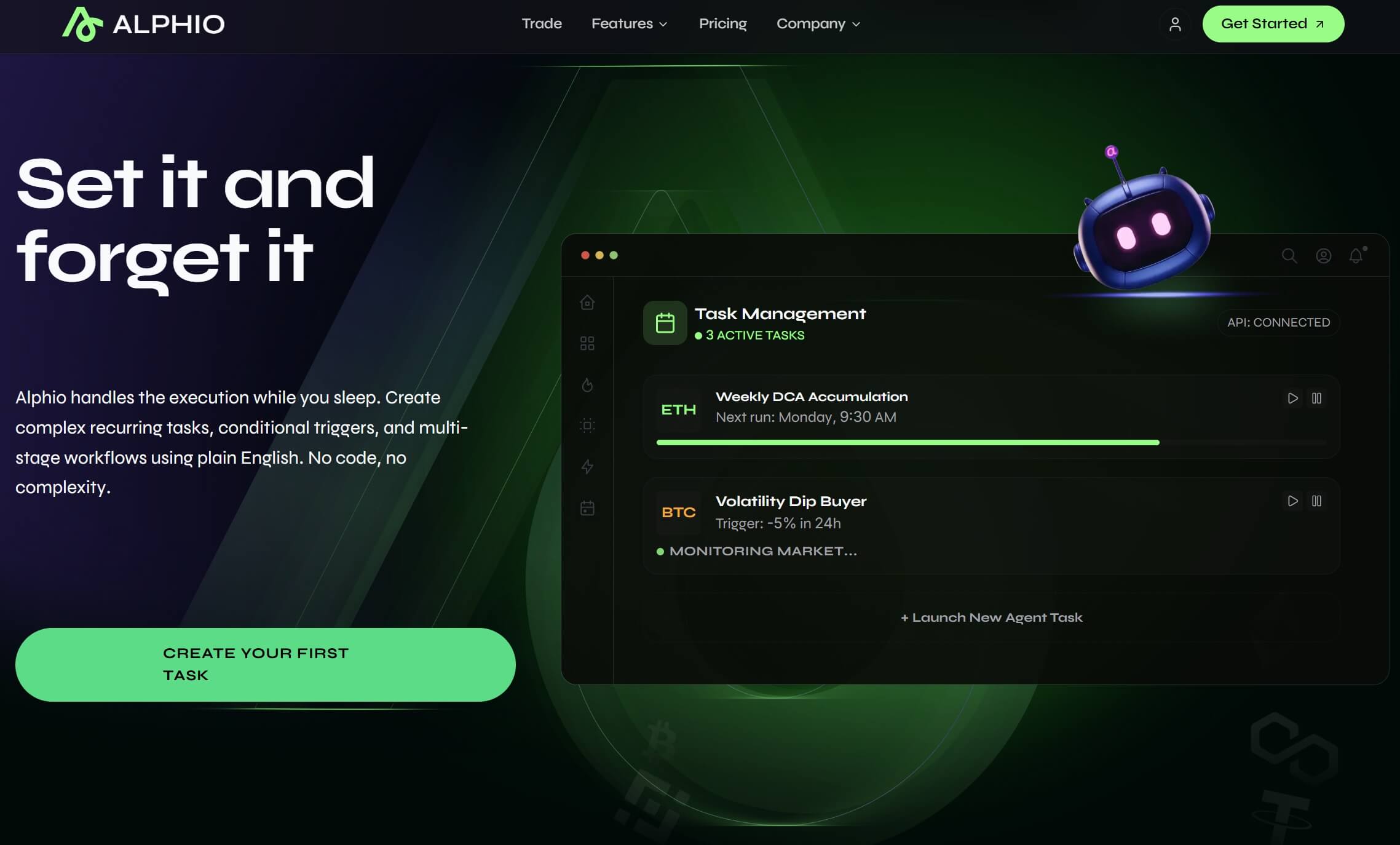
Investors who struggle to follow a schedule can automate it. Alphio's Scheduled Task feature lets you set recurring checks on prices, valuation levels or portfolio weights so your plan runs on a calendar instead of on emotion.
Separate quality from momentum
Corrections tend to punish everything that rose together, but recoveries are usually more selective. Before adding to an AI name, check a few fundamentals: whether revenue growth is accelerating or slowing, whether free cash flow covers capital spending, how much debt the company carries, and how concentrated its customer base is. Analyst sentiment can be a useful cross-check, but it often lags price moves in both directions, so treat ratings as one input rather than a signal.
Risk Management Rules for Volatile Tech Markets
Size positions for the drawdown you can survive
A practical rule is to size each position so that a 30% to 50% decline in that stock would not force you to change your life plans or sell other holdings in a panic. Individual AI stocks have historically been capable of drawdowns of that magnitude even in strong long-term uptrends, as Nvidia's own history shows. Smaller positions make it psychologically possible to hold through volatility, which is often the difference between capturing a recovery and selling at the low.
Define exit and review triggers in advance
Before buying, note the specific developments that would change your thesis: a guidance cut from a key customer, a sharp drop in gross margins, new restrictions on data-center construction, or a balance sheet that deteriorates. Review those triggers after each earnings report rather than after every price swing. Price-based stop-losses can help some traders, but in a market that gaps 5% overnight they may execute far from the intended level, so many long-term investors prefer thesis-based reviews.
Watch correlation inside your portfolio
During the November selloff, chipmakers, power suppliers, cloud platforms and AI software names all fell together. That is a reminder that holding ten AI stocks is not the same as holding ten independent bets. Pairing AI exposure with assets that respond differently to rates, energy prices and the economic cycle, such as short-term Treasuries, dividend-paying value stocks or small caps, can smooth the ride. On November 9, for example, AP data showed the Russell 2000 gaining roughly 3%, a sign that market leadership can broaden when oil and rates ease.
The Catalysts to Watch Through Year-End
Earnings and guidance
Nvidia's November 17 report is the single most important event for AI sentiment in the near term, followed by commentary from other chip and infrastructure suppliers as the third-quarter season wraps up. Investors should listen for order visibility into 2027, pricing trends and any signs that customers are pausing or stretching out purchases.
The Fed, yields and oil
The Federal Reserve's December 8–9 meeting is the main macro event, and a rate hike would be a headwind for long-duration growth stocks. Oil also matters more than usual: falling crude prices helped spark the November 9 rally, while a renewed spike linked to the Iran conflict would add to inflation pressure and borrowing costs. Watching the 10-year Treasury yield alongside oil gives a quick read on the discount-rate pressure facing AI stocks.
Policy signals from the new Congress
Finally, track concrete policy proposals rather than speculation. Data-center permitting, utility rate rules, chip export controls and AI safety legislation could all affect the sector, but the timing and details will only become clear after the new Congress takes office in January 2027. Until then, headlines are likely to move stocks more than actual rule changes.
Investors who want to explore ideas or check positions quickly can use Conversational Trading to ask plain-language questions about prices, news and portfolio exposure before making any decision.
Conclusion
The November 2026 AI stocks correction is a reminder that even the strongest investment themes go through painful repricings. The selloff was driven by a combination of doubts about the return on record AI capital spending, political uncertainty after the midterms, elevated rates and oil prices, and a crowded trade, while the sharp November 9 rebound showed how quickly sentiment can swing. Unlike 2000, the market enters this phase with a forward P/E below its five-year average and earnings estimates that have risen faster than prices this year, according to FactSet. That is a cushion, not a guarantee.
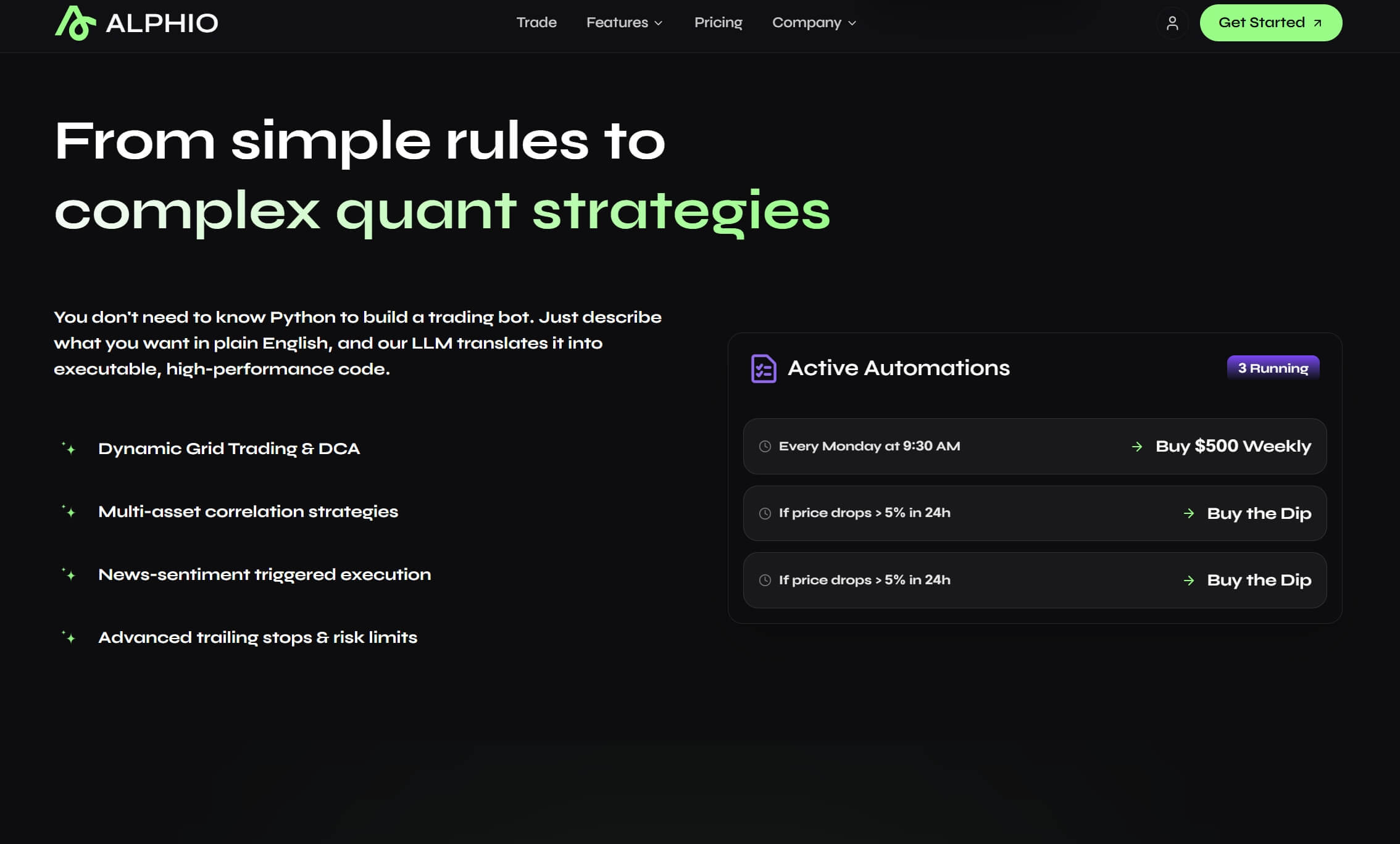
The investors most likely to come through this period well are the ones who decide their AI allocation in advance, add in stages, favor companies whose cash flows can fund their ambitions, and judge holdings on fundamentals after each earnings report rather than on daily swings. If you want help turning that plan into consistent action, Alphio's Scheduled Task can keep your reviews on schedule, Copy Trade lets you study how experienced investors are positioning, and Autonomous Trading can execute rules you have already defined. As always, set your risk limits first and remember that no tool can guarantee returns.
FAQs
Are AI stocks in a correction in November 2026?
The Nasdaq Composite closed 11.9% below its October record on November 5, 2026, according to AP, which met the 10% correction threshold. A 2.7% rally on November 9 lifted it to about 8.5% below the October 6 record close of 27,599.89, so the index has been moving back and forth around that line.
What caused the AI stock selloff?
Reuters and AP pointed to doubts about returns on record AI capital spending, rising use of debt to fund data centers, and uncertainty about data-center rules after Democrats won Congress. Elevated Treasury yields, high oil prices and a crowded trade amplified the decline.
Is the AI selloff like the 2000 dot-com crash?
There are important differences. FactSet reported the S&P 500's forward P/E at 17.7 on November 5, 2026, below its five- and ten-year averages, and the largest AI spenders are highly profitable. That lowers but does not remove the risk of a deeper decline.
Should I buy AI stocks during the correction?
That depends on your goals, time horizon and existing exposure, and this article is not personal advice. Many investors set a maximum AI allocation, add in stages on a schedule, and favor companies whose cash flow covers their capital spending.
What are the next catalysts for AI stocks?
Nvidia reports fiscal third-quarter results on November 17, 2026, and the Federal Reserve meets December 8–9 with a possible rate hike under discussion. Oil prices, the 10-year Treasury yield and policy signals from the new Congress also matter.
Related articles
- How to Invest in Gold in 2026: A Guide After the Price Pullback and Fed Hike FearsGold fell about 30% from its January 2026 record as Fed hike odds rose. Learn what drives gold, ETFs vs miners, taxes, and a rules-based plan to invest in gold.
- Treasury Yields and the Stock Market: What a Near-5% 10-Year Yield Means for Investors in 2026The 10-year Treasury yield hit 5.31% in October 2026 before easing to 4.88%. Learn how Treasury yields affect stocks, which sectors react and how to plan.
- CPI Report and the Stock Market: How to Read October 2026 Inflation Data Before the Fed DecidesOctober 2026 CPI lands Nov 10 with no year-over-year number and Fed hike odds near 80%. Learn how to read CPI, which stocks react, and how to plan for it.
- Fed Rate Cut Impact on Stock Market 2026: What Investors Need to KnowAnalyzing how the Federal Reserve's potential rate cuts could impact stock markets in August 2026. Key sectors to watch and investment strategies for investors.
- US Job Market Report August 2026: Sudden Employment Stall Sends Shockwaves Through MarketsUS employers unexpectedly cut 23,000 jobs in July 2026, with unemployment at 4.1%. Analyze the market impact, Fed policy implications, and investment strategies.
- NVIDIA Stock Analysis 2026: Navigating the AI RevolutionComprehensive NVIDIA stock analysis for 2026. Explore AI investment trends, data center growth, competitive positioning, and price targets for NVDA stock.