
B
Bull
Bull · 25%CVX
$172.89
Scenario price
$212.450
+1.508 (+0.71%)At close
Chevron Corporation is an integrated energy company. The Company produces crude oil and natural gas; manufactures transportation fuels, lubricants, petrochemicals and additives; and develops technologies that enhance its business and industry. The Company’s segments include Upstream and Downstream. Upstream operations consist primarily of exploring for, developing, producing and transporting crude oil and natural gas; liquefaction, transportation and regasification associated with LNG; transporting crude oil by major international oil export pipelines; processing, transporting, storage and marketing of natural gas; carbon capture and storage; and a gas-to-liquids plant. Downstream operations consist primarily of the refining of crude oil into petroleum products; marketing crude oil, refined products, and lubricants; manufacturing and marketing of renewable fuels, and transporting of crude oil and refined products by pipeline, marine vessel, motor equipment and rail car.
Chevron Corp (CVX) is currently trading at $212.45, with a forward P/E ratio of 15.95, suggesting it is fairly valued compared to its earnings potential. The stock has shown a year-to-date change of +36.27%, indicating strong performance over the year. However, the RSI is at 53.68, indicating that the stock is neither overbought nor oversold, suggesting caution. The main risk is the recent insider activity where Berkshire Hathaway reduced its stake by approximately 35%, reflecting a cautious stance on oil prices. Therefore, while the stock has potential, the mixed analyst ratings and insider activity suggest holding rather than buying at this time.
Barclays
$248
2026-11-13
Barclays
2026-11-13
Price Target
$248
Bernstein
$233
2026-11-12
Bernstein
2026-11-12
Price Target
$233
DZ Bank
$240
2026-11-03
DZ Bank
2026-11-03
Price Target
$240
UBS
$265
2026-11-02
UBS
2026-11-02
Price Target
$265
Morgan Stanley
$230
2026-11-02
Morgan Stanley
2026-11-02
Price Target
$230
Scenario prices are the last monthly forecast band of the current year. Probabilities are fixed model weights (25 / 50 / 25), not guarantees.
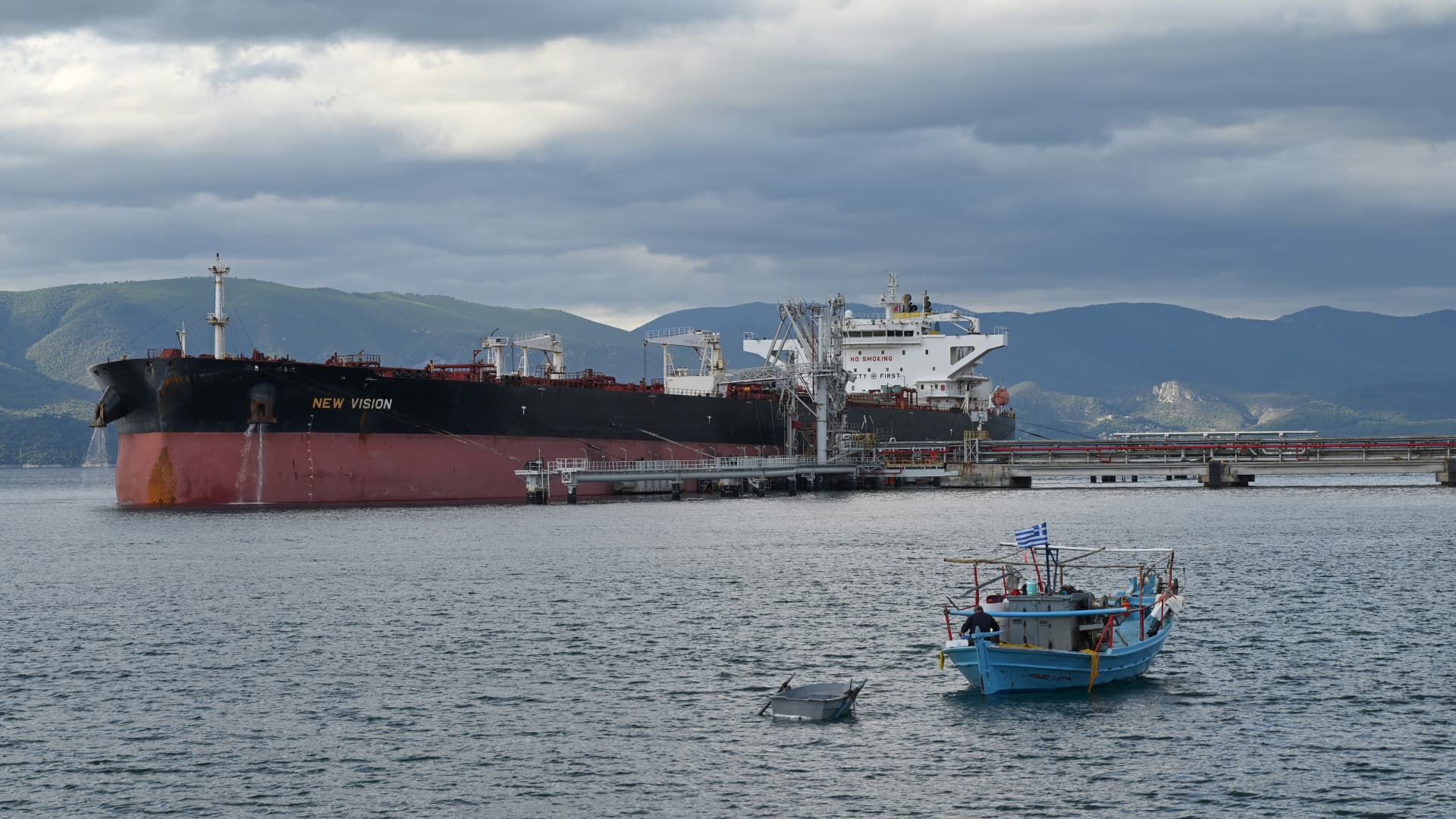
Middle East Crude Exports Rebound, Market Faces Surplus

Berkshire Cuts Chevron Stake While Holding Occidental: Implications for Oil Prices
Latin America's Mineral Resources Boost AI Development
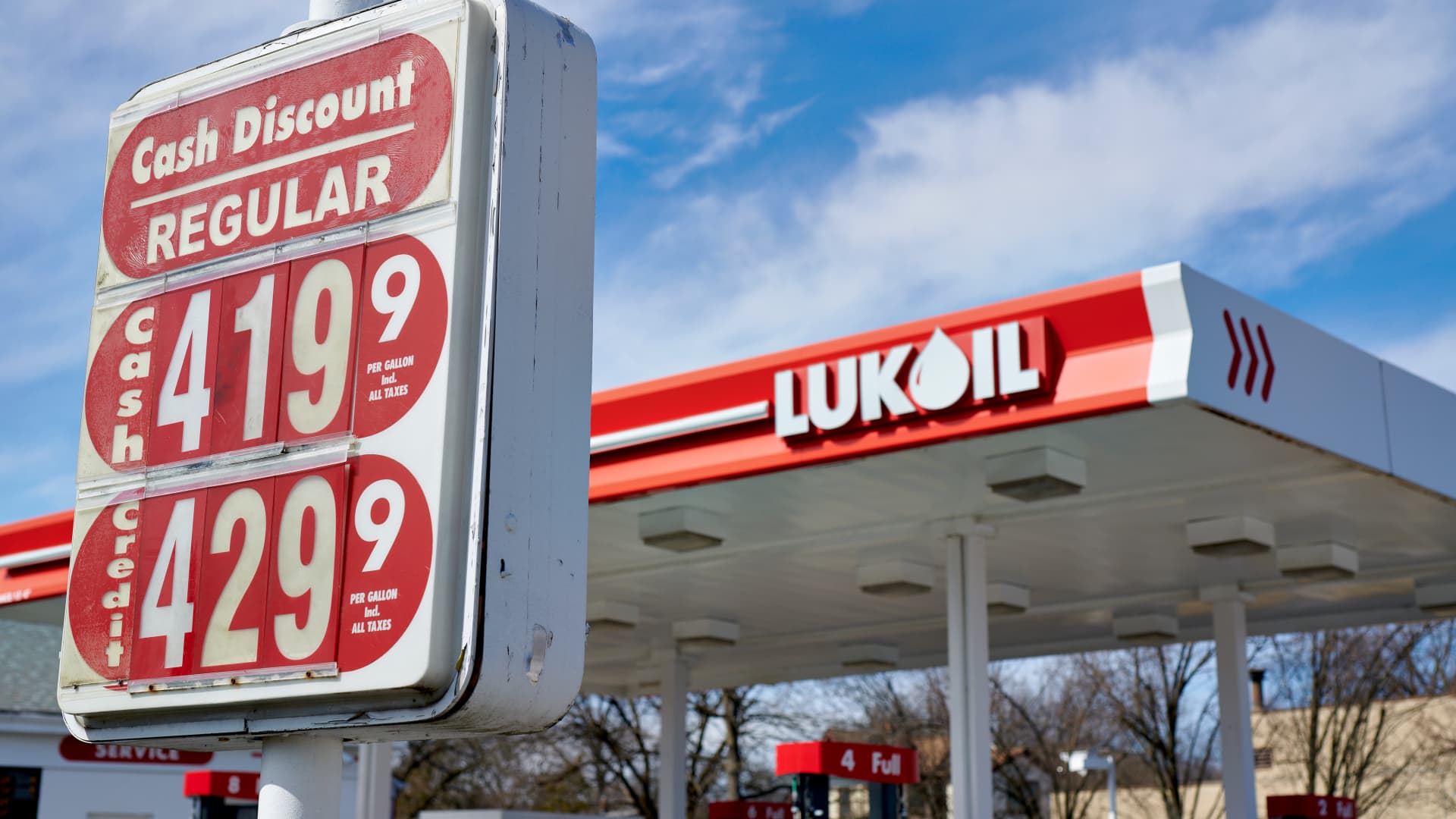
Todd Boehly-Led Group Acquires Lukoil's International Assets

Three High-Yield Stocks That Thrived During Last Market Crash
Chevron Corporation is an integrated energy company. The Company produces crude oil and natural gas; manufactures transportation fuels, lubricants, petrochemicals and additives; and develops technologies that enhance its business and industry. The Company’s segments include Upstream and Downstream. Upstream operations consist primarily of exploring for, developing, producing and transporting crude oil and natural gas; liquefaction, transportation and regasification associated with LNG; transporting crude oil by major international oil export pipelines; processing, transporting, storage and marketing of natural gas; carbon capture and storage; and a gas-to-liquids plant. Downstream operations consist primarily of the refining of crude oil into petroleum products; marketing crude oil, refined products, and lubricants; manufacturing and marketing of renewable fuels, and transporting of crude oil and refined products by pipeline, marine vessel, motor equipment and rail car. It operates in the Energy sector (PETROLEUM REFINING industry).
Chevron Corp (CVX) is currently trading at $212.45, with a forward P/E ratio of 15.95, suggesting it is fairly valued compared to its earnings potential. The stock has shown a year-to-date change of +36.27%, indicating strong performance over the year. However, the RSI is at 53.68, indicating that the stock is neither overbought nor oversold, suggesting caution. The main risk is the recent insider activity where Berkshire Hathaway reduced its stake by approximately 35%, reflecting a cautious stance on oil prices. Therefore, while the stock has potential, the mixed analyst ratings and insider activity suggest holding rather than buying at this time.
24 analysts cover CVX: 16 rate it Buy, 7 Hold and 1 Sell. The average price target is 176.95.

💸 Rubio says Venezuela's external debt exceeds $200 billion: What does this mean for P2P? US Secretary of State Marco Rubio estimates that Venezuela's external debt exceeds $200 billion and notes that this is a major obstacle to investment. For the P2P market and USDT users, this figure is not out of reach: it affects exchange rate expectations, spreads, and liquidity. 🔹 Key data • External debt: more than $200 billion (defaulted bonds, bilateral loans, supplier debt, and PDVSA liabilities) • No comprehensive restructuring for years, and it keeps growing due to accrued interest • BCV net international reserves: about $3.6 billion (Ecoanalítica, October 30 to November 5, 2026) • Mobile payments: from $60 million in April 2026 to $300 million in September • BCV allocated $220 million through the foreign exchange trading window in October 2026 • Parallel market: 350 to 400 bolivars per dollar, while the official rate is 227.86 bolivars (60% higher) 🔹 The spread is a barometer The P2P market is a barometer of political and economic uncertainty. When uncertainty rises, spreads widen: USDT sellers ask for more bolivars, and buyers bid lower. A trade that usually takes a few minutes may take hours, and the final price can differ a lot. For trades of $100 to $300, the spread can be as high as 10%. For trades of $1,000 or more, the spread drops to 3% to 5%, but it is still high compared with other markets. 🔹 Liquidity: limited amounts available for trading The amounts available on the P2P market are limited. It is not rare for a $500 order to be split into multiple trades because no single seller holds that much. And when uncertainty rises, sellers leave the market, and liquidity drops further. Net international reserves of $3.6 billion mean the authorities cannot intervene in the foreign exchange market continuously, and the market is vulnerable to any shock. Demand for foreign exchange has not weakened: BCV allocated $220 million in October, but demand still exceeds supply. 🔹 Legal difficulties US and EU sanctions restrict PDVSA's and the government's financial operations. OFAC continues to maintain the relevant restrictions, preventing access to external financing. The Chevron case is the clearest: its license to operate in Venezuela determines whether foreign exchange can be obtained through oil channels. Article advice: do not be swayed by rumors. Political statements affect spreads in the short term, but market structure will not change overnight. Avoid large trades with spreads of 10% or more, split trades, verify the exchange rate in real time before completing a trade, and only trade with counterparties whose reputation has been verified. 👉 Full analysis: Educational content. Not financial advice. #Deuda #USDT #P2P #VenezuelaEconomy
Show more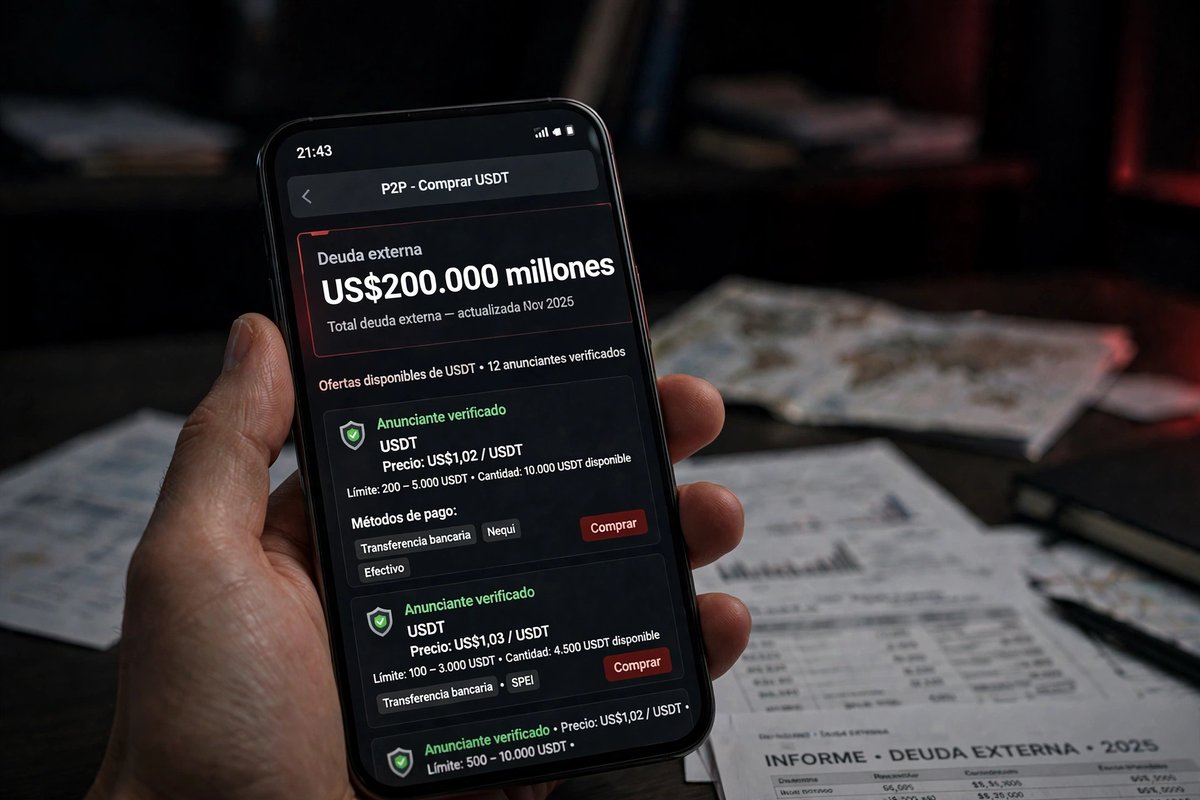

$CVX Q3 '26 Earnings Results & Recap • Reported GAAP EPS of $5.28, up 185.41% YoY • Reported revenue of $65.24B, up 35.43% YoY
Show more

Everyone... listen to me... this coin is about to surge 💥 Right now, it's in a favorable position. It just needs to break through the current structure and enter a new phase. Short-term resistance is at 2.9–3. If $CVX gets rejected here, it will pull back to the 2.7–2.5 range. If it breaks through at 3, possible targets are in the 3.3 to 4 range. A move up to 5 is also possible. Targets: 2.78, 2.9, 3.05, 3.3, 3.65, 4, 5 Stop loss stays at 2.45.
Show more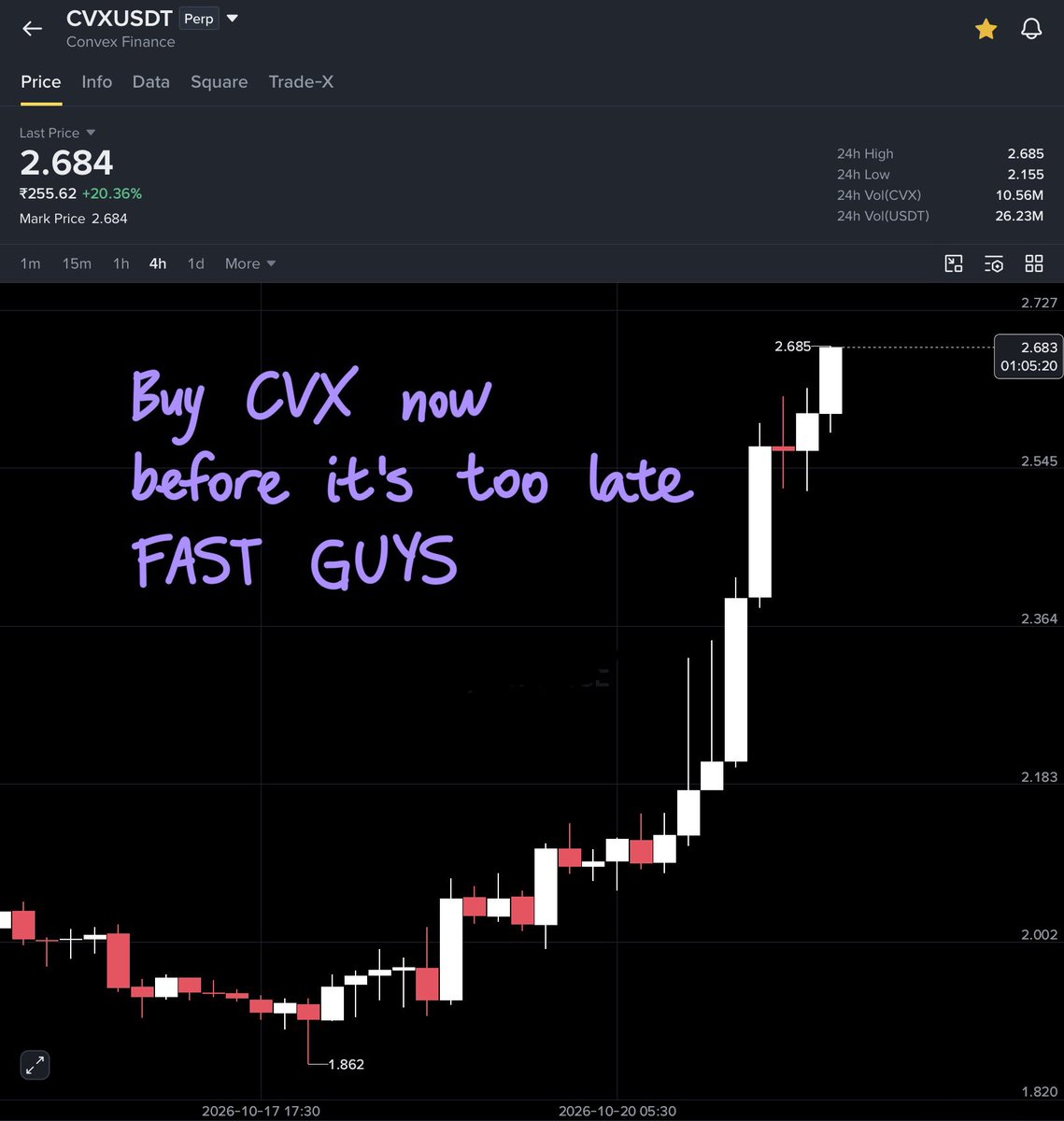
Chevron is once again a hot topic on Wall Street, but not because of anything in Houston: in its quarterly letter, asset manager Reaves W H & Co listed Chevron among its highest-returning holdings in dividend income strategies... Among the reasons listed is one factor closely tied to us: the renegotiation of the terms of its joint ventures in Venezuela. The Q3 2026 report highlights that the company successfully updated and secured new conditions for joint operations in Venezuela, creating room to increase production and develop more projects. In addition, its assets in Argentina and the United States performed well, and an offshore agreement in Greece expanded the company's footprint in the Mediterranean. Analysts note that rising oil prices boosted the company's share price. To be candid: this report is about Chevron's stock, not the Venezuelan economy. No one on Wall Street is cheering for local economic prosperity. But when a company of this scale consolidates more stable production conditions in the country, the indirect impact on the real economy is worth watching. So how does this transmit to P2P? The transmission chain is long: if Chevron increases production, export volumes rise, and dollar income entering formal channels increases accordingly. This money does not flow directly into the parallel market; it passes through the state system, the banking sector, and the foreign exchange settlement mechanism managed by the BCV. Funds first enter the financial system, then are partially distributed through banking and the official foreign exchange market, and only afterward reach merchants and users with delays and incompletely; they buy dollars to pay suppliers or save. From a drilling platform in Zulia to the P2P rate a user in Maracaibo sees, it does not happen automatically or immediately. This is exactly where the analysis needs to focus. The USDT/VES P2P market is driven both by capital flows and by expectations; when news hints at potentially higher oil revenue, it often triggers two opposing forces: 1) Downward pressure on the parallel rate: if foreign exchange supply in the system increases, the gap between the official rate and the P2P rate tends to narrow, and USDT becomes cheaper relative to the bolivar on trading platforms. 2) Upward pressure from precautionary demand: whenever positive news appears, demand also rises from people who want to convert savings into dollars before the bolivar weakens again. Even if the rate falls, this behavior still supports demand for stablecoins. The reality in Venezuela shows that news about foreign investment affects trader sentiment for only days, not months. What sustains P2P rate trends is verifiable capital flow, not announcements. The other side of the equation is digital banking: if some dollars circulate through electronic payments, interbank transfers, or card payment platforms, users gain more ways to obtain foreign exchange and do not have to rely solely on P2P. The more legitimate channels there are for obtaining dollars, the lower the premium the P2P market demands for risk and transaction friction. What is worth watching in the coming weeks is not just the headlines: 1. Actual production: any production increase announcement matters more than the renegotiation of the contract itself. 2. Changes in the rate gap: if the gap between the official rate and the P2P rate continues to narrow, it indicates foreign exchange inflows. If the gap stays the same or widens, then the news remains only on paper. 3. Liquidity on P2P trading platforms: the USDT/VES bid-ask spread is a gauge: a narrower spread indicates sufficient competition and supply; a wider spread reflects supply shortages and weak confidence. Conclusion: Chevron consolidating operating conditions in Venezuela is a positive signal for the country and for the investment climate in the energy sector. But for USDT users, the impact depends on the rate shown on screen, not the share price in New York. The connection does exist, but what comes first is rumor, then capital flows, and finally adjustment in the P2P market. As always, in Venezuela: stay patient, rely on data, and keep a healthy skepticism toward overly optimistic headlines. 👉 #P2P #Chevron #USDT #Venezuela
Show more
This page is for research only and is not investment advice. Models can be wrong. Past performance does not guarantee future results.