

S&P 500 Rebalance December 2026: What Happens When a Stock Is Added to the Index
How the December 2026 S&P 500 rebalance works: 2026 eligibility rules, the shrinking index inclusion effect, and a plan for stocks added to the index.

Key Takeaway
Every quarter, a small committee at S&P Dow Jones Indices decides which companies enter and leave the most tracked stock index in the world, and the December 2026 decision is close. The quarterly rebalance is tied to the third Friday of the month, which falls on December 18, 2026. Based on recent precedent, the changes are likely to be announced after the close on the first Friday of the month, which would be December 4, with membership changes taking effect before the open on Monday, December 21. Those dates are an inference from past cycles, not an official calendar, so investors should watch for the S&P DJI press release rather than assume them.
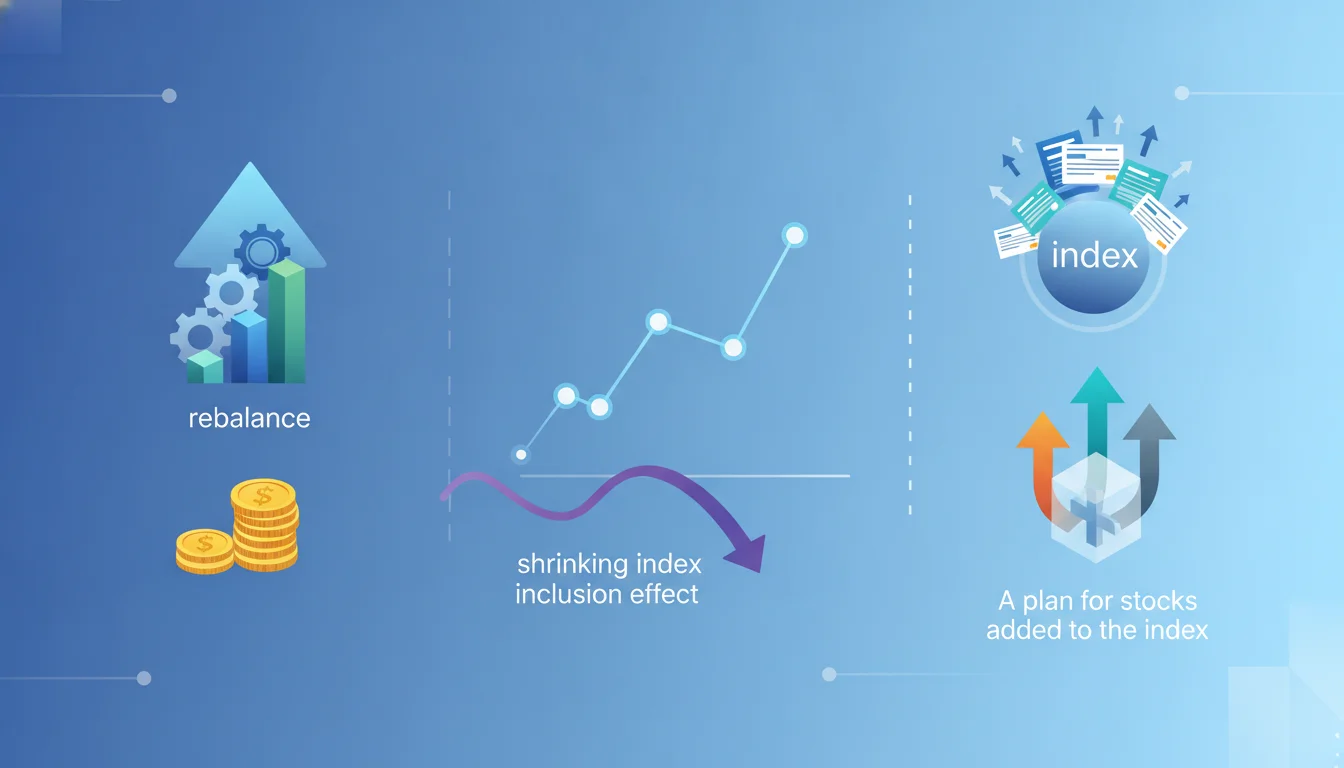
The headline attraction of a stock added to the S&P 500 is the forced buying from index funds, and that buying is real: S&P DJI has estimated that about $20 trillion was indexed or benchmarked to the S&P 500 as of December 2024, with roughly $13 trillion of it passively managed, according to figures cited by Fortune. But academic research shows the famous "index inclusion effect" has shrunk dramatically, from average abnormal gains of 7.6% in the 1990s to under 1% in the 2010s. Much of the move now happens before the announcement, in the stocks the market already expects to qualify.
This guide explains how the S&P 500 rebalance actually works, which rules decide eligibility in 2026, what the September 2026 and December 2025 cycles taught us, and why the smarter use of rebalance season is risk management rather than a lottery ticket. With the S&P 500 still trading in what Equity Clock describes as a pattern of lower highs after the autumn sell-off, a disciplined process matters more than a hot tip.
How the S&P 500 Rebalance Works
A committee, not a formula
Unlike many indices that mechanically rank companies by size, the S&P 500 is run by the U.S. Index Committee at S&P Dow Jones Indices. The committee applies published eligibility rules, but it also uses judgment about sector balance, turnover, and whether a company is truly representative of large-cap U.S. equities. That is why a stock can meet every numerical test for months and still not be added, and why a company that shrinks below the entry threshold is not automatically ejected.
The committee can also make changes off-cycle. Mergers, acquisitions, and spin-offs regularly force mid-quarter replacements, because a company that is bought out simply stops existing as a constituent. Those ad hoc changes are often announced with only a few days of notice, which is one reason the scheduled quarterly reviews draw so much attention: they are the moments when the committee has the most freedom to reshape the index.
The quarterly calendar
Scheduled rebalances line up with the third Friday of March, June, September, and December, the same day quarterly options and futures expire. In September 2026, S&P DJI announced its changes on the evening of Friday, September 4, and they took effect before the open on Monday, September 21. In December 2025, the announcement came on Friday, December 5, with changes effective before the open on Monday, December 22. That pattern points to an announcement around Friday, December 4, 2026, but the exact timing is S&P DJI's call.
Because index funds generally want to own new members at the official closing price before the effective date, the heaviest trading tends to cluster in the closing auction of the Friday rebalance session. That concentration is why quarterly expiration days often post some of the year's highest closing volumes.
Additions, deletions and migrations
A typical S&P 500 rebalance moves a handful of companies. Some additions come from outside the S&P Composite 1500 entirely, while others are "migrations" up from the S&P MidCap 400. Deleted names usually drop to the MidCap 400 or, if they have fallen far enough, straight to the S&P SmallCap 600. In September 2026, Bloom Energy, Everpure, and Illumina joined the S&P 500, while Molson Coors, The Trade Desk, and Builders FirstSource were moved down to the SmallCap 600. The release said the changes aim to keep each index "more representative of its market capitalization range."
The 2026 Eligibility Rules for a Stock Added to the S&P 500
Size and float tests
According to S&P DJI's U.S. indices methodology, a company needs a total market capitalization of at least $22.7 billion to be considered for addition, a guideline the index provider reviews each quarter. Size alone is not enough. The security must also have a float-adjusted market value of at least half that company-level threshold, and its investable weight factor, the share of stock freely available to public investors, must be at least 0.10. Pip Theory, an independent research site, cites the MidCap 400 range as roughly $8.0 billion to $22.7 billion, which explains why some deletions skip the midcap index entirely.
These rules matter because companies with tiny floats can look enormous on paper. A business with a huge headline valuation but only a sliver of shares in public hands would force index funds to chase a scarce supply of stock, and the float tests are designed to prevent that kind of squeeze.
Profitability and seasoning
The most frequently misunderstood rule is financial viability. A candidate must report positive GAAP net income from continuing operations both in its most recent quarter and for the sum of its last four quarters. Adjusted earnings and "EBITDA before stock compensation" do not count. Newly public companies must also have traded for 12 months on an eligible exchange before they can be added, though spin-offs are exempt from that seasoning requirement.
Liquidity is the final hurdle. The methodology includes trading-volume tests so that index funds can buy their positions without distorting prices. In practice, most companies above the size threshold pass this easily, but it can be a barrier for closely held companies with modest daily volume.
Why the 2026 megacap debate matters
In April 2026, S&P DJI opened a consultation on how to treat newly public "megacap" companies, amid a wave of giant listings. Among the proposals were cutting the IPO seasoning period from 12 months to six and relaxing the profitability and float tests for the largest companies. On June 4, 2026, S&P DJI published the results: no changes for the S&P 500, MidCap 400, or SmallCap 600. It concluded that exceptions to these requirements "should not be granted solely based on market capitalization." Fast-track entry for large IPOs was adopted only for broad total-market indices.
That decision sharply contrasts with Nasdaq. SpaceX priced its IPO at $135 on June 12, 2026, closed its first day at $160.95, and joined the Nasdaq-100 on July 7 under Nasdaq's new fast-entry rule, only 15 trading days after listing, according to TechCrunch and Al Jazeera. Under the S&P rules, the same company cannot be considered before it completes 12 months of trading, and it would still need to satisfy the GAAP profit test.
What History Says About the Index Inclusion Effect
The effect has largely disappeared
The idea that buying a stock just before it joins the S&P 500 is easy money comes from data that is now decades old. In their study "The Disappearing Index Effect," Robin Greenwood and Marco Sammon found that stocks added to the S&P 500 earned average abnormal returns of about 3.4% in the 1980s and 7.6% in the 1990s, but only about 0.8% between 2010 and 2020. The paper, first circulated as an NBER working paper and later published in the Journal of Finance, documents a similar fade on the deletion side, where the average hit shrank from double digits in the 1990s to well under 1% in the most recent decade.
The authors tested the obvious explanations, such as the changing mix of companies being added and lower trading costs, and found that neither fully accounts for the decline. One practical reading is that the market has simply become very efficient at anticipating which names will qualify, so the price adjustment is spread out over months rather than concentrated on announcement day.
Long-run results are not flattering
A separate study by Benjamin Bennett, René Stulz, and Zexi Wang, covering additions from 1997 to 2017, went further. They found that the positive announcement effect had disappeared over that period and that the long-run impact of joining the index had turned negative. One interpretation is that companies tend to be added after a strong run that made them big enough to qualify, which means investors buying at the moment of inclusion are often paying for performance that has already happened.
Direct additions versus migrations
The September 2026 cycle offered a live example of a nuance that research has long identified. According to Pip Theory, Bloom Energy, the only addition coming from outside the S&P Composite 1500, rose about 7.5% in after-hours trading on the announcement, while Everpure and Illumina, both migrating up from the MidCap 400, gained roughly 2.2% and 2.0%. The logic is straightforward: midcap index funds already own the migrating names and must sell them, which offsets part of the buying from S&P 500 funds. A stock coming from outside the S&P family has no such natural seller. Pip Theory itself cautions that this is a three-stock sample from a single session, so it should be read as an illustration, not a rule.
Lessons From the Last Two Rebalances
December 2025: industrials and autos
In December 2025, S&P DJI added CRH, Carvana, and Comfort Systems USA, while removing LKQ, Solstice Advanced Materials, and Mohawk Industries, all three of which moved to the SmallCap 600. Comfort Systems was a migration from the MidCap 400. Ahead of the release, Dow Jones had named CRH, Vertiv, Alnylam Pharmaceuticals, and Ares Management among the top candidates, yet only CRH made the cut that quarter. The cycle showed that pre-announcement speculation is often partly right and partly wrong, which is exactly why trading purely on candidate lists is risky.
September 2026: energy, health care and the AI supply chain
The September 2026 changes added an industrial energy name, a technology company, and a health care company, while the deletions came from beverages, advertising technology, and building products. The same release also reshuffled the S&P 100, adding Dell, Palo Alto Networks, Arista Networks, and Sandisk. The pattern reflects how the market's winners and losers over the preceding months flow directly into index membership: companies tied to AI infrastructure and power demand grew into the large-cap index, while businesses hurt by weaker consumer spending and housing activity shrank out of it.
What deletions tell you
Deletions get less attention, but they carry information. A stock dropped from the S&P 500 typically faces selling from large-cap funds before it is bought by midcap or small-cap funds, and the composition of deletions shows which industries have lost the most market value. For long-term holders of a deleted company, the important question is whether the business fundamentals have changed, not the fact of the deletion itself, since the academic data suggest the price impact of removal has also faded.
How to Approach December 2026 Rebalance Season
Build a watchlist from the rules, not the rumors
The most useful exercise ahead of the expected December announcement is to screen for companies that clear the published tests: total market capitalization above $22.7 billion, a meaningful public float, positive GAAP earnings in the latest quarter and over the trailing four quarters, and at least 12 months of trading history. That list will include many names the committee has no immediate reason to add, so it is a starting point, not a prediction. Pay special attention to sector balance, since the committee aims to keep the index broadly representative of the U.S. large-cap market.
Set alerts for the announcement window
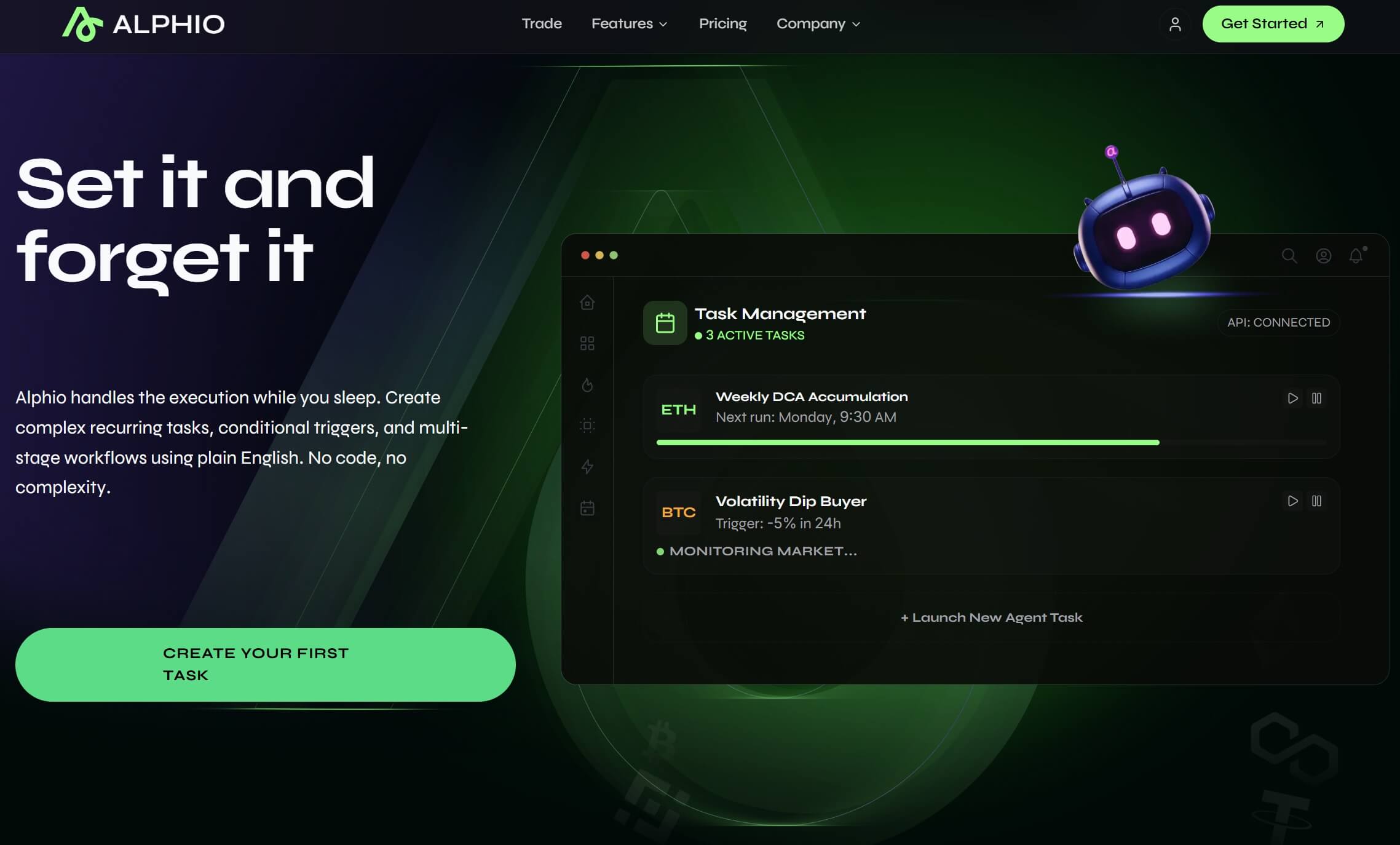
Because the release usually arrives after the close on a Friday, the first trading reaction often happens in after-hours sessions when liquidity is thin and spreads are wide. Investors who want to act deliberately rather than impulsively can automate the boring part of the process: a recurring check on candidate tickers, price levels, and the S&P DJI press feed, scheduled to run Friday evening and again before the following Monday open. An Alphio Scheduled Task can run that kind of watchlist review on a calendar, so the decision is made against a written plan instead of a headline.
Decide in advance what you will not do
The simplest risk rule for rebalance season is to avoid chasing a gap in after-hours trading. If a stock you already own is added, the more useful question is whether its new weight in your portfolio still matches your plan after the move. If a stock you were watching jumps on the news, the research above suggests the remaining edge is small and the downside if the move fades is real. Writing down entry, exit, and position-size limits before the announcement keeps the process honest.
What Index Rebalances Mean for Index Fund Investors
Hidden costs are small but real
For investors who simply own an S&P 500 index fund, rebalance season is mostly invisible. Funds that track the index buy additions and sell deletions at or near the official closing price, which minimizes tracking error. The trade-off, which academics have debated for years, is that anyone who front-runs that predictable demand can extract a small amount of value from index investors. Because the inclusion effect has shrunk, that cost has also shrunk, but it has not disappeared entirely.
Concentration is the bigger issue
A more important consideration for passive investors in 2026 is concentration. The largest companies in the S&P 500 account for a very large share of the index's market value, and newly listed giants such as SpaceX, which joined the Nasdaq-100 within weeks of its debut, are a reminder of how quickly a handful of names can dominate a cap-weighted benchmark. The S&P 500's seasoning and profitability rules act as a speed bump, delaying exposure to unprofitable newly listed megacaps. Investors who prefer that discipline may view it as a feature, while those who want immediate exposure to new giants may see it as a drawback.
Midcap and small-cap ripple effects
Every S&P 500 rebalance also reshuffles the MidCap 400 and SmallCap 600. In September 2026 alone, ten companies were added to the SmallCap 600, including the three names that left the S&P 500. Investors in midcap and small-cap funds experience the other side of these migrations, with funds selling the companies that graduate upward and buying the ones that fall.
Common Mistakes Around S&P 500 Additions
Confusing qualification with selection
The single most common mistake is assuming that a company meeting every rule will be added this quarter. The committee has discretion, there are only a few open slots each cycle, and it weighs sector balance and turnover. Many qualified companies wait several quarters, and some never join before conditions change.
Ignoring what already happened before the announcement
Stocks that become obvious candidates often rally for weeks before the announcement as traders position for inclusion. By the time the release arrives, a significant part of the expected demand may already be in the price. That dynamic helps explain why the academic studies find such small average announcement effects in recent decades.
Treating inclusion as a quality stamp
Membership in the S&P 500 signals that a company is large, liquid, and profitable on a GAAP basis at the time of its review. It says nothing about whether the stock is cheap or whether earnings will keep growing. For research questions about a specific candidate's valuation, analyst views, and recent earnings, Alphio's Conversational Trading lets investors ask in plain language and then verify against filings.
Seasonality and the Broader Market Backdrop
December's historical tilt
The rebalance lands in what has historically been one of the stronger months of the year. Equity Clock notes that over the past five decades, the S&P 500 has averaged a 1.2% gain in December, rising in 72% of years, with gains tending to concentrate in the second half of the month. The same source records a range from a 9.2% loss in December 2018 to an 11.1% gain in December 1991, a reminder that averages hide wide outcomes.
A market still repairing damage
The post-Thanksgiving session on Friday, November 27, 2026, delivered a 1.61% gain for the S&P 500, according to Equity Clock, which also described the index as still in a path of lower highs and lower lows since the autumn decline. In that kind of environment, rebalance-driven flows are one more source of short-term volatility rather than a reliable driver of direction.
Options expiration meets rebalancing
Because the rebalance coincides with quarterly options and futures expiration on December 18, closing volumes can be unusually heavy and intraday price moves can look exaggerated. Those mechanical flows usually fade within days, so investors should be careful about reading too much into a single session's move in a newly added stock.
Conclusion
The December 2026 S&P 500 rebalance is worth following, but mainly as a lesson in how the market's plumbing works rather than as an easy trade. The eligibility rules are public and stricter than many investors assume, the committee retains discretion, and the research is clear that the classic index inclusion pop has largely faded. The September 2026 cycle showed that direct additions can still move more than migrations, yet even that pattern comes with small samples and big caveats.
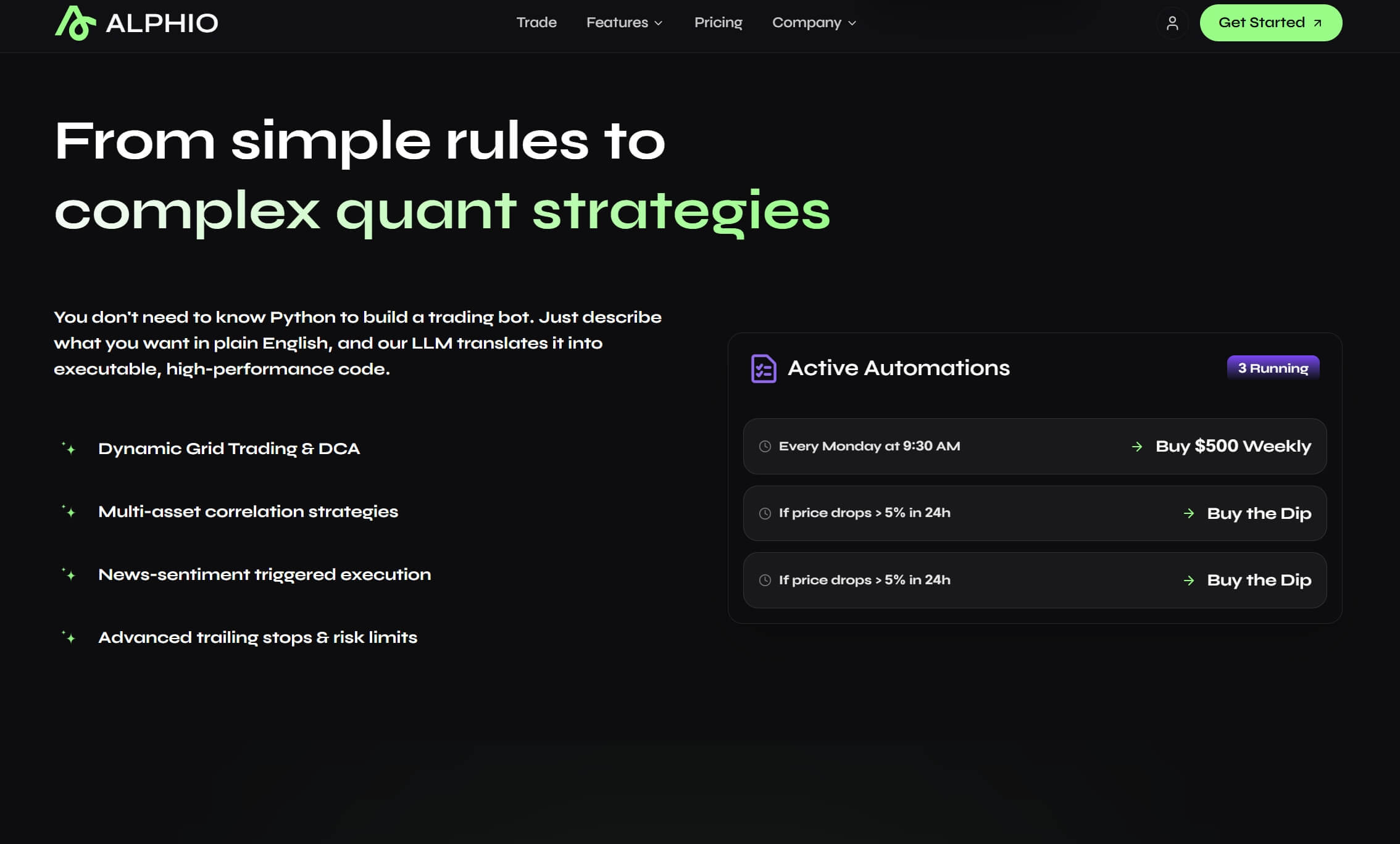
The most practical approach is to build a rules-based watchlist, wait for the official S&P DJI release, and decide position sizes before the after-hours headlines arrive. Investors who want to learn from experienced traders' positioning can explore Alphio's Copy Trade, while those who want to turn a written plan into executed rules can look at Autonomous Trading. Neither replaces your own risk limits, and no tool can guarantee returns, but both can help keep rebalance season disciplined rather than reactive.
FAQs
When is the S&P 500 rebalance in December 2026?
The quarterly rebalance is tied to the third Friday of December, which is December 18, 2026. Based on recent cycles, changes are typically announced after the close on the first Friday of the month and take effect before the open on the following Monday, but investors should confirm dates in the official S&P Dow Jones Indices release.
What are the requirements for a stock to be added to the S&P 500?
Under S&P DJI's methodology, a company needs total market capitalization of at least $22.7 billion, adequate float and liquidity, and an investable weight factor of at least 0.10. It must also show positive GAAP earnings in its latest quarter and over the trailing four quarters, and newly public companies must have traded for 12 months.
Do stocks go up when they are added to the S&P 500?
Often in the short term, but much less than they used to. Research by Greenwood and Sammon found average abnormal returns for additions fell from about 7.6% in the 1990s to roughly 0.8% in 2010 to 2020, and much of the move now happens before the announcement.
Can SpaceX join the S&P 500?
Not yet under current rules. SpaceX listed on June 12, 2026, and S&P DJI decided in June 2026 to keep the 12-month IPO seasoning period and GAAP profitability test for the S&P 500, so it must satisfy those requirements before it can be considered.
What happens to a stock removed from the S&P 500?
A deleted company usually moves to the S&P MidCap 400 or SmallCap 600, which means S&P 500 funds sell it while smaller-cap funds buy it. Academic research shows the average price impact of deletions has also shrunk sharply since the 1990s, so business fundamentals matter more than the deletion itself.
Related articles
- Tax-Gain Harvesting in 2026: How to Use the 0% Capital Gains Bracket Before December 31Tax-gain harvesting guide for 2026: how the 0% capital gains bracket works, the 2026 and 2027 IRS limits, hidden costs and how to sell before December 31.
- Fed Dot Plot Explained: How to Read the December 2026 FOMC Rate ProjectionsFed dot plot explained: how to read FOMC rate projections, what the September 2026 dots showed, and how stocks and bonds may react on December 9, 2026.
- ISM Manufacturing PMI and the Stock Market: How to Read the December 2026 ReportThe ISM Manufacturing PMI lands Dec 1, 2026 as the Fed eyes a hike. Learn what the PMI measures, which subindexes move stocks and how sectors tend to react.
- Federal Reserve Interest Rate Decision August 2026: Market Impact and Investment StrategyAnalyze the Federal Reserve's August 2026 interest rate decision. Discover investment strategies for navigating the stock market in the current rate environment.
- Broadcom Stock Analysis: Why AVGO's AI Chip Dominance Could Drive 35% UpsideComprehensive Broadcom stock analysis for August 2026. Explore AVGO's AI semiconductor growth, custom chip demand, and why analysts see 35% upside potential.
- Ray Dalio's AI Bubble Warning: Is History Repeating Itself in 2026?Billionaire investor Ray Dalio warns the AI bubble is approaching 1929 and dot-com bubble levels. Learn what investors should know about current market risks.