

Gold Price Forecast 2026: Central Bank Buying and Fed Policy Drive Bullion to Record Territory
Gold price forecast 2026: Central bank buying, Fed rate cuts, and geopolitical tensions drive bullion to record highs. Expert analysis on XAU/USD outlook.

Key Takeaway
Gold has emerged as one of the most compelling investment stories of 2026, with prices surging past $2,400 per ounce and setting sights on the psychologically significant $3,000 level. The precious metal's remarkable ascent reflects a confluence of powerful macroeconomic forces: unprecedented central bank accumulation, shifting Federal Reserve monetary policy expectations, persistent geopolitical tensions, and growing institutional demand for portfolio hedging instruments.
For investors navigating the current market environment, gold offers a unique combination of wealth preservation and capital appreciation potential. Unlike speculative cryptocurrencies that dominate headlines with extreme volatility, gold represents a time-tested store of value with millennia of historical precedent. The metal's recent price action demonstrates that even in an era of digital assets and technological disruption, traditional safe-haven assets retain their fundamental appeal when uncertainty grips global markets.
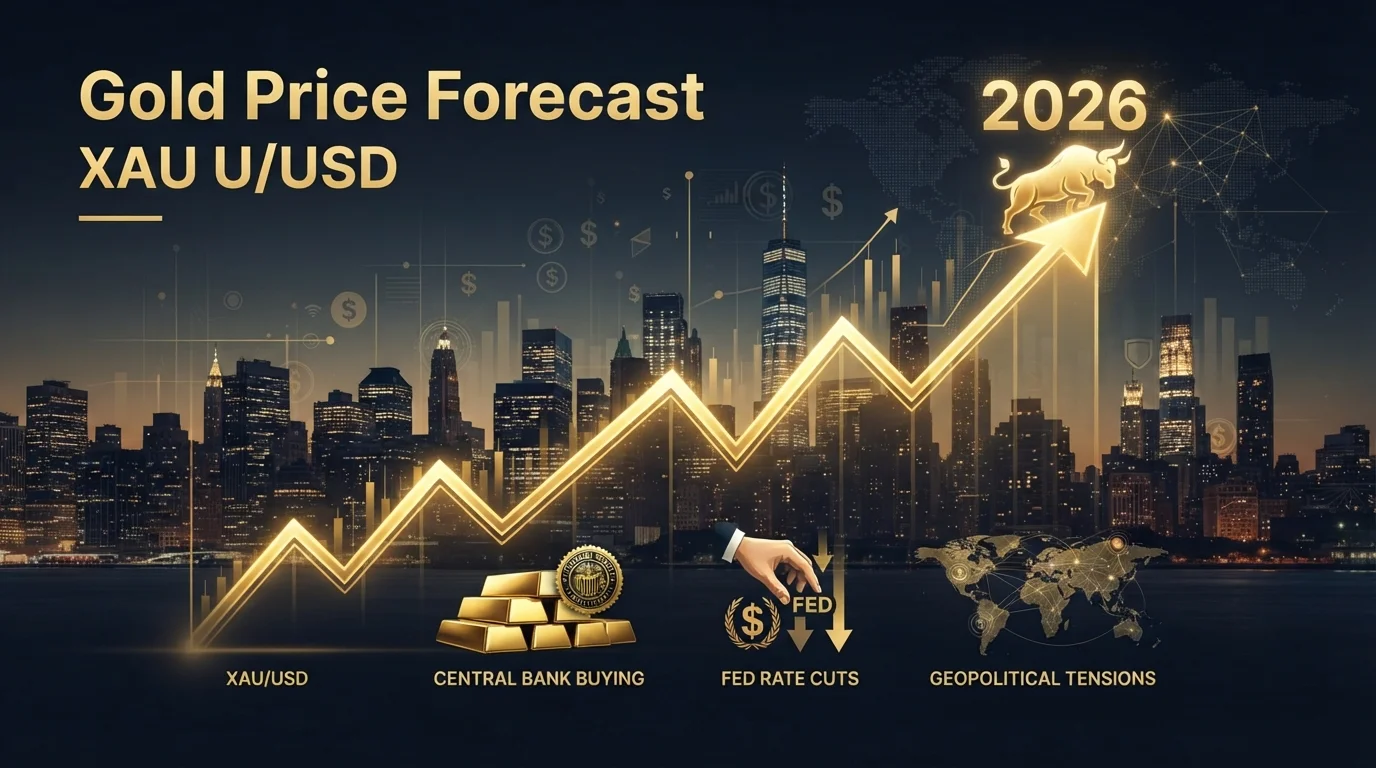
The trajectory of gold prices through the remainder of 2026 will largely depend on three critical factors: the pace and magnitude of Federal Reserve interest rate cuts, the continuation of aggressive central bank purchasing programs, and the evolution of geopolitical risk premiums. Each of these variables carries significant implications for dollar-denominated commodities and offers distinct opportunities for informed investors to position their portfolios strategically.
Central Banks Lead the Charge: Record Gold Accumulation
The most significant structural driver supporting gold prices in 2026 has been the extraordinary accumulation of bullion by global central banks. According to data from the World Gold Council, central banks purchased over 1,000 metric tons of gold in 2025, marking the third consecutive year of net buying exceeding historical norms. This trend has accelerated in 2026, with first-half purchases already approaching 600 tons and suggesting annual totals could challenge previous records.
China's central bank has been particularly active, adding gold to its reserves for seventeen consecutive months through early 2026. The People's Bank of China now holds over 2,300 tons of gold, representing a strategic diversification away from dollar-denominated assets amid ongoing trade tensions and concerns about Western financial sanctions. This pattern of de-dollarization through gold accumulation has been mirrored by central banks across emerging markets, from Turkey and India to Singapore and the Czech Republic.
The motivations behind this institutional buying extend beyond simple portfolio diversification. Central bankers increasingly view gold as a geopolitical hedge against potential currency weaponization and as insurance against sovereign debt concerns in developed economies. With global government debt levels reaching unprecedented heights, the appeal of an asset with no counterparty risk continues to resonate with monetary authorities seeking to bolster their reserve positions.
For investors seeking to mirror these institutional strategies, consider using Alphio AI's copy trading feature to follow smart money positioning in precious metals and other asset classes.

Federal Reserve Pivot: Rate Cuts and Dollar Dynamics
The Federal Reserve's monetary policy trajectory represents the most significant near-term catalyst for gold price movements. Following the most aggressive rate-hiking cycle in four decades, markets are now pricing in substantial easing beginning in late 2026. The CME FedWatch Tool indicates market participants anticipate between 75 and 100 basis points of cumulative rate cuts by year-end, with the first reduction potentially arriving as early as the September Federal Open Market Committee meeting.
This shifting interest rate environment carries profound implications for non-yielding assets like gold. During periods of elevated real interest rates, gold faces headwinds as opportunity costs rise and yield-bearing instruments become relatively more attractive. However, as the Fed pivots toward accommodative policy, these dynamics reverse, creating tailwinds for precious metals. Historical analysis demonstrates that gold prices have typically appreciated during the twelve months following the initiation of Fed rate-cutting cycles.
The relationship between gold and the U.S. dollar adds another layer of complexity to the price outlook. As the Fed reduces rates while other major central banks maintain relatively tighter policy stances, dollar weakness becomes increasingly likely. Since gold is priced in dollars, currency depreciation translates directly into higher nominal prices for the metal, even before accounting for increased investment demand from international buyers seeking dollar hedges.
Geopolitical Risk Premium: Uncertainty as a Constant
The geopolitical landscape of 2026 continues to support elevated risk premiums across precious metals markets. Ongoing conflicts in Eastern Europe and the Middle East, coupled with heightened tensions in the South China Sea and concerns about Taiwan's status, have created a persistent backdrop of uncertainty that favors safe-haven assets. Gold's historical role as a crisis hedge ensures consistent demand during periods of international instability.
Beyond hot conflicts, structural shifts in the global order are driving long-term allocation decisions toward gold. The weaponization of financial infrastructure, including sanctions on central bank reserves and exclusion from payment systems, has prompted many nations to reconsider their dependence on dollar-centric financial architecture. Gold, with its physical portability and universal acceptance, offers a form of monetary sovereignty that electronic assets cannot replicate.
Climate change and energy transition concerns also factor into the gold investment thesis. The metal's unique properties make it essential for various green technologies, from solar panels to electric vehicle components. As global decarbonization efforts accelerate, industrial demand for gold may provide an additional demand vector beyond traditional investment and jewelry applications.
Technical Analysis: Chart Patterns and Price Targets
From a technical perspective, gold's price action in 2026 has been constructive, with the metal establishing a series of higher lows while testing resistance levels near all-time highs. The breakthrough above $2,400 per ounce in mid-2026 cleared significant psychological resistance and opened the path toward the $2,500-$2,600 range. Consolidation at these levels has allowed momentum indicators to reset, potentially setting the stage for the next leg higher.
Key support levels to monitor include the $2,300 area, which represents the previous breakout zone and now serves as initial technical support. Below that, the $2,200-$2,250 range offers more substantial support where significant buying interest previously emerged. As long as prices hold above these thresholds, the technical outlook remains bullish with upside targets extending toward $2,800 and potentially $3,000 per ounce.
Momentum indicators including the Relative Strength Index and Moving Average Convergence Divergence suggest that while gold may be approaching overbought conditions on shorter timeframes, the longer-term trend remains firmly intact. Institutional positioning data from the Commodity Futures Trading Commission shows managed money accounts have maintained substantial net long positions, indicating continued faith in the bullish thesis among professional commodity traders.
Investment Strategies: Allocating to Gold in 2026
For investors considering gold exposure, multiple vehicles offer distinct risk-return profiles. Physical bullion in the form of coins or bars provides the purest exposure to gold prices but requires secure storage and insurance considerations. Exchange-traded funds backed by physical gold, such as SPDR Gold Shares, offer convenient exposure without custody concerns while maintaining tight tracking of spot prices.
Mining equities provide leveraged exposure to gold prices, with individual company performance dependent on operational factors, reserve quality, and management execution. Major producers like Newmont and Barrick Gold offer relatively conservative exposure to the sector, while junior explorers present higher-risk, higher-reward opportunities for investors with appropriate risk tolerance.
For those interested in automating their precious metals investment strategy, explore Alphio AI's agentic trading capabilities to implement systematic approaches to gold allocation and portfolio rebalancing.

Conclusion
Gold's performance in 2026 reflects its enduring status as the ultimate safe-haven asset in an increasingly uncertain world. The combination of central bank accumulation, Federal Reserve policy pivot, and persistent geopolitical tensions creates a compelling fundamental backdrop for continued price appreciation. While short-term volatility should be expected, the structural drivers supporting gold appear durable and likely to persist through year-end and beyond.
For investors seeking portfolio diversification and inflation protection, maintaining strategic allocation to gold makes compelling sense in the current environment. The metal's historical track record during periods of currency debasement and financial instability provides confidence that gold will continue serving its traditional role as a store of value.
To implement systematic gold trading strategies and automate your precious metals exposure, leverage Alphio AI's scheduled task automation to set conditional workflows based on price triggers and market conditions.

Alternatively, use Alphio AI's conversational trading interface to execute gold trades and manage your portfolio through natural language commands.

FAQs
What is the gold price forecast for 2026?
Gold price forecasts for 2026 suggest continued upside potential, with many analysts targeting $2,800-$3,000 per ounce. Key drivers include Federal Reserve rate cuts, sustained central bank buying, and ongoing geopolitical tensions that support safe-haven demand for precious metals.
Why are central banks buying so much gold?
Central banks are accumulating gold to diversify reserves away from dollar-denominated assets, hedge against geopolitical risks and potential sanctions, and address concerns about sovereign debt levels in developed economies. Gold offers monetary sovereignty and carries no counterparty risk.
How do Fed rate cuts affect gold prices?
Federal Reserve rate cuts typically support gold prices by reducing the opportunity cost of holding non-yielding assets, weakening the U.S. dollar, and increasing inflation expectations. Historical data shows gold often appreciates during the twelve months following the start of Fed easing cycles.
Is gold a good investment in 2026?
Gold can be a valuable portfolio diversifier in 2026, offering protection against inflation, currency debasement, and geopolitical uncertainty. However, like all investments, gold carries risks including price volatility and opportunity costs during periods of rising real interest rates.
What are the best ways to invest in gold?
Investors can gain gold exposure through physical bullion, gold-backed ETFs like SPDR Gold Shares, mining company stocks, futures contracts, or automated trading platforms. Each approach offers different risk-return characteristics, liquidity profiles, and storage considerations.
Related articles
- Stock Market Surges After 2026 Midterms: What the Democratic Sweep Means for Your PortfolioThe stock market rallied after Democrats won the 2026 midterms. Discover what the election means for investors, tech stocks, and the S&P 500 outlook.
- Stock Market Surges After 2026 Midterms: What the Democratic Sweep Means for Your PortfolioThe stock market rallied after Democrats won the 2026 midterms. Discover what the election means for investors, tech stocks, and the S&P 500 outlook.
- Oil Prices Surge Above $105 Amid US-Iran Conflict: Energy Investment Opportunities in November 2026Oil prices climb past $105 as US strikes Iran's Qeshm Island. Discover energy investment opportunities, top oil stocks, and market outlook for November 2026.
- Fed Chairman Warsh's Jackson Hole Warning: Rate Hikes Back on the Table as Inflation PersistsFed Chairman Kevin Warsh's Jackson Hole speech signals potential rate hikes amid persistent inflation. Analysis of market impact, investment strategies, and sector implications for investors.
- Nvidia Earnings August 2026: AI Chip Demand Analysis & Stock ForecastNvidia's Q2 2026 earnings reveal record data center revenue driven by Blackwell chip demand. Analysis of NVDA stock price targets, AI market growth, and investment outlook.
- Nvidia Earnings August 2026: Record Revenue and the Future of AI Chip DemandNvidia reported record Q2 2026 earnings with $96.22B revenue. Analyze AI chip demand trends, stock price forecast, and investment implications for NVDA investors.