

When a CEO Resigns: What Nvidia's Leadership Shock Teaches Investors About Key-Person Risk
What happens to a stock price when a CEO resigns? Lessons from Nvidia, Apple and Starbucks, the research on key-person risk, and a checklist for investors.

Key Takeaway
Few headlines move markets like the words "CEO transition." On November 12, 2026, Nvidia announced that Jensen Huang had resigned as president, chief executive and director, effective immediately, according to the company's press release and its Form 8-K filed with the SEC. Chief financial officer Colette Kress was named interim CEO while the board runs a formal search that will consider internal and external candidates. Nvidia shares dropped more than 13% at the open before recovering much of the loss and closing at $166.19, down 4.34%, according to Motley Fool market data, while the S&P 500 slipped 0.35% to 7,592.40, according to Yahoo Finance.
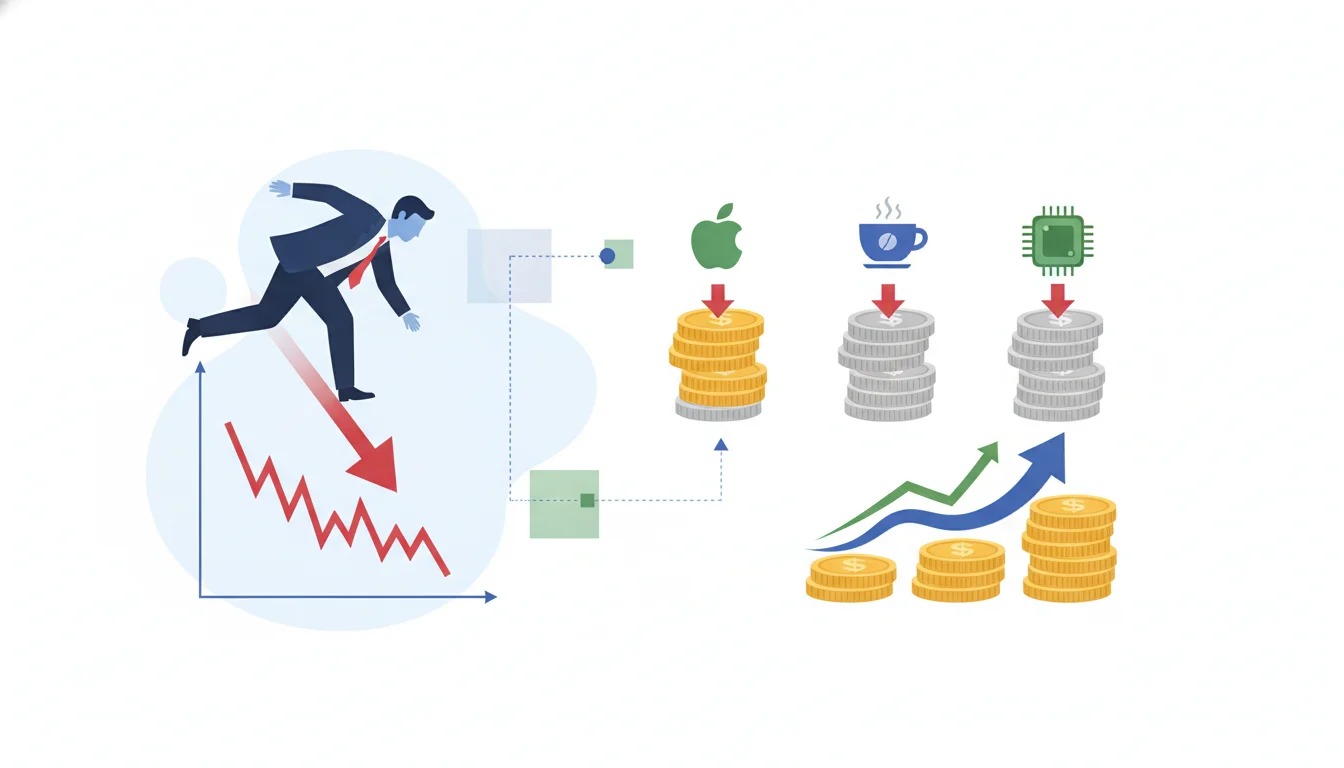
The episode is a vivid reminder of key-person risk: the danger that a company's value is tied to one individual in ways a balance sheet never shows. History suggests the first-day reaction to a CEO resignation is driven mostly by surprise and by what the departure signals, not by a sober recalculation of long-term cash flows. Some exits are punished for days, some are shrugged off by the next session, and some send a stock soaring because investors wanted change.
This guide explains how a CEO resignation tends to affect a stock price, what decades of research say about key-person risk, a practical checklist for reacting to the news, and why even index-fund investors carry more single-company exposure than they think. Market data are as of the November 12, 2026 close (America/New_York) unless noted. Forecasts are projections rather than guarantees, and nothing here is personalized investment advice.
What Happened at Nvidia and Why It Matters Beyond One Stock
The announcement and the succession structure
Nvidia's release was notable for what it did and did not say. It confirmed that Huang stepped down from all three roles at once, named Kress interim CEO while she continues as chief financial officer, and appointed Harvey C. Jones, a former Synopsys chief executive, as the company's first Chair of the Board, according to the 8-K. The company did not give a reason for the departure, which left investors relying on media reports about the circumstances. The filing quoted Jones saying the board "has full confidence in Colette and the leadership team," a line designed to signal continuity at the top of the world's most closely watched AI supplier.
That structure matters. An interim leader from the existing team, an independent chair and an open search do not remove uncertainty, but they reduce the odds of operational drift at a company still worth roughly $4 trillion at the close, according to CNBC.
How the market reacted in a single session
The intraday path told the story of a market processing a shock. Nvidia touched a 52-week low of $148.80, roughly 14% below the prior close, before buyers stepped in, according to Motley Fool data. Analysts moved quickly as well: CNBC reported that Cantor Fitzgerald cut its price target from $350 to $250, while KeyBanc warned of "a material increase in strategic, organizational, and execution risk." Bernstein's Stacy Rasgon told clients it was "hard to advocate stepping in here in size," according to CNBC.
Rivals moved the other way. AMD shares rose as traders speculated that customers might diversify their AI hardware purchases while Nvidia's leadership was in flux, according to CNBC and Motley Fool coverage. The broad indexes fell only modestly, with the Nasdaq Composite down 0.39% to 25,366.09 and the Dow down 0.36%, according to Yahoo Finance. That contrast between a sharp single-stock reaction and a muted index reaction is exactly where the lessons for ordinary investors begin.
Why index investors are exposed too
It is tempting to think a CEO departure only matters to people who own the stock directly. In reality, Nvidia was about 6.8% of the Invesco QQQ Trust as of November 10, 2026, according to StockAnalysis holdings data, and roughly 6.3% of the S&P 500 based on SPY holdings compiled by CalculatorAI. Anyone holding a broad U.S. index fund, a target-date fund or a technology ETF owned a meaningful slice of the leadership shock without ever placing a trade in Nvidia itself.
How Stocks Typically React When a CEO Resigns
The first-day move is mostly about surprise
A CEO resignation stock price reaction is largely a measure of how unexpected the news was. When a departure follows a long, public succession process, much of the information is already in the price, and the stock often barely moves. When the exit is effective immediately, with no named successor and no stated reason, the market has to price a range of possible explanations at once, and the worst of those scenarios drives the opening print. That is why abrupt departures so often produce gaps at the open that partially reverse as more information arrives.
Recent 2026 examples show the pattern. MongoDB shares gapped down about 17% after CEO CJ Desai, who had been in the role for less than a year, left to join Meta Platforms, according to MarketBeat; the board reinstated former CEO Dev Ittycheria on an interim basis and reaffirmed guidance. On the same day as Nvidia's announcement, HubSpot shares rose after co-founder Brian Halligan returned as CEO, according to CFO Dive, a reminder that leadership news can be read as either a threat or a reset.
Voluntary versus forced departures
Researchers have long separated planned, voluntary exits from forced ones, and the distinction matters for investors. A study of 235 French companies by Dherment-Ferere and Renneboog, summarized by CXO Advisory, found no price reaction to voluntary resignations, a small positive abnormal return of about 0.5% for forced resignations, and a larger positive reaction when an outsider replaced a CEO pushed out after poor performance. The intuition is straightforward: when a struggling leader is replaced, the market often welcomes the change, while a voluntary exit at a healthy company is closer to neutral. In real time, though, a "retirement" can be a negotiated exit, so the timing relative to earnings and any change to guidance are often better clues than the press release wording.
Volatility tends to stay elevated
Even when the price recovers, the risk profile of a stock frequently changes after a leadership change. Clayton, Hartzell and Rosenberg studied 872 CEO turnovers at U.S. companies between 1979 and 1995 and found that forced turnovers raised equity volatility by about 24% in the following year, versus about 10% for voluntary turnovers, according to CXO Advisory's summary. They also found that earnings announcements produced larger price responses after a turnover, which makes sense because investors scrutinize a new leader's first reports for any sign of a strategy shift.
Lessons From Famous CEO Transitions
Apple in 2011: a planned handoff that still rattled traders
When Steve Jobs resigned as Apple's CEO after the close on August 24, 2011, the stock fell roughly 5% to 7% in after-hours trading, depending on the timestamp, according to contemporaneous reports from CNN Money and Reuters. Tim Cook, already chief operating officer, was named successor and Jobs stayed on as chairman. By the next session's close, Apple was down only about 0.65% on a day when the S&P 500 fell about 1.5%, according to Fortune. The board had a credible insider ready, investors had watched Cook run the company during earlier medical leaves, and the business itself had not changed overnight.
Starbucks and Disney: when change is welcomed
Sometimes the departure of one CEO is the good news. On August 13, 2024, Starbucks named Chipotle's Brian Niccol as chief executive, and its shares jumped about 24% in what Reuters described as a record one-day percentage gain, while Chipotle fell about 7.5% on the loss of its leader. In November 2022, Disney's surprise decision to bring back Bob Iger sent the stock up as much as 9.9% intraday, according to Bloomberg. In both cases investors were pricing a credible turnaround leader for a business they believed was underperforming.
Intel and Berkshire: the headline is not the whole story
Intel's December 2, 2024 announcement that Pat Gelsinger had retired initially lifted the shares as much as 6%, but they closed down 0.5% that day, according to Reuters, and fell further the next day as investors questioned whether the turnaround plan would survive. Berkshire Hathaway shares closed down about 5% on May 5, 2025, the first trading day after Warren Buffett said he would hand the CEO role to Greg Abel, according to Reuters. Both cases show that the market reprices not just the person leaving, but the strategy and the premium attached to that person's judgment.
What Academic Research Says About Key-Person Risk
Sudden-death studies isolate the value of one executive
The cleanest way to measure what a single leader is worth is to study unexpected departures that nobody chose. Johnson, Magee, Nagarajan and Newman examined 53 sudden executive deaths in a 1985 paper in the Journal of Accounting and Economics and found little systematic effect on average returns, but a wide spread of individual reactions. In other words, some companies lost a great deal and others gained, which is consistent with investors judging each leader on their own merits rather than treating all CEOs as irreplaceable.
Later work by Nguyen and Nielsen, published in Management Science in 2014, studied 149 sudden deaths of U.S. top executives between 1991 and 2008. Their analysis concluded that executives capture a substantial share of the value they create, with the published estimates at roughly 71% for top executives and about 65% for CEOs. For investors, the takeaway is that leadership quality is real and measurable, but the average stock does not collapse when a leader is lost.
The founder premium is real but contested
Founder-led companies are a special case because the founder often embodies the strategy, the culture and the relationships with major customers. Rüdiger Fahlenbrach's 2009 study in the Journal of Financial and Quantitative Analysis found that founder-CEO firms among large U.S. companies delivered benchmark-adjusted returns of about 4.4% a year after controls between 1993 and 2002, and invested more in research and capital spending. Bain & Company research has also argued that founder-involved companies outperform over long periods.
Not every study agrees on how large that premium is or whether it survives the founder's departure. Nguyen and Nielsen found no significant founder premium in their sudden-death sample after controls, contrasting with earlier estimates. The fair reading is that founders can matter enormously, but investors should not assume that a company's edge disappears the day the founder leaves, especially when the business has deep engineering talent, long-term contracts and an entrenched ecosystem.
A Practical Checklist When a CEO Resigns
Read the filing before the headlines
Public companies must disclose the departure of a principal executive officer on Form 8-K under Item 5.02, generally within four business days, according to the SEC's Form 8-K instructions. That filing, rather than social media commentary, is where investors find the effective date, any interim appointments, board changes and, sometimes, separation terms. In Nvidia's case, the 8-K confirmed the interim CEO, the new independent chair and the earnings date, which narrowed the range of outcomes even though it did not explain why Huang left.
Separate the person from the business
Once the facts are clear, the core question is whether anything about the business changed along with the leadership. A useful framework is to work through a short list of questions before acting:
- Did the company reaffirm or change financial guidance at the same time?
- Is there a named interim or permanent successor with credible operating experience?
- Did the departure coincide with an accounting, legal or regulatory issue?
- How dependent are key customers, partners and engineers on the departing executive?
- Has the valuation already priced a worst-case scenario, or is it still assuming flawless execution?
If guidance is intact, the successor is credible and there is no sign of an accounting problem, a sharp drop may reflect fear more than fundamentals. If the departure arrives alongside a guidance cut or an investigation, the price reaction may only be the beginning.
Judge the succession plan, not just the successor
Boards that maintain a written succession plan can name an interim leader within hours and keep operations steady. Companies that scramble often reveal governance gaps that persist long after the new CEO arrives. Investors can review proxy statements for evidence of succession planning, check whether the board has an independent chair or lead director, and read 10-K risk factors, which frequently state openly how dependent the company is on specific individuals.
Concentration Risk: When One Company Is a Big Slice of Your Index
How much Nvidia you really own
Key-person risk becomes portfolio risk when one company is a large share of what you own. As of November 10, 2026, the ten largest holdings made up about 46% of QQQ, according to StockAnalysis, and about 37% of the S&P 500, according to CalculatorAI's analysis of SPY holdings. That means a leadership shock at any single mega-cap company can move a supposedly diversified fund more than many investors expect.
Look-through exposure is easy to underestimate
Many investors own the same handful of companies several times over: once through an S&P 500 fund, again through a growth or technology ETF, again through a target-date fund in a retirement account, and sometimes again as an individual stock. Adding those positions up, a practice known as look-through analysis, often reveals that a single name represents a far larger share of total wealth than the investor intended. That hidden overlap is where key-person risk quietly accumulates. Equal-weight, small-cap and international funds can reduce dependence on a few mega-cap leaders, though none guarantees protection against losses.
Building a Portfolio That Can Absorb Leadership Shocks
Size positions so a bad headline is survivable
The simplest defense against key-person risk is position sizing. Many professional investors cap any single stock at a set percentage of the portfolio and trim back to that limit when a winner grows beyond it. The exact limit depends on the investor, but the principle is constant: a position should be small enough that a 15% overnight gap is painful but not plan-changing. Nvidia's recent run made it a large position for many investors simply because it rose so much, which is precisely when rebalancing discipline matters most.
Avoid trading the headline in either direction
The first hours after a CEO resignation are when prices are least informed and spreads and volatility are widest. Selling at the open locks in the worst of the panic, while buying aggressively assumes you know more than a market that is still digesting incomplete information. A more measured approach is to wait for the company's next communication, often an earnings call or investor update, and decide based on what management and the board actually say about strategy and guidance.
Write the rules before you need them
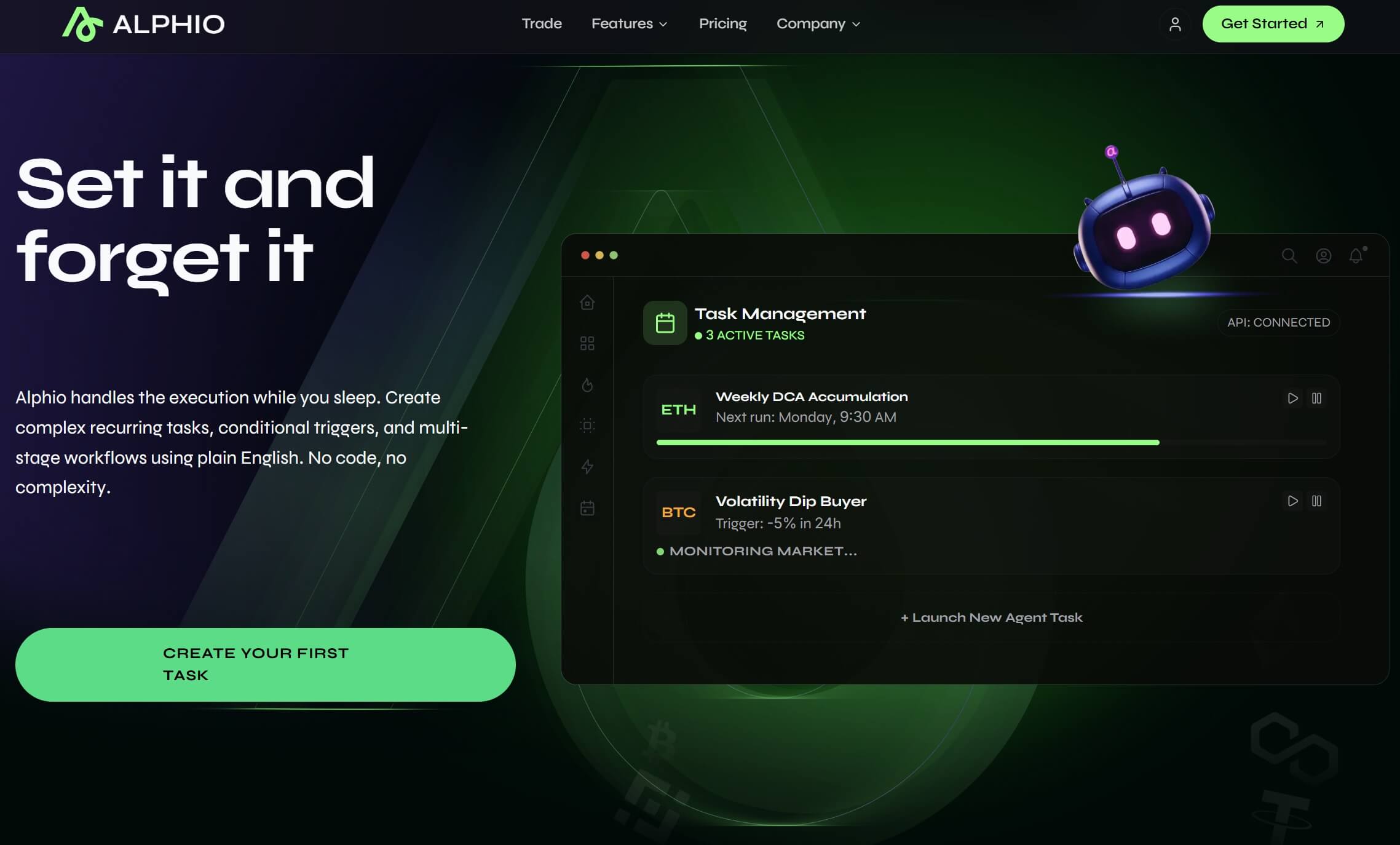
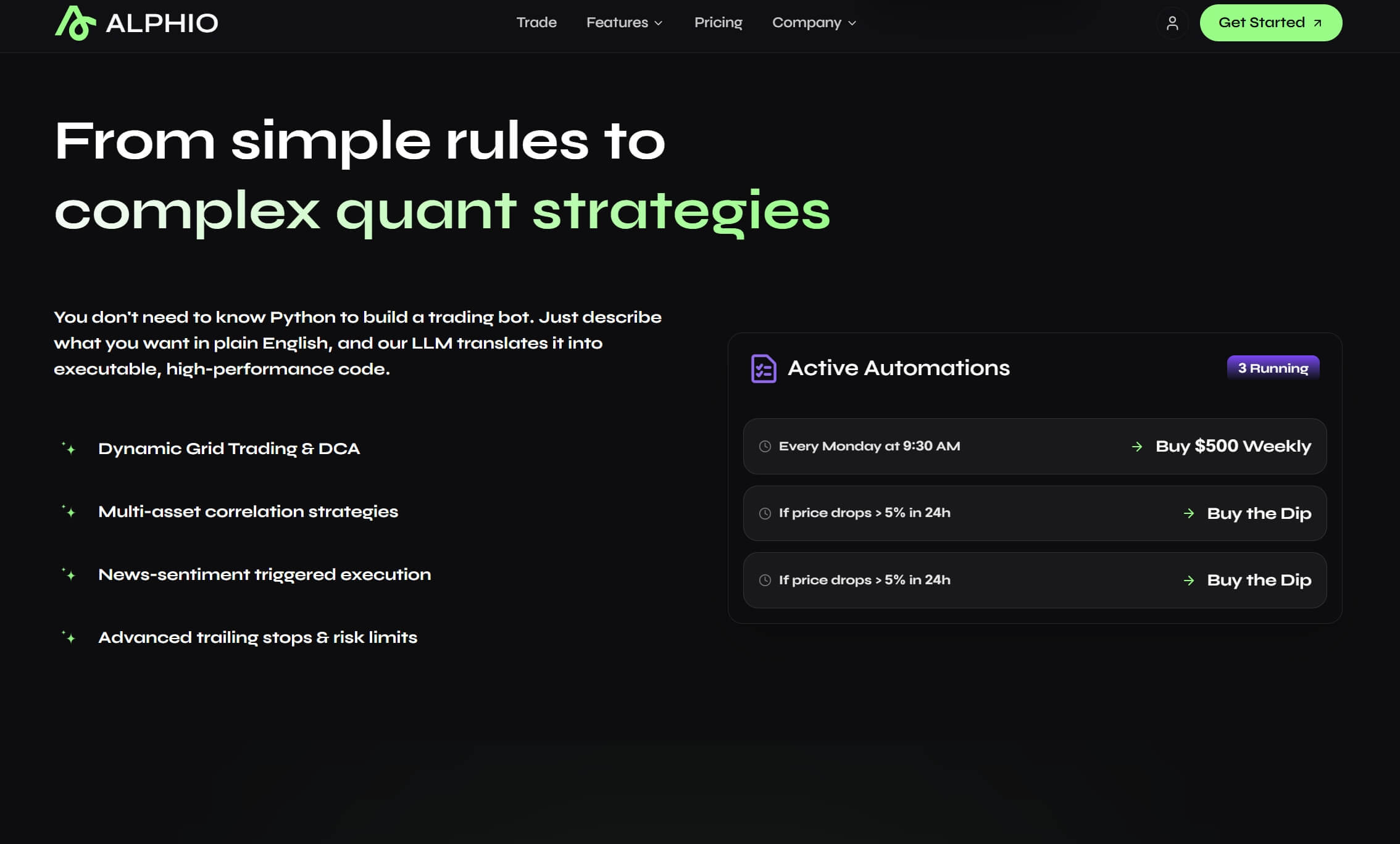
The best time to decide how you will react to a leadership shock is before it happens. Investors can write down a few simple rules, such as reviewing any holding when a CEO departure 8-K is filed, rechecking position limits after large moves and reassessing the thesis after the next earnings report. Alphio's Scheduled Task feature lets investors set recurring reviews, such as a weekly check of concentration in their largest holdings or a reminder around a key earnings date, so the plan runs on schedule rather than on emotion.
What to Watch Next for Nvidia and the AI Trade
The November 17 earnings report
Nvidia is scheduled to report third-quarter fiscal 2027 results on Tuesday, November 17, with a conference call at 2 p.m. Pacific time, according to the company's release. This will be the first major test of the interim leadership team. Investors will listen for whether guidance is reaffirmed, how customers are responding to the transition, and whether product roadmaps and supply commitments remain on track.
Competitors and customers
The leadership change also reshapes the competitive conversation. AMD and other AI chip suppliers may find hyperscale customers more open to diversifying their purchases while Nvidia's search is underway, though any shift in market share would show up over quarters rather than days.
For quick, plain-language questions, such as how a holding has historically reacted around earnings or what share of a portfolio sits in a single stock, Alphio's Conversational Trading lets investors ask in natural language and review the answer before taking any action.
The macro backdrop still matters
Leadership news does not happen in a vacuum. On the same day, the 10-year Treasury yield traded above 5% and Brent crude rose more than 3% to about $95.82, according to CNBC, while the Russell 2000 fell 1.66%, according to Yahoo Finance. Higher yields pressure richly valued growth stocks regardless of who runs them, so not every move in AI shares should be blamed on the boardroom.
Conclusion
A CEO resignation is a signal to investigate, not an automatic instruction to buy or sell. The research and the historical record point in the same direction: first-day moves are driven by surprise, volatility often stays elevated for months, and the long-term outcome depends on whether the business, the succession plan and the strategy remain intact. Nvidia's transition will be judged over the coming quarters, beginning with its November 17 earnings report, not by a single trading session.
For most investors, the more durable lesson is about concentration. Key-person risk at one company becomes portfolio risk when that company quietly dominates your holdings through several funds at once. Sizing positions sensibly, checking look-through exposure and writing rules before the next shock arrives will do more to protect a portfolio than any reaction to a single headline.
Investors who want to put that discipline into practice can explore Alphio's Copy Trade to see how experienced traders manage position sizing through volatile periods, or use Autonomous Trading to run rules-based strategies with risk limits defined in advance. Whatever tools you use, keep the decision anchored to filings, fundamentals and a plan written before the news breaks.
FAQs
What happens to a stock price when the CEO resigns?
The reaction depends mainly on how surprising the departure is and what it signals about the business. Abrupt exits with no stated reason often cause sharp drops at the open that partially reverse, while planned handoffs to credible successors may barely move the stock. Research also shows volatility often stays elevated in the year after a CEO change.
Should I sell a stock when the CEO resigns?
Not automatically. Read the company's 8-K filing, check whether guidance was reaffirmed and evaluate the succession plan before acting, because first-day moves are often driven by fear rather than fundamentals. If the departure coincides with an accounting issue, investigation or guidance cut, the risk may be more serious.
What is key-person risk in investing?
Key-person risk is the danger that a company's value depends heavily on one individual, such as a founder or long-time CEO. Companies often describe this dependence in the risk factors section of their annual 10-K. Investors manage it through position sizing, diversification and attention to board succession planning.
How much Nvidia stock is in an S&P 500 index fund?
As of November 10, 2026, Nvidia was roughly 6.3% of the S&P 500 based on SPY holdings compiled by CalculatorAI, and about 6.8% of the Invesco QQQ Trust according to StockAnalysis. Weights change daily with prices, so investors should check their fund's latest holdings for current figures.
Who is Nvidia's interim CEO after Jensen Huang's resignation?
Nvidia named chief financial officer Colette Kress as interim CEO on November 12, 2026, and she continues to serve as CFO. The board appointed Harvey C. Jones as its first Chair and said it will consider internal and external candidates for the permanent role.
Related articles
- International Stocks vs US Stocks in 2026: How the Strong Dollar and Valuations Change the CaseInternational stocks vs US stocks in 2026: how the strong dollar, valuation gaps, Fed hikes and concentration risk shape a smarter global allocation plan now.
- Defensive Stocks in 2026: Is the Rush Into Staples and Healthcare Already Overcrowded?Investors are piling into defensive stocks as tech slides. See why staples and healthcare surged, why valuations look stretched, and how to avoid overpaying.
- Defense Stocks in 2026: How Midterms, the Iran War and a Stalled Budget Shape the OutlookDefense stocks fell after the 2026 midterms. Learn how the Iran war, the $1.5T budget request and the December 11 funding deadline shape the sector outlook.
- 2026 Midterm Results Are In: What Democratic Control of Congress Means for the Stock MarketDemocrats win House and Senate in 2026 midterms: what divided government under Trump means for stocks, sectors, volatility, and investor checklists.
- US Midterm Elections and the Stock Market: Investor Playbook for Late 2026How US midterm elections affect stocks historically: S&P returns, gridlock premium, healthcare/defense/energy sectors, and a late-2026 investor checklist.
- Earnings Yield vs Bond Yield: How Stock Investors Should Read the Fed-Model Spread in 2026Compare S&P 500 earnings yield vs the 10-year Treasury and TIPS as of early Nov 2026. Learn Fed-model uses, flaws, and mega-cap examples for investors.