樂
樂觀
樂觀 · 25%MRNA
$20.51
情境價格
$245.810
+3.785 (+1.54%)收盤時
Moderna, Inc. is a biotechnology company advancing a new class of medicines made of messenger ribonucleic acid (mRNA). It is engaged in developing medicines across infectious disease vaccines, oncology therapeutics and rare disease therapeutics. Its platform incorporates advances across three components, mRNA, delivery, and the manufacturing process, to advance its medicines. Its products are Spikevax and mNEXSPIKE (its COVID vaccines), and mRESVIA (its vaccine against respiratory syncytial virus (RSV)). It also has a diverse development pipeline that consists of 35 therapeutic and vaccine programs, six of which are in late-stage development. It has regulatory filings under review for its seasonal flu+COVID vaccine (mRNA-1083) in Europe and Canada and for its seasonal flu vaccine (mRNA-1010) in the United States, Europe, Canada and Australia. Its rare disease programs are Propionic acidemia (mRNA-3927); Methylmalonic acidemia (mRNA-3705), and Cystic Fibrosis (mRNA-3692/VX-522).
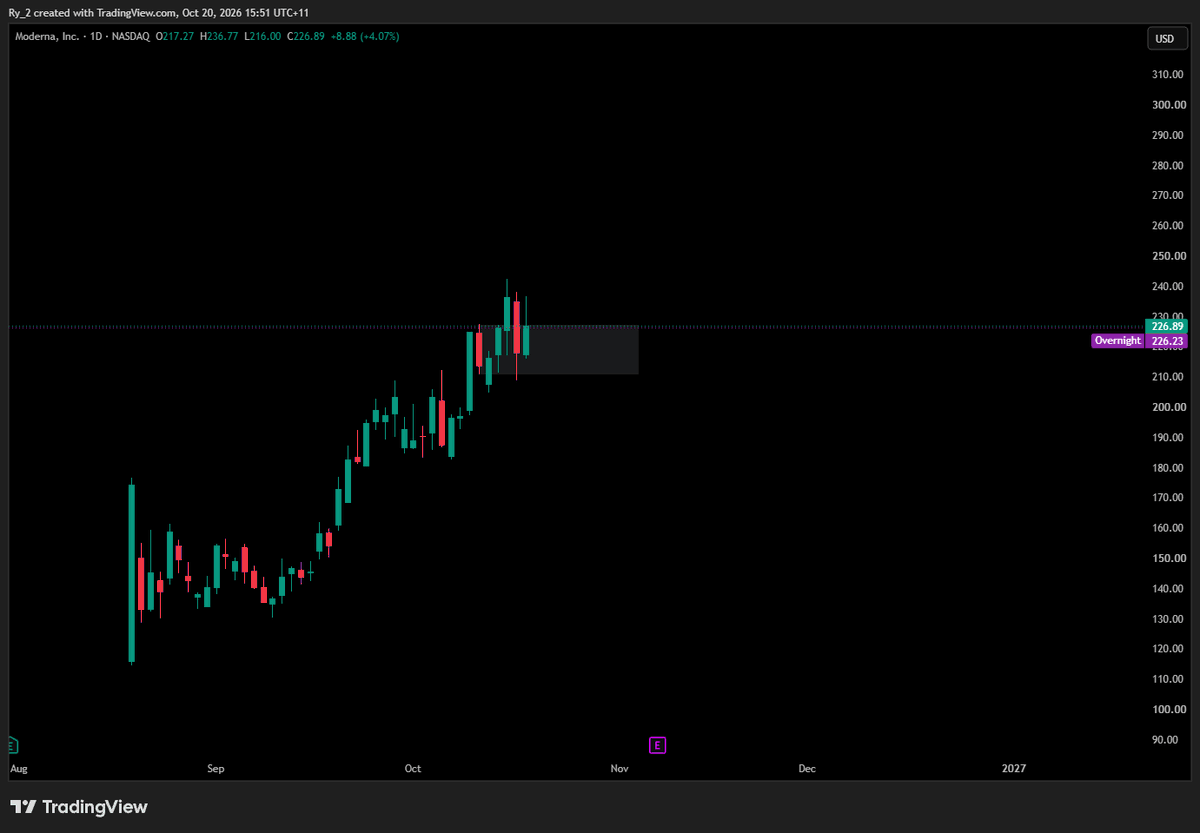
Moderna Inc is currently not a strong buy at $218.01 due to mixed analyst ratings and significant recent volatility. The RSI is at 55.19, indicating a neutral momentum, while the stock has experienced a 3.11% decline over the past five days. The forward P/E ratio is 23.04, suggesting that the stock may be overvalued compared to earnings expectations. The main risk is the hedge fund selling activity, which has increased by 437.15% over the last quarter, indicating a bearish sentiment among institutional investors.
情境價格取自當年最後一個月度預測區間。機率為固定的模型權重(25 / 50 / 25),不構成保證。
Moderna Stock Soars 600% Amid Vaccine Approvals and Breakthroughs

Moderna Shifts Focus to Oncology, Sees Growth Potential
Moderna and Merck Present Phase 3 Melanoma Findings for Personalized Cancer Treatment
BioNTech Faces Setbacks in Clinical Trials Amid Pipeline Hopes

Moderna Added to Nasdaq-100 Index, Boosting Investor Interest
Moderna, Inc. is a biotechnology company advancing a new class of medicines made of messenger ribonucleic acid (mRNA). It is engaged in developing medicines across infectious disease vaccines, oncology therapeutics and rare disease therapeutics. Its platform incorporates advances across three components, mRNA, delivery, and the manufacturing process, to advance its medicines. Its products are Spikevax and mNEXSPIKE (its COVID vaccines), and mRESVIA (its vaccine against respiratory syncytial virus (RSV)). It also has a diverse development pipeline that consists of 35 therapeutic and vaccine programs, six of which are in late-stage development. It has regulatory filings under review for its seasonal flu+COVID vaccine (mRNA-1083) in Europe and Canada and for its seasonal flu vaccine (mRNA-1010) in the United States, Europe, Canada and Australia. Its rare disease programs are Propionic acidemia (mRNA-3927); Methylmalonic acidemia (mRNA-3705), and Cystic Fibrosis (mRNA-3692/VX-522). It operates in the Healthcare sector (BIOLOGICAL PRODUCTS, (NO DISGNOSTIC SUBSTANCES) industry).
Moderna Inc is currently not a strong buy at $218.01 due to mixed analyst ratings and significant recent volatility. The RSI is at 55.19, indicating a neutral momentum, while the stock has experienced a 3.11% decline over the past five days. The forward P/E ratio is 23.04, suggesting that the stock may be overvalued compared to earnings expectations. The main risk is the hedge fund selling activity, which has increased by 437.15% over the last quarter, indicating a bearish sentiment among institutional investors.

$MRNA $MRK $MRNA Phase 3 data for intismeran autogene in the adjuvant treatment of patients with resected stage IIB-IV melanoma has been selected for presentation at a Presidential Symposium at ESMO Congress 2026. Moderna will host an investor event via webcast on Saturday, October 24, at 7:00 PM CEST / 1:00 PM EDT. Core focus: discussing the clinical data and commercial outlook for Moderna's oncology pipeline, specifically following the Presidential Symposium presentation. Registration is available on the event page.
展開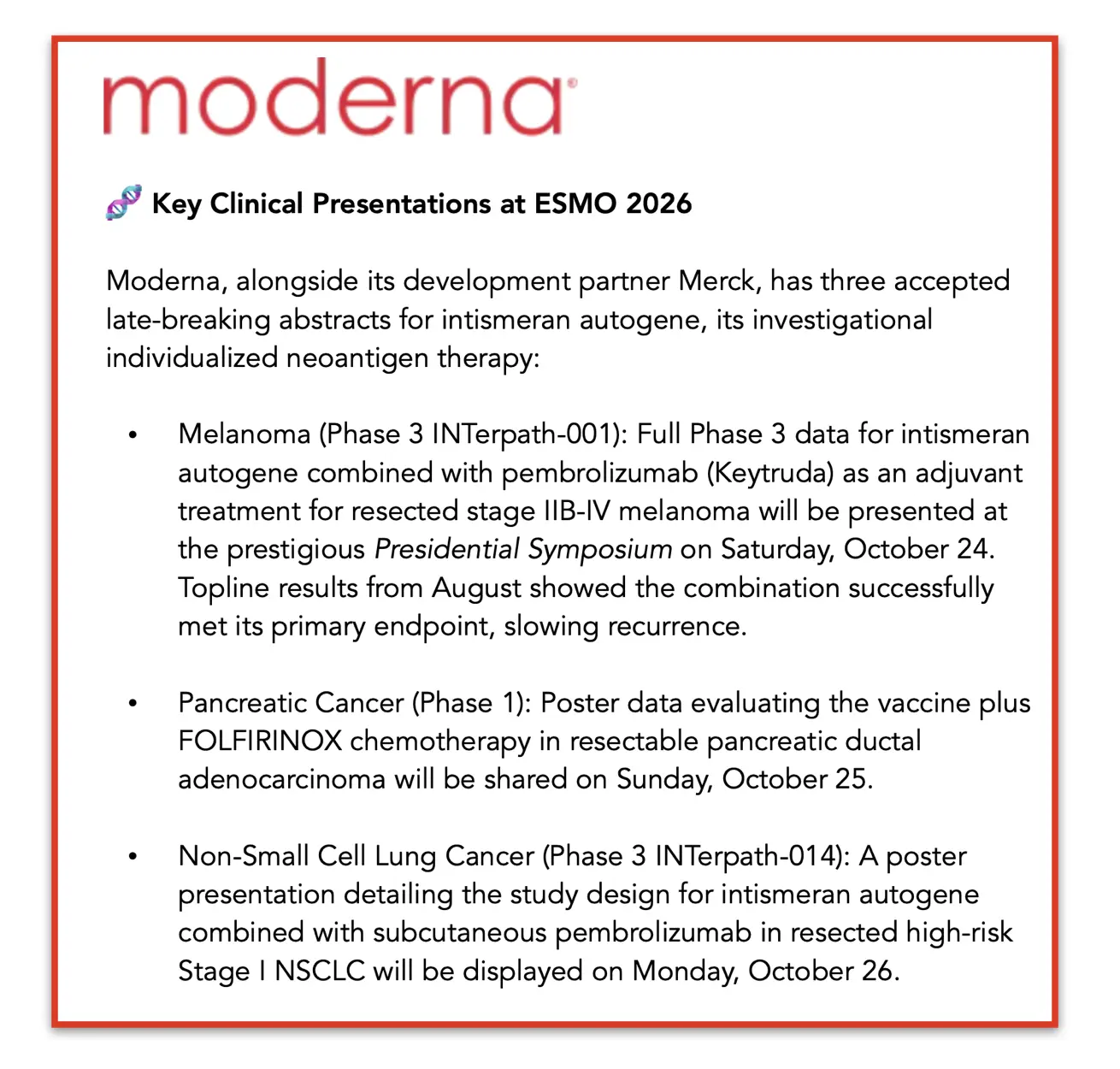

Moderna is not only holding up but hitting new highs while AI hardware stocks pull back. The most valuable part of AI implementation is its application in drug development, not in producing more junk short videos for cheap dopamine. The second image shares monitoring points for when Moderna's rally ends and upside targets. $MRNA
展開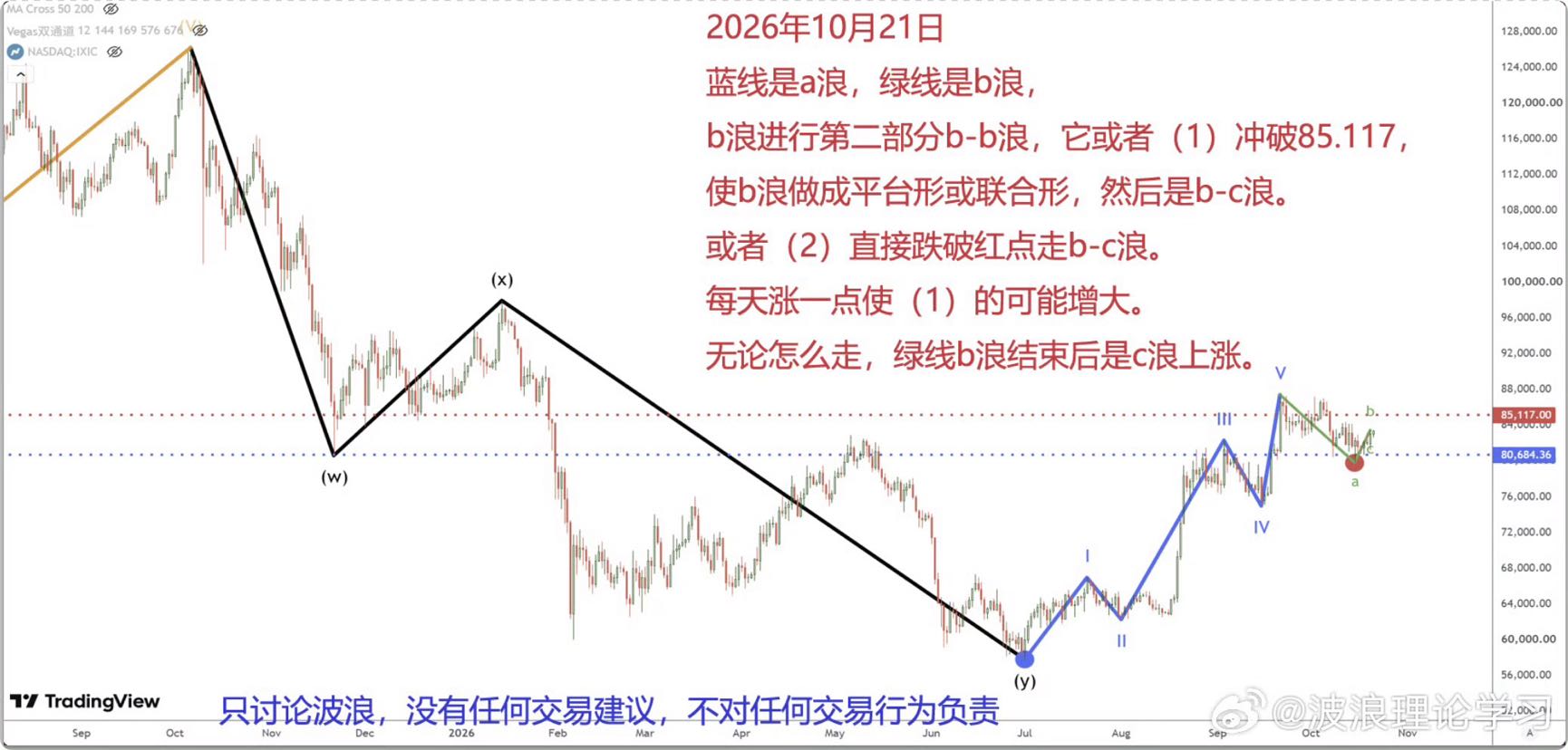

OpenAI bought an AI drug company, but not the part that designs molecules OpenAI acquired Orchestra Bio and folded it into its own life sciences project, Rosalind. This company doesn't touch molecule generation; what it does looks quite traditional: using AI agents to help drugmakers track trial scheduling and clinical progress, and coordinate manufacturing delays. The official announcement says: a new drug still takes an average of 10 to 15 years. When large model companies enter pharma, the first thing they take on isn't science, it's operations. 1. Who's on the team CEO Ashoka Rajendra, former head of development and manufacturing products at Benchling. - Benchling is a leader in biopharma R&D software, valued at $6.1 billion in its 2021 Series F, and officially says more than 1,300 biotech companies use it, including Merck, Moderna, and Sanofi, to record experiments, manage samples, and handle data. - He built exactly the software for the stretch where a drug goes from the lab to manufacturing. He sees most clearly where pharma companies break down and where they leak money. CTO Andy Xu, former VP of engineering at Numenta. - Numenta was founded in 2005 by Palm founder Jeff Hawkins, starting from brain science and doing AI, later focusing on making model inference faster and cheaper, officially claiming it can speed up inference by more than 10 to 100 times. - Scheduling and dispatch work runs a huge amount of inference every day; if costs can't be pushed down, it's unaffordable. One understands pharma workflows, the other understands running systems cheaply. 2. The bottleneck isn't the algorithm Molecular design has been buzzing for years, and everyone thought AI could quickly compute new drugs. But after computing them out, synthesis, animal testing, and Phase III trials can't be skipped. Trial and error in the physical world can't be replaced by algorithms. 3. Science sets the ceiling, grunt work decides survival A lot of new drug R&D time is spent on internal friction: disconnected communication between departments, scheduling delays at outsourced research organizations, and gaps when scaling up production. Straightening out this information gap between discovery and clinical trials is something agents can turn into real savings right now. I think what OpenAI wants from this investment is also an entry point and data. Tools that only run molecular models struggle to get into pharma companies' core decisions; once it takes over clinical and manufacturing scheduling, the data from pharma companies' real daily workflows passes through it. 4. Chew through the messy process work first, then aim for the scientific holy grail. Molecular design sells a lottery ticket ten-plus years out. Process coordination sells tomorrow's cash ledger. Everyone thought large models would enter pharma as Einstein first, but it turns out they went in as project managers first.
展開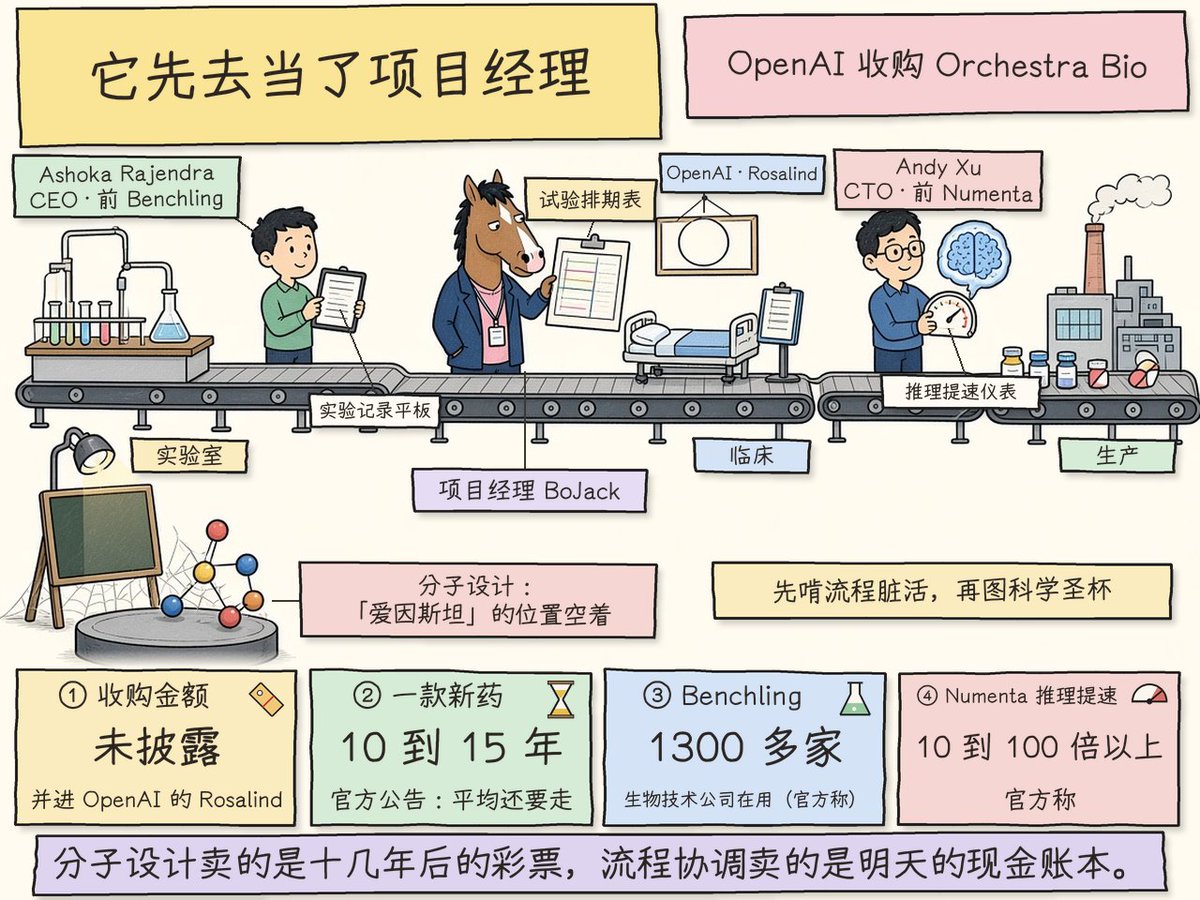


本頁僅供研究參考,不構成投資建議。模型可能出錯。過往表現不代表未來結果。