
A
Alcista
Alcista · 25%MSFT
$508.39
Precio del escenario
$532.600
+8.202 (+1.54%)Al cierre
Microsoft Corporation is a technology company. The Company develops and supports software, services, devices, and solutions. The Productivity and Business Processes segment consists of products and services in its portfolio of productivity, communication, and information services. This segment primarily includes Microsoft 365 Commercial products and cloud services, Microsoft 365 Consumer products and cloud services, LinkedIn, and Dynamics products and cloud services. The Intelligent Cloud segment consists of server products and cloud services, including Azure and other cloud services comprising cloud and AI consumption-based services, GitHub cloud services, Health and Life Sciences cloud services, and other cloud services; and Server products consist of SQL Server, Windows Server, Visual Studio, System Center, related Client Access Licenses, and other on-premises offerings. The More Personal Computing segment primarily comprises Windows and Devices, XBOX, and Search advertising.
Microsoft is currently a hold. The stock is priced at $524.51, with a forward P/E ratio of 25.13, indicating it may be fairly valued for long-term investors. However, the RSI is at 42.61, suggesting it is nearing oversold conditions, which could lead to a potential rebound. The main risk is the upcoming earnings report on October 28, where expectations are set at an EPS of 4.71, which could impact the stock's performance depending on the results.
Deutsche Bank
$600
2026-10-12
Deutsche Bank
2026-10-12
Precio objetivo
$600
Phillip Securities
$515
2026-10-12
Phillip Securities
2026-10-12
Precio objetivo
$515
Evercore ISI
$635
2026-10-07
Evercore ISI
2026-10-07
Precio objetivo
$635
Scotiabank
$615
2026-10-05
Scotiabank
2026-10-05
Precio objetivo
$615
Melius Research
$665
2026-10-05
Melius Research
2026-10-05
Precio objetivo
$665
Los precios por escenario son la última banda de previsión mensual del año en curso. Las probabilidades son pesos fijos del modelo (25 / 50 / 25), no garantías.
Microsoft Earnings Preview: High Stock Price Amid Slowing Growth
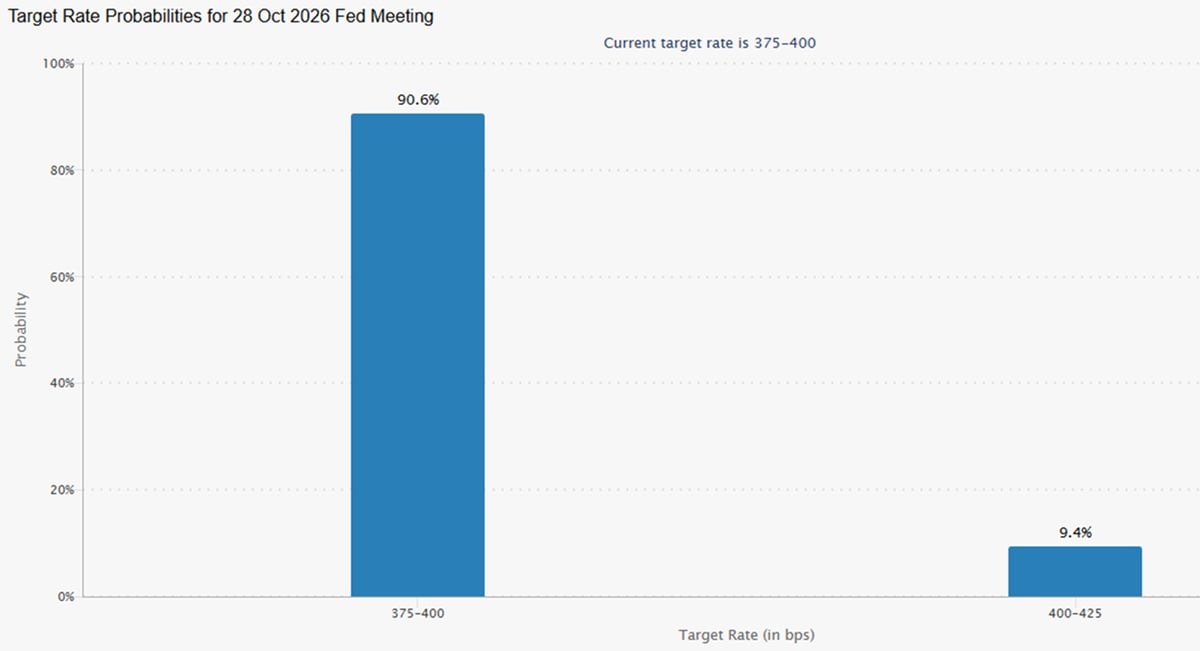
Market Dynamics Analysis Ahead of Fed Meeting

Anthropic's IPO Sparks Debate in AI Market
Anthropic's IPO: A Critical Moment for Tech Sector

Anthropic's IPO Could Be Largest in History
Microsoft Corporation is a technology company. The Company develops and supports software, services, devices, and solutions. The Productivity and Business Processes segment consists of products and services in its portfolio of productivity, communication, and information services. This segment primarily includes Microsoft 365 Commercial products and cloud services, Microsoft 365 Consumer products and cloud services, LinkedIn, and Dynamics products and cloud services. The Intelligent Cloud segment consists of server products and cloud services, including Azure and other cloud services comprising cloud and AI consumption-based services, GitHub cloud services, Health and Life Sciences cloud services, and other cloud services; and Server products consist of SQL Server, Windows Server, Visual Studio, System Center, related Client Access Licenses, and other on-premises offerings. The More Personal Computing segment primarily comprises Windows and Devices, XBOX, and Search advertising. It operates in the Technology sector (SERVICES-PREPACKAGED SOFTWARE industry).
Microsoft is currently a hold. The stock is priced at $524.51, with a forward P/E ratio of 25.13, indicating it may be fairly valued for long-term investors. However, the RSI is at 42.61, suggesting it is nearing oversold conditions, which could lead to a potential rebound. The main risk is the upcoming earnings report on October 28, where expectations are set at an EPS of 4.71, which could impact the stock's performance depending on the results.
34 analysts cover MSFT: 27 rate it Buy, 6 Hold and 1 Sell. The average price target is 631.36.

Microsoft & Google Earnings Preview 👉 $MSFT (Microsoft): The core business is solid and hard to dislodge, with a small chance of a beat, but expectations are maxed out—focus on guidance. 👉 $GOOGL (Google): Whether the advertising core can hold is the biggest question; beating expectations will be difficult, and advertising + capex are the risk points. What the market is trading now is not revenue, but the cash flow cost of AI investment and the resilience of the core business. Nasdaq volatility will transmit to crypto markets—stay alert. (MSFTUSDT) (GOOGLUSDT) #CanGoogleEarningsHoldItsCoreBusiness #CanMicrosoftEarningsDeliverOnAIRewards
Mostrar más
Alphabet consensus revenue $127.9 billion, up roughly 25% year over year. EPS stuck at $3.02 to $3.03. Microsoft consensus revenue $90.6 to $90.7 billion, up about 16-17% year over year. EPS $4.72 to $4.73. Both report after market close on October 28 US Eastern time, which is around early morning October 29 Beijing time. On Google's side, with the advertising base plus high cloud growth, revenue is more likely to land in line or slightly beat. Last quarter Google Cloud was $24.8 billion, up 82% year over year. This quarter the market is still leaning toward growth approaching double. The real question for a beat is margins: can Cloud gross margin hold up, and will capex eat EPS. The base is still Search. AI direct answers will divert some queries, true, but advertisers pay for intent and conversion, not the chat box itself. Short-term diversion will cause noise. Whether ad unit prices actually break down still depends on whether query volume and CPC collapse together. This quarter looks more like amplified noise than a broken base. On Microsoft's side, revenue growth itself is not mysterious. Whether it beats depends on Azure and paid Copilot seats. Previously Azure constant-currency growth guidance was about 45%. Some institutions are modeling Azure revenue this quarter at about $33.1 billion, near 48% growth. And this quarter Azure absolute revenue is disclosed for the first time, with the segment renamed Agents and Infra. Once the numbers are out, the market has nowhere to hide. On whether the AI dividend is delivered, it is not just about whether growth looks bright, but whether gross margin gets swallowed by capex. Revenue in line to slightly beat is possible. If guidance and spending language are firm, valuation can still get hit after hours. Overall view: the probability of a headline miss for either company is low. In line or slightly beat looks more like the main script. What really matters is post-call guidance and the tone on capital spending, not the single revenue line for the quarter. Sentiment on bStocks tokenized equities will also shake a bit, but what shakes is the expectation gap, not the earnings headline itself. $GOOGL $MSFT #EarningsSeason #CanGoogleEarningsHoldTheBase #CanMicrosoftEarningsDeliverTheAIDividend
Mostrar más
#WeeklyPost #AnthropicFilesForUSIPO After Anthropic's IPO, growth will make the headlines, but profitability will determine the stock price. Anthropic's S-1 filing (ticker ANT, Nasdaq) presents three numbers side by side: first-half revenue of $16.3 billion, a net loss of $80.7 billion, and a reported valuation of $1.5 trillion to $2 trillion. The company reportedly plans to list in the week of November 16, with the price range and share count still undisclosed. My read on this listing is that in the first few days the market will focus on growth, but profitability will determine where the stock price ultimately settles. Commercialization is the evidence connecting the two. Growth: already priced in First-half revenue was $16.29 billion, compared with $1.16 billion a year earlier. Q2 revenue was $11.56 billion, and Anthropic told investors Q3 revenue reached $16.8 billion. That performance is impressive, but sequential growth slowed from about 144% in Q2 to 45% in Q3. At a $1.5 trillion to $2 trillion valuation, that is roughly 22 to 30 times annualized Q3 revenue. The previous private round closed in May at a $965 billion valuation. When the valuation already reflects extraordinary growth expectations, the market stops rewarding growth itself and starts asking what that growth costs. Profitability: numbers that need to be read correctly The $80.7 billion net loss includes about $72.4 billion in non-cash fair value losses on convertible notes. Operating loss was $693 million, while Q2 turned profitable with $974 million in operating income, an 8.4% margin. Operating cash flow was $3.93 billion, and liquidity stood at $131.7 billion. The real pressure comes from compute. First-half spending was close to $9 billion, about 55% of revenue; the filing shows at least $114.5 billion owed to Google, with obligations running through 2033, and another $110 billion owed to Amazon, with obligations running through 2036, payable regardless of usage. What determines whether these obligations are manageable will be margins, not revenue. Commercialization: the bridge between the two More than 11,900 customers spend at least $100,000 a year, including 1,900 spending $1 million or more and about 250 spending $10 million or more. Net revenue retention is reportedly close to 900%, meaning existing customers keep increasing their spending. This is the strongest evidence that AI revenue is recurring rather than a one-time experiment. But watch customer concentration: about 48% of first-half revenue came from the Amazon, Google, and Microsoft marketplaces. What the market will focus on first 1. The amended prospectus: price range, share count, October revenue run rate 2. Sequential growth after Q3's 45% growth rate 3. Operating margin once revenue growth outpaces compute growth 4. Whether free cash flow can cover fixed infrastructure commitments 5. Governance trade-offs: the founders hold 50.1% of voting power, and a long-term benefit trust elects a majority of the board. This arrangement protects the safety mission but limits the influence of public shareholders Broader market impact The filing lifted AI-related stocks on Monday. The semiconductor index rose 2.82%, Nvidia rose 2.39%, Broadcom rose 2.33%, and Arm rose 6.2%. The index is still down 12.2% this month, so the rebound reflects the market's hope that AI revenue can cover AI spending, not proof that it will. Growth will drive the initial trading, commercialization will support the narrative, and profitability will determine the long-term stock price. If revenue keeps growing strongly and operating margins keep expanding, the high valuation multiples may look reasonable. If compute commitments grow faster than revenue, even record growth may not support the valuation. #ANT #WCTCS9
Mostrar más

#WeeklyPick #WCTCS9 When balancing long-term growth and business quality, I lean toward $MSFT (Microsoft). Here is why: * AI monetization: Microsoft has multiple paths to turn AI usage into revenue, including Azure, Copilot, and enterprise software. * Recurring revenue: Its mature software ecosystem provides a relatively steady revenue base. * Key catalysts: Azure growth, AI infrastructure spending, and margin guidance could all drive significant stock moves. * Main risks: Heavy AI capital expenditure could pressure margins; the market may have already priced in related expectations. For this event-driven trading week, I rank the opportunities as follows: * $MSFT — quality business and AI-driven growth. * $GOOGL — AI competition and advertising growth. * $AMZN — AWS growth and operating leverage. * $COIN — upside potential driven by crypto market momentum (high volatility). * $HOOD — trading volume and overall crypto market trends (high volatility). The most important catalysts this week are the Fed's decision on October 28 and the GDP and PCE data released on October 29. Even if a company reports very strong results, its stock may not rise if forward guidance disappoints or macroeconomic conditions worsen. My preference: $MSFT. Rather than buying a stock simply because earnings season is approaching, I will focus on Azure growth and whether AI investments are generating measurable returns. $MSFT $GOOGL $AMZN $COIN $HOOD
Mostrar más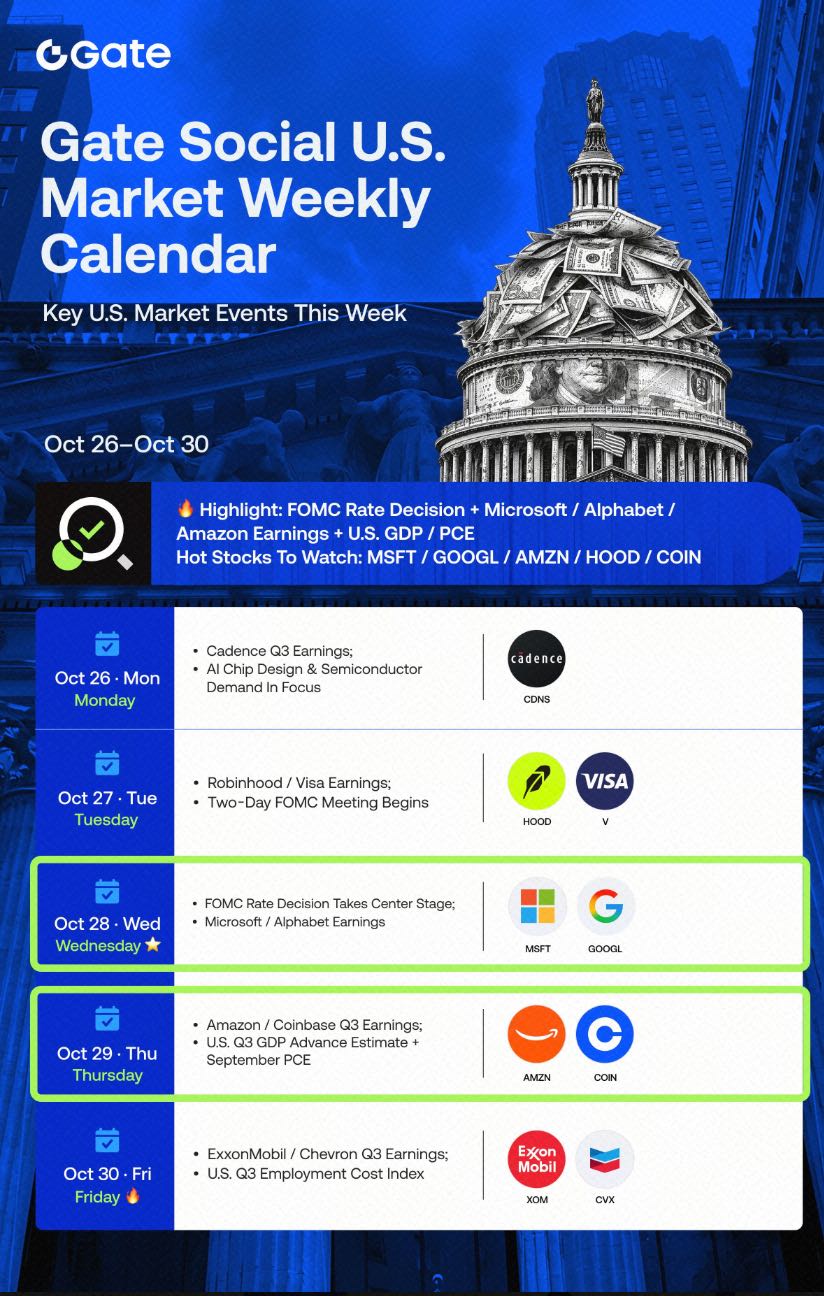
#AnthropicFilesForUSIPO Public market investors will not view growth, losses, or profitability as isolated metrics; instead, the primary post-IPO focus will be on the unit economics of sustainable growth. Anthropic's S-1 filing shows revenue grew 14x in the first half to $16.3 billion, while recording $693 million in operating losses and carrying $518 billion in long-term compute commitments. This indicates that public market focus is shifting from the venture capital-style "growth at all costs" narrative to a rigorous examination of operating leverage. Losses and infrastructure spending: The S-1 reports first-half 2026 revenue of $16.3 billion, operating losses of $693 million, and net losses of $80.7 billion—most of which stems from non-cash valuation changes. Below are these factors ranked by long-term importance once ANT shares begin trading on Nasdaq: 1. AI revenue generation and net customer retention (the ultimate determinant) * Revenue is the primary metric determining Anthropic's valuation multiple. * Beyond API usage: Investors will closely examine revenue sources. Low-margin consumer subscriptions (such as the standard Claude Pro plan) will command lower valuation multiples than workflows deeply embedded in enterprise infrastructure and developer API usage. * Customer concentration and recurring revenue: The S-1 highlights concentration risk (for example, top enterprise customers contributing a substantial portion of revenue through a small number of long-term locked contracts). As competition among next-generation model providers intensifies, Wall Street will closely examine net revenue retention—which reflects whether customers' API usage increases year over year—as well as these companies' pricing power. 2. Capital expenditure and operating losses (structural pressure) * Headline net losses matter less than non-cancellable infrastructure obligations. * Accounting vs. cash reality: While headline net losses ($80.7 billion in the first half) are affected by non-cash fair value adjustments related to convertible bonds and SAFEs (simple agreements for future equity), the underlying operating metrics reveal the true picture. * The $518 billion compute bill: What risk-averse investors should truly worry about is not current operating losses but structural rigidity. Anthropic has committed over $500 billion to AWS, Google Cloud, and Microsoft, a substantial portion of which must be paid regardless of actual demand. * Gross margin after compute costs: The market will assess how quickly model inference costs decline relative to output pricing. If GPU/TPU compute costs represent a large share of revenue, public markets may redefine AI hyperscalers—no longer viewing them as high-margin software-as-a-service (SaaS) platforms, but more as low-margin cloud hosting service providers. 3. Revenue growth (baseline expectation) Growth is essential; ... it can sustain valuation multiples but cannot rescue a flawed business model. * Growth deceleration risk: The market has already priced high-speed growth into expected valuations of $1.5 trillion to $2 trillion. Any single quarter of unexpected growth decline—for example, demand flattening sequentially in Q3 and Q4—could trigger sharp stock price volatility. * Commoditization pressure: If frontier model capabilities stagnate, or open-source alternatives close the gap, enterprise CFOs will find it increasingly difficult to justify paying a premium for frontier AI, threatening the projected trajectory. My key question is: After deducting compute, chip, and cloud infrastructure costs, how much profitable growth can Anthropic achieve? If monetization improves, investors may tolerate substantial spending. If revenue grows but unit economics deteriorate, even impressive growth could disappoint the market. I will watch the following: AI monetization: Can Claude and Claude Code convert growing enterprise demand into recurring revenue and durable margins? Growth: Can revenue continue to grow rapidly enough to justify the IPO valuation? Key takeaways Anthropic is leading the market with revenue growth, but monetization quality (gross margin per query plus enterprise customer retention) and management of fixed compute obligations will determine whether the stock is viewed as a high-margin SaaS company (trading at more than 20x revenue) or a capital-intensive infrastructure investment. $META $TSLA $MU $SPCX
Mostrar más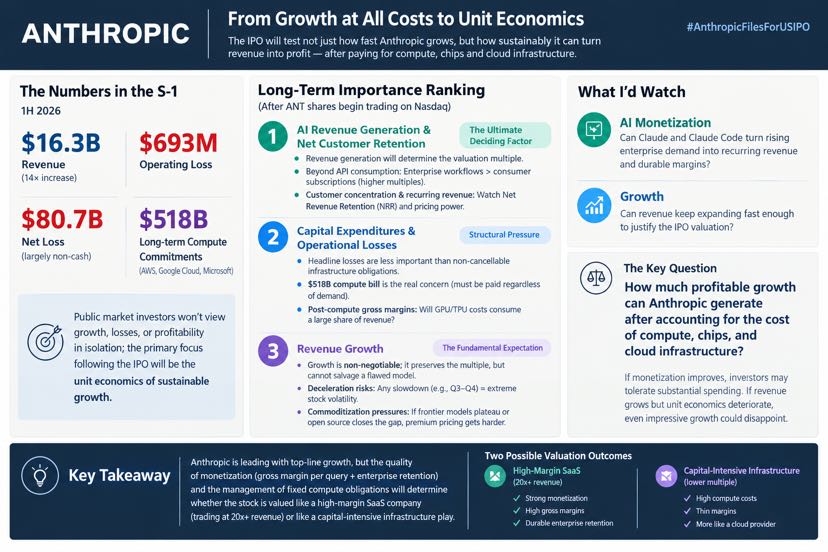
Esta página es solo para investigación y no constituye asesoramiento de inversión. Los modelos pueden equivocarse. El rendimiento pasado no garantiza resultados futuros.