
A
Alcista
Alcista · 25%ASML
$987.59
Precio del escenario
$1,641.520
-15.759 (-0.96%)Al cierre
ASML Holding N.V. is a holding company based in the Netherlands. The Company operates through its subsidiaries in the Netherlands, the United States, Italy, France, Germany, the United Kingdom, Ireland, Belgium, South Korea, Taiwan, Singapore, China, Hong Kong, Japan, Malaysia and Israel. The Company operates through one business segment which is engage in development, production, marketing, sales, upgrading and servicing of advanced semiconductor equipment systems, consisting of lithography, metrology and inspection systems. The Company offers TWINSCAN systems, equipped with lithography system with a mercury lamp as light source (i-line), Krypton Fluoride (KrF) and Argon Fluoride (ArF) light sources for processing wafers for manufacturing environments for which imaging at a small resolution is required. TWINSCAN systems also include immersion lithography systems (TWINSCAN immersion systems).
ASML is a strong buy right now due to its recent record Q3 sales of €11.7 billion, a 55% year-over-year increase, and an impressive gross margin of 57.5%. Additionally, the stock has a forward P/E ratio of 28.90, indicating reasonable valuation given its growth potential in the AI chip market. However, the main risk is the current RSI of 21.12, suggesting the stock is oversold, which could lead to short-term volatility.
Los precios por escenario son la última banda de previsión mensual del año en curso. Las probabilidades son pesos fijos del modelo (25 / 50 / 25), no garantías.
ASML Reports Record Q3 Results, Raises Full-Year Guidance

ASML Sees Strong Demand for AI Chips, Growth Prospects Remain
Analysis of TSMC's Future Growth Potential
ASML's Critical Role in the AI Chip Market
ASML Reports Record Q3 Sales Driven by AI Investments
ASML Holding N.V. is a holding company based in the Netherlands. The Company operates through its subsidiaries in the Netherlands, the United States, Italy, France, Germany, the United Kingdom, Ireland, Belgium, South Korea, Taiwan, Singapore, China, Hong Kong, Japan, Malaysia and Israel. The Company operates through one business segment which is engage in development, production, marketing, sales, upgrading and servicing of advanced semiconductor equipment systems, consisting of lithography, metrology and inspection systems. The Company offers TWINSCAN systems, equipped with lithography system with a mercury lamp as light source (i-line), Krypton Fluoride (KrF) and Argon Fluoride (ArF) light sources for processing wafers for manufacturing environments for which imaging at a small resolution is required. TWINSCAN systems also include immersion lithography systems (TWINSCAN immersion systems). It operates in the Technology sector (SPECIAL INDUSTRY MACHINERY, NOT ELSEWHERE CLASSIFI industry).
ASML is a strong buy right now due to its recent record Q3 sales of €11.7 billion, a 55% year-over-year increase, and an impressive gross margin of 57.5%. Additionally, the stock has a forward P/E ratio of 28.90, indicating reasonable valuation given its growth potential in the AI chip market. However, the main risk is the current RSI of 21.12, suggesting the stock is oversold, which could lead to short-term volatility.

#ASMLTSMCQ3EarningsSoon Two AI giants, two very different growth stories The semiconductor market has taught investors an important lesson: being essential to the AI boom does not mean every company benefits in the same way or on the same timeline. ASML and TSMC both sit at critical points in the advanced chip supply chain, but their businesses work differently. ASML builds the complex lithography machines needed to produce advanced chips, while TSMC manufactures chips for customers that design processors powering AI, smartphones, and data centers. After ASML reported third-quarter results on October 14, my attention turned to TSMC's earnings release on October 15. ASML delivered strong figures, but the market reaction matters just as much. Based on the data provided, ASML reported quarterly sales of EUR 11.7 billion, a gross margin of 57.5%, and EUR 5.7 billion in new orders. It reported earnings per share of $14.65, also above the cited estimate of about $12.13. Strong service and upgrade revenue helped support the results. These figures suggest demand for advanced chipmaking equipment remains substantial. Still, I would not judge ASML only on beating expectations. Semiconductor equipment orders, fab expansion plans, and installation timelines run on longer cycles. Customers may be investing heavily in AI, but the resulting equipment revenue takes several quarters to show up. That is why even impressive results do not automatically translate into an immediate stock price move. Investors also weigh valuation, forward guidance, and how much growth is already reflected in the share price. TSMC is heading into its report with different strengths. Its preliminary quarterly revenue data points to strong demand. Based on the data provided, third-quarter revenue reached about NT$1.49 trillion, equivalent to roughly $46.7 billion, exceeding the cited market consensus and the upper end of its published guidance range. For me, the key question is whether revenue growth is translating into stronger profitability, and whether management remains confident about future demand. Advanced 3nm and 5nm manufacturing processes, plus advanced packaging capacity, all matter because AI chipmakers need not only chip designs but also the manufacturing capacity to produce increasingly complex processors at scale. If demand stays strong and capacity constraints persist, TSMC may retain meaningful pricing power. But higher capital expenditure, manufacturing costs, and the difficulty of expanding capacity efficiently are risks I would not overlook. Why does TSMC look attractive in this earnings context? The difference comes down to how the two companies capture the AI investment cycle. ASML benefits when chipmakers invest in the equipment needed to expand or upgrade production. TSMC is more directly involved in manufacturing the chips customers order. That does not mean one business is broadly better than the other. ASML's advanced equipment is hard to replace, while TSMC's manufacturing capability and advanced packaging are central to delivering cutting-edge chips. Both depend on continued investment in computing infrastructure, but their earnings drivers and timing differ. For this particular earnings event, I will be watching TSMC's profit growth, gross margin outlook, advanced node demand, packaging capacity, and management commentary on future capital expenditure. Strong revenue alone is not enough; guidance needs to support the growth expectations already reflected in the share price. My view is that TSMC has a highly attractive near-term earnings catalyst, because its results can reveal how much AI demand is translating directly into manufacturing revenue and profit. At the same time, ASML's results provide a valuable signal about the long-term investment cycle behind advanced chip production. I would not buy either stock just because AI demand remains strong. Valuation, forward guidance, and the market's reaction to results still matter. The real opportunity lies in identifying which company can convert AI demand into sustainable earnings growth without making investors pay too much for that growth. $ASML $TSM $AMD
Mostrar más

If you missed September, don't miss October 🔥 We're already halfway through the month, right at the most active period of the market. Seize the opportunity to recover what was lost before, or push toward even greater heights. Time waits for no one, but in life you really only need to catch one or two opportunities — that's enough. #ASML and #TSMC are about to release Q3 earnings.
Mostrar más

What are we talking about today? Gate Square's trending topics have been updated. US September CPI will be released tonight. Will the inflation data once again change the trading pace for $BTC and US stocks? Gate's derivatives market share has risen to 10.1%, the largest global increase in September. Can this growth continue? ASML and TSMC's Q3 earnings will be released soon. Will the semiconductor supply chain see a new round of repricing? Quality content may receive traffic support and featured recommendations. What are your thoughts? Join the discussion:
Mostrar más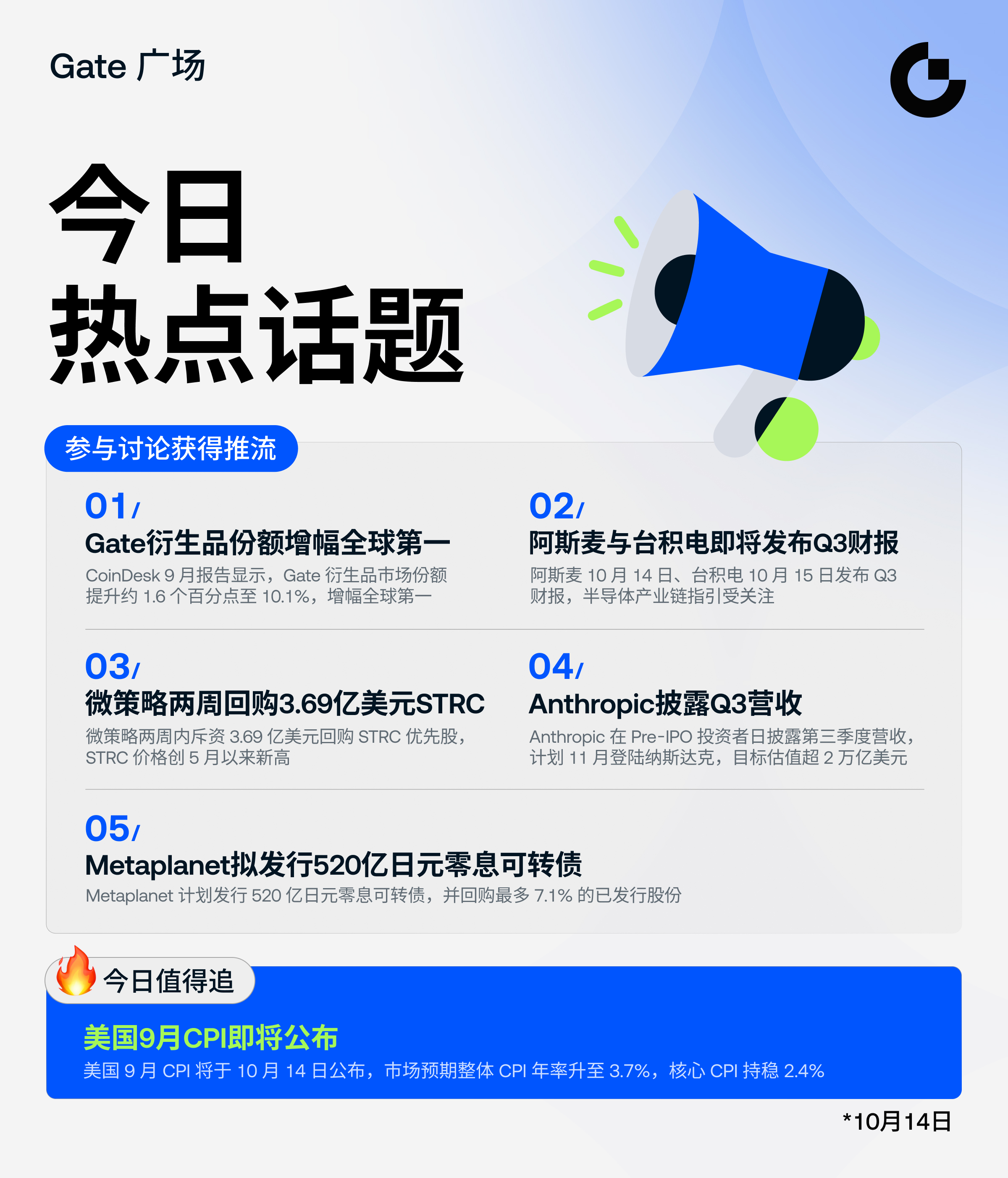

🔥 What are we talking about today? Gate Square's trending topics have been updated! 🔹 US September CPI is released tonight — will the inflation data once again change the trading rhythm for $BTC and US stocks? 🔹 Gate's derivatives market share rose to 10.1%, the largest global increase in September — can this growth continue? 🔹 ASML and TSMC Q3 earnings are coming up one after another — will the semiconductor supply chain see a new round of pricing? Quality content can receive traffic support + featured recommendations. 💰 Have a view? Come join the discussion:
Mostrar más
#ASMLTSMCQ3EarningsSoon ASML and TSMC Earnings: The AI Boom Faces Its Next Major Reality Check The AI revolution has created huge opportunities across the semiconductor industry, but the next phase of growth depends on one important question: can chip demand continue to support the massive investment flowing into AI infrastructure? This week, two major players in the global semiconductor supply chain, ASML and TSMC, are preparing to release their Q3 2026 earnings updates. With investors focused on AI spending, advanced chip production, and future profitability, these reports could shape market sentiment across the entire tech sector. ASML: The Equipment Behind the AI Revolution ASML holds a strategically important position in semiconductor manufacturing. Its advanced lithography systems help chipmakers produce increasingly powerful and complex chips. Its extreme ultraviolet (EUV) technology is especially important for making cutting-edge semiconductors. ASML plans to report Q3 results on October 14. Investors will look beyond revenue and earnings figures, hoping to understand the company's future growth potential. The most important metrics include new orders, EUV system demand, margins, delivery timelines, and management's outlook for the coming quarters. Growing AI infrastructure investment could push chipmakers to expand capacity, potentially supporting long-term demand for ASML's equipment. However, export restrictions, customer investment decisions, production constraints, and high valuation expectations remain significant risks. TSMC: Turning AI Demand Into Revenue TSMC is another key part of the AI ecosystem. As a leading foundry semiconductor manufacturer, it produces advanced chips for customers across the tech industry. TSMC has already reported Q3 revenue of about NT$1.49 trillion, equivalent to about US$46.71 billion, up roughly 50% year over year. These figures highlight strong recent demand, but revenue alone cannot explain the full picture of the business. Investors will focus on quarterly profit, gross margins, advanced process demand, advanced packaging capacity, capital expenditure, and management's expectations for future growth. AI accelerators and high-performance computing remain important growth drivers. However, manufacturing costs, energy demand, capacity expansion, and competition for investment resources could affect future profitability. Three Factors That Could Move Semiconductor Stocks 1. The strength of AI demand: Are tech companies continuing to invest in data centers, AI processors, and computing infrastructure at the expected pace? 2. Future guidance: If management signals slower growth, fewer orders, or delayed customer investment, strong historical results may not be enough. 3. Margins and valuation: Investors must judge whether future earnings can support the prices already reflected in semiconductor stocks. What Could Happen Next? If ASML reports healthy order data and TSMC delivers strong profits with confident guidance, market sentiment toward the semiconductor sector could improve. On the other hand, even if both companies report solid quarterly figures, weaker-than-expected guidance, rising costs, or signs of slowing AI investment could trigger volatility. In my view, the market reaction will depend less on how impressive the past quarter was and more on what these companies say about the coming quarters. My Final Take ASML represents the complex equipment behind advanced chip production, while TSMC represents the manufacturing capability that turns semiconductor designs into actual products. Together, the two companies offer a valuable perspective on the health of the AI supply chain. However, investors should remember that a great company does not mean a great investment at any price. Expectations, valuation, profitability, and future guidance all matter. The real test is whether AI demand can continue to drive sustainable growth, not just generate impressive headlines. Will ASML and TSMC confirm that the AI semiconductor boom still has room to grow, or will their guidance remind investors that even the strongest trends face challenges? #ASML #TSMC #WCTCS9 #ShareWeekly
Mostrar más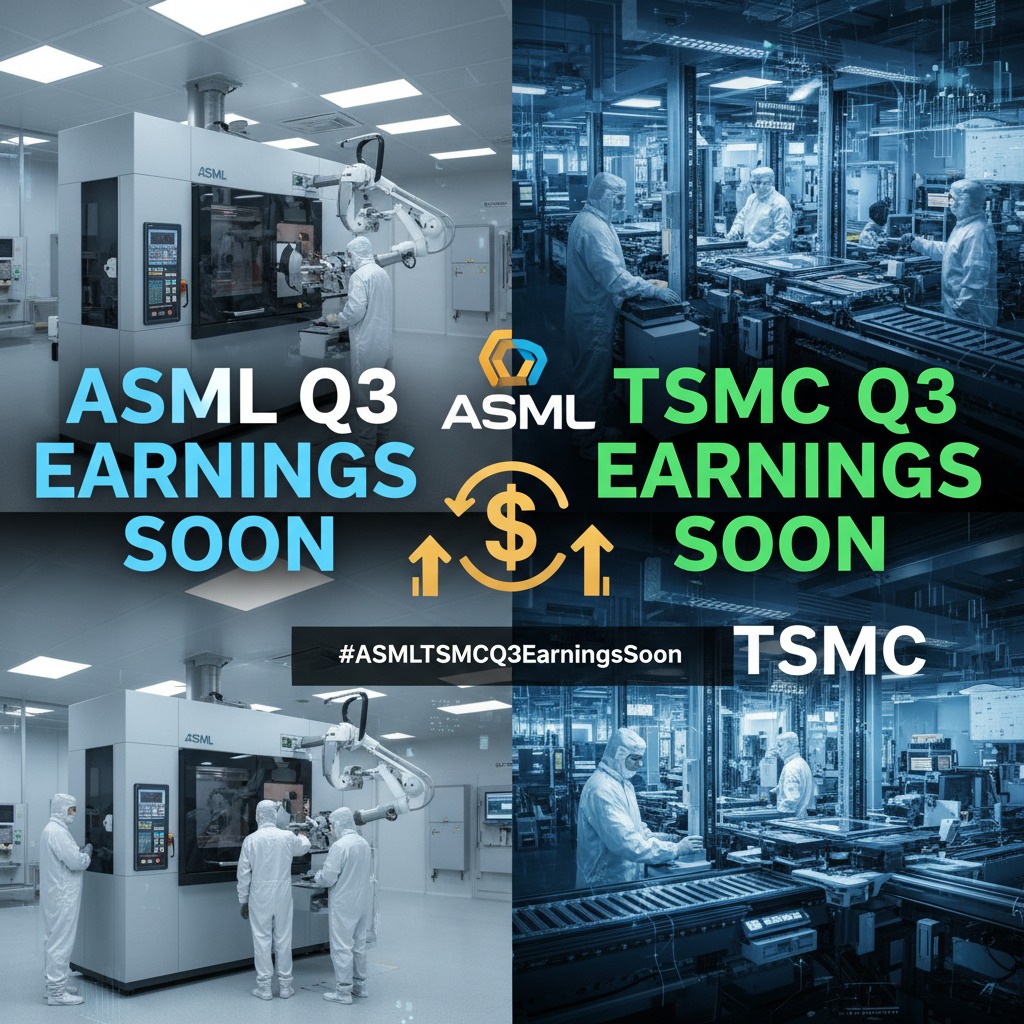
Esta página es solo para investigación y no constituye asesoramiento de inversión. Los modelos pueden equivocarse. El rendimiento pasado no garantiza resultados futuros.