

Pfizer Stock Analysis: Is PFE's 6.9% Dividend Yield Worth the Risk?
Is Pfizer undervalued? Explore PFE's 6.9% dividend yield, weight loss drug pipeline, and why analysts see 15% upside. Complete investment analysis for 2026.

Key Takeaway
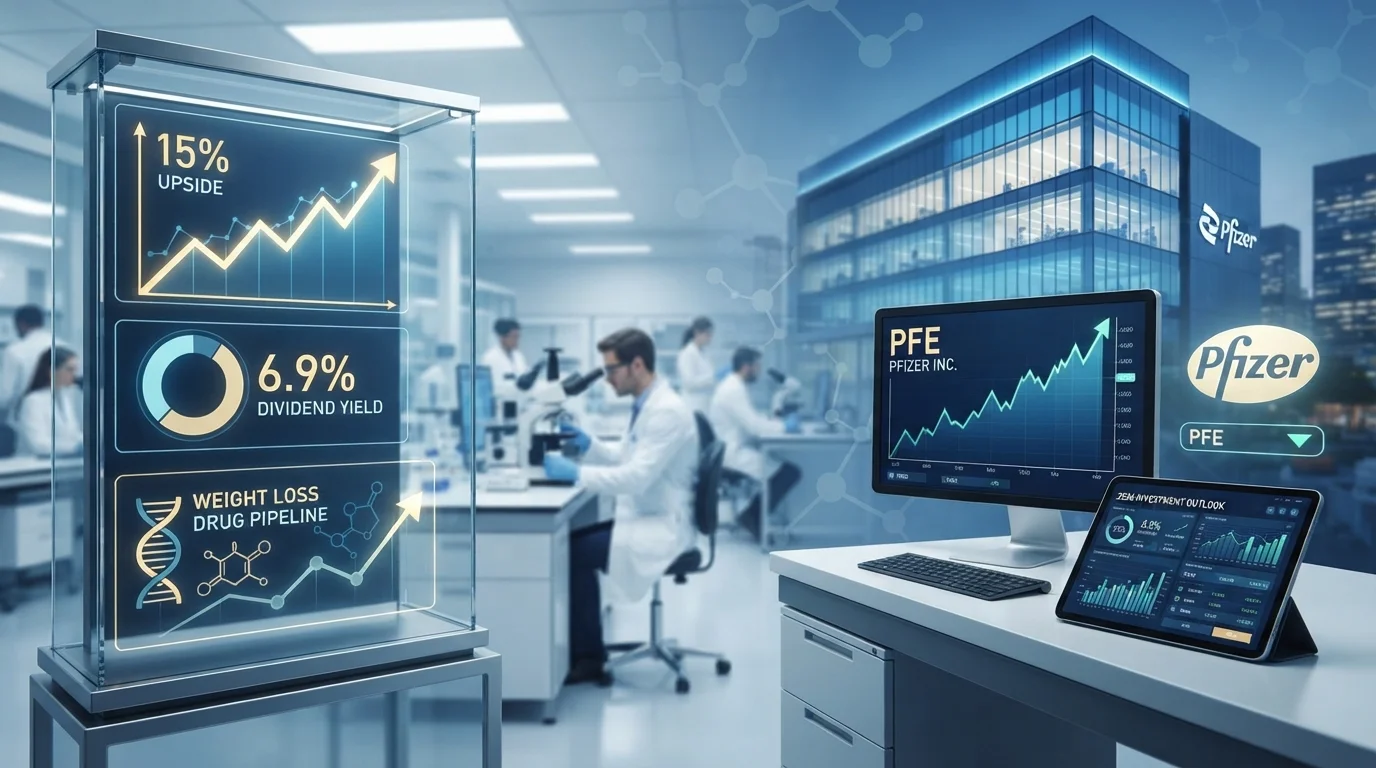
Pfizer (NYSE: PFE) presents a compelling value opportunity for income-focused investors in August 2026. Trading at approximately $25 per share with a price-to-earnings ratio of just 19, the pharmaceutical giant offers one of the most attractive dividend yields in the large-cap healthcare sector at nearly 6.9%. While the stock has underperformed the broader market this year with only a 5.63% year-to-date return compared to the S&P 500's 9.41%, patient investors may find significant value in PFE's defensive characteristics and promising drug pipeline.
The investment thesis for Pfizer extends beyond its generous income stream. The company is making strategic moves in the high-growth weight loss drug market, positioning itself to capture share from established players like Novo Nordisk and Eli Lilly. With several late-stage candidates in development and a strong balance sheet to support further acquisitions and research investments, Pfizer could be setting the stage for a multi-year recovery story.
However, investors must weigh these positives against the headwinds facing traditional pharmaceutical companies, including patent cliffs, regulatory pressures, and the lingering impact of declining COVID-19 vaccine and treatment revenues. The stock's low valuation reflects these concerns, but it also creates an opportunity for contrarian investors willing to look past near-term challenges.
For investors seeking to automate their trading strategies and capture opportunities like Pfizer's potential rebound, consider using Alphio AI's copy trading feature to mirror successful pharmaceutical sector trades and smart money allocations.

Pfizer's Current Valuation: A Deep Value Play
Trading at Historical Lows
Pfizer's current valuation metrics suggest the market has priced in significant pessimism. With a trailing P/E ratio of 19.09 and earnings per share of $1.31, the stock trades at a substantial discount to both its historical averages and the broader healthcare sector. The price-to-sales ratio has compressed to levels not seen since the 2008 financial crisis, creating what value investors often describe as a "margin of safety" situation.
The company's market capitalization of approximately $142.5 billion reflects a dramatic contraction from its pandemic-era peak when vaccine and antiviral sales propelled the stock to new heights. This repricing, while painful for existing shareholders, has created an entry point that income investors haven't seen in over a decade. The dividend yield, now approaching 7%, ranks among the highest in the Dow Jones Industrial Average and significantly exceeds the average yield of both the S&P 500 and the healthcare sector.
Why the Discount Exists
Several factors have contributed to Pfizer's compressed valuation. The most significant is the steep revenue decline following the normalization of COVID-19 vaccine and treatment demand. Paxlovid and Comirnaty sales, which drove record profits in 2021 and 2022, have fallen dramatically as the world transitions from pandemic to endemic status. This revenue cliff has forced Pfizer to guide for lower near-term earnings, triggering multiple analyst downgrades and price target cuts.
Additionally, the pharmaceutical industry faces ongoing patent expirations that threaten established revenue streams. Like its peers, Pfizer must continuously replenish its product pipeline to offset revenue loss from drugs losing exclusivity. The market has expressed skepticism about the company's ability to execute this transition smoothly, particularly given the high-profile setbacks in oncology and inflammation programs over the past two years.
The Dividend Story: Sustainable Income or Value Trap?
Dividend Coverage and Payout Ratio Analysis
Pfizer's quarterly dividend of $0.43 per share translates to an annualized yield of approximately 6.9% at current prices. This payout represents a substantial commitment from management to return capital to shareholders, but the sustainability of this dividend has become a topic of intense debate among analysts. The company's payout ratio, calculated against current earnings, exceeds 100%, raising concerns about whether the dividend can be maintained without compromising the company's ability to reinvest in growth initiatives.
However, a deeper analysis reveals a more nuanced picture. Pfizer's management has consistently emphasized that the dividend remains a priority, and the company's strong cash flow generation provides support for this commitment. The pharmaceutical industry benefits from relatively stable cash flows once drugs reach commercialization, and Pfizer's diverse portfolio of established products generates substantial recurring revenue that can fund both dividends and research investments.
Historical Dividend Track Record
Pfizer has maintained or increased its dividend for over a decade, weathering multiple industry downturns and company-specific challenges. This track record demonstrates management's commitment to income shareholders and provides some assurance that the current yield isn't merely a temporary artifact of stock price weakness. The company's dividend growth rate has moderated in recent years, reflecting the transition from pandemic-driven profitability to a more normalized earnings base.
For investors focused on generating passive income, Pfizer's yield offers an attractive alternative to traditional fixed-income investments, particularly in an environment where Treasury yields have become more volatile. The stock's low beta of 0.31 indicates that it tends to be less volatile than the overall market, making it potentially suitable for conservative portfolios seeking equity exposure with reduced risk.
Weight Loss Drug Pipeline: The Next Growth Catalyst
Market Opportunity in Obesity Treatment
The global weight loss drug market has emerged as one of the most lucrative opportunities in healthcare, with projections suggesting the market could exceed $100 billion annually by 2030. Novo Nordisk's Wegovy and Eli Lilly's Zepbound have demonstrated that effective obesity treatments can generate tens of billions in annual sales, creating a gold rush mentality among pharmaceutical companies seeking to capture market share.
Pfizer has positioned itself as a serious contender in this space through a multi-pronged approach. The company is advancing several oral GLP-1 agonists that could offer advantages over the injectable products currently dominating the market. Oral medications typically enjoy higher patient acceptance and compliance rates, potentially giving Pfizer a significant competitive edge if its candidates prove safe and effective.
Clinical Progress and Timeline
Pfizer's lead weight loss candidate, danuglipron, is currently in Phase 2b clinical trials. Early data has shown promising weight loss results, with patients achieving double-digit percentage reductions in body weight over 16-week treatment periods. The company has emphasized the drug's favorable tolerability profile compared to existing treatments, which often cause significant gastrointestinal side effects that lead to high discontinuation rates.
Analysts estimate that a successful launch of Pfizer's oral GLP-1 program could generate $5-10 billion in peak annual sales, fundamentally transforming the company's growth trajectory. While the timeline remains uncertain—with Phase 3 trials and regulatory review likely pushing commercialization to 2027 or 2028—the potential upside has attracted the attention of investors seeking exposure to the obesity mega-trend without paying premium valuations for established leaders.
Competitive Position and Strategic Outlook
R&D Investment and Pipeline Depth
Pfizer maintains one of the largest research and development budgets in the pharmaceutical industry, investing over $10 billion annually in discovering and developing new medicines. This substantial commitment to innovation supports a pipeline that includes more than 100 programs across therapeutic areas including oncology, immunology, rare diseases, and vaccines. While the industry-wide success rate for experimental drugs remains low, the sheer scale of Pfizer's research efforts increases the probability of meaningful product launches over the coming years.
The company's recent acquisition of Seagen for $43 billion significantly bolstered its oncology capabilities, adding antibody-drug conjugate technology and several promising cancer treatments to the portfolio. This deal, while expensive, demonstrates Pfizer's willingness to deploy its substantial cash reserves to acquire growth rather than relying solely on internal development. The integration of Seagen's assets is progressing according to plan, with several acquired programs advancing through late-stage clinical trials.
Generic Competition and Patent Protection
Like all major pharmaceutical companies, Pfizer faces ongoing challenges from generic competition as key products lose patent protection. The company has developed sophisticated life cycle management strategies to extend market exclusivity, including formulation improvements, new indications, and combination products. Additionally, Pfizer's biosimilar business has become a meaningful revenue contributor, leveraging the company's manufacturing expertise to capture share from expiring biologic patents.
The patent cliff is a persistent concern, but Pfizer's diversified revenue base—spanning primary care, specialty care, and oncology—provides some insulation against individual product losses. The company's scale also enables it to absorb setbacks that might cripple smaller competitors, maintaining financial flexibility even during challenging periods.
Analyst Perspectives and Price Targets
Wall Street Sentiment
Wall Street analysts currently maintain a mixed but generally positive outlook on Pfizer shares. The consensus rating sits at "Hold" with a minority of analysts maintaining "Buy" recommendations. The average price target of $28.75 implies approximately 15% upside from current levels, with some bullish analysts projecting returns of 40% or more if the company's pipeline execution exceeds expectations.
Recent analyst commentary has focused on the upcoming earnings report scheduled for August 4, 2026, which will provide crucial updates on revenue trends, pipeline progress, and management's updated guidance for the remainder of the fiscal year. Positive surprises on weight loss drug timelines or stronger-than-expected core business performance could catalyze a meaningful rerating of the stock.
Risk Factors and Downside Scenarios
The bear case for Pfizer centers on several key risks. Failure in the weight loss drug program would eliminate a major growth catalyst and likely pressure shares further. Continued revenue erosion from generic competition without sufficient new product launches to offset losses could force dividend cuts or asset sales. Regulatory challenges, including pricing pressures from Medicare negotiation and international reference pricing schemes, threaten industry-wide profitability.
Macroeconomic factors also present headwinds. Rising interest rates increase the cost of capital for acquisitions and debt refinancing, while recession fears could pressure healthcare utilization and pharmaceutical pricing power. The strong dollar continues to erode the value of international revenue, which represents a significant portion of Pfizer's total sales.
For investors interested in exploring automated strategies to navigate these market complexities, Alphio AI's agentic trading offers AI-powered portfolio management that can adapt to changing market conditions and sector rotations.

Investment Strategy: Who Should Own PFE?
Income-Focused Investors
Pfizer is most appropriate for investors prioritizing current income over capital appreciation. The 6.9% dividend yield substantially exceeds what investors can earn from investment-grade bonds or most dividend-focused ETFs. The stock's relatively low volatility and defensive characteristics make it potentially suitable for retirees and conservative investors seeking to maintain purchasing power while generating cash flow.
However, income investors should recognize that Pfizer's dividend growth prospects appear limited in the near term. The payout ratio strain and capital allocation priorities suggest that dividend increases, if they occur at all, will likely be modest. Investors requiring growing income streams may need to look elsewhere or accept that PFE functions primarily as a current yield play rather than a dividend growth story.
Value and Contrarian Investors
For value-oriented investors, Pfizer represents a classic deep value opportunity trading at historically low multiples. The combination of an above-market yield, below-market valuation, and potential pipeline catalysts creates an asymmetric risk-reward profile where the downside appears limited while the upside could be substantial if execution improves.
Contrarian investors may find particular appeal in Pfizer's current unpopularity. The stock ranks among the worst performers in the Dow Jones Industrial Average over the past year, suggesting that negative sentiment may be overdone. Mean reversion strategies often target such out-of-favor names, betting that valuations eventually normalize as temporary headwinds fade.
Growth Investors
Growth-oriented investors will likely find Pfizer less appealing despite the weight loss drug potential. The company's near-term revenue and earnings trajectory remains constrained by generic competition and the COVID revenue decline. Even successful pipeline execution will take years to materially impact financial results, testing the patience of investors accustomed to more immediate gratification.
Those seeking healthcare growth exposure may prefer companies with clearer near-term catalysts or higher revenue growth rates. However, Pfizer could serve as a defensive anchor within a diversified healthcare allocation, providing income and stability while more aggressive positions capture upside momentum.
Conclusion
Pfizer stands at a crossroads in August 2026, offering investors a high-stakes decision between viewing the stock as a value trap or an underappreciated opportunity. The 6.9% dividend yield provides immediate income that rewards patience, while the weight loss drug pipeline offers potential for significant capital appreciation if clinical programs succeed. Trading at just 19 times earnings, the market has clearly priced in substantial pessimism, creating potential upside for those willing to bet on management's ability to execute a turnaround.
The risks are real and substantial. Patent cliffs, generic competition, and regulatory pressures threaten profitability, while the transition from pandemic-driven revenues remains incomplete. Investors must weigh these challenges against Pfizer's scale, cash flow generation, and strategic positioning in high-growth therapeutic areas. For those with appropriate risk tolerance and investment time horizons, PFE may represent one of the more compelling risk-reward opportunities in the large-cap pharmaceutical space.
To capitalize on opportunities like Pfizer and stay ahead of market movements, explore Alphio AI's automation features to set conditional trading workflows that respond to earnings announcements, analyst upgrades, and pipeline news.

Additionally, consider leveraging conversational trading through Alphio's chat-based interface to execute trades and monitor your pharmaceutical positions with natural language commands.

FAQs
Is Pfizer's 6.9% dividend yield sustainable?
While Pfizer's payout ratio exceeds 100% of current earnings, the company's strong cash flow generation and management commitment suggest the dividend is sustainable in the near term. However, dividend growth may be limited until revenue and earnings stabilize.
What is Pfizer's weight loss drug timeline?
Pfizer's lead oral GLP-1 candidate, danuglipron, is currently in Phase 2b trials. If successful, the drug could reach the market in 2027-2028, potentially generating $5-10 billion in peak annual sales and transforming the company's growth outlook.
Why is Pfizer stock trading at such a low valuation?
The discount reflects concerns about declining COVID-19 vaccine and treatment revenues, patent cliffs facing key products, and skepticism about the company's ability to replenish its pipeline. These headwinds have compressed multiples to historically low levels.
What are analysts saying about Pfizer stock?
Analysts maintain a mixed outlook with a consensus 'Hold' rating and average price target of $28.75, suggesting approximately 15% upside. Bulls cite the attractive valuation and weight loss drug potential, while bears worry about near-term earnings pressure.
Is Pfizer a good stock for dividend investors?
Pfizer offers compelling current yield for income-focused investors, particularly those seeking defensive characteristics and low volatility. However, the stock is less suitable for investors requiring dividend growth, as payout increases may be modest until business fundamentals improve.
Related articles
- Stock Market Surges After 2026 Midterms: What the Democratic Sweep Means for Your PortfolioThe stock market rallied after Democrats won the 2026 midterms. Discover what the election means for investors, tech stocks, and the S&P 500 outlook.
- Stock Market Surges After 2026 Midterms: What the Democratic Sweep Means for Your PortfolioThe stock market rallied after Democrats won the 2026 midterms. Discover what the election means for investors, tech stocks, and the S&P 500 outlook.
- Oil Prices Surge Above $105 Amid US-Iran Conflict: Energy Investment Opportunities in November 2026Oil prices climb past $105 as US strikes Iran's Qeshm Island. Discover energy investment opportunities, top oil stocks, and market outlook for November 2026.
- Nvidia Earnings August 2026: Will NVDA Stock Soar After the August 26 Report?Nvidia reports Q2 earnings on August 26, 2026. Get expert analysis on NVDA stock, revenue forecasts of $91B, AI chip demand, and price targets before the big announcement.
- SMCI Stock Analysis August 2026: Margins Double, Guidance Soars to $72 BillionSuper Micro Computer (SMCI) stock analysis for August 2026. Q4 earnings beat expectations with margins doubling to 17.5%. Fiscal 2027 guidance hits $72 billion.
- Super Micro Computer (SMCI) Q4 2026 Earnings: AI Infrastructure Powerhouse Rallies on Strong GuidancSuper Micro Computer SMCI Q4 2026 earnings analysis. Explore AI server demand, SpaceX xAI partnership, and investment outlook for this data center infrastructure leader.