

Insider Buying in a Market Correction: How to Read Form 4 Signals in 2026
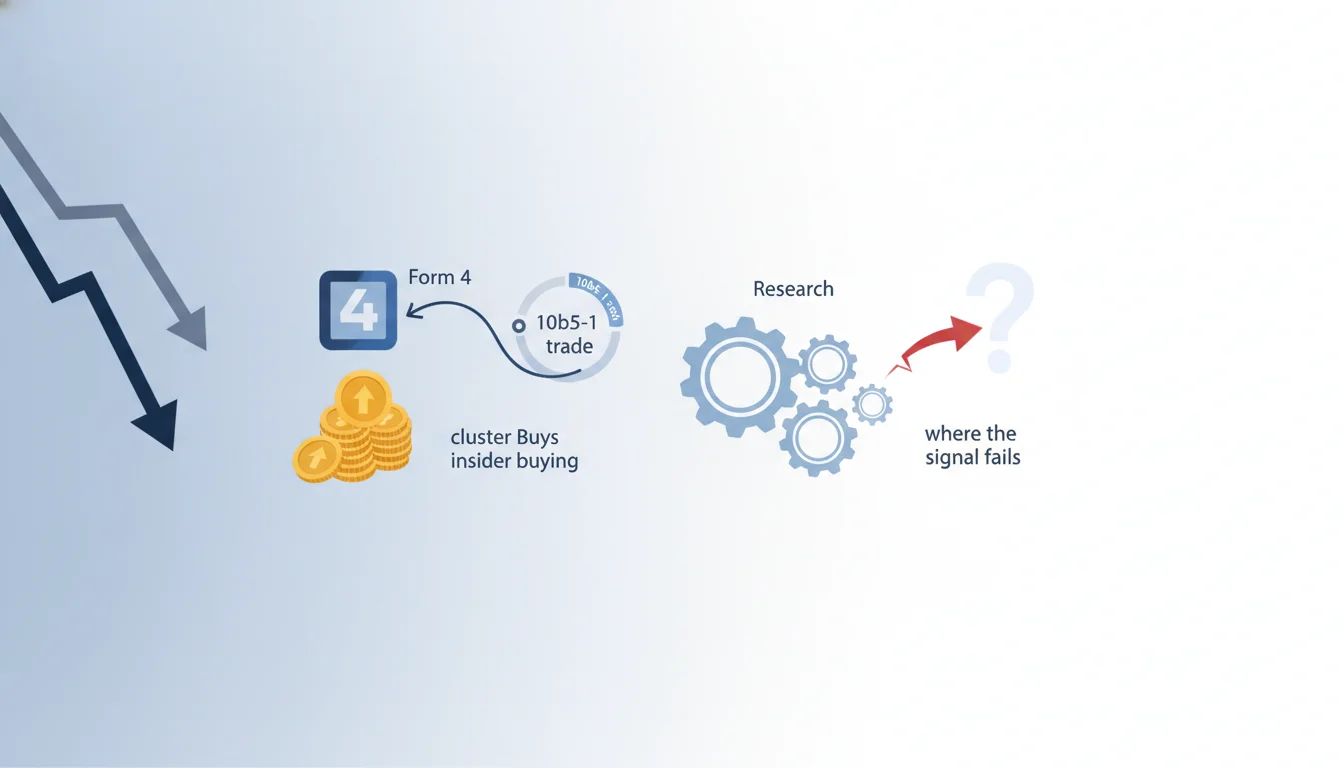
How to read insider buying in the November 2026 correction: Form 4 codes, 10b5-1 trades, cluster buys, what research shows, and where the signal fails.

Key Takeaway
When stocks fall hard, one group of investors gets a closer look than anyone else: the executives and directors who run the companies. They know their order books, their pipelines, and their balance sheets, and when they reach into their own pockets to buy shares during a sell-off, the market pays attention. That question is suddenly practical. On Friday, November 20, 2026, the S&P 500 closed at 6,910.39, down 3.7% on the day and 8.6% for the week, its worst week since April 2025, according to CNBC. The index now sits about 11.6% below its October 6 record close of 7,818.93, based on S&P Dow Jones Indices data published by the St. Louis Fed's FRED database. The Nasdaq Composite lost roughly 10% for the week, its worst stretch since March 2020, and the Cboe Volatility Index closed at 35.89.
Insider buying is one of the few signals with decades of academic research behind it. Studies published in the Journal of Finance, the Review of Financial Studies, and the Review of Economics and Statistics have found that insider purchases, especially non-routine ones, have historically been followed by above-market returns, while insider sales carry far less information. Research on the October 1987 crash found that insiders bought in record numbers right after the collapse, and the stocks they bought most went on to outperform the following year.
But raw insider data is noisy, and most of the headlines built on it are misleading. Option exercises, tax withholding, pre-scheduled 10b5-1 plan trades, and gifts all show up on the same SEC filings as genuine conviction buys. This guide explains how to read Form 4 filings, which transaction codes to ignore, how to separate routine trades from opportunistic ones, how to think about market-wide insider activity during a correction, and where the signal breaks down.
Why Insider Buying Matters in a Market Correction
The information edge insiders actually have
Corporate insiders are not allowed to trade on material nonpublic information, but they still understand their businesses better than outside investors. A chief financial officer sees daily cash collections, a chief executive knows whether customers are delaying or canceling orders, and a director sits through board presentations on strategy and risk. None of that has to be a secret for it to matter. Often the insider's advantage is simply a better sense of whether a falling share price reflects a real deterioration in the business or a market-wide panic that has dragged a healthy company down with it. In a correction driven by macro fear rather than company-specific bad news, that distinction is exactly what investors are trying to figure out.
Why purchases say more than sales
Insiders sell stock for dozens of reasons that have nothing to do with the outlook: paying taxes on vested awards, buying a house, diversifying a concentrated position, funding a divorce settlement, or following a long-planned schedule. They generally buy for one reason, which is that they expect the shares to be worth more. Peter Lynch made a version of this point in One Up on Wall Street, and the academic evidence backs it up. Josef Lakonishok and Inmoo Lee, studying NYSE, AMEX, and Nasdaq firms from 1975 to 1995, concluded that "insider selling appears to have no predictive ability," while purchases did carry information. That asymmetry is the starting point for any sensible use of insider data.
Why corrections are a natural test
Sell-offs create the conditions where insider purchases stand out. When a stock is falling alongside the market, an executive who buys is putting personal money at risk at a moment when headlines are frightening and the easy choice is to wait. The current sell-off has several overlapping drivers, according to CNBC's reporting: profit-taking after the Anthropic IPO, a 14% one-day drop in Nvidia on November 20 after Reuters reported an SEC investigation into accounting issues, expectations that the Federal Reserve will raise rates at its December 8–9 meeting, and a 10-year Treasury yield above 5%. Some of those risks are company-specific and some are macro, which is precisely the environment where watching who buys, and who does not, can be informative.
What the Research Says About Insider Purchases
Purchases have historically beaten the market
The best-known performance study is Frank Jeng, Andrew Metrick, and Richard Zeckhauser's 2003 paper in the Review of Economics and Statistics, which treated insiders as if they were a portfolio manager and measured the returns. They found that insider purchases earned abnormal returns of more than 6% per year, while insider sales did not earn significant abnormal returns. Lakonishok and Lee reached a similar conclusion about the direction of the signal, and added an important detail: the predictive power was concentrated in smaller companies. For a mega-cap stock followed by dozens of analysts, an insider purchase is less likely to reveal something the market has missed than it is at a thinly covered small cap.
Routine trades versus opportunistic trades
The most useful refinement came from Lauren Cohen, Christopher Malloy, and Lukasz Pomorski in "Decoding Inside Information," published in the Journal of Finance in 2012. They classified insiders as routine traders if they traded in the same calendar month for several consecutive years, and opportunistic traders if they did not. Routine trades turned out to be predictable and essentially uninformative. The opportunistic trades carried the signal: a strategy built only on them earned value-weighted abnormal returns of 82 basis points per month in their sample. In practice, this means a purchase by a director who buys every March is far less interesting than a first-time purchase by a CFO in the middle of a sell-off.
The 1987 crash precedent
H. Nejat Seyhun studied how insiders behaved around the October 1987 crash, a reasonable historical stress test for today's question. His 1990 Journal of Finance paper found that insiders "became buyers of stock in record numbers immediately following the crash," and that the stocks that fell the most were also the ones insiders bought most. Those stocks went on to post larger positive returns in 1988. Seyhun concluded that overreaction was an important part of the crash. It is a striking result, but it is one episode, and it should be read as evidence that insiders can recognize indiscriminate selling, not as a promise that every sell-off ends the same way.
How to Read a Form 4 Filing
Who has to file and how fast
Under Section 16 of the Securities Exchange Act, officers, directors, and beneficial owners of more than 10% of a registered class of equity are reporting insiders. They file a Form 3 within 10 days of becoming an insider, and a Form 4 whenever their ownership changes. Since the Sarbanes-Oxley Act amended Section 16(a) in 2002, Form 4 must be filed before the end of the second business day after the transaction. Some items can be reported later on Form 5, which is due within 45 days after the company's fiscal year ends. All of these filings are free to search on the SEC's EDGAR system, and most data providers simply repackage them.
The transaction codes that matter
The single most important column on a Form 4 is the transaction code. Code P means an open market or private purchase, and code S means an open market or private sale. Those are the only two that reflect an insider choosing to trade at market prices with their own money. Code A is a grant or award, code M is an option exercise or conversion, code F is shares withheld or delivered to pay an exercise price or tax bill, and code G is a bona fide gift. Since the SEC's 2022 rule changes, gifts must be reported on Form 4 as well. A headline saying an executive "acquired" 50,000 shares may describe nothing more than a routine stock award.
The 10b5-1 checkbox
Rule 10b5-1 lets insiders set up trading plans in advance so that later trades can proceed even if they come into possession of inside information. The SEC tightened the rules in December 2022, effective February 27, 2023. Directors and officers now face a cooling-off period of the later of 90 days after adopting or modifying a plan, or two business days after the company reports results for the quarter in which the plan was adopted, capped at 120 days. For Form 4 filings made on or after April 1, 2023, insiders must check a box indicating that a trade was meant to satisfy the Rule 10b5-1 defense and disclose the plan's adoption date. That checkbox is a gift to investors, because planned trades are by design less tied to current conditions.
Filtering the Noise: Which Insider Trades to Ignore
Awards, exercises, and tax withholding
Most insider transactions are compensation mechanics, not market views. When restricted stock vests, the company commonly withholds shares to cover taxes and reports them under code F, which can look like a sale on a quick scan. When an executive exercises options, the filing may show a code M acquisition followed the same day by a code S sale of the same shares, a cashless exercise that says more about the option's expiration date than about the stock. Large code A grants appear around annual compensation cycles. If you filter a Form 4 feed down to code P purchases that are not marked as 10b5-1 trades, the volume of transactions shrinks dramatically, and what remains is far closer to the signal the research describes.
Ten percent holders and funds are different
Not every reporting insider is an operator. Activist funds, private equity sponsors, and other holders of more than 10% must also file, and their purchases can reflect fund flows, a control strategy, or a merger plan rather than an informed view of next quarter's sales. Their trades are still worth knowing about, but they should not be lumped together with a CEO buying stock. A practical rule is to weight purchases by role: chief executives and chief financial officers have the broadest view of the business, directors somewhat less, and large outside holders should be analyzed on their own terms.
Size relative to the insider's wealth
A $50,000 purchase means something very different for a director with modest holdings than for a founder worth billions. Small, symbolic purchases are sometimes made to signal confidence publicly, especially after a sharp drop, and the market increasingly recognizes them for what they are. A better test compares the purchase with the insider's existing stake and annual compensation, which you can find in the company's proxy statement. When an executive buys an amount that meaningfully increases their exposure, the trade carries more weight than a token purchase timed to a press release.
Cluster Buying and the Strongest Signals
What a cluster buy looks like
A cluster buy happens when several different insiders at the same company purchase shares on the open market within a short window. There is no official definition, and practitioners use rules of thumb such as three or more insiders over a few weeks. The logic is intuitive: one executive may have personal reasons to buy, but when the CEO, the CFO, and two directors all buy independently, it is harder to explain away. Be careful with clusters that look too neat, however. When several directors buy identical share amounts on the same day, the purchases may reflect a coordinated board decision or a stock-ownership guideline rather than independent conviction.
Timing within the earnings calendar
Most companies impose blackout periods that bar insiders from trading in the weeks before earnings releases, and trading windows usually open shortly after results are published. That means insider purchases tend to arrive in bursts after earnings, and a purchase made just after a disappointing report deserves a closer look, because the insider is buying with the bad news already public. With most of the third-quarter reporting season behind us, many trading windows are open right now, which is one reason the current correction is a useful moment to watch Form 4 activity.
Buying into weakness
Purchases made after a stock has already fallen sharply are especially interesting in light of Seyhun's 1987 findings and the Cohen, Malloy, and Pomorski evidence on opportunistic trades. An insider who buys after a 30% decline is making a statement about value, not momentum. That does not make them right. Insiders can be overconfident about their own companies, and Seyhun's 1988 study of aggregate insider trading noted that insiders cannot always distinguish between company-specific and economy-wide forces. A falling stock in a cyclical industry can keep falling even when its managers believe in it.
Market-Wide Insider Activity as a Sentiment Gauge
Insiders as aggregate contrarians
Beyond individual stocks, some investors track the ratio of insider purchases to sales across the whole market. Lakonishok and Lee found that insiders in aggregate behave as contrarian investors, buying more after prices fall, and that their aggregate activity predicted market movements better than simple contrarian strategies did. Seyhun's research on 1987 told a similar story at the market level. The intuition is that thousands of insiders across many industries, each acting on their own view of their business, collectively provide a bottom-up read on whether valuations have overshot.
How to read buy/sell ratios carefully
Several data vendors publish insider buy/sell ratios, but their methods differ, and the numbers are not directly comparable. Some count transactions, some count insiders, some weight by dollar value, and not all of them strip out planned trades. Because selling always outnumbers buying, ratios typically sit well below one, so the useful information is in the change relative to each series' own history, not in the absolute level. If you follow one of these gauges, stick with a single provider and look for a sustained rise in buying across many companies, not a spike driven by a handful of large purchases.
Combining it with other signals
An insider buying gauge works best as one input among several. During this sell-off, the VIX close of 35.89 on November 20, according to Cboe data, already shows how much fear is in the market. Wednesday, November 25 brings the Bureau of Economic Analysis's second estimate of third-quarter GDP and the October personal income and outlays report, which includes PCE inflation, ahead of the Thanksgiving holiday. U.S. stock markets are closed on Thursday, November 26, and close early at 1:00 p.m. Eastern on Friday, November 27, according to the NYSE calendar. Insider buying tends to be most useful when it rises at the same time that sentiment indicators are at extremes and valuations have reset, rather than as a standalone timing tool.
Putting Insider Data to Work in Your Process
A practical screening routine
A disciplined process keeps insider data from turning into a stream of hot tips. One workable approach is a weekly screen that keeps only code P open-market purchases, excludes trades marked as 10b5-1, drops purchases below a minimum dollar size, and flags CEOs, CFOs, first-time buyers, and cluster buys. From there, each flagged company still needs fundamental work: earnings trends, debt, valuation, and the reason the stock fell in the first place. For heavily sold large caps, valuation context matters as much as the insider signal itself.
Automating the watchlist
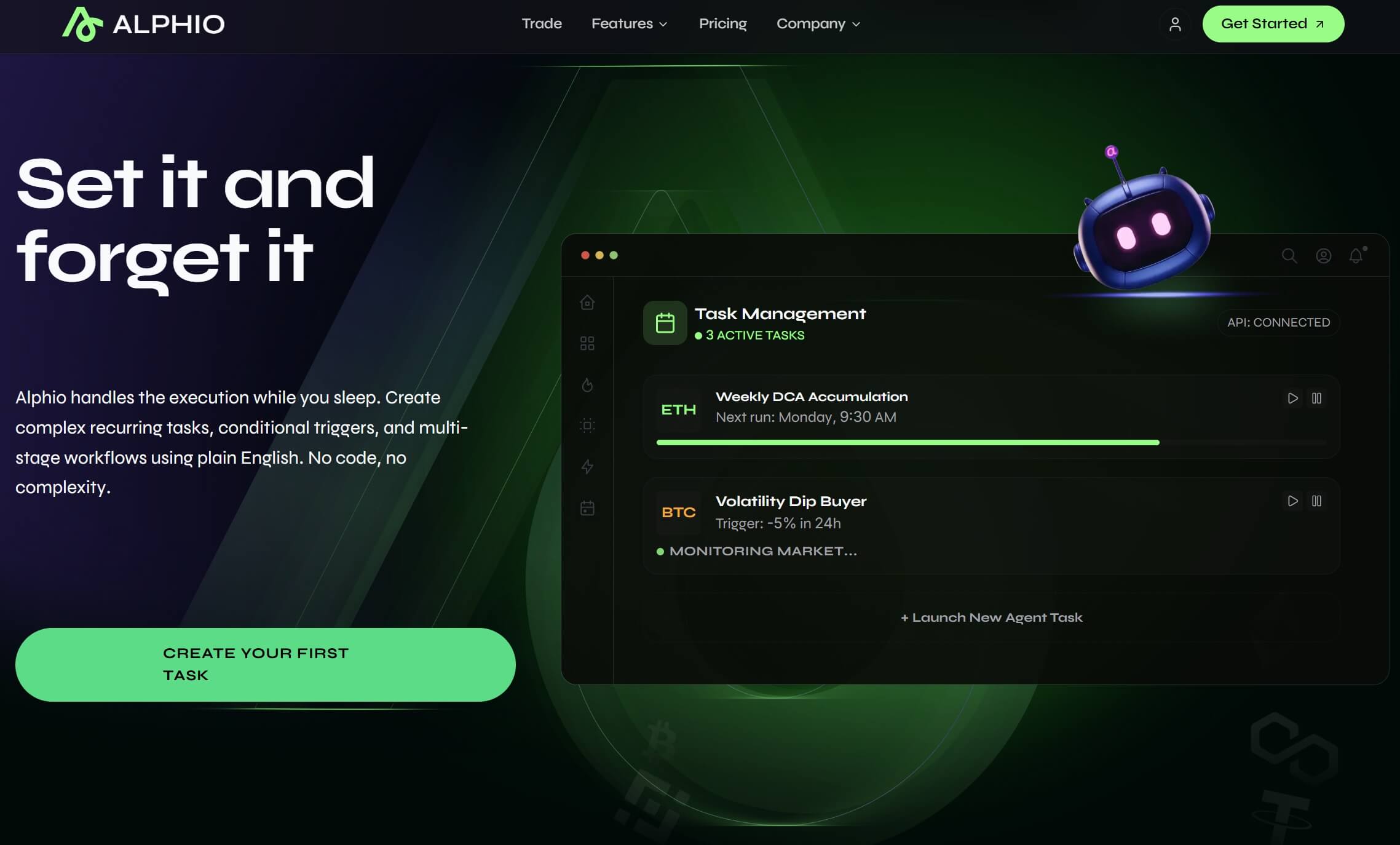
Checking EDGAR by hand every morning is tedious, and most investors stop doing it after a few weeks. This is where automation helps. With Alphio's Scheduled Task feature, you can set up a recurring job that checks a watchlist for new insider purchases, summarizes the filings, and flags the ones that pass your filters, so the routine keeps running even when markets are quiet and your attention is elsewhere.
The Limits and Risks of Following Insiders
The reporting lag
By the time you see a Form 4, the trade is up to two business days old, and in a fast market the price may already have moved. Popular tracking sites also amplify large purchases within hours, so the easy gains, if there are any, often go to the quickest readers. Form 5 items can surface months later. The research results were measured using filing data, but trading costs, timing, and competition from other investors who read the same filings can shrink the edge in practice.
Insiders can be wrong
Executives are often optimistic about their own companies, and that optimism does not always survive contact with a recession, a competitor, or a regulator. Managers inside a cyclical business can misjudge how deep a downturn will go, precisely because they are so close to it. The signal also says nothing about the broader market path. If the Federal Reserve raises rates in December and long-term yields keep climbing, even well-timed insider purchases can sit underwater for a while.
Conclusion
The November 2026 correction has pushed the S&P 500 more than 10% below its October record and pushed the VIX to a close of 35.89, which is exactly the kind of environment where insider purchases become informative. The research is consistent on the big picture: open-market purchases, especially opportunistic ones at smaller companies, have historically been followed by above-market returns, while insider sales say little. The work is in the filtering. Focus on code P purchases, set aside 10b5-1 plan trades, ignore grants, exercises, and tax withholding, weight CEOs and CFOs above outside holders, and give extra attention to clusters and purchases made into weakness.
Used that way, insider data becomes a disciplined input rather than a source of tips. Pair it with valuation work, sentiment readings, and the macro calendar, including this week's PCE and GDP data and the Fed's December 8–9 meeting. If you want to build that routine into a repeatable process, Alphio's Conversational Trading lets you ask questions about a company's filings and price action in plain English, while Copy Trade and Autonomous Trading can help you put a tested strategy into practice with clear rules. Whatever tools you use, remember that insiders are often early, sometimes wrong, and never a substitute for your own analysis.
FAQs
Is insider buying a good signal for stocks?
Historically it has been one of the more reliable signals. Jeng, Metrick, and Zeckhauser found insider purchases earned abnormal returns of more than 6% per year, while insider sales did not earn significant abnormal returns. It works best combined with fundamental analysis rather than on its own.
How quickly do insiders have to report trades?
Officers, directors, and holders of more than 10% must file a Form 4 with the SEC before the end of the second business day after the transaction. Some items can be reported later on Form 5, which is due within 45 days after the company's fiscal year ends.
What does transaction code P mean on a Form 4?
Code P means an open market or private purchase, the type of trade most associated with insider conviction. Codes such as A (grants), M (option exercises), F (tax withholding), and G (gifts) usually reflect compensation or estate planning rather than a view on the stock.
Should I ignore 10b5-1 plan trades?
For signal purposes, planned trades usually deserve less weight because they are scheduled in advance, with a cooling-off period of at least 90 days for directors and officers. Since April 1, 2023, Form 4 includes a checkbox showing whether a trade was made under a Rule 10b5-1 plan.
Does insider buying predict a market bottom?
Aggregate insider buying has historically risen after market declines, and research found insiders bought in record numbers after the 1987 crash. It can help gauge sentiment, but it does not pinpoint a bottom, and insiders are often early.
Related articles
- Position Sizing: How Much to Invest in One Stock When Markets Swing 30% in a WeekPosition sizing guide for volatile markets: percentage caps, the 1% risk rule, ATR and volatility sizing, and Kelly, with lessons from Nvidia's November swing.
- Jobs Report and the Stock Market: How to Trade Nonfarm Payrolls Before the December FedHow the jobs report moves stocks and bonds in a Fed hiking cycle: October's 165K payroll surprise, the Dec. 4 release before the Fed, and a jobs-Friday plan.
- How to Build a Bond Ladder in 2026: Treasury Rungs, Bond Funds, and a Fed Still HikingBond ladder guide for 2026: how to build Treasury rungs on a flat 1-5 year curve, ladder vs bond fund vs iBonds ETFs, costs, taxes, and mistakes to avoid.
- Retail Stocks and the 2026 Holiday Shopping Season: What Investors Should WatchNRF forecasts $1.013 trillion in 2026 holiday sales, but consumers are stretched. Learn how retail stocks trade around the holidays and what to watch now.
- AI Stocks Correction: How to Invest After the November 2026 Tech SelloffThe Nasdaq slid into correction as AI and chip stocks plunged in November 2026. Learn what drove the selloff, how valuations compare, and how to invest now.
- How to Invest in Gold in 2026: A Guide After the Price Pullback and Fed Hike FearsGold fell about 30% from its January 2026 record as Fed hike odds rose. Learn what drives gold, ETFs vs miners, taxes, and a rules-based plan to invest in gold.