

How to Evaluate Crypto Custody Before Copy Trading
A practical checklist to evaluate crypto custody before copy trading or AI agents: permissions, hot sleeves, revoke tests, and budget caps.


Key Takeaway
Before you copy a vault, whale, or AI strategy, the first question is not who is winning on the leaderboard. It is where your capital actually sits while the copying happens. Retail traders keep learning this the hard way: a strategy can look brilliant for weeks and still leave you exposed if the platform holds withdrawal rights, generates your private key, or requires you to deposit into an account you cannot independently control. Custody is the layer that decides whether a bad week costs you performance or costs you the account.
In 2026, the better education pieces and platform docs all converge on the same framing. Custody for copy trading is mostly a permission problem. Trade-only agents and API keys that cannot withdraw are meaningfully different from platforms that custody your funds. Hyperliquid-style agent systems and non-custodial copy products advertise that separation explicitly: the right to trade is not the right to move money. That distinction should sit at the top of any evaluation checklist, ahead of win rate, ROI banners, or social proof.
This guide walks through how to evaluate crypto custody before you allocate to copy trading or AI agents. It is written for people who want practical questions, evidence standards, and exit tests—not marketing language. Along the way you will see how products like Alphio Copy Trade fit a budget-capped, permission-aware workflow, and how liquid benchmarks such as Bitcoin-linked equities still matter when you size risk around crypto automation.
Why custody comes before performance
Leaderboards do not disclose counterparty risk
Copy-trading dashboards are optimized to show returns. They are rarely optimized to show insolvency treatment, key custody, or what happens if the operator disappears. Hex Trust’s 2026 custody due-diligence framing is useful even for retail: grade answers by evidence, not by statements. A licence, an audit report, or a public register entry is stronger than a homepage claim. If a platform can only answer with slogans, treat that as a gap, not as “trust us.”
Performance can also mislead because it is path-dependent. A whale who printed returns on thin meme launches may be using access or timing you cannot replicate. A vault with a short track record may be wash-traded into a perfect curve. None of that is a custody failure by itself, but it becomes catastrophic when combined with custodial deposits. If you cannot withdraw quickly when you spot style drift, the evaluation failed at the foundation.
Two custody models, two failure shapes
The practical split most bot and copy platforms fall into is simple. In model one, you deposit to the platform and the platform holds balances. Your money is exposed to that entity’s solvency, ops failures, and withdrawal policy. In model two, funds stay on your exchange or wallet and the software receives trade-scoped permissions—API keys or agents that can open and close positions but cannot withdraw. Platform-vetting guides put it bluntly: if the platform holds funds, you need substantially more evidence before you touch it.
Hyperliquid’s agent model and several non-custodial copy apps push the second shape further by encoding trade-only scope at the protocol or wallet-authorization layer. Product docs in this category emphasize that turning copy on creates an authorization that can trade but cannot transfer funds, and that you can revoke it. That is the direction you want to prefer when the product allows it. It does not remove market risk, liquidation risk, or smart-contract risk. It removes a specific counterparty shape that has historically wiped followers who never intended to underwrite platform credit risk.
The custody evaluation checklist in practice
Ask where funds sit—and verify it yourself
Start with a concrete question: if the platform vanished tomorrow, where would the balances be? If the answer is “on your connected exchange” or “in your wallet under a revocable trade agent,” write down how you would revoke access and how you would flat positions. If the answer is “on our platform wallet,” demand segregation language, withdrawal SLAs, and evidence of controls. Some products are unusually honest that a copy wallet is custodial and generated server-side, and they tell users to fund it like a hot trading key, not like savings. That honesty is rare and useful. Treat any product that blurs the difference between storage and trading capital as higher risk by default.
Also separate login risk from key risk. A custodial copy wallet means whoever controls your login can authorize spending without a popup on every trade—by design, because latency kills copies. That is a real trade-off. Size capital accordingly. Keep long-term holdings elsewhere. Rotate credentials. Prefer hardware or passkey protections on the account that gates the hot sleeve.
Map permissions, not brand names
Permissions beat branding. Prefer trade-only API keys with withdrawal disabled, IP allowlists where available, and agent scopes that cannot transfer. Prefer products that document outage behavior: what happens to open positions if the copy engine goes dark? Major venues have published cancel-only responses during infrastructure stress; most bot layers still lack a published plan. Before you size up, run a small live test and deliberately revoke the key during a tiny position. Observe whether the venue leaves the position open, whether support acknowledges the scenario, and whether you can still exit from the exchange or wallet directly.
For AI agents specifically, industry guidance in 2026 is converging on the same rule: prompts are not guardrails. Spend limits and withdrawal blocks must live outside the model. If a product claims the agent “won’t withdraw” because the system prompt says so, that is not a custody control. External budget caps, key scopes, and kill switches are.

How budget caps interact with custody
Hot sleeves need hard ceilings
Custody evaluation and budget design are the same conversation dressed differently. A non-custodial agent with unlimited notional can still liquidate you. A custodial deposit with a tiny allocation may still be the wrong place for savings, but at least the blast radius is capped. The sane pattern is a dedicated trading sleeve with a hard maximum, funded only with capital you can lose, and paired with per-strategy caps so one vault cannot dominate the sleeve.
This is where product workflow matters. On Alphio, the practical habit is to evaluate the lead first, then bind a budget before mirroring flow—rather than mirroring first and promising yourself you will cut size later. Explore that flow on Alphio Copy Trade and, for agent-style automation, on Alphio Autonomous Trading.

Open Alphio Autonomous Trading
Correlate custody risk with market risk
Bitcoin volatility still sets the tone for crypto risk budgets even when you are copying altcoin perps or social strategies. Looking at liquid proxies helps keep sizing honest. MicroStrategy and Coinbase equity charts are not custody solutions, but they are reminders that crypto beta clusters. If your copy book is already long crypto through multiple vaults, adding another “diversified” whale that is also long the same complex is not diversification.
Red flags that should stop the evaluation
Unexportable keys and deposit-only narratives
Walk away—or size to dust—if the product generates a private key you cannot export, refuses to explain insolvency treatment, or pressures you to move funds off your primary venue into a branded wallet with vague insurance language. Insurance claims without schedules are statements, not documents. “Segregated” without legal entity detail is marketing. “Non-custodial” without a revocable permission model is often a word game.
Also watch for social-trading red flags adjacent to custody: perfect short track records, bundled wallets entering the same block, profit curves that never show drawdowns, and support that cannot explain how to stop copying and withdraw in under a few steps. Education sites keep repeating the same pattern: manipulated track records plus deposit custody is how followers become exit liquidity.
Outage silence and unclear stop behavior
If documentation never mentions outages, missed copies, or what happens when allocation is fully deployed, assume the product has not stress-tested follower experience. Mature docs note that copies can be resized, delayed, skipped under minimums, or blocked when allocation is full—and that the app may not always tell you why a trade did not copy. That kind of honesty should raise your confidence in the team’s engineering maturity, not lower it. Opacity is the red flag.
Building a repeatable custody review cadence
Pre-fund, post-fund, and monthly checks
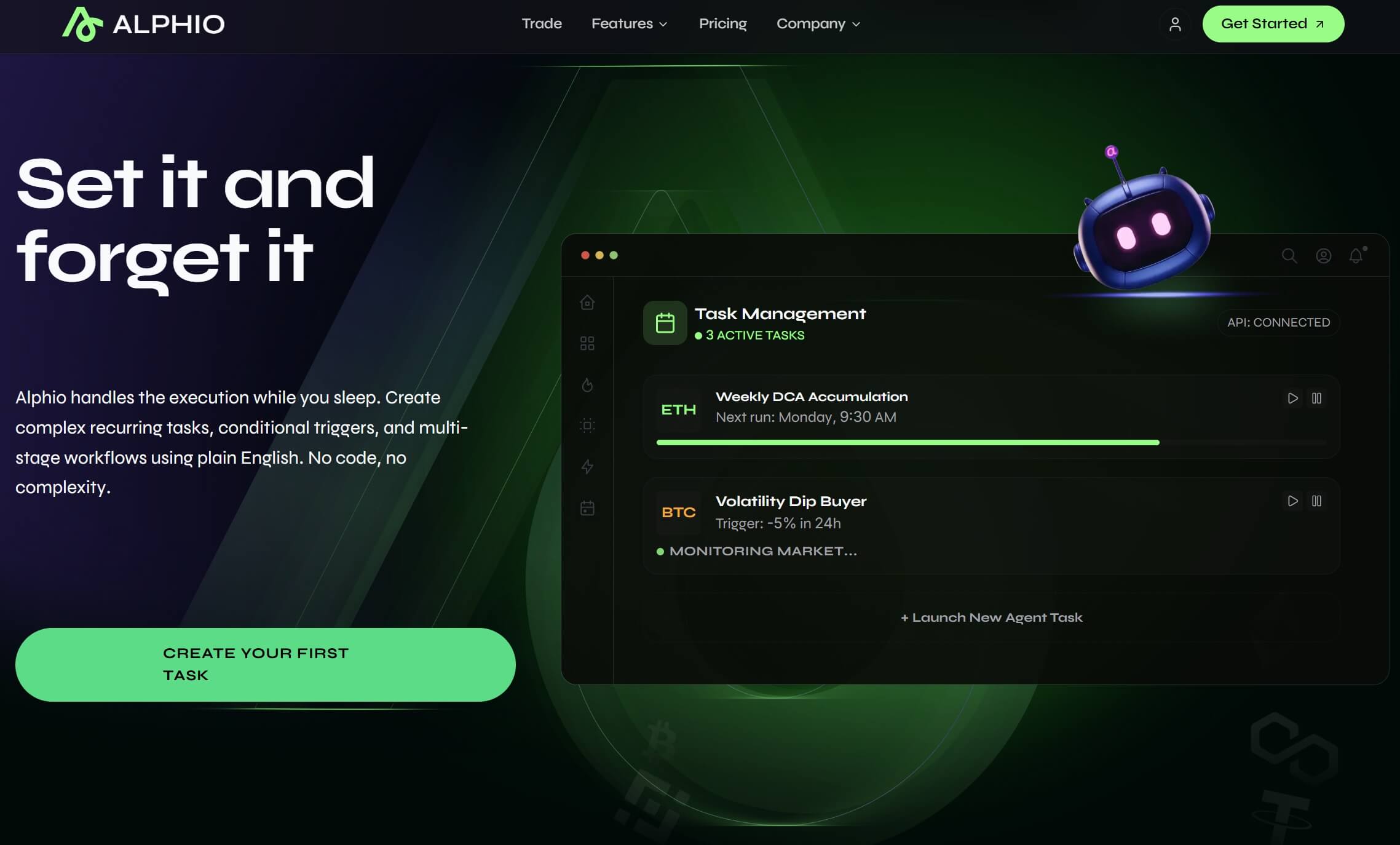
Before funding, complete a one-page note: custody model, permission scope, revoke path, withdrawal path, and maximum sleeve size. After funding a tiny amount, test revoke and withdraw. Monthly, re-check whether the product changed terms, whether your agent or API still has withdrawal disabled, and whether any new strategy you follow requires a different custody posture. Scheduled reviews beat vibes. If you like rule-based routines, Alphio’s Scheduled Task automation surface is designed for recurring checks rather than one-off clicks.
Keep a conversational audit trail
When something feels off—slippage spikes, skipped copies, style drift—write it down in plain language and decide whether to pause. Conversational trading interfaces help because they force you to state the decision: stop this vault, cut budget, or flatten. Use Alphio Conversational Trading as a place to turn fuzzy anxiety into an explicit action, then verify on-chain or on-exchange that the action landed.
What institutional checklists teach retail followers
Evidence grades beat vibes
Institutional crypto custody diligence in 2026 often scores eight areas: licensed entity, segregation and insolvency treatment, key management, independent assurance, insurance, operations and SLAs, compliance, and commercial exit terms. Retail followers will not run a full RFP, but the evidence hierarchy still applies. A document you can read beats a register entry you can open, which beats a sales sentence. If the zeros fall on entity, segregation, or the ability to exit, pause. That grading habit alone filters a surprising amount of social-trading noise.
Exit terms are part of custody
Custody is not only where funds sit on day one. It is how fast you can leave on day ninety. Read withdrawal queues, cool-downs, profit-share clawbacks, and whether stopping a copy still leaves residual permissions active. Prefer products where unfollow and revoke are separate, explicit actions you can verify. If support cannot describe the exit path without escalation theater, assume exits will be slow precisely when markets are violent.
Connecting custody to the rest of the checklist family
Custody is the first gate. Budget caps, stop-following rules, and position sizing are the next gates. A clean custody model with no budget is still reckless. A hard budget on a custodial black box is still fragile. The combination you want is: funds you control, permissions you can revoke, budgets you cannot impulsively exceed, and written rules for when a vault’s edge has decayed. That is the difference between educational copy trading and unpaid market-making for someone else’s exit.
If you are comparing platforms, score them on evidence quality the way institutional custody checklists do—even if you compress that into a retail one-pager. Then bind product behavior to your score: only raise allocation on setups that pass custody and that let you set caps before live mirroring.
A retail scorecard you can finish in one sitting
Score each item zero, one, or two: funds location clarity; withdrawal test completed; trade-only permissions verified; revoke path tested; outage behavior documented; insurance or assurance evidence beyond marketing; exit terms readable; support can explain stop-copy without theater. Totals in the high teens are investable for a hot sleeve. Mid scores belong on tiny pilot size. Low scores belong on a blocklist. Re-run the card when terms change or when you add a new venue. The scorecard is not bureaucracy. It is how you keep custody evaluation from dissolving into vibes after a winning week.
Conclusion
Evaluating crypto custody before copy trading is less about memorizing jargon and more about refusing to underwrite silent counterparty risk. Prefer trade-only permissions, revocable agents, and capital that stays in wallets or venues you can exit from independently. Fund hot sleeves like hot sleeves. Test revoke and withdraw while sizes are small. Treat perfect curves and deposit pressure as correlated warnings.
When you are ready to put the checklist into a live workflow, start with a capped allocation on Alphio Copy Trade and keep agent risk behind hard limits on Alphio Autonomous Trading. Custody first, performance second—because performance is optional, and solvency is not.
FAQs
What is the safest custody model for crypto copy trading?
Generally, keeping funds in your own wallet or exchange account with trade-only permissions is safer than depositing into a platform-controlled wallet. Trade-scoped agents or API keys that cannot withdraw reduce a major counterparty failure mode, though they do not remove market or liquidation risk.
Does non-custodial copy trading eliminate losses?
No. Non-custodial design mainly reduces the risk that an operator holds and fails to return your funds. You can still lose money from strategy drawdowns, leverage, slippage, smart-contract bugs, and missed or delayed copies.
How should I test a platform’s custody claims?
Fund a tiny amount, verify where balances appear, attempt a withdrawal, and revoke trade permissions during a small open position. Confirm you can exit from the venue directly and that documentation matches what you observed.
Why do educators say prompts are not custody controls for AI agents?
Because a model can ignore or reinterpret instructions. Real controls are external: key scopes without withdrawal, hard spend caps, circuit breakers, and human kill switches enforced outside the model.
How does Alphio fit a custody-first workflow?
Alphio is designed around evaluating leads and binding budget caps before copying or running agents, which helps keep hot trading capital inside intentional limits rather than mirroring first and hoping discipline arrives later.
Related articles
- How to Rebalance a Concentrated Stock Portfolio in 2026: Mag7 Drift, Tax-Aware Trims, and Practical Rebalance a concentrated stock portfolio in 2026: Mag7 drift risk, 5pp bands, tax-aware trims, RSP/IWM diversifiers, and single-name caps.
- Small Cap Stocks Investing Guide 2026: Russell 2000, Fed Hikes, and the Financing TradeSmall-cap stocks investing guide 2026: Russell 2000 vs S&P, IWM rate sensitivity, floating-rate debt, Fed hikes, valuation discounts, and a practical checklist.
- Santa Claus Rally and the Year-End Stock Market: Investor Guide for Late 2026Santa Claus rally explained: 7-day window stats since 1950, Nov–Dec seasonality, post-midterm 2026 setup, and a risk-managed year-end investing playbook.
- Gold Price Outlook July 2026: Navigating Fed Policy Uncertainty and Market VolatilityGold prices near $4,170 face pressure from Fed policy uncertainty. Explore the outlook for XAUUSD, Fed rate decisions, and key support levels for July 2026.
- AI Chip Stocks July 2026: NVDA vs AMD Investment Analysis & Market OutlookDiscover the latest AI chip stock trends for July 2026. Compare Nvidia and AMD performance, analyze semiconductor sector outlook, and find investment opportunities.
- Gold Price Forecast 2026: Expert Analysis, Price Targets & Investment StrategiesDiscover gold price predictions for 2026 from top analysts. Learn investment strategies, market drivers, and how to position your portfolio for the precious metals bull run.