G
Gilder Gagnon Howe & Co. LLC
+ 持有CRWV
+3.49%
3个月收益率
$61.390
-7.312 (-11.91%)收盘时
CoreWeave, Inc. is a cloud infrastructure technology company. The Company offers the CoreWeave Cloud Platform, which consists of software and cloud services that deliver the automation and efficiency needed to manage complex artificial intelligence (AI) infrastructure. Its CoreWeave Cloud Platform is an integrated solution that is purpose-built for running AI workloads such as model training and inference. Its solutions include infrastructure services, managed software services, and application software services. Its Infrastructure Services provide its customers with access to advanced graphics processing unit (GPU) and central processing unit (CPU) compute, highly performant networking, and storage. Its Managed Software Services include CKS, a flexible virtual private cloud and a bare metal service that runs kubernetes directly on high-performance servers. Its Application Software Services build on top of its infrastructure and managed software services, integrating additional tools.
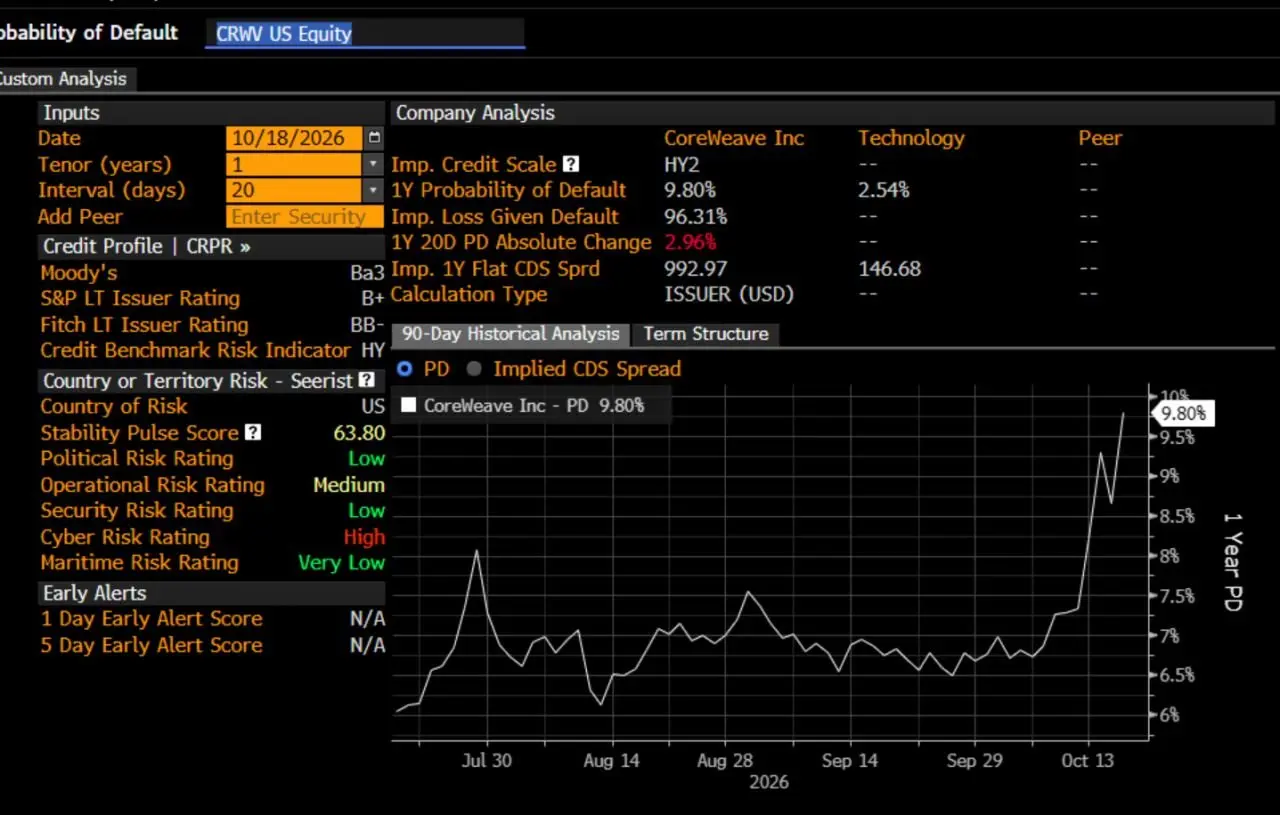
CoreWeave, Inc. is not a good buy right now due to significant financial instability and market concerns. The current price is $61.39, and the stock has seen a drastic 51.68% decline over the past year. Additionally, the RSI is at a low 19.405, indicating oversold conditions, but this is coupled with a high risk of default, as the five-year credit default swaps imply a 60% probability of default. These factors suggest that while there may be potential for recovery, the immediate risks outweigh the benefits.
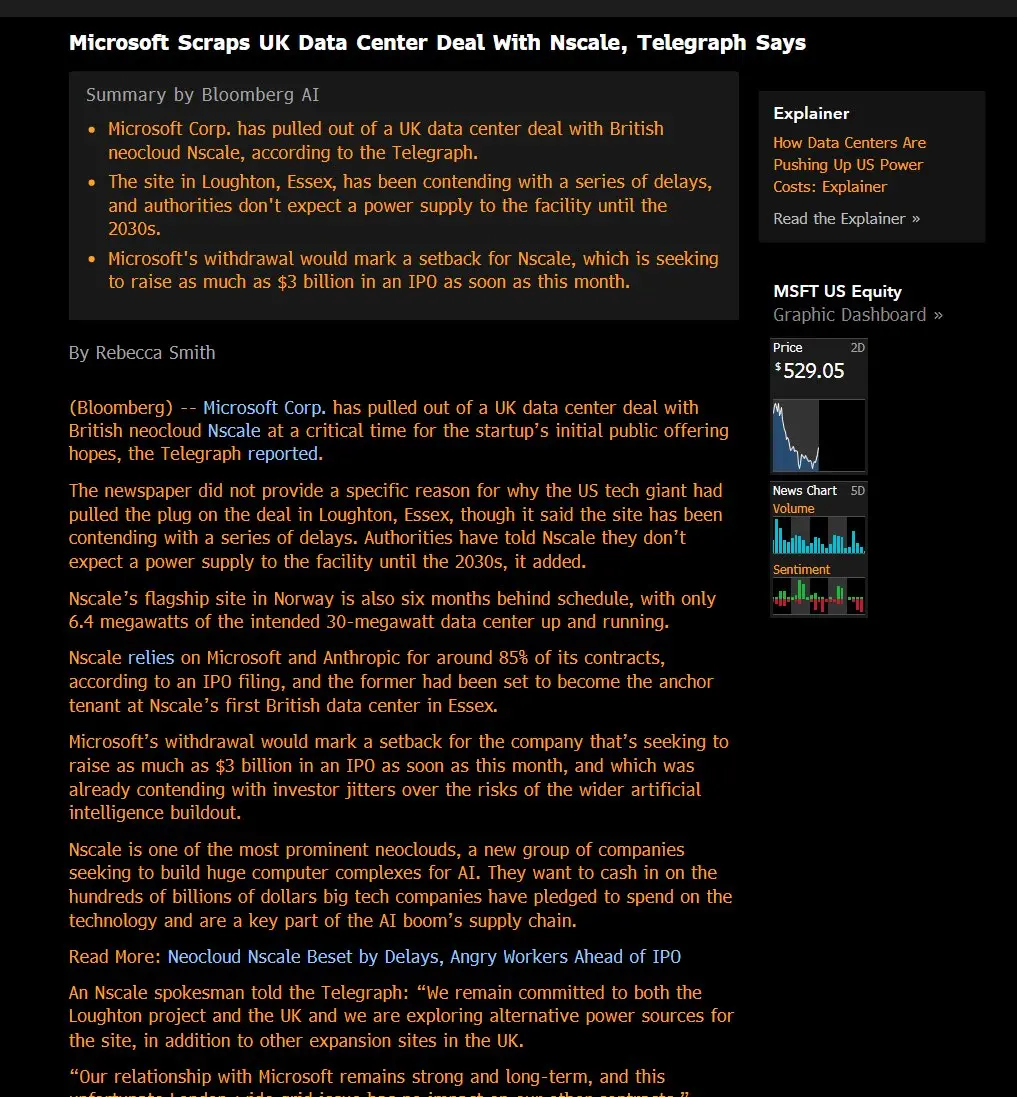
CoreWeave Faces Rising Debt Insurance Costs Amid Growth
CoreWeave Bond Yields Surge, Causing Panic in Neocloud Sector
Investor Concerns Weigh on CoreWeave Amid AI Funding Risks
Market Volatility Amid Strong Bank Earnings

Gartner Predicts 80% of Neocloud Companies Will Cease Operations by 2030
CoreWeave, Inc. is a cloud infrastructure technology company. The Company offers the CoreWeave Cloud Platform, which consists of software and cloud services that deliver the automation and efficiency needed to manage complex artificial intelligence (AI) infrastructure. Its CoreWeave Cloud Platform is an integrated solution that is purpose-built for running AI workloads such as model training and inference. Its solutions include infrastructure services, managed software services, and application software services. Its Infrastructure Services provide its customers with access to advanced graphics processing unit (GPU) and central processing unit (CPU) compute, highly performant networking, and storage. Its Managed Software Services include CKS, a flexible virtual private cloud and a bare metal service that runs kubernetes directly on high-performance servers. Its Application Software Services build on top of its infrastructure and managed software services, integrating additional tools. It operates in the Technology sector.
CoreWeave, Inc. is not a good buy right now due to significant financial instability and market concerns. The current price is $61.39, and the stock has seen a drastic 51.68% decline over the past year. Additionally, the RSI is at a low 19.405, indicating oversold conditions, but this is coupled with a high risk of default, as the five-year credit default swaps imply a 60% probability of default. These factors suggest that while there may be potential for recovery, the immediate risks outweigh the benefits.

🐋 Whale Watch: The $10 trillion AI infrastructure boom is quietly turning into a debt crisis. While retail attention is fixed on GPU chips, physical construction is hitting a massive wall. The numbers are striking: => 47 major data center projects were delayed, shelved, or withdrawn in 2026 alone. => Bernstein analysts say only 35% of planned US projects are truly credible. => 1,000+ communities are pushing back against AI development. The canary in the coal mine? CoreWeave dropped 25% in just one week, and Wall Street is finally waking up to the reality of its debt-driven expansion. Developers borrowed billions. But if deadlines are missed, AI companies can legally walk away, leaving empty shells and massive debt behind. Is the picks-and-shovels trade about to break?
展开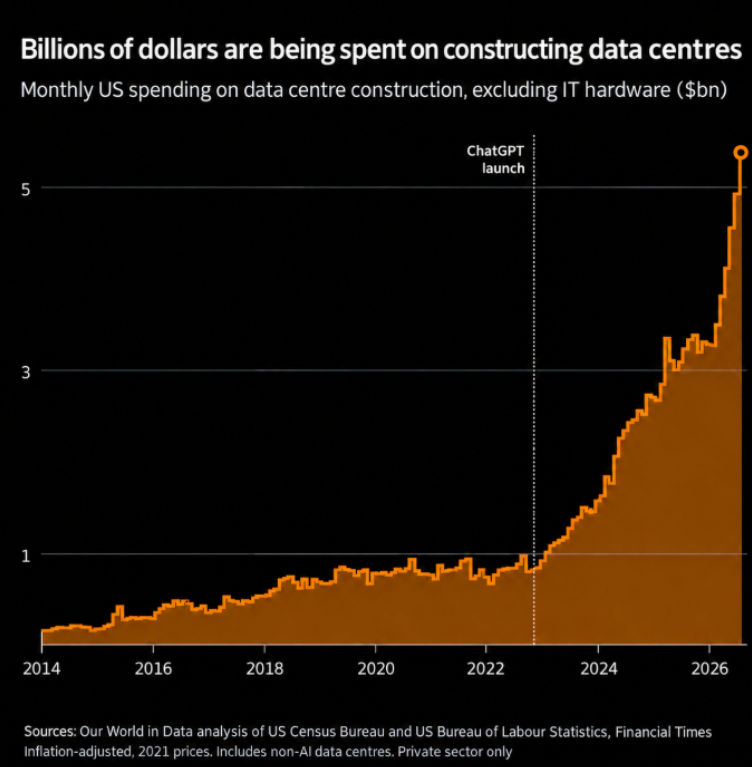



Warsh's IMF speech was not about being dovish or hawkish; the core was his refusal to signal any direction. The market read it short term as "the probability of an October hike has fallen," but the real impact is that the Fed's rate path will be harder to predict. To clarify the background: this was a fireside chat Warsh gave on October 16 at the IMF/World Bank annual meetings in Bangkok. He repeatedly stressed that he would not prejudge rate decisions and would not preview what the Fed will do at its remaining meetings this year. The effect was immediate: the probability of an October hike fell from about 27% to below 15%. For the dollar: weaker short term, but not necessarily so medium term. Short term: as expectations for no hike rose, the dollar edged lower, with DXY falling to about 101.7. But: he neither promised no further hikes nor laid out a clear path for cuts. Medium term: inflation, demand growth driven by AI investment, oil prices and geopolitical risk all remain, so the dollar could strengthen again at any time. Put simply, the dollar just lost one support, "an immediate hike," but has not entered an easing cycle. For US stocks: limited upside, tech still under pressure. Broad market: after Warsh spoke, US stocks briefly turned higher but closed mixed: the Dow edged up, the S&P fell 1.09%, and the Nasdaq fell 2.14%. Tech/AI stocks: the pressure has nothing to do with the Fed's remarks. CoreWeave faces debt pressure, chip stocks fell for eight straight sessions, returns on capital spending are being questioned, and money is rotating from tech into energy and utilities. The real impact: expectations for lower rates can support valuations to some extent, but cannot offset deleveraging and market doubts about AI industry earnings. So this is not "Warsh saved the market," but more like a brief breather. For BTC: slightly positive, but not enough to drive a one-way rally. After Warsh spoke, Bitcoin rebounded to about $82k, above the average cost basis of about $81.5k for US spot ETF holders. That counts as a short-term support level. The logic: cooling hike expectations, more room for Treasury yields to fall, risk assets get a breather, and BTC benefits. But Warsh did not rule out further tightening, and balance sheet reduction and a strong-dollar framework remain, so it is hard to chase BTC as a "liquidity bull market." More importantly, BTC is still below the cost basis of many ETF holders, which suggests holders are under pressure. Holding above $82k would be a strong sign; falling below $80k could mean further declines. The remarks are short-term negative for the dollar, provide sentiment support for US stocks, and are slightly positive for BTC. But they did not change the core issues: inflation has not been clearly defeated, liquidity has not eased significantly, and tech stocks are still digesting excess. What really determines the path ahead will be the October FOMC meeting, inflation data, Treasury yields, and whether AI capital spending continues to trigger blowups.
展开
本页仅供研究参考,不构成投资建议。模型可能出错。过往表现不代表未来结果。