

Self-Custody vs Exchange Custody for Copy Traders
Compare self-custody, exchange API, and custodial copy wallets for crypto copy trading—what each protects, what it doesn’t, and how to choose.

Key Takeaway
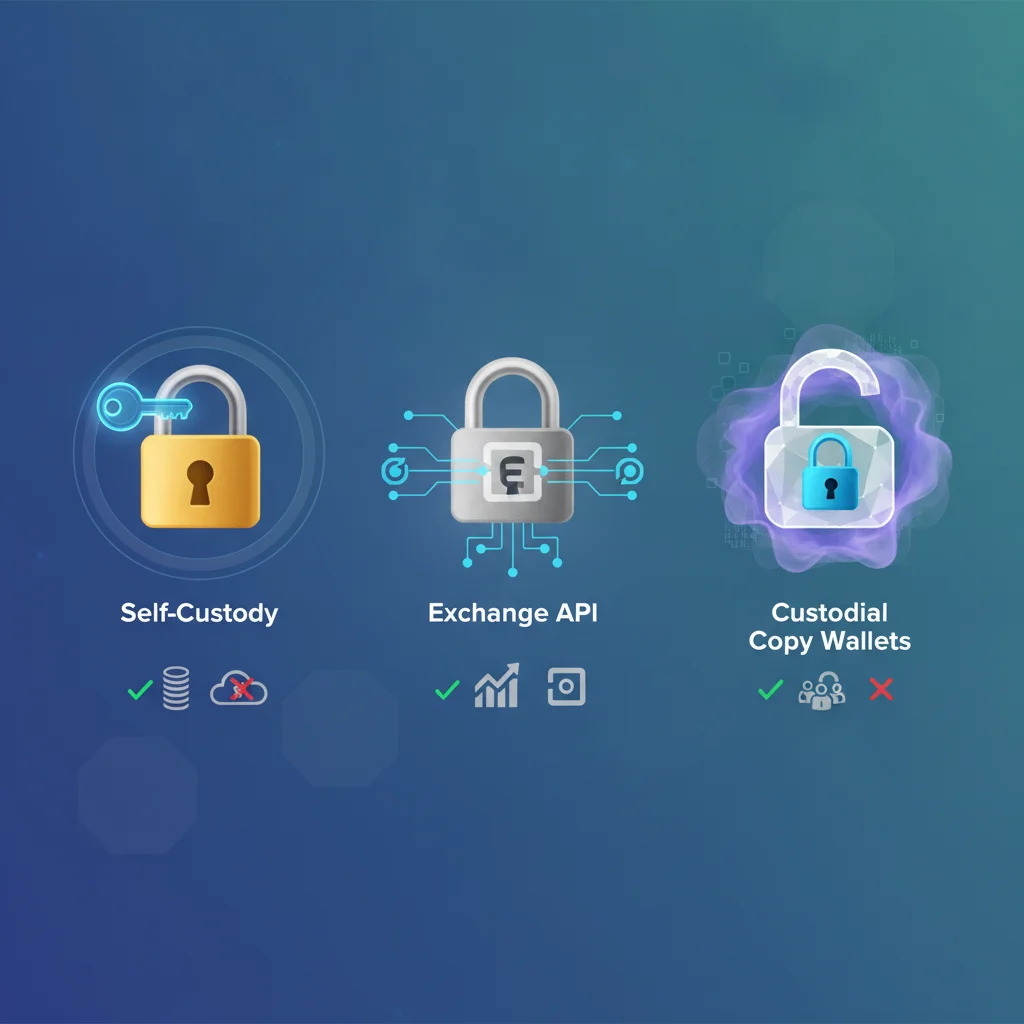
Self-custody versus exchange custody is not a morality play for copy traders. It is a trade-off among counterparty risk, execution speed, operational complexity, and the kinds of failures you are willing to underwrite. Spot holders often treat self-custody as the default virtue. Copy traders live in a different reality: latency, standing authorizations, and sometimes server-signed hot wallets exist because mirroring is a race. The right question is which risks you are buying when you choose a venue model—and how to size the hot sleeve so that choice cannot bankrupt the rest of your life.
This guide compares self-custody, exchange API setups, and hybrid copy wallets through the lens of social and AI copy trading. It stays practical: what each model protects, what it does not protect, and which evaluation questions separate durable setups from deposit-and-pray funnels. You will also see how Alphio’s budget-first workflows fit whichever custody shape you choose.
Three models copy traders actually meet
Exchange balance plus trade-only API
In the classic bot pattern, capital sits on Binance, Bybit, or a similar venue. The copy or bot layer receives an API key that can trade but cannot withdraw. If the bot vendor disappears, balances remain on the exchange—subject to that exchange’s own solvency and access risks. The new risks are key leakage, overly broad permissions, and bots that stop managing stops during an outage while positions remain open on the venue.
This model is often the pragmatic middle for retail: familiar venue interfaces, relatively clear permission toggles, and an exit path that does not depend on the copy vendor’s solvency. It is not “self-custody” in the cryptographic sense. It is “not handing the vendor withdrawal rights,” which is still a major upgrade over depositing into an opaque platform wallet.
Wallet self-custody with revocable trade agents
On-chain copy designs increasingly use authorizations that let your wallet open and close copied positions without approving every popup, while still blocking transfers. Hyperliquid-style agent framing treats custody as a permission problem: separate the right to trade from the right to move funds. When implemented honestly, this removes vendor deposit risk. It does not remove liquidation risk, smart-contract risk, or the chance that an agent trades you into a hole inside the allowed scope.
Revocation is the feature that makes the model adult. If you cannot explain how to revoke the agent and flatten from your own wallet tooling, you do not yet understand the setup well enough to size it.
Custodial copy wallets and platform deposits
Some products generate a copy wallet server-side or require deposits into platform-controlled accounts because speed demands signing without user popups. Honest teams say so and tell you to fund them like hot keys. Dishonest teams blur the language into “non-custodial” while retaining control. This model can be usable for small hot sleeves. It is a poor home for savings, yield you cannot afford to lock, or capital you would not leave on a hot exchange account overnight.
What each model protects—and what it does not
Counterparty maps
Self-custodial agents reduce the risk that a copy vendor absconds with balances. Exchange API setups reduce vendor absconding risk while retaining exchange counterparty risk. Platform deposits maximize convenience and vendor counterparty risk together. None of these maps erase market risk. A non-custodial agent can still run leverage into liquidation. An exchange API bot can still fail to fire a stop during an outage. Choosing custody is choosing which catastrophic story is less acceptable, not choosing immortality.
Operational burden
Self-custody raises the cost of user error: wrong networks, phishing, seed mishandling, and forgotten revocations. Exchange custody raises the cost of venue failure and account takeover. Platform custody raises the cost of trusting ops teams you cannot audit casually. Match the model to the skills you actually have. A cryptographically pure setup you operate poorly can be riskier than a boring exchange API you operate carefully with withdrawal disabled and IP allowlists on.
Decision checklist for copy traders
Start from capital purpose, not from ideology
Ask what this capital is for. Long-term bitcoin savings do not belong in a copy hot wallet. Speculative follow capital might. Split accounts by purpose before you split by ideology. Then ask which failure you are optimizing against this month: vendor insolvency, exchange insolvency, or personal key compromise. Your answer can change as stack size changes. Many experienced traders keep savings in cold or tightly controlled venues and run copy flow in a tightly capped hot sleeve—sometimes exchange-based, sometimes agent-based.
Demand evidence, then run drills
For exchange API setups, verify withdrawal is disabled, create allowlists, rotate keys, and practice revoking during a tiny open position. For wallet agents, verify transfer is impossible under the authorization, practice revoke, and confirm you can exit positions with your own tooling. For custodial copy wallets, read the key-management story, fund only what you can lose, and test withdrawals while markets are calm. Grade answers with documents and observed behavior, not with logos.
When the checklist clears, bind a budget before scaling. That pairing—custody model plus ceiling—is the core of a sane Alphio workflow on Alphio Copy Trade.

Follow with caps on Alphio Copy Trade
Hybrid realities in 2026
Speed versus approval friction
Copy trading is latency sensitive. Pure manual self-custody with a popup on every fill cannot compete with leaders who already traded seconds ago. That is why standing authorizations and sometimes custodial signing exist. The adult framing is to accept a hot permission surface and then shrink blast radius with budgets, isolated margin where available, and ruthless unfollow rules. Pretending you can have zero custody trade-offs and perfect copy fidelity at once is how people get sold magical deposits.
AI agents intensify the same trade-off
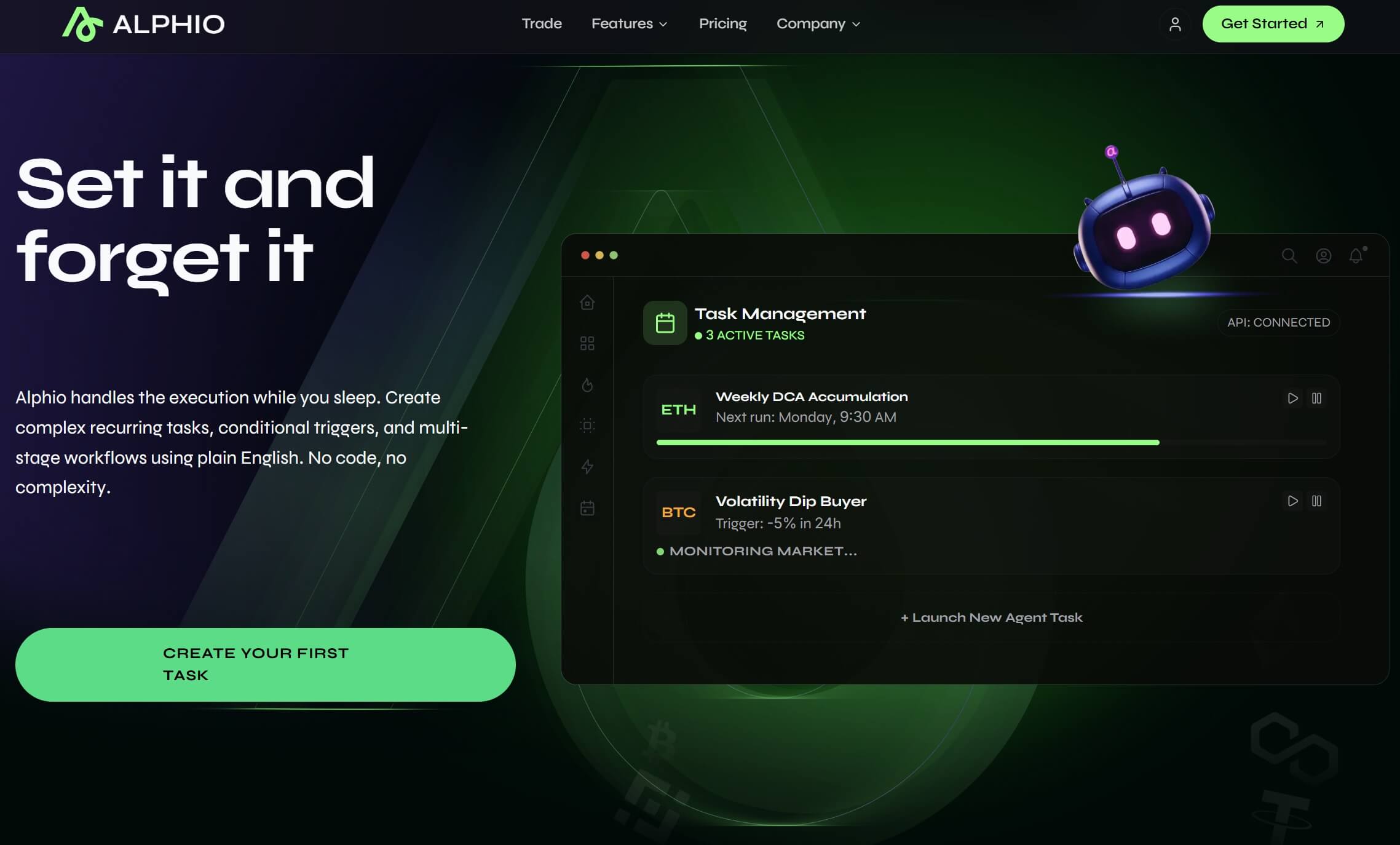
Autonomous strategies want continuous access. Continuous access without withdrawal rights is the design target. Continuous access with withdrawal rights is how demos become incidents. Prefer agent products that keep owner wallets in control and enforce spend limits outside the model, as modern agent-safety write-ups insist. Explore that pattern on Alphio Autonomous Trading.

How market context should influence the choice
Crypto-equity names such as Coinbase and MicroStrategy are reminders that venue and beta risk cluster. In high-volatility regimes, prefer the custody model you can exit from quickly under stress, even if it is slightly less “pure.” A beautiful cold architecture that takes thirty confused minutes to unwind during a liquidation cascade is not safer in practice. Schedule a quarterly custody review with Alphio Scheduled Task and keep a conversational note of why you chose the current model on Alphio Conversational Trading.
A side-by-side evaluation script
Open a note with four columns: self-custody agent, exchange API, custodial copy wallet, and platform deposit. For each column, answer where balances live overnight, who can withdraw, how you revoke trading rights, how you flatten if the vendor is down, what evidence supports the answers, and what maximum sleeve you would fund tomorrow morning. Force yourself to write “unknown” instead of hopeful guesses. Unknowns are automatic size reducers.
Next, run the smallest possible live drill on the model you are tempted to use. Deposit dust, open a tiny copied or agent position, revoke or disable access, and exit. Time how long each step takes. If the drill is confusing while calm, it will be worse when
style volatility is screaming through your timeline. Only after the drill should you discuss scaling inside Alphio Copy Trade or Alphio Autonomous Trading.
Finally, write your personal vetoes. Examples: no unexportable keys above a few hundred dollars; no withdrawal-enabled API keys ever; no platform deposits without a published withdrawal SLA; no agent without an external daily loss halt. Vetoes prevent clever exceptions. Share them with anyone who co-manages capital so a late-night override needs social friction.
Revisit the script quarterly or after any venue incident in the industry. Custody fashion changes quickly in crypto, but your vetoes can remain stable. Store the dated script where your trading journal lives, and use Alphio Conversational Trading if you want the rationale attached to the same workspace where you act.
Field notes from followers who learned the hard way about self custody vs exchange custody copy traders
The most expensive lessons in crypto automation rarely come from a single bad tick. They come from missing controls that looked optional during a calm onboarding. Someone funded a hot sleeve without a revoke drill. Someone raised a budget after three green days. Someone treated a leaderboard as a due-diligence report. Someone kept a lead through style drift because lifetime ROI still sparkled. Each story is specific; the pattern is identical: evidence was replaced by narrative at the moment capital scaled.
You can interrupt that pattern with ceremony that feels almost bureaucratic. Before every increase in size related to self custody vs exchange custody copy traders, require two artifacts: a one-page note of what changed since the last review, and a dust-sized test that proves the control you think you have still works. If either artifact is missing, the increase does not happen. Alphio’s Scheduled Task surface exists to make the ceremony recur, and Conversational Trading exists to make the note attach to the same place you act.
How this checklist connects to Alphio workflows
Checklists fail when they live only in blog tabs. They work when they become defaults in the product path you actually click. For followers, that usually means evaluating a lead, binding a budget, then mirroring—not mirroring first. For agent users, it means external caps before autonomy theater. Use Alphio Copy Trade when the object is a vault, whale, or followable strategy, and Alphio Autonomous Trading when the object is an agent loop that must be fenced.
Apply the checklist in Alphio Copy Trade
Fence agents in Alphio Autonomous Trading
Keep liquid market context honest while you do it. Crypto-sensitive equities such as
and
will not manage your risk for you, but they will remind you that beta clusters. If your notes on self custody vs exchange custody copy traders ignore that clustering, your diversification claims are probably cosmetic.
A thirty-day adoption plan you can actually finish
Week one: write the one-pager and run dust drills only. No scaling. Week two: allow a tiny live sleeve under the strictest caps you wrote, and log every reject or skip. Week three: compare your fills and drawdowns to the thesis; demote anything that drifted. Week four: decide whether to promote, hold, or kill—then schedule the next monthly review before you celebrate. The plan is deliberately slow. Speed is how social trading apps sell. Slowness is how educational capital survives.
If you skip weeks, do not “catch up” by jumping to week four size. Restart at the last honest week. Ambition is cheap; repaired process is not. Store the week-four decision where you will see it again, ideally beside an Alphio reminder via Scheduled Task.
Questions to ask support before you increase size
Ask where funds sit overnight, how to revoke trading permissions, what happens on engine outages, how skipped copies are surfaced, whether profit share and fees are netted in displayed ROI, and how to flatten without the happy-path UI. Write the answers into your self custody vs exchange custody copy traders file. If support cannot answer without delay or deflection, treat that as a soft veto on scaling. Good teams are boringly specific. Vague poetry is a risk factor.
Also ask what changed in the last ninety days: custody model, fee schedule, margin defaults, or authorization scope. Quiet changes are where yesterday’s checklist becomes today’s false comfort. A quarterly diff review is as important as the initial review.
Closing synthesis before the formal conclusion
By now the through-line should be obvious. Whether the page title centers on self custody vs exchange custody copy traders or on a neighboring evaluation theme, durable copy and agent trading is a stack: custody, budgets, sizing, stops, fees, and unfollow rules. Removing one layer does not make you agile; it makes you leveraged to a single point of failure. Prefer products and habits that make the stack visible. Prefer Alphio paths that bind capital to limits before narratives get loud.
If a friend forwards a perfect curve tomorrow, you already know the response: open the checklist, run the drills, and only then discuss size. That response is the entire educational edge available to most retail followers.
Conclusion
Self-custody versus exchange custody for copy traders is a structured choice among failure modes. Prefer trade-only permissions and revocable agents when you can. Use exchange balances with withdrawal-disabled keys when that is the operationally honest middle. Treat custodial copy wallets as hot sleeves with tiny ceilings and honest labeling. Never let ideology put savings inside a racing product.
Put the choice to work with capped follows on Alphio Copy Trade and capped autonomy on Alphio Autonomous Trading. Custody model first, then budget, then performance stories.
FAQs
Is self-custody always safer for copy trading?
Not always. Self-custody can reduce vendor deposit risk but increases operational and key-management risk. For copy trading, revocable trade-only permissions and small hot sleeves often matter more than slogans.
Are exchange API copy setups custodial?
Funds usually remain on the exchange, so you still take exchange counterparty risk. The copy vendor typically should not have withdrawal rights if the key is configured correctly.
Why do some copy wallets hold keys server-side?
Because copying is latency sensitive and per-trade wallet popups are too slow. That speed comes with hot-wallet risk, so capital should be sized like trading capital, not savings.
What should I test before scaling any custody model?
Verify permissions, revoke access during a tiny position, withdraw a small amount, and confirm you can exit without the vendor’s happy path.
How does Alphio fit different custody preferences?
Alphio focuses on evaluating strategies and binding budgets before copying or running agents, which complements whichever underlying venue or wallet model you choose.
Related articles
- Stock Market Surges After 2026 Midterms: What the Democratic Sweep Means for Your PortfolioThe stock market rallied after Democrats won the 2026 midterms. Discover what the election means for investors, tech stocks, and the S&P 500 outlook.
- Stock Market Surges After 2026 Midterms: What the Democratic Sweep Means for Your PortfolioThe stock market rallied after Democrats won the 2026 midterms. Discover what the election means for investors, tech stocks, and the S&P 500 outlook.
- Oil Prices Surge Above $105 Amid US-Iran Conflict: Energy Investment Opportunities in November 2026Oil prices climb past $105 as US strikes Iran's Qeshm Island. Discover energy investment opportunities, top oil stocks, and market outlook for November 2026.
- Price-to-Sales vs EV/EBITDA: When Each Valuation Multiple Works in 2026Compare price-to-sales vs EV/EBITDA with Q3 2026 Siblis bands and Oct 2026 NVDA, MSFT, AMZN & CRM figures—when each multiple works and how margins decide.
- Trailing Stop Loss Strategy: Systematic Exit Rules for Stock Investors in 2026A practical trailing stop loss strategy with percentage, dollar, and ATR exit rules that lock in gains on stocks like NVDA, AAPL, SPY, and QQQ in 2026.
- Best AI Stock Picker App for US StocksCompare leading AI stock pickers and see why Alphio.AI's SwingMax Signal stands out for swing traders seeking automated execution and transparent portfolio tracking.