

Nvidia Earnings & Jackson Hole: The Perfect Storm Testing AI Stocks Against Rising Rates
Nvidia earnings and Jackson Hole symposium converge this week. Discover how Fed policy and AI chip demand could reshape the stock market rally in August 2026.

Key Takeaway
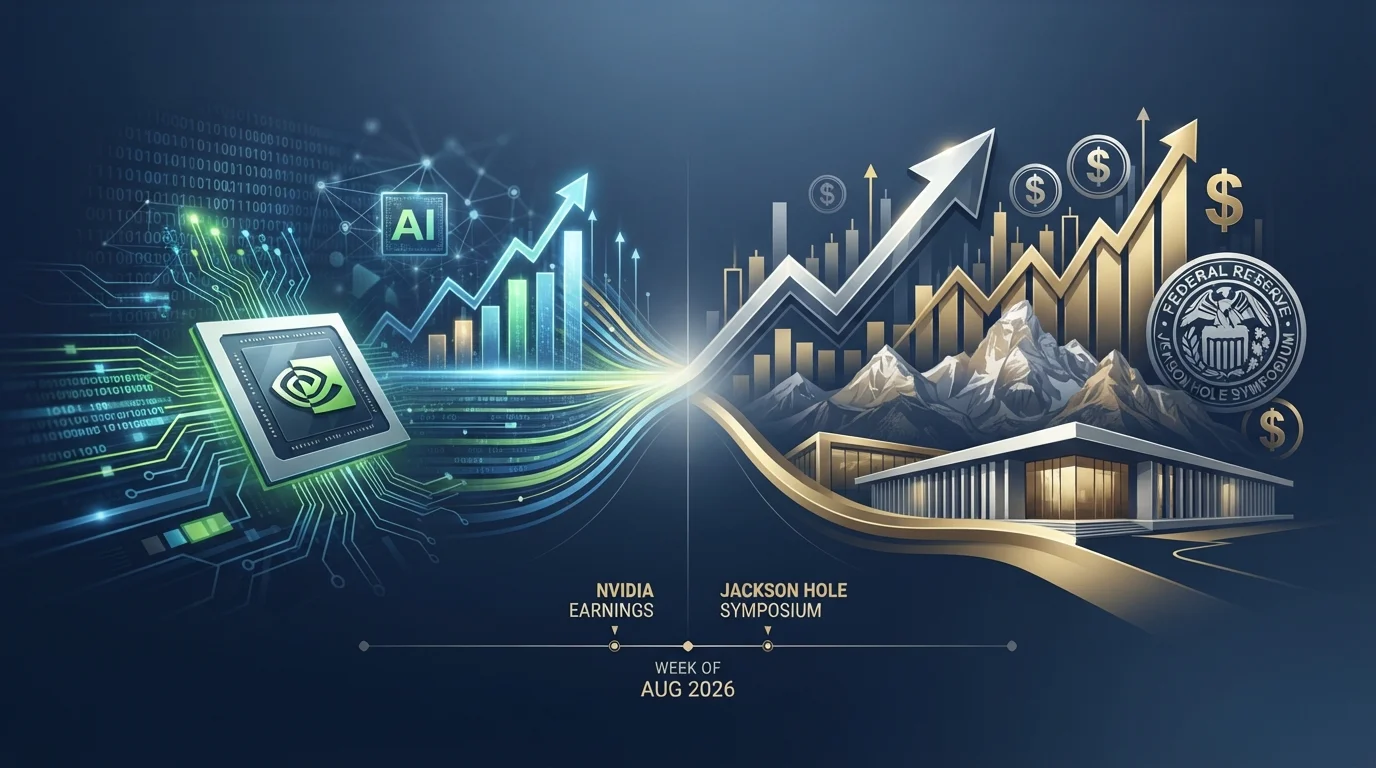
The convergence of Nvidia's quarterly earnings report and the Federal Reserve's Jackson Hole economic symposium represents a critical inflection point for the 2026 stock market. These back-to-back events will test whether the AI-driven equity surge can withstand mounting pressure from rising Treasury yields, persistent inflation concerns, and shifting monetary policy expectations under new Fed Chair Kevin Warsh.
Nvidia reports earnings on Wednesday, August 26, with Wall Street expecting revenue around $91 billion guided by the company. Analysts maintain a consensus Strong Buy rating with an average 12-month price target of $304.73, suggesting roughly 42% upside potential from current levels. However, the stock has gained little in 2026 while the broader chip sector surged, creating a tense setup for the earnings release.
Meanwhile, Fed Chair Kevin Warsh delivers his first Jackson Hole keynote on Friday, August 28, with markets desperate for clarity on the central bank's inflation-fighting commitment. The Fed held rates steady at 3.50%-3.75% in July, but three regional bank presidents dissented in favor of hikes—the first such three-way dissent since September 2016. With core PCE inflation expected at 3.3% year-over-year and Treasury yields at multi-decade highs, Warsh's message could either calm nervous investors or accelerate the recent market volatility.
The Nvidia Earnings Setup: High Stakes for AI Chip Demand
Nvidia's dominance in the artificial intelligence chip market has made it the world's most valuable semiconductor company, with a market capitalization exceeding $4.86 trillion. The company's data center revenue has become the primary growth engine, driven by insatiable demand from tech giants building out AI infrastructure. However, this quarter's earnings report carries unusual significance as investors question whether the AI boom can maintain its momentum amid macroeconomic headwinds.
The company faces several challenges heading into the report. DRAM prices have surged, leading to over 15% price hikes for server systems using Nvidia's AI chips. This development complicates the data-center build-out for major tech firms and could impact near-term demand. Additionally, intensifying competition from AMD and emerging threats from custom silicon developed by Google, Amazon, and Microsoft raise questions about Nvidia's long-term market share.
Despite these concerns, the fundamental demand picture remains robust. Cloud providers continue to expand capital expenditures on AI infrastructure, with many viewing the technology as essential for maintaining competitive advantage. Nvidia's Blackwell architecture, set for broader deployment in late 2026, represents the next evolution in AI computing power and could drive another wave of upgrade cycles.
What Analysts Expect From Nvidia's Report
Wall Street analysts have set high expectations for Nvidia's quarterly results, with the consensus revenue estimate aligning with the company's $91 billion guidance. The focus will extend beyond headline numbers to forward guidance, gross margin trends, and commentary on Blackwell ramp timing. Any indication of demand deceleration or pricing pressure could trigger significant stock volatility given elevated valuation multiples.
The analyst community remains overwhelmingly bullish, with 62 analysts maintaining an average rating of Strong Buy. Price targets range widely from $180 to $500, reflecting the uncertainty surrounding AI demand sustainability. AI-powered forecasting models suggest Nvidia stock could reach $225-$230 by month-end, representing roughly 4.6% upside from current levels near $215.
For investors seeking to capitalize on AI stock opportunities, consider using Alphio AI's copy trading feature to mirror successful traders and smart money wallets tracking semiconductor momentum.

Jackson Hole 2026: Warsh's Debut Under the Spotlight
The Federal Reserve's annual Jackson Hole Economic Policy Symposium runs August 27-29, with Kevin Warsh delivering his first keynote as Fed Chair on Friday morning. While the official theme focuses on Financial Innovation: Implications for Payments and Policy, markets will parse every word for signals on interest rate trajectory and inflation commitment.
Warsh assumed the Fed Chair role on May 22, 2026, inheriting an economy with sticky inflation, resilient growth, and Treasury yields at multi-decade highs. His predecessor's framework of average inflation targeting (AIT) may face abandonment in favor of a strict 2% target, representing a significant shift in monetary policy philosophy. The July FOMC meeting revealed internal divisions, with roughly half of committee members penciling in rate hikes for 2026 and three regional presidents dissenting from the hold decision.
History suggests Jackson Hole keynotes often signal near-term monetary policy shifts regardless of the academic program's focus. Previous speeches in 2020, 2021, 2022, and 2025 all preceded significant policy pivots. For Warsh, this represents his clearest opportunity to define what kind of Fed Chair he intends to be and how the central bank will respond to persistent inflationary pressures.
Inflation Data and Rate Expectations
The July Personal Consumption Expenditures (PCE) price index, released just before Jackson Hole, will provide crucial context for Warsh's speech. Core PCE, which excludes volatile food and energy prices, is forecast to rise 3.3% year-over-year—unchanged from June and well above the Fed's 2% target. This persistence in underlying inflation pressures complicates the case for rate cuts and may force Warsh to adopt a more hawkish tone than markets hope.
Current market pricing shows September rate hike odds hovering near one-in-three, with the fed funds rate expected to remain elevated through much of 2026. The 30-year Treasury yield has climbed to levels not seen in decades, reflecting concerns that the government's efforts to rein in long-term borrowing costs may provide only temporary relief. If Warsh fails to signal a credible inflation-fighting commitment, real interest rates could rise further, pressuring equity valuations across the board.
For traders looking to automate their response to Fed policy shifts, Alphio AI's agentic trading enables automated portfolio management with AI-powered strategies that adapt to changing macroeconomic conditions.

Market Implications: AI Stocks vs. Rising Rates
The collision of Nvidia earnings and Jackson Hole creates a binary outcome scenario for AI stocks and the broader market. A strong Nvidia report combined with dovish Fed messaging could reignite the AI rally and push major indices to new highs. Conversely, disappointing earnings or hawkish Fed commentary could accelerate the recent correction in growth stocks and trigger broader market volatility.
The tension between AI-driven growth narratives and rising real interest rates represents the defining market dynamic of 2026. AI stocks have commanded premium valuations based on expectations of transformative revenue growth over the next decade. However, higher discount rates reduce the present value of those future cash flows, creating valuation headwinds even for companies delivering strong operational results.
Sector rotation patterns reveal investor uncertainty, with money flowing between growth and value stocks based on incremental data points. The technology sector's performance relative to the broader market has narrowed in recent months, suggesting the AI trade may be approaching a consolidation phase. How Nvidia trades post-earnings could set the tone for the entire AI complex heading into September.
Treasury Yields and Equity Valuations
The surge in Treasury yields to multi-decade highs has emerged as the primary headwind for equity markets in August 2026. The 10-year yield has climbed above 5%, while the 30-year yield approaches 6%, levels that significantly impact discount rates used in equity valuation models. For high-growth stocks like Nvidia, which trade on expectations of earnings far in the future, rising yields compress theoretical fair value calculations.
The yield curve has steepened as markets price in expectations of higher-for-longer interest rates. This environment typically favors value stocks with near-term cash flows over growth stocks with distant earnings potential. However, the unique nature of AI demand—driven by genuine technological transformation rather than speculative excess—may allow leading AI stocks to outperform even in a rising rate environment.
Investors should monitor the relationship between Nvidia's earnings results and Treasury yield movements for clues on whether AI stocks can decouple from traditional rate sensitivity. If Nvidia rallies on strong results despite elevated yields, it would signal that company-specific fundamentals can overcome macro headwinds. Alternatively, a sell-off on good news would confirm that valuation compression from higher rates remains the dominant factor.
Sector Rotation and Market Leadership
The stock market's leadership has shown signs of broadening beyond the narrow group of mega-cap tech stocks that drove gains earlier in 2026. Financials, energy, and industrial sectors have outperformed recently as investors position for a higher-rate environment that benefits lenders, commodity producers, and cyclical businesses. This rotation reflects growing confidence in economic resilience but also concerns about tech stock valuations.
Nvidia's earnings report could either accelerate or reverse this rotation pattern. Strong results would validate the AI investment thesis and potentially draw capital back into technology stocks. Weak results or cautious guidance could confirm investor fears that AI capital spending has peaked, triggering further rotation into defensive and value-oriented sectors.
The broader semiconductor sector has already diverged from Nvidia's performance this year, with many chip stocks rallying while Nvidia traded sideways. This divergence suggests investors have already priced in some uncertainty around Nvidia's near-term outlook. A positive earnings surprise could drive catch-up performance, while disappointment might drag the entire sector lower.
For investors seeking to set conditional trades based on earnings outcomes and Fed policy, Alphio AI's automations enable sophisticated workflow triggers that execute based on market events and price movements.

Global Market Context
International markets are also focused on this week's U.S. events, with European and Asian equities showing correlation to American AI stocks and Treasury yield movements. The dollar's strength against major currencies reflects expectations of higher U.S. rates relative to other developed economies, creating headwinds for emerging markets and commodity prices denominated in USD.
China's economic slowdown and property sector challenges have reduced demand for industrial commodities, though oil prices have remained resilient due to supply constraints and geopolitical tensions. Gold has held gains despite rising real yields, supported by central bank purchases and investment demand for inflation hedges. These cross-asset dynamics create a complex backdrop for equity investors navigating the Nvidia-Fed convergence.
European markets face their own challenges, with the ECB grappling with similar inflation dynamics and growth concerns. The divergence between Fed and ECB policy trajectories has driven euro-dollar volatility, impacting multinational corporate earnings and global capital flows. How Warsh positions the Fed relative to other central banks will have significant implications for currency markets and international equity performance.
Trading Strategies for the Week Ahead
Investors and traders should prepare for elevated volatility around both the Nvidia earnings release and Jackson Hole keynote. Options markets are pricing in significant expected moves for Nvidia stock, with implied volatility elevated ahead of the report. Position sizing and risk management become critical in this environment, as binary outcomes can produce sharp price movements in either direction.
For those holding Nvidia positions, consider whether to reduce exposure ahead of earnings given the binary risk/reward setup. For those looking to initiate positions, waiting for post-earnings clarity may provide better entry points regardless of direction. The stock's reaction to the report will likely persist for several sessions as analysts digest results and update models.
Broader market positioning should account for the Fed uncertainty surrounding Jackson Hole. Defensive sectors and quality factors may outperform if Warsh adopts a hawkish tone, while cyclicals and growth stocks could rally on dovish messaging. Diversification across sectors and factors remains prudent given the wide range of potential outcomes.
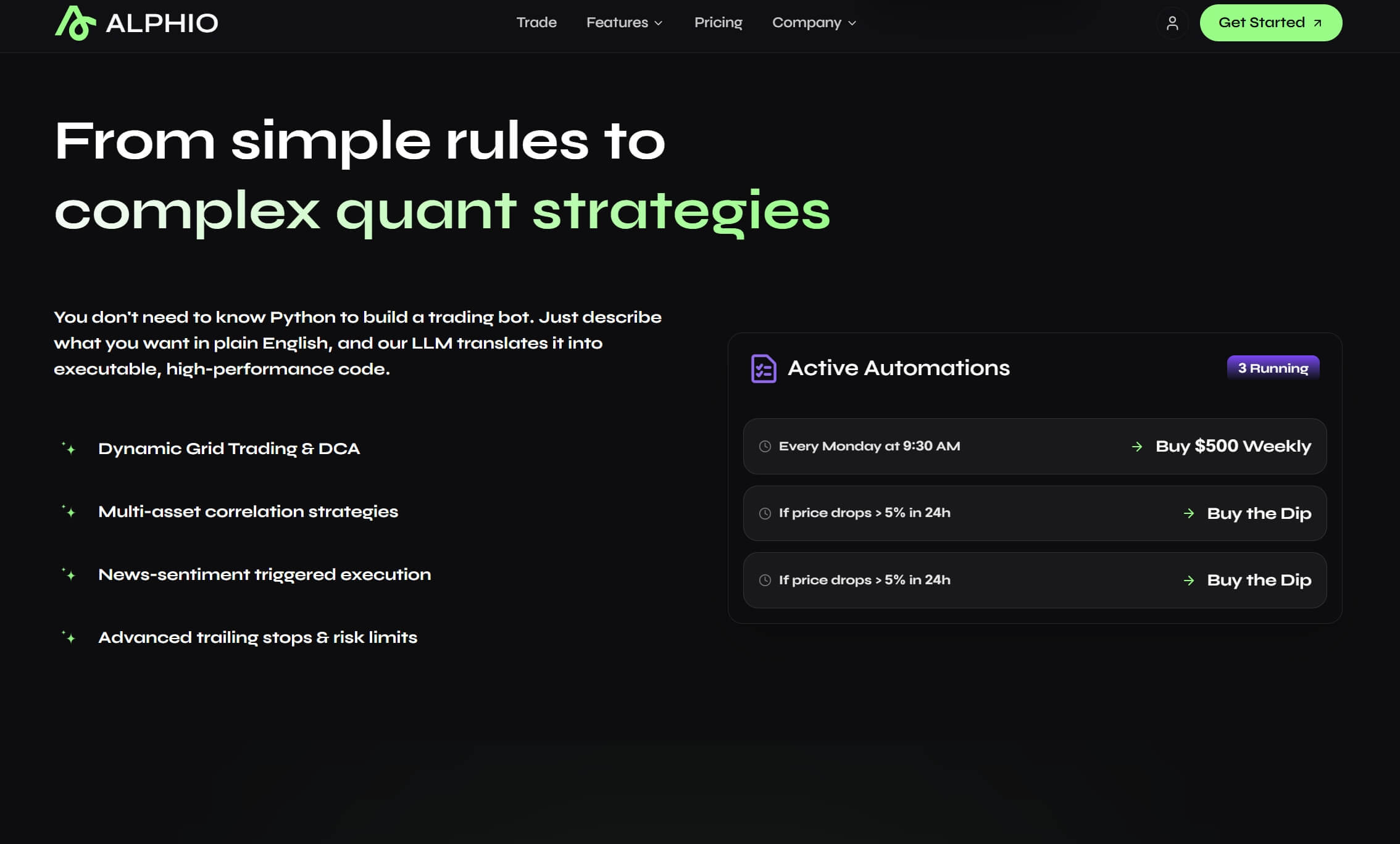
For seamless trade execution during volatile market events, Alphio AI's conversational trading allows you to execute trades via chat interface, perfect for rapid response to earnings surprises and Fed announcements.
Long-Term AI Investment Thesis
Regardless of near-term volatility, the long-term investment case for AI infrastructure remains compelling. The technology is driving genuine productivity improvements across industries, from software development to drug discovery to autonomous systems. Nvidia's position as the dominant supplier of AI computing hardware creates a structural growth opportunity that extends beyond any single quarter's results.
The company's competitive moat includes not just hardware performance but also the CUDA software ecosystem, which has become the standard platform for AI development. This ecosystem lock-in creates switching costs for customers and barriers to entry for competitors. While rivals like AMD are gaining ground, Nvidia's comprehensive platform approach maintains its leadership position.
Investors with multi-year time horizons should view potential post-earnings weakness as accumulation opportunities rather than reasons to exit. The AI build-out is still in early stages, with enterprise adoption accelerating and new use cases emerging regularly. Nvidia's data center revenue could grow several-fold over the next five years as AI becomes ubiquitous across the global economy.
Conclusion
This week's convergence of Nvidia earnings and the Jackson Hole symposium represents a defining moment for 2026 markets. The outcome will shape investor expectations for AI stock valuations, interest rate trajectories, and the sustainability of the current bull market. While uncertainty is elevated, prepared investors can navigate this volatility by maintaining discipline around position sizing, diversification, and long-term investment objectives.
Nvidia's earnings will test whether AI demand remains robust enough to justify premium valuations, while Warsh's Jackson Hole speech will reveal the Fed's commitment to taming inflation. Neither outcome is preordained, but both will provide valuable information for positioning portfolios in the months ahead. Investors should remain flexible and ready to adapt as new data emerges.
For those looking to enhance their trading capabilities during this volatile period, explore Alphio AI's copy trading to mirror successful strategies, or try agentic trading to automate your portfolio management with AI-powered insights. The combination of human judgment and AI execution may be the optimal approach for navigating these uncertain markets.
FAQs
When is Nvidia reporting earnings in August 2026?
Nvidia reports earnings on Wednesday, August 26, 2026, at 21:20 BST / 16:20 EDT. The report is highly anticipated as it will provide insights into AI chip demand and data center revenue growth.
What is the Wall Street price target for NVDA stock?
According to 62 analysts, the average 12-month price target for NVDA is $304.73, representing approximately 42% upside from current levels. Price targets range from $180 to $500, reflecting uncertainty about AI demand sustainability.
When is the Jackson Hole symposium and what should investors watch?
The Jackson Hole Economic Policy Symposium runs August 27-29, 2026. Fed Chair Kevin Warsh delivers his first keynote on Friday, August 28. Investors should watch for signals on interest rate trajectory, inflation commitment, and potential changes to the Fed's monetary policy framework.
How could rising Treasury yields impact AI stocks like Nvidia?
Rising Treasury yields increase discount rates used in equity valuation models, compressing the present value of future earnings. For high-growth AI stocks trading on distant earnings expectations, this creates valuation headwinds even if operational performance remains strong.
What is the expected core PCE inflation reading for July 2026?
Core PCE inflation for July 2026 is forecast to rise 3.3% year-over-year, unchanged from June and well above the Fed's 2% target. This persistent inflation pressure complicates the case for rate cuts and may force the Fed to maintain a hawkish stance.
Related articles
- Santa Claus Rally and the Year-End Stock Market: Investor Guide for Late 2026Santa Claus rally explained: 7-day window stats since 1950, Nov–Dec seasonality, post-midterm 2026 setup, and a risk-managed year-end investing playbook.
- AppLovin Q3 2026 Deep Dive: Beaten-Down S&P Dog Meets Axon Next-Gen Beat-and-Raise—and a $3.2B BuybaAppLovin Q3 2026: $2.185B rev (+55%), EPS $4.30 vs ~$4.03–4.04 Street, Adj EBITDA $1.842B (84%). Beat own guide $100M; Q4 $2.365–2.395B; auth +$3.2B; AH +22–24%.
- Democratic Sweep Sends Stocks Soaring: Dow Posts Best Post-Midterm Rally in 44 Years Amid AI Sector US stocks surged after Democrats swept the 2026 midterms. The Dow jumped 1,569 points for its best post-election day since 1982 as markets cheered political clarity.
- Gold Price Forecast 2026: Expert Analysis & Investment Strategy GuideDiscover gold price predictions for 2026 from top analysts. Learn investment strategies, market drivers, and how to position your portfolio for the precious metals bull run.
- Q2 2026 Earnings Season Preview: Banks Lead the Charge as Tech Giants AwaitGet ready for Q2 2026 earnings season starting July 14. Discover key bank earnings, tech stock forecasts, and Fed decision impacts on S&P 500.
- AMD Stock Analysis July 2026: HSBC's $200 Target Signals AI Chip RevolutionAMD stock surges as HSBC sets $200 price target. Analysis of MI300X AI chip demand, data center growth, and competition with Nvidia for investors.