

Moderna Stock Skyrockets 177% on Landmark Cancer Vaccine Breakthrough: Investment Analysis
Moderna (MRNA) stock jumped 177% after Phase 3 melanoma vaccine success with Merck. Analysis of the breakthrough, market impact, and investment outlook for 2026.

Key Takeaway
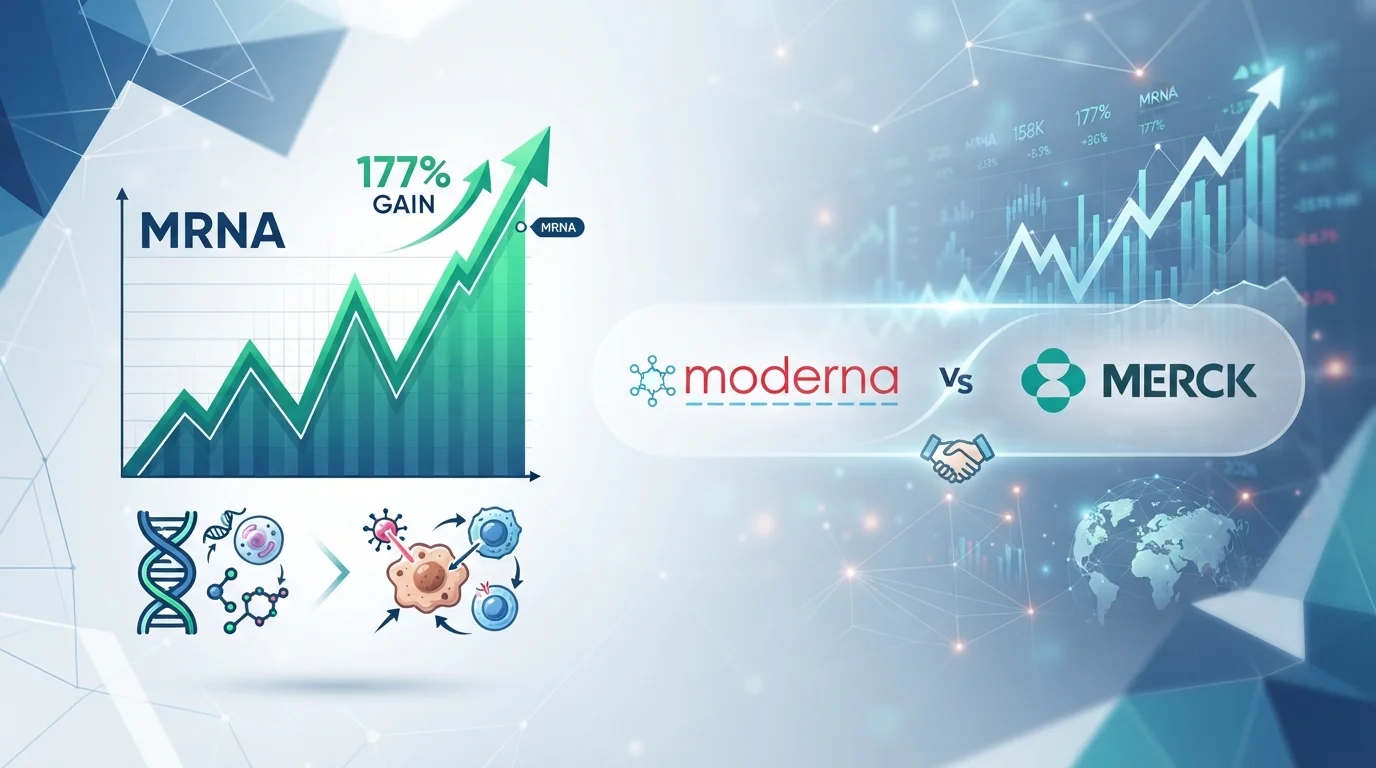
Moderna's stock has experienced one of the most dramatic rallies in recent biotech history, surging approximately 177% in a single trading session following the announcement of successful Phase 3 trial results for its personalized mRNA cancer vaccine developed in partnership with Merck. This landmark achievement represents a potential paradigm shift in oncology treatment and has fundamentally transformed investor sentiment toward the company, which had been struggling with declining COVID-19 vaccine demand. The combination therapy, which pairs Moderna's mRNA-4157 vaccine with Merck's Keytruda, demonstrated statistically significant improvement in recurrence-free survival for melanoma patients compared to Keytruda alone. For investors, this breakthrough signals Moderna's successful pivot from a pandemic-dependent vaccine maker to a diversified biotechnology company with a robust oncology pipeline, potentially unlocking billions in future revenue streams.
The market reaction reflects not merely enthusiasm for a single product but recognition of the broader implications for mRNA technology in cancer treatment. Moderna's success validates years of research into personalized cancer vaccines and establishes a clear regulatory pathway for similar therapies targeting other cancer types. With melanoma serving as the proof-of-concept, the company now has a platform technology that could be applied to lung, colorectal, and other high-incidence cancers. This diversification opportunity addresses one of the primary concerns that had been weighing on Moderna's valuation—the lack of revenue visibility beyond its COVID franchise. The partnership structure with Merck also provides important risk mitigation, as the pharmaceutical giant brings established commercial infrastructure and deep oncology expertise to the table.
The Science Behind the Breakthrough
Moderna's mRNA-4157 represents a revolutionary approach to cancer treatment that leverages the same messenger RNA technology that powered its COVID-19 vaccines, but with a crucial twist—personalization. Unlike traditional vaccines that use standardized antigens, mRNA-4157 is custom-manufactured for each patient based on the unique mutational profile of their tumor. When a patient is diagnosed with melanoma, researchers sequence the tumor's DNA to identify neoantigens—abnormal proteins created by cancer-specific mutations. The mRNA vaccine is then designed to encode up to 34 of these neoantigens, training the patient's immune system to recognize and attack cancer cells bearing these specific markers.
The Phase 3 trial results demonstrated that this personalized approach, when combined with Merck's Keytruda (pembrolizumab), significantly extended recurrence-free survival compared to Keytruda alone. This dual-mechanism approach is particularly elegant: Keytruda removes the brakes from the immune system by blocking the PD-1 pathway, while the mRNA vaccine provides specific instructions about which cancer cells to target. The synergy between these mechanisms appears to create a more robust and durable anti-cancer response than either treatment could achieve independently. For patients with high-risk melanoma, this represents a meaningful advancement in preventing disease recurrence after surgical removal of the primary tumor.
The implications extend far beyond melanoma. Moderna has already initiated trials exploring mRNA-4157 in non-small cell lung cancer, the leading cause of cancer death globally. The company is also investigating applications in colorectal, pancreatic, and other solid tumors. If the platform proves transferable across cancer types, the addressable market could expand from hundreds of millions to tens of billions of dollars annually. This scalability potential is what has investors particularly excited—the same manufacturing infrastructure and scientific expertise that enables melanoma vaccine production can be redirected toward other indications with relatively modest incremental investment.
Market Impact and Stock Performance
The immediate market reaction to Moderna's announcement was nothing short of extraordinary. MRNA shares vaulted from approximately $63 to over $174, adding more than $40 billion in market capitalization in a single session. This price action represented the largest percentage gain for a large-cap biotech stock in recent memory and reflected a fundamental repricing of the company's prospects. Prior to this announcement, Moderna had been trading near multi-year lows as investors grappled with the collapse of COVID-19 vaccine revenues and uncertainty about the company's path to sustainable profitability.
The rally also lifted Merck shares, though more modestly, as investors recognized the complementary value of the combination therapy to Keytruda's already dominant position in immunotherapy. Keytruda is currently the world's best-selling pharmaceutical product, generating over $29 billion in annual revenue. The addition of mRNA-4157 as a combination partner could extend Keytruda's market leadership and provide a defense against biosimilar competition that will begin emerging later this decade. For Merck, the partnership represents a relatively low-risk way to enhance its oncology portfolio without the full acquisition premium that would have been required to buy Moderna outright.
Trading volume during the announcement session was unprecedented, with more than 250 million shares changing hands compared to a typical daily average of around 10 million. This volume surge indicated broad participation from both retail and institutional investors, with options markets showing particularly intense activity as traders positioned for continued volatility. The price action also triggered circuit breakers multiple times as the stock hit upper limit thresholds, creating a series of trading halts that added to the dramatic nature of the session.
Investment Thesis: Beyond the Headlines
While the 177% rally captures attention, sophisticated investors must look beyond the headline numbers to assess Moderna's true investment value. The company now trades at a valuation that implies significant future success for its oncology pipeline, meaning the margin of safety that existed at $60 per share has largely evaporated. However, several factors suggest the repricing may be justified if the company can execute on its expanded opportunity set. First, the melanoma indication alone could generate peak annual sales of $2-3 billion based on the addressable patient population and likely pricing power for a personalized cancer therapy. Second, success in lung cancer, which Moderna is already pursuing, could multiply this opportunity by a factor of ten given the much larger patient population.
The competitive landscape also warrants careful consideration. While Moderna and Merck have established first-mover advantage in personalized mRNA cancer vaccines, other biotechnology companies are pursuing similar approaches. BioNTech, Moderna's German rival that also developed a successful COVID-19 vaccine, has its own mRNA cancer vaccine pipeline and has partnered with Roche for combination studies. Gritstone Bio and other smaller players are also developing neoantigen-targeting therapies. However, Moderna's scale advantages in mRNA manufacturing and its established relationship with regulators following the COVID-19 pandemic response provide meaningful competitive moats that will be difficult for smaller competitors to overcome.
For investors seeking to automate their trading strategies and capitalize on biotech volatility, consider using Alphio AI's copy trading feature to mirror successful traders and smart money wallets who specialize in healthcare and biotechnology sectors.

Financial considerations also support a constructive view. Moderna ended the most recent quarter with approximately $9 billion in cash and investments, providing substantial runway to fund expanded clinical development without dilutive financing. The company has also been implementing cost reduction measures to align its expense base with reduced COVID-19 vaccine revenues, positioning it to achieve profitability more quickly as oncology revenues ramp. Management has guided for break-even operations by 2027, a timeline that appears achievable given the new revenue visibility from the cancer vaccine program.
Regulatory Pathway and Commercial Strategy
The successful Phase 3 readout positions Moderna and Merck to seek regulatory approval for mRNA-4157 in melanoma, with filings expected in major markets during 2027. The regulatory pathway appears favorable given the clear survival benefit demonstrated in the trial and the significant unmet need in high-risk melanoma patients. The FDA has already granted Breakthrough Therapy designation to the combination, which should expedite review timelines. European and Japanese regulators have also shown receptivity to innovative cancer therapies, suggesting a broad global approval trajectory.
Commercial strategy will be critical to realizing the full value of this breakthrough. Personalized cancer vaccines present unique manufacturing and distribution challenges compared to traditional pharmaceuticals. Each dose must be custom-produced based on individual patient tumor sequencing, requiring sophisticated logistics and rapid turnaround times. Moderna has been investing in manufacturing capabilities to support this model, but scaling production to meet global demand will require continued capital deployment and operational execution. The partnership with Merck provides valuable commercial infrastructure, as the pharmaceutical giant has one of the industry's largest oncology sales forces and established relationships with cancer treatment centers worldwide.
Pricing strategy will also influence commercial success. Personalized therapies typically command premium pricing, and cancer treatments often exceed $100,000 per course of therapy. However, payers are increasingly scrutinizing drug costs, and the personalized nature of mRNA-4157 may complicate traditional health economic assessments. Moderna and Merck will need to demonstrate clear value relative to existing standards of care to secure favorable reimbursement, particularly in European markets where pricing pressure is more intense. The companies may also face competition from emerging cell therapy approaches, though the outpatient administration advantage of mRNA vaccines compared to inpatient CAR-T procedures provides a meaningful convenience benefit.
Risks and Considerations for Investors
Despite the compelling bull case, investors must remain cognizant of significant risks that could derail Moderna's recovery story. The most immediate concern is the potential for clinical setbacks in follow-on trials. While the melanoma results were strong, cancer drug development is notoriously unpredictable, and success in one indication does not guarantee success in others. The lung cancer trial, in particular, will be closely watched as it represents the largest commercial opportunity but also involves a more heterogeneous patient population with more variable outcomes. A negative or ambiguous readout in this study could significantly dampen enthusiasm for the platform.
Manufacturing and operational execution also present meaningful challenges. Personalized mRNA vaccines require a fundamentally different production model than the mass-manufactured COVID-19 vaccines that Moderna produced during the pandemic. Each patient requires individual manufacturing runs, quality control testing, and rapid delivery to treatment centers. Any manufacturing disruptions, quality issues, or logistical failures could damage the commercial launch and create opportunities for competitors. The company will also need to invest heavily in sales and marketing infrastructure to support an oncology commercial organization, expenses that will pressure near-term profitability even as revenues grow.
For traders looking to automate portfolio management during periods of high volatility, Alphio's agentic trading features can help execute strategies based on predefined rules and market conditions.

Market valuation also requires careful monitoring. At current prices, Moderna trades at a substantial premium to traditional biotechnology valuations, implying significant success across multiple pipeline programs. Any disappointments in clinical development, regulatory review, or commercial execution could result in sharp multiple compression. The stock has historically been highly volatile, and investors should be prepared for significant price swings as new data emerges and market sentiment shifts. Position sizing and risk management are essential for investors considering exposure to this name.
Broader Implications for Biotechnology Investing
Moderna's breakthrough carries significance beyond the company itself, offering important lessons for biotechnology investors and highlighting broader trends shaping the industry. The success validates the mRNA platform approach that many skeptics questioned during the COVID-19 pandemic, demonstrating that the technology can address complex therapeutic challenges beyond infectious disease. This validation is likely to increase investor appetite for other mRNA-focused companies and platform technologies more broadly, potentially expanding valuation multiples across the sector.
The partnership model employed by Moderna and Merck also illustrates an important dynamic in contemporary drug development. Rather than pursuing full acquisition, large pharmaceutical companies are increasingly opting for collaborative arrangements that provide access to innovative science while preserving optionality. For smaller biotechnology companies, these partnerships provide non-dilutive funding, validation of their technology, and access to commercial infrastructure without sacrificing independence. This trend toward strategic alliances rather than outright M&A may persist as large pharma companies seek to manage R&D risk while maintaining balance sheet flexibility.
The personalized medicine angle also reinforces a fundamental shift in oncology treatment paradigms. The one-size-fits-all approach that characterized chemotherapy and even early immunotherapies is giving way to precision treatments tailored to individual patient biology. Moderna's cancer vaccine exemplifies this trend, using genomic sequencing to design patient-specific therapies. Investors should expect this personalization trend to accelerate, creating opportunities for companies with capabilities in genomics, bioinformatics, and advanced manufacturing. It also suggests that future oncology blockbusters may be smaller in peak sales than historical standards but more durable and defensible against competition.
Conclusion
Moderna's cancer vaccine breakthrough represents a genuine inflection point for the company and a significant advancement for patients battling melanoma. The 177% stock rally, while dramatic, reflects a fundamental repricing of the company's prospects as it successfully pivots from pandemic vaccine maker to diversified biotechnology platform. The partnership with Merck provides both validation and commercial capabilities that should support successful market entry, while the platform nature of mRNA technology offers significant expansion opportunities across multiple cancer types.
For investors, Moderna now presents a more complex risk-reward profile than the deep value opportunity that existed prior to the announcement. The upside case remains compelling if the company can replicate melanoma success in larger indications like lung cancer and establish sustainable manufacturing and commercial operations. However, the valuation now embeds significant expectations, leaving less room for error and increasing sensitivity to any clinical or operational setbacks. Investors considering positions should size appropriately for the inherent volatility of biotechnology investing and maintain a long-term perspective aligned with the multi-year development and commercialization timeline ahead.
The broader implications for biotechnology investing are equally significant. Moderna's success validates mRNA platform technology for therapeutic applications beyond vaccines, potentially expanding addressable markets for companies with similar capabilities. The personalized medicine trend that this breakthrough exemplifies is likely to accelerate, reshaping oncology treatment paradigms and creating new investment opportunities across the healthcare landscape. For investors willing to navigate the inherent risks of drug development, the potential rewards of backing transformative medical innovation have rarely been more compelling.
Ready to take your trading to the next level? Explore Alphio's conversational trading interface to execute trades via natural language commands and stay on top of market-moving news like Moderna's breakthrough.

You can also set up automated trading workflows to respond to earnings announcements and clinical trial results without constant manual monitoring.

FAQs
Why did Moderna stock jump 177% on the cancer vaccine news?
Moderna stock surged 177% because the company announced successful Phase 3 trial results for its personalized mRNA cancer vaccine (mRNA-4157) in combination with Merck's Keytruda. The treatment showed statistically significant improvement in preventing melanoma recurrence compared to Keytruda alone. This breakthrough validates Moderna's pivot from COVID-19 vaccines to oncology and opens multi-billion dollar revenue opportunities across multiple cancer types.
How does Moderna's cancer vaccine work?
Moderna's mRNA-4157 is a personalized cancer vaccine custom-manufactured for each patient. Researchers sequence the patient's tumor DNA to identify neoantigens (abnormal proteins created by cancer mutations). The mRNA vaccine encodes up to 34 of these neoantigens, training the patient's immune system to recognize and attack cancer cells bearing these specific markers. When combined with Merck's Keytruda, which removes immune system brakes, the dual approach creates a more robust anti-cancer response.
What is the market opportunity for Moderna's cancer vaccine?
The melanoma indication alone could generate peak annual sales of $2-3 billion. However, the larger opportunity lies in expanding to other cancer types. Moderna is already testing the vaccine in non-small cell lung cancer, which has a much larger patient population. If successful across multiple indications, the platform could address a market worth tens of billions annually. The personalized medicine approach also creates competitive moats as each therapy is custom-designed for individual patients.
What are the main risks for Moderna investors after this breakthrough?
Key risks include clinical setbacks in follow-on trials (success in melanoma doesn't guarantee success in lung cancer), manufacturing and operational challenges with personalized therapies, and high valuation that embeds significant future success. The stock is historically volatile and sensitive to news flow. Additionally, competition from other mRNA companies like BioNTech and emerging cell therapies could limit market share. Investors should also monitor regulatory review timelines and commercial pricing negotiations.
How does the Merck partnership benefit Moderna?
The Merck partnership provides several strategic advantages: validation from a major pharmaceutical company, access to Merck's extensive oncology commercial infrastructure and sales force, shared development costs and risks, and combination with Keytruda—the world's best-selling drug with over $29 billion in annual sales. This collaboration structure allows Moderna to leverage Merck's expertise while preserving its independence, creating a lower-risk path to commercialization than going it alone.
Related articles
- Stock Market Surges After 2026 Midterms: What the Democratic Sweep Means for Your PortfolioThe stock market rallied after Democrats won the 2026 midterms. Discover what the election means for investors, tech stocks, and the S&P 500 outlook.
- Stock Market Surges After 2026 Midterms: What the Democratic Sweep Means for Your PortfolioThe stock market rallied after Democrats won the 2026 midterms. Discover what the election means for investors, tech stocks, and the S&P 500 outlook.
- Oil Prices Surge Above $105 Amid US-Iran Conflict: Energy Investment Opportunities in November 2026Oil prices climb past $105 as US strikes Iran's Qeshm Island. Discover energy investment opportunities, top oil stocks, and market outlook for November 2026.
- Walmart and Target Earnings: What Retail Giants Reveal About the US Consumer in August 2026Walmart and Target Q2 2026 earnings reveal critical insights about US consumer health. Discover what retail results mean for investors and the economy ahead.
- NVIDIA Earnings August 2026: AI Chip Leader's Q2 Preview & Investment OutlookNVIDIA reports Q2 FY2027 earnings on August 26, 2026. Explore analyst forecasts, Blackwell chip momentum, data center growth, and NVDA stock price targets.
- NVIDIA Earnings August 2026 Preview: AI Chip Leader's Next CatalystNVIDIA reports Q2 FY27 earnings on August 26, 2026. Wall Street expects $93-95B revenue driven by AI accelerator demand and Blackwell ramp. Stock analysis.