

Federal Reserve Interest Rate Policy 2026: A Comprehensive Market Guide
Comprehensive analysis of Federal Reserve interest rate policy in 2026. Learn how Fed decisions impact stocks, bonds, forex, and your investment portfolio.

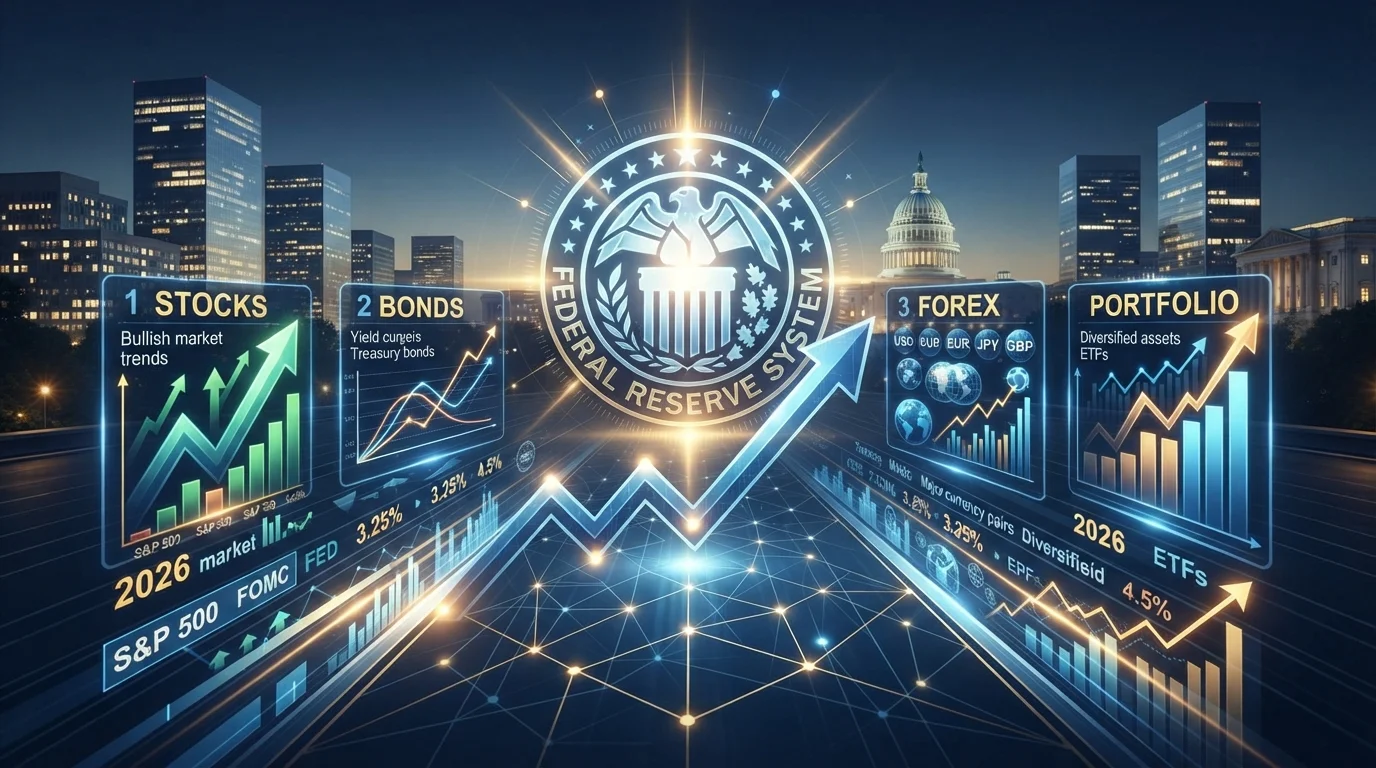
Key Takeaway
The Federal Reserve's interest rate policy remains the single most influential factor shaping global financial markets in 2026. After a series of aggressive rate hikes in 2022-2023 to combat inflation, the Fed has maintained a cautious approach, keeping the federal funds rate in restrictive territory while carefully monitoring economic data. This policy stance has created significant ripple effects across equities, fixed income, foreign exchange, and commodity markets, fundamentally altering investment strategies and portfolio allocations.
Investors navigating this environment must understand that Fed policy operates with long and variable lags. The rate decisions made today continue to work through the economy months later, affecting everything from mortgage rates to corporate borrowing costs. For traders and long-term investors alike, staying ahead of Fed communications and interpreting the subtle signals within FOMC statements has become an essential skill for portfolio management. The current environment demands a nuanced approach that balances the potential for continued economic resilience against the risks of overtightening and recession.
Understanding the Current Fed Policy Framework
The Federal Reserve's Dual Mandate in 2026
The Federal Reserve operates under a dual mandate to promote maximum employment and price stability. In 2026, these two objectives continue to present policymakers with challenging trade-offs. The labor market has shown remarkable resilience despite elevated interest rates, with unemployment remaining near historically low levels. This strength has given the Fed additional room to maintain restrictive policy, ensuring that inflation returns sustainably to the 2% target.
Price stability remains the Fed's primary concern, though inflation has moderated significantly from its 2022 peak. Core PCE inflation, the Fed's preferred measure, has gradually declined toward target levels, but the journey has been neither linear nor guaranteed. Services inflation has proven particularly sticky, driven by wage growth and housing costs, requiring the central bank to remain vigilant even as goods inflation has normalized.
The Dot Plot and Forward Guidance
The Summary of Economic Projections, commonly known as the dot plot, provides crucial insight into where individual FOMC members expect rates to head. These quarterly projections serve as the Fed's forward guidance, helping markets anticipate the likely path of monetary policy. In 2026, the dot plot has become increasingly important as investors attempt to gauge when the Fed might pivot to rate cuts.
Forward guidance has evolved significantly since the era of explicit forward commitment. Today's Fed relies more on data-dependent communications, emphasizing that future policy decisions will depend on incoming economic data rather than predetermined paths. This approach provides flexibility but also increases market volatility around key data releases, as traders reassess their expectations with each new employment report or inflation reading.
Impact on Equity Markets
Sector Rotation and Rate Sensitivity
Different sectors of the stock market exhibit varying sensitivity to interest rate changes. Growth stocks, particularly technology companies with distant future cash flows, typically suffer when rates rise because higher discount rates reduce the present value of their expected earnings. Conversely, value stocks with strong current cash flows tend to be more resilient in rising rate environments.
The financial sector presents a more complex picture. Banks generally benefit from higher interest rates through improved net interest margins, but they face challenges if rising rates lead to loan defaults or economic slowdown. Regional banks have been particularly vulnerable, as evidenced by the banking stress events of 2023 that prompted emergency Fed facilities to stabilize the system.
Small Caps vs Large Caps
Small-cap stocks typically face greater headwinds during periods of elevated interest rates. These companies often rely more heavily on floating-rate debt and have less diversified revenue streams, making them more vulnerable to economic downturns. The Russell 2000 index has historically underperformed large-cap benchmarks when monetary policy tightens significantly.
Large-cap companies, particularly those with strong balance sheets and pricing power, tend to navigate restrictive policy environments more successfully. The Magnificent Seven tech giants exemplify this dynamic, using their cash reserves and market dominance to weather economic storms while smaller competitors struggle. However, concentration risk has become a growing concern, with these few stocks driving a disproportionate share of market returns.
Fixed Income Market Dynamics
Treasury Yield Curve Analysis
The Treasury yield curve serves as a crucial barometer of market expectations for Fed policy and economic growth. In 2026, the curve has shown signs of normalization following the deep inversions that characterized 2023 and 2024. Historically, yield curve inversions have preceded recessions with remarkable accuracy, though the lag time can vary significantly.
Long-term Treasury yields reflect the market's view of future inflation, economic growth, and term premiums. When the Fed signals potential rate cuts, long yields often decline in anticipation, even before any actual policy change occurs. This dynamic creates opportunities for bond investors but also risks for those caught on the wrong side of shifting expectations.
Corporate Credit Spreads
Corporate bond spreads over Treasuries provide insight into market perceptions of credit risk. During periods of Fed tightening, spreads typically widen as investors demand greater compensation for taking on corporate credit exposure. High-yield bonds face particular pressure, as the companies issuing them are most vulnerable to economic slowdowns and refinancing challenges.
Investment-grade corporate bonds offer a middle ground, providing higher yields than Treasuries while maintaining reasonable credit quality. However, duration risk remains a significant concern, as longer-maturity bonds face greater price sensitivity to interest rate changes. Many investors have shifted toward shorter-duration strategies to minimize this risk while waiting for clearer signals on the Fed's policy trajectory.
Forex and Global Capital Flows
Dollar Strength and International Markets
Federal Reserve policy has profound implications for the U.S. dollar and global currency markets. When the Fed maintains higher interest rates relative to other central banks, the dollar typically strengthens as investors seek higher yields. This dynamic was particularly evident in 2022, when aggressive Fed tightening drove the dollar index to multi-decade highs.
A strong dollar creates winners and losers in the global economy. U.S. consumers benefit from cheaper imports and more affordable international travel, while American exporters face competitive challenges in foreign markets. Emerging markets often struggle with dollar strength, as their dollar-denominated debt becomes more expensive to service, potentially triggering capital flight and currency crises.
Central Bank Coordination and Divergence
The Fed's policy decisions influence other central banks through multiple channels. When the Fed tightens, other central banks often face pressure to follow suit to prevent excessive currency depreciation and imported inflation. However, the degree of coordination varies significantly depending on domestic economic conditions.
The European Central Bank, Bank of England, and Bank of Japan have all grappled with their own inflation challenges while maintaining different policy stances. These divergences create opportunities in currency markets but also risks for multinational corporations with significant overseas operations. Understanding these cross-border policy dynamics has become essential for global investors.
Commodity Market Implications
Gold as a Policy Hedge
Gold prices often move inversely to real interest rates, making Fed policy a crucial driver of precious metal performance. When real yields rise, the opportunity cost of holding non-yielding gold increases, typically pressuring prices. Conversely, expectations of Fed rate cuts can boost gold by reducing real yields and increasing demand for safe-haven assets.
In 2026, gold has maintained its appeal as a portfolio diversifier and inflation hedge, despite the challenging rate environment. Central bank gold purchases have provided underlying support, while geopolitical tensions continue to drive periodic safe-haven demand. For investors concerned about Fed policy uncertainty, gold remains a valuable risk management tool.
Oil and Energy Markets
Crude oil prices respond to Fed policy through multiple transmission channels. Higher interest rates typically slow economic growth, reducing demand for petroleum products. However, the relationship is complicated by supply-side factors, geopolitical events, and the strength of the dollar, which affects global oil prices denominated in USD.
Energy stocks have shown resilience in the current environment, benefiting from disciplined capital allocation and strong shareholder returns. The sector's low correlation with tech stocks makes it valuable for portfolio diversification, particularly when Fed policy creates volatility in growth-oriented investments.
Trading Strategies for the Current Environment
Tactical Asset Allocation
Navigating Fed policy uncertainty requires a flexible approach to asset allocation. Rather than making binary bets on rate cuts or hikes, sophisticated investors are using options strategies to hedge against multiple scenarios. Collars, straddles, and other derivatives can provide protection while maintaining upside exposure.
Sector rotation strategies have proven effective during previous rate cycles. As the Fed's stance evolves, rotating between rate-sensitive and defensive sectors can capture relative value opportunities. Healthcare, utilities, and consumer staples typically outperform during periods of economic uncertainty, while technology and discretionary sectors lead when rate cut expectations build.
For investors seeking to automate their trading strategies and take advantage of market opportunities, consider using Alphio AI's copy trading feature to mirror successful traders and smart money wallets.

Duration Management in Fixed Income
Bond investors face the classic dilemma of locking in current yields versus maintaining flexibility for future opportunities. Barbell strategies, combining short-term and long-term bonds while avoiding intermediate maturities, offer one approach to this challenge. This structure provides liquidity on the short end while capturing higher yields on the long end.
Floating-rate securities have gained popularity as a way to benefit from elevated short-term rates without taking significant duration risk. Bank loans and adjustable-rate mortgages offer exposure to current yields while protecting against further rate increases. However, credit risk remains a concern, particularly in the leveraged loan market where covenant quality has deteriorated.
Alternatively, explore Alphio's agentic trading to automate your portfolio management with AI-powered strategies that adapt to changing Fed policy expectations.

Macroeconomic Indicators to Watch
Employment Data
Monthly nonfarm payrolls reports and weekly jobless claims provide crucial real-time signals about labor market health. The Fed has explicitly tied policy decisions to employment outcomes, making these releases major market events. Unexpected strength in employment data can push back expectations for rate cuts, while weakness may accelerate the pivot timeline.
The unemployment rate, labor force participation, and wage growth all factor into the Fed's assessment. Of particular importance is the ratio of job openings to unemployed workers, which Fed Chair Jerome Powell has cited as a key metric for understanding labor market tightness. As this ratio normalizes, the Fed gains confidence that wage pressures will subside.
Inflation Metrics
The Consumer Price Index and Personal Consumption Expenditures price index provide the most direct measures of inflation. Core inflation, which excludes volatile food and energy prices, receives particular attention from policymakers as a better indicator of underlying price trends. The Fed's 2% target applies specifically to core PCE inflation.
Housing costs, including rents and owners' equivalent rent, represent a significant component of inflation indices. Due to measurement lags, housing inflation can remain elevated even as real-time market data shows cooling. Understanding these technical details helps investors interpret inflation reports and anticipate Fed reactions.
You can set up conditional workflows to monitor these key economic indicators using Alphio's automation features.

Global Economic Context
International Policy Coordination
The Fed's decisions reverberate through global financial markets, affecting everything from emerging market debt to European equity valuations. When the Fed tightens, capital flows toward the United States, potentially destabilizing smaller economies with dollar-denominated liabilities. This dynamic creates pressure for international coordination, though national interests often diverge.
The strong dollar policy of recent years has created particular challenges for commodity-importing nations and those with significant dollar debt. Some countries have responded by accelerating dedollarization efforts, though the dollar's reserve currency status remains firmly entrenched. Understanding these global dynamics is essential for assessing the full impact of Fed policy.
Fiscal Policy Interactions
Monetary policy does not operate in a vacuum. Government spending, tax policy, and regulatory decisions all interact with Fed policy to shape economic outcomes. Large fiscal deficits can complicate the Fed's inflation fight, potentially forcing more aggressive rate hikes than would otherwise be necessary.
The interaction between monetary and fiscal policy has become increasingly important as government debt levels have risen. Higher interest rates increase the cost of servicing this debt, creating potential fiscal constraints that could influence future policy choices. Investors must consider these political economy factors when forecasting the Fed's likely path.
Conclusion
Federal Reserve interest rate policy will continue to dominate market narratives and drive asset price movements throughout 2026. The delicate balance between controlling inflation and supporting economic growth requires constant recalibration, creating both risks and opportunities for prepared investors. Those who understand the Fed's framework, monitor key data releases, and maintain portfolio flexibility will be best positioned to navigate this complex environment.
As we look ahead, the most likely scenario involves a gradual policy normalization as inflation approaches target levels. However, the path will rarely be smooth, with periodic volatility around data releases and Fed communications. Maintaining diversification, managing duration risk, and staying informed about policy developments remain essential practices for successful investing in this environment.
To stay ahead of Fed policy changes and execute trades efficiently, try Alphio's conversational trading platform where you can manage your portfolio through natural language commands and receive AI-powered insights.
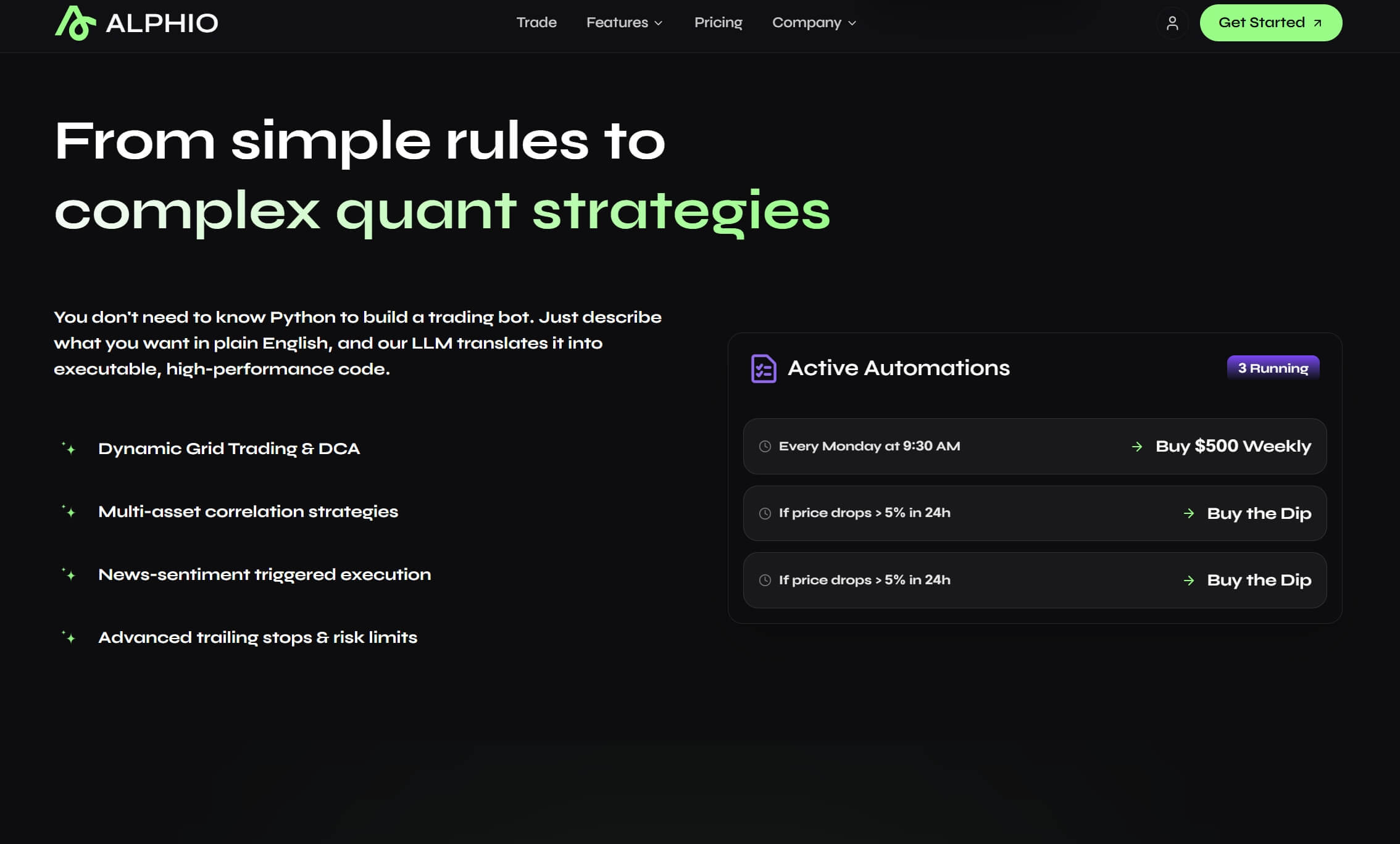
Whether you're a long-term investor building retirement wealth or an active trader seeking to capitalize on policy-driven volatility, understanding Federal Reserve interest rate policy is no longer optional, it is essential. The insights and strategies outlined in this guide provide a foundation for making informed decisions in a policy-driven market environment.
FAQs
How does the Federal Reserve decide on interest rate changes?
The Federal Reserve makes interest rate decisions based on its dual mandate of maximum employment and price stability. The Federal Open Market Committee (FOMC) reviews economic data including employment reports, inflation metrics, GDP growth, and financial conditions. Decisions are made through voting by FOMC members, with the Chair casting the deciding vote if necessary. The Fed uses forward guidance to communicate its expectations for future policy.
What is the difference between federal funds rate and prime rate?
The federal funds rate is the interest rate at which banks lend reserve balances to each other overnight, set by the Federal Reserve as its primary policy tool. The prime rate is the interest rate that commercial banks charge their most creditworthy customers, typically set at 3 percentage points above the federal funds rate. While the Fed controls the federal funds rate directly, the prime rate is set by individual banks though it generally moves in lockstep with Fed policy changes.
How do Fed rate cuts affect the stock market?
Fed rate cuts generally boost stock markets by lowering borrowing costs for companies, increasing the present value of future earnings (particularly benefiting growth stocks), and stimulating economic activity. Lower rates also make fixed income investments less attractive, driving capital toward equities. However, if rate cuts are motivated by economic weakness rather than controlled inflation, markets may react negatively to recession fears.
What is quantitative tightening and how does it differ from rate hikes?
Quantitative tightening (QT) is the process of reducing the Federal Reserve's balance sheet by allowing bonds to mature without reinvesting the proceeds, or by actively selling securities. This reduces the money supply and tightens financial conditions. Rate hikes, by contrast, directly increase the cost of borrowing. QT works more gradually through balance sheet reduction, while rate hikes have immediate impacts on short-term borrowing costs. The Fed uses both tools in combination to achieve its policy objectives.
How can individual investors protect their portfolios from Fed policy changes?
Individual investors can protect their portfolios through diversification across asset classes, duration management in fixed income holdings, and sector rotation based on rate expectations. Maintaining exposure to inflation hedges like Treasury Inflation-Protected Securities (TIPS) and commodities can help. Consider using tools like Alphio AI's automation features to set up conditional workflows that respond to market changes, or explore copy trading to mirror strategies used by experienced investors navigating Fed policy cycles.
Related articles
- Stock Market Surges After 2026 Midterms: What the Democratic Sweep Means for Your PortfolioThe stock market rallied after Democrats won the 2026 midterms. Discover what the election means for investors, tech stocks, and the S&P 500 outlook.
- Stock Market Surges After 2026 Midterms: What the Democratic Sweep Means for Your PortfolioThe stock market rallied after Democrats won the 2026 midterms. Discover what the election means for investors, tech stocks, and the S&P 500 outlook.
- Oil Prices Surge Above $105 Amid US-Iran Conflict: Energy Investment Opportunities in November 2026Oil prices climb past $105 as US strikes Iran's Qeshm Island. Discover energy investment opportunities, top oil stocks, and market outlook for November 2026.
- Fed Interest Rate Decision August 2026: Market Impact & Investment StrategyComprehensive analysis of the August 2026 Fed interest rate decision, market reactions, and investment strategies. Learn how rate changes affect stocks and portfolios.
- Best Value Stocks to Watch in 2026: A Comprehensive Investor's GuideDiscover the best value stocks to watch in 2026. Our expert analysis covers top undervalued companies, valuation metrics, and investment strategies for building wealth.
- July Jobs Report Signals Fed Rate Cut: Market Impact and Investment StrategyUS unexpectedly lost 23,000 jobs in July. Learn how weak employment data is reshaping Fed policy expectations and what it means for stocks, bonds, and gold.