

Oil Prices Surge as Hormuz Crisis Deepens: What Investors Need to Know in August 2026
Oil prices surge amid Strait of Hormuz closure. Analyze the impact on energy stocks, inflation, and Federal Reserve policy. Expert insights for investors.

Key Takeaway
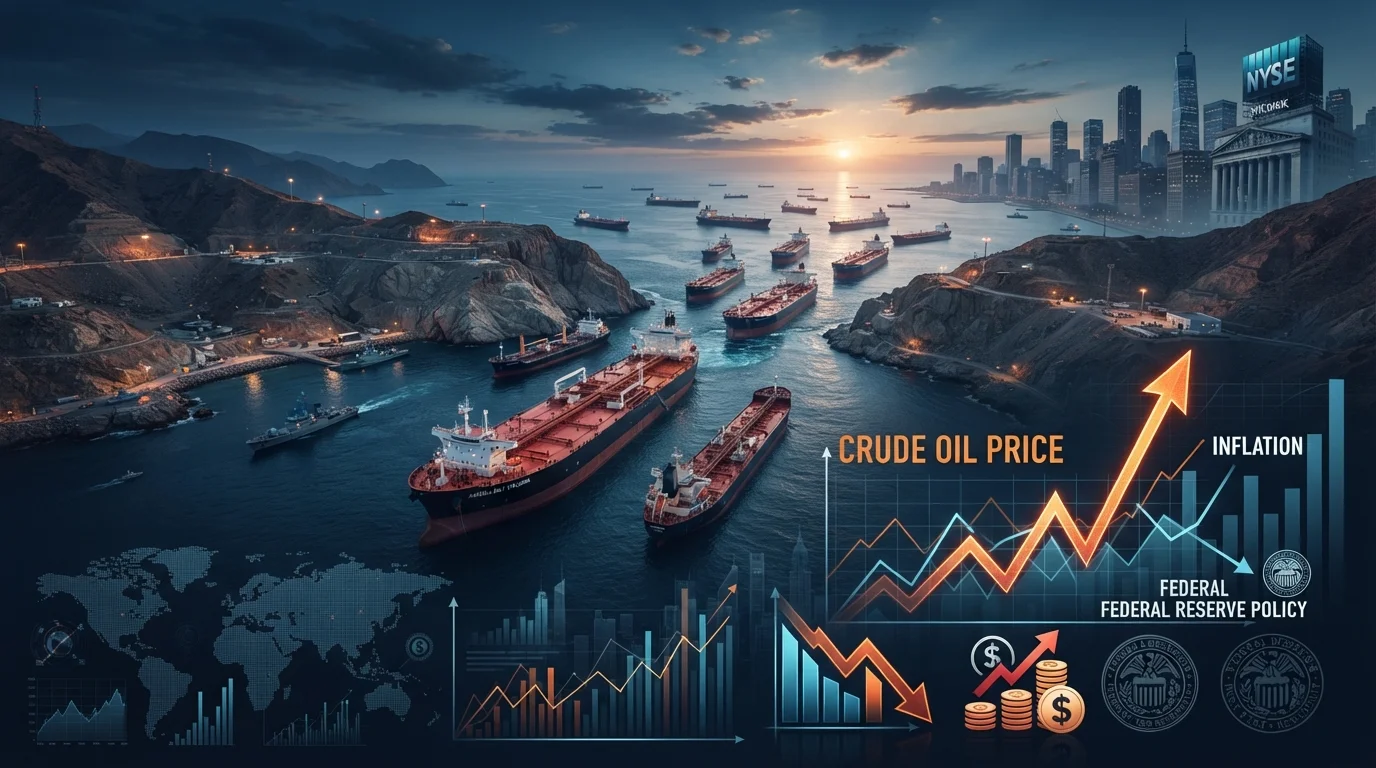
The ongoing closure of the Strait of Hormuz has become the defining factor for global oil markets in August 2026, with Brent crude prices hovering between $80 and $87 per barrel despite diplomatic efforts to resolve the crisis. This sustained supply disruption, now entering its sixth month, has created a complex investment landscape where energy stocks have outperformed the broader market while inflation concerns have intensified, complicating the Federal Reserve's policy calculus.
For investors, the current environment presents both opportunities and risks. Energy sector valuations have climbed as companies benefit from elevated oil prices, yet the broader economic implications—including potential Fed rate decisions and consumer spending impacts—require careful portfolio positioning. The International Energy Agency has repeatedly revised down its supply forecasts, while the U.S. Energy Information Administration now expects Brent to average $87 per barrel for the full year 2026, significantly above pre-crisis projections.
The market's resilience in the face of this supply shock has been notable. Despite oil price volatility, major equity indexes have continued reaching record highs, suggesting investors believe the crisis will eventually resolve without causing a global recession. However, this optimism may be tested if diplomatic efforts fail to reopen the strait before year-end.
Understanding the Strait of Hormuz Crisis
The World's Most Critical Oil Chokepoint
The Strait of Hormuz represents the single most important maritime passage for global energy markets, with approximately 20 million barrels of oil passing through daily at peak times. This narrow waterway connects the Persian Gulf to the open ocean, making it irreplaceable for Middle Eastern oil exports. When Iran restricted passage following regional military tensions in early 2026, the global oil market faced its most significant supply disruption since the 1970s oil crises.
The immediate impact on oil loadings was severe. According to the International Energy Agency's August 2026 Oil Market Report, loadings peaked at 20 million barrels per day at the start of July but dropped to around 12 million barrels later in the month as shipping companies rerouted vessels or suspended operations. This 40% reduction in throughput has forced consuming nations to draw down strategic petroleum reserves while seeking alternative suppliers.
The diplomatic stalemate between Washington and Tehran has proven more intractable than initially anticipated. Despite multiple rounds of negotiations and a theoretical ceasefire expiration date that passed without resolution, both sides remain far apart on key demands. Iran's insistence on sanctions relief as a precondition for reopening the strait has clashed with U.S. requirements for verifiable security guarantees, creating a deadlock that shows few signs of breaking.
Current Oil Price Dynamics
Oil markets have displayed remarkable resilience despite the prolonged closure, with prices remaining below the panic levels many analysts initially predicted. Brent crude futures ended last week down more than 7% following signals from Washington about potential diplomatic breakthroughs, even as those hopes subsequently faded. This volatility reflects the market's struggle to price in competing scenarios: a swift resolution that could crash prices, or an extended closure that might push them above $100 per barrel.
The current trading range of $80 to $85 per barrel suggests traders are assigning meaningful probability to a near-term resolution while maintaining risk premiums for supply disruption. SEB Research analysts noted that although the strait remains essentially closed, prices reflect hope for a solution in near time. This optimism may be misplaced given the entrenched positions of both sides, creating potential for significant price moves as the situation evolves.
Looking ahead, the Energy Information Administration projects that oil markets won't return to near pre-conflict levels until early 2027, assuming the strait eventually reopens. This extended timeline has major implications for energy company earnings, inflation trajectories, and central bank policy decisions across the developed world.
Impact on Energy Stocks and Sector Performance
Energy Sector Outperformance
Energy stocks have been the clear beneficiaries of elevated oil prices, with the sector significantly outperforming broader market indexes in 2026. Companies across the value chain—from exploration and production firms to refiners and integrated majors—have reported improved profitability as their realized prices for crude oil and petroleum products have risen substantially.
ExxonMobil and other integrated majors have particularly benefited from their diversified operations. While upstream exploration activities generate higher revenues from elevated oil prices, downstream refining operations have also captured wider margins as product prices have risen faster than crude input costs. This operational flexibility has allowed these companies to maximize returns regardless of specific price movements within the oil complex.
Independent exploration and production companies have seen even more dramatic stock price appreciation, as their leveraged exposure to oil prices translates directly into earnings growth. Many of these firms had already reduced production costs and improved operational efficiency during the lean years of 2020-2024, positioning them to generate substantial free cash flow at current price levels.
Investment Considerations for Energy Stocks
Investors evaluating energy sector opportunities must weigh several competing factors. On the positive side, current oil prices support attractive dividend yields from established energy companies, many of which have maintained or increased distributions despite market volatility. The sector's valuation multiples remain reasonable compared to historical averages, suggesting room for further appreciation if oil prices remain elevated.
However, risks abound for the sector. A sudden resolution to the Hormuz crisis could cause oil prices to plummet, compressing margins and potentially triggering a sector-wide selloff. Additionally, the long-term energy transition toward renewable sources continues apace, with many institutional investors maintaining strict carbon reduction mandates that limit their ability to allocate to fossil fuel producers.
For investors seeking exposure to the energy sector, consider using Alphio AI's copy trading feature to mirror successful energy sector traders and smart money wallets that have navigated similar market conditions.

Macroeconomic Implications and Inflation Concerns
Fed Policy in the Balance
The Federal Reserve faces one of its most challenging policy environments in decades as it weighs the competing pressures of supply-driven inflation against slowing economic growth. The Hormuz crisis has directly contributed to higher energy costs, which feed through to virtually every sector of the economy through transportation and manufacturing expenses. This supply-side inflation complicates the Fed's efforts to bring price stability without triggering a recession.
Recent inflation data has shown concerning persistence in energy-related categories, with gasoline prices rising sharply even as other components of the consumer price index have moderated. The Fed's preferred inflation measure, the personal consumption expenditures price index, has remained above target, with energy services contributing disproportionately to the upside surprise.
The central bank's dilemma is acute. Raising interest rates further could help dampen inflation expectations but would also increase borrowing costs for businesses and consumers already strained by elevated energy prices. Conversely, maintaining current rates risks allowing inflation to become entrenched, potentially requiring even more aggressive action later. The minutes from the Fed's most recent meeting, released this week, revealed three dissenters voting to raise rates, highlighting the internal debate over the appropriate policy path.
Consumer Spending Under Pressure
Higher oil prices act as a tax on consumers, reducing disposable income available for other purchases. With gasoline prices elevated and home heating costs expected to rise heading into winter, households are already adjusting spending patterns. Retailers including Walmart, Target, and Home Depot are reporting cautious consumer behavior, with shoppers trading down to lower-priced alternatives and delaying discretionary purchases.
This consumer retrenchment has broad implications for economic growth. Consumer spending accounts for approximately two-thirds of U.S. GDP, making any sustained pullback a significant headwind for the overall economy. The retail earnings reports scheduled for this week from major chains will provide crucial insight into how consumers are responding to the combination of high energy costs and persistent inflation in other categories.
Walmart, in particular, serves as a bellwether for consumer health given its position as the nation's largest retailer and its customer base spanning all income demographics. The company has topped earnings estimates in 15 of the past 16 quarters, making its guidance particularly important for understanding the trajectory of consumer spending. Analysts will be watching closely for commentary on how fuel prices are affecting store traffic and purchase patterns.
Global Oil Market Outlook and Supply Adjustments
OPEC's Response to the Crisis
The Organization of Petroleum Exporting Countries has struggled to offset the loss of Hormuz transit volumes despite having significant spare capacity, particularly in Saudi Arabia and the United Arab Emirates. Political considerations and technical constraints have limited the group's ability to fully compensate for the missing barrels, contributing to the tight global supply picture.
Saudi Arabia has increased production above its OPEC quota, utilizing spare capacity developed during years of underinvestment in new supply. However, the kingdom has been reluctant to fully deplete its buffer, maintaining some capacity as insurance against further disruptions. This cautious approach has prevented a complete collapse in prices while still allowing the market to remain relatively tight.
Non-OPEC producers have also responded to higher prices by accelerating drilling programs where possible. U.S. shale producers, in particular, have increased activity, though years of capital discipline and investor pressure for returns have limited the industry's ability to rapidly ramp up production as it did during previous price spikes.
Strategic Petroleum Reserve Drawdowns
Coordinated releases from strategic petroleum reserves by the United States and allied consuming nations have helped bridge the supply gap created by the Hormuz closure. The U.S. Strategic Petroleum Reserve has been drawn down significantly, with inventory levels falling to multi-decade lows. While these releases have been effective in moderating price spikes, they represent a finite resource that cannot indefinitely offset lost production.
The decision to tap emergency reserves reflects the seriousness of the supply disruption and the potential economic damage from sustained high oil prices. However, policymakers must balance the immediate need for supply against the importance of maintaining adequate reserves for genuine emergencies. As SPR levels decline, the market may become increasingly sensitive to any signs that releases will slow or stop.
For traders looking to automate their response to oil market volatility, Alphio AI's agentic trading capabilities can help automate portfolio management with AI-powered strategies tailored to commodity market conditions.

Investment Strategies for the Current Environment
Portfolio Positioning Amid Uncertainty
The Hormuz crisis requires investors to carefully consider portfolio positioning across multiple asset classes. Energy sector exposure has been rewarding but carries event risk should the crisis resolve suddenly. Diversification across energy subsectors—including explorers, refiners, and service companies—can help mitigate company-specific risks while maintaining sector exposure.
Beyond direct energy investments, the crisis has implications for other sectors. Airlines and shipping companies face higher fuel costs that may not be fully passable to customers, compressing margins. Conversely, renewable energy companies may benefit from accelerated investment in alternatives to oil-dependent transportation and power generation.
Fixed income investors must consider how the crisis affects inflation expectations and central bank policy. If the Fed responds to energy-driven inflation with tighter monetary policy, bond yields could rise significantly, hurting fixed-rate securities. Treasury inflation-protected securities (TIPS) offer one potential hedge against this scenario.
Trading Opportunities and Risk Management
Active traders can exploit the volatility created by Hormuz-related news flow through options strategies and tactical positioning. Crude oil futures and energy sector ETFs provide liquid vehicles for expressing views on price direction, while options strategies can capture volatility premiums or provide downside protection.
Risk management is paramount in this environment given the binary nature of the crisis outcome. Position sizing should reflect the potential for large moves in either direction based on diplomatic developments. Stop-loss orders and portfolio hedges can help limit downside if the situation resolves in a way that contradicts current positioning.
Investors seeking to set up conditional trading workflows based on oil price movements or news events can explore Alphio AI's automations to create sophisticated trading rules that execute automatically when market conditions change.

Conclusion
The Strait of Hormuz crisis has fundamentally reshaped the investment landscape for 2026, creating both opportunities and challenges across asset classes. Energy stocks have benefited from elevated oil prices, while the broader economy grapples with inflationary pressures that complicate central bank policymaking. The path forward depends heavily on diplomatic developments that remain highly uncertain.
For investors, the key is maintaining flexibility while positioning for multiple scenarios. Energy sector exposure has been profitable but requires careful risk management given the potential for sudden price reversals. Diversification across sectors and asset classes remains essential, as does attention to the second-order effects of high oil prices on consumer spending and corporate profitability.
The crisis has also highlighted the importance of having access to sophisticated trading tools that can respond quickly to changing market conditions. Whether through copy trading successful strategies, implementing agentic trading systems, or setting up automated workflows, modern AI-powered platforms offer investors powerful capabilities for navigating volatile markets.
As we move through the second half of 2026, monitoring developments in the Middle East will remain crucial for investment decision-making. The resolution—or escalation—of the Hormuz crisis will likely determine whether current market trends continue or reverse, making this one of the most important geopolitical factors for investors to track.
Ready to take control of your trading strategy? Try Alphio AI's conversational trading platform to execute trades via natural language commands and access real-time market insights powered by artificial intelligence.

Don't miss out on the opportunities this volatile market presents. Start trading smarter with Alphio AI today.
FAQs
How long is the Strait of Hormuz expected to remain closed?
The Energy Information Administration projects that oil markets won't return to near pre-conflict levels until early 2027, assuming diplomatic efforts eventually succeed. However, the timeline remains highly uncertain as negotiations between the U.S. and Iran have stalled over key demands including sanctions relief.
What is the current price of Brent crude oil?
As of August 2026, Brent crude oil is trading between $80 and $87 per barrel, with prices remaining volatile based on diplomatic developments. The EIA expects Brent to average $87 per barrel for the full year 2026, significantly above pre-crisis projections.
How does the Hormuz crisis affect the Federal Reserve's interest rate decisions?
The crisis complicates Fed policy by contributing to supply-driven inflation through higher energy costs. Recent Fed meeting minutes revealed three dissenters voting to raise rates, highlighting internal debate over whether to tighten policy further to combat inflation or maintain rates to avoid slowing an economy already strained by high energy prices.
Which energy stocks are best positioned to benefit from high oil prices?
Integrated majors like ExxonMobil benefit from diversified operations across upstream and downstream activities. Independent exploration and production companies offer leveraged exposure to oil prices, while refiners capture wider margins as product prices rise faster than crude costs. Investors should consider diversification across these subsectors.
How can investors protect their portfolios from oil price volatility?
Investors can use diversification across sectors, position sizing to limit exposure to event risk, and hedging strategies including options and Treasury inflation-protected securities (TIPS). AI-powered trading platforms like Alphio offer automated workflows and copy trading features to help navigate volatile market conditions.