

Leveraged ETFs in the 2026 Sell-Off: Why TQQQ and SOXL Dip Buyers Got Crushed by Volatility Decay
Leveraged ETFs like TQQQ and SOXL fell hard in the 2026 sell-off. Learn how daily resets and volatility decay work, and how to size and time-box 3x trades.

Key Takeaway
Leveraged ETFs are built to deliver a multiple of an index's return for a single day, not for a month, a quarter, or a year. The 2026 sell-off has turned that fine print into a painful lesson. According to a November 3 analysis by 24/7 Wall St., the Direxion Daily Semiconductor Bull 3X Shares (SOXL) took in about $7.27 billion of net inflows in October while the fund fell 47.89% over the month, and the ProShares UltraPro QQQ (TQQQ) absorbed about $3.49 billion while losing 20.53%. Dip buyers were not wrong that chip stocks had fallen hard; they were wrong about what a daily-reset product does when a market falls, bounces, and falls again.
The backdrop has not improved since. As of the November 19, 2026 close (America/New_York), the S&P 500 finished at 7,175.83, down 2% on the day, its sixth straight loss and 8.2% below the record it set in October, according to the Associated Press. The Nasdaq Composite dropped 2.3% to 23,879.20, and AP reported the index was down 5% for the week through Thursday. The 10-year Treasury yield remains above 5%, and the Federal Reserve has been signaling that further rate hikes may be needed, per Motley Fool's market wrap. That mix of high volatility and no clear trend is the exact environment in which leveraged ETFs quietly bleed.
This guide explains how leveraged ETFs actually work, why volatility decay happens, what the October 2026 numbers reveal, and how an investor who still wants amplified exposure can size it, time-box it, or replace it with something more forgiving. Nothing here is a recommendation to buy or sell any fund; it is a framework for understanding a product that is easy to buy and hard to hold.
How Leveraged ETFs Actually Work
The daily objective is the whole product
Every leveraged ETF prospectus says some version of the same thing. ProShares describes TQQQ as seeking daily results, before fees and expenses, equal to three times the daily performance of the Nasdaq-100 Index. The key word is daily. At the end of every trading session, the fund rebalances its swaps and futures so that its exposure is again three times its net assets. If the Nasdaq-100 rises 1% on a Tuesday, TQQQ should rise about 3% on that Tuesday. What it does over the following week depends on the path the index takes, not just where it ends up.
That design makes leveraged ETFs useful tools for traders who want a precise one-day bet without opening a margin account or trading options. It also means the funds do not promise three times the return of the index over any period longer than one day. ProShares' own fund page warns that over longer holding periods your return may be higher or lower than the daily target. Investors who treat the ticker as "the Nasdaq, but three times" are reading a product label that does not exist.
Where the leverage comes from
Leveraged ETFs do not borrow money the way a margin investor does. Most of their exposure comes from total return swaps with large banks, plus index futures, with cash and Treasury bills held as collateral. The swap counterparties charge a financing spread, which is one reason leveraged ETFs get more expensive to run when short-term interest rates are high, as they are in 2026. TQQQ's fund page lists a gross expense ratio of 0.94%, and that headline fee does not include the embedded financing cost of the swaps.
Daily reset means rebalancing in the direction of the move
Because a 3x fund must restore its target exposure every evening, it buys after up days and sells after down days. After a rally, the fund's net assets are larger, so it needs more swap exposure. After a decline, net assets shrink, so it must reduce exposure. This "buy high, sell low" rebalancing is mechanical, and in a choppy market it compounds against the holder. It is also why the funds can lose ground even when the underlying index finishes a volatile stretch roughly flat.
Volatility Decay: The Math Behind the Damage
A simple two-day example
The cleanest way to see volatility decay is with round numbers. Suppose an index starts at 100, rises 10% to 110, then falls 10% to 99. The index has lost 1%. A 3x daily fund starting at 100 rises 30% to 130, then falls 30% to 91. It has lost 9%, not 3%. Nothing unusual happened; the index simply moved up and down by the same percentage, and leverage magnified the asymmetry of compounding.
FINRA made the same point back in Regulatory Notice 09-31, published June 11, 2009. It walked through an index that moves from 100 to 110 and back to 100: a daily-reset inverse fund on that index loses 1.82% even though the index is unchanged. FINRA also cited real cases from December 2008 to April 2009, including a 3x fund on a financial-services index that fell 53% while the index itself gained about 8%. Those were not product failures. They were the product working as designed in a volatile market.
The rough rule of thumb for decay
There is a useful approximation, and it should be treated as an approximation rather than a forecast. For a fund with leverage L, the drag relative to simply multiplying the index return by L grows roughly with (L² − L) / 2 times the index's variance. For a 3x fund, that works out to about three times the variance. If the Nasdaq-100 runs at an annualized volatility of 30%, the variance is 0.09, so the extra drag is on the order of 27 percentage points a year before fees and financing. At 20% volatility, the same math gives roughly 12 points. Volatility, not direction, is the hidden cost.
Recovery math gets brutal after a deep drawdown
Losses also require bigger gains to repair. A fund that drops 50% needs a 100% gain to break even. According to 24/7 Wall St., SOXL lost 58.50% between October 6 and November 2, 2026. Simple arithmetic says a 58.5% loss needs about a 141% gain to get back to the starting point. Over the same window, the unleveraged iShares Semiconductor ETF (SOXX) lost 23.04%, which requires about a 30% gain to recover. The same chip cycle produced two very different holes.
What the October 2026 Chip Sell-Off Revealed
Inflows chased the falling knife
The flow data is the most striking part of this episode. According to 24/7 Wall St., citing Hana Securities, SOXL attracted about $7.15 billion in the week of October 12 to 16 alone, the second-largest intake among U.S.-listed equity ETFs, while its price fell roughly 33%. Korean retail investors were a major source of that demand, net buying about $2.97 billion of SOXL in October, according to the same report. Investors were not buying leverage at the top. They were buying it on the way down, betting on a fast V-shaped rebound.
Path dependency punished the timing
The October tape was not a straight line lower; it was a series of sharp drops and partial bounces. Between October 14 and October 29, SOXX slid only 1.07%, yet SOXL lost 7.37% over those 11 sessions, according to 24/7 Wall St. Then, in the two sessions ending November 2, SOXX fell 11.72% and SOXL fell 33.42%. A buyer of SOXL at the October 16 close of $93.67 was sitting on a loss of roughly 27% by November 2, even though the underlying chip index had not collapsed during most of that holding period. The math in the previous section was playing out in real money.
The rebound gap
The same analysis estimated that, from the November 2 close, SOXX needed about a 13.3% gain to return to its October 29 level, while SOXL needed about 50.2%. TQQQ needed about 16.5% while QQQ needed about 5%. This is the practical meaning of "path dependency": even if the underlying index fully recovers, the leveraged fund can still be underwater, because it lost more on the way down than three times the index loss. Since then, AMD fell 7.72% and Nvidia 3.30% on November 19 alone, according to Motley Fool, which suggests the rebound those buyers were counting on had not arrived as of this writing.
Who Leveraged ETFs Are Actually For
Short-term traders with a defined thesis
Regulators have been consistent about the intended user. FINRA's 2009 notice said leveraged and inverse ETFs that reset daily "typically are unsuitable for retail investors" who plan to hold them for longer than one trading session, particularly in volatile markets. That does not mean they are illegal for retail accounts; it means the product is a short-duration instrument. A trader expecting a large move around a specific catalyst, such as a CPI release or a major earnings report, and who plans to exit within days, is using the fund as it was designed.
Long-term holders in trending markets
There is a reason TQQQ has a loyal following. In long, low-volatility bull markets, daily compounding can work in the holder's favor, and a 3x fund can beat three times the index return. That is the flip side of volatility decay: steady trends reward leverage, while choppy markets punish it. The problem is that nobody can reliably tell in advance which regime they are entering, and the bad regimes tend to arrive exactly when investors feel most tempted to "buy the dip with leverage."
Investors who should probably avoid them
If you cannot watch a position during the trading day, if a 30% drawdown in a week would force you to sell, or if you are using money you need within a year, leveraged ETFs are a poor fit. The same goes for tax-advantaged retirement accounts used for long-horizon saving; decay does not care that the account is tax-sheltered. In those cases, the realistic choice is not "3x or nothing" but a more measured way to express the same view.
The Rules Behind the Product
Regulation caps new funds, not old ones
The SEC's Rule 18f-4, adopted in October 2020, created a value-at-risk framework for funds that use derivatives. In its press release, the SEC said the rule effectively limits leveraged or inverse funds' targeted daily return to 200% of their underlying index. However, the rule included an exception for leveraged and inverse funds already in operation that seek returns above 200%, subject to conditions. That is why legacy 3x funds such as TQQQ, which launched in February 2010, still trade, while most new launches since then are 2x products.
Fees and financing in a 5% rate world
Expense ratios on leveraged ETFs are typically several times those of plain index funds, and swap financing is priced off short-term rates. When the Fed is tightening and the front end of the curve is elevated, the cost of carrying a leveraged exposure rises. This drag is smaller than volatility decay in a turbulent month, but over a holding period of a year or more it becomes a meaningful, guaranteed headwind on top of an uncertain return.
Taxes and distributions
Leveraged funds can realize gains inside the fund when they reset swaps and roll futures, and some have paid capital gains distributions in strong years even to shareholders who bought late. In a taxable account, that can mean a tax bill in a year when the investor's own position lost money. Checking a fund's distribution history before buying is a small step that prevents an unpleasant surprise in December.
How to Use Leveraged ETFs More Safely
Size the position by the leveraged exposure, not the dollars
The most common mistake is sizing a 3x fund like a normal ETF. A $10,000 position in TQQQ carries roughly $30,000 of daily Nasdaq-100 exposure. A disciplined approach is to decide how much index exposure you actually want and buy one-third of that amount in the 3x fund, leaving the rest in cash or short-term Treasuries. That converts a leveraged bet into a capital-efficient one and keeps a single bad week from wrecking the portfolio.
Put an expiration date on every trade
Because decay is a function of time and volatility, a leveraged ETF position should have a time stop as well as a price stop. Write down the catalyst, the expected holding period, and the exit rule before entering. If the thesis has not played out by the deadline, close the position even if it is not at a loss. The October 2026 SOXL buyers who held "until it comes back" turned a short-term trade into a long-term exposure to decay.
Automate the discipline
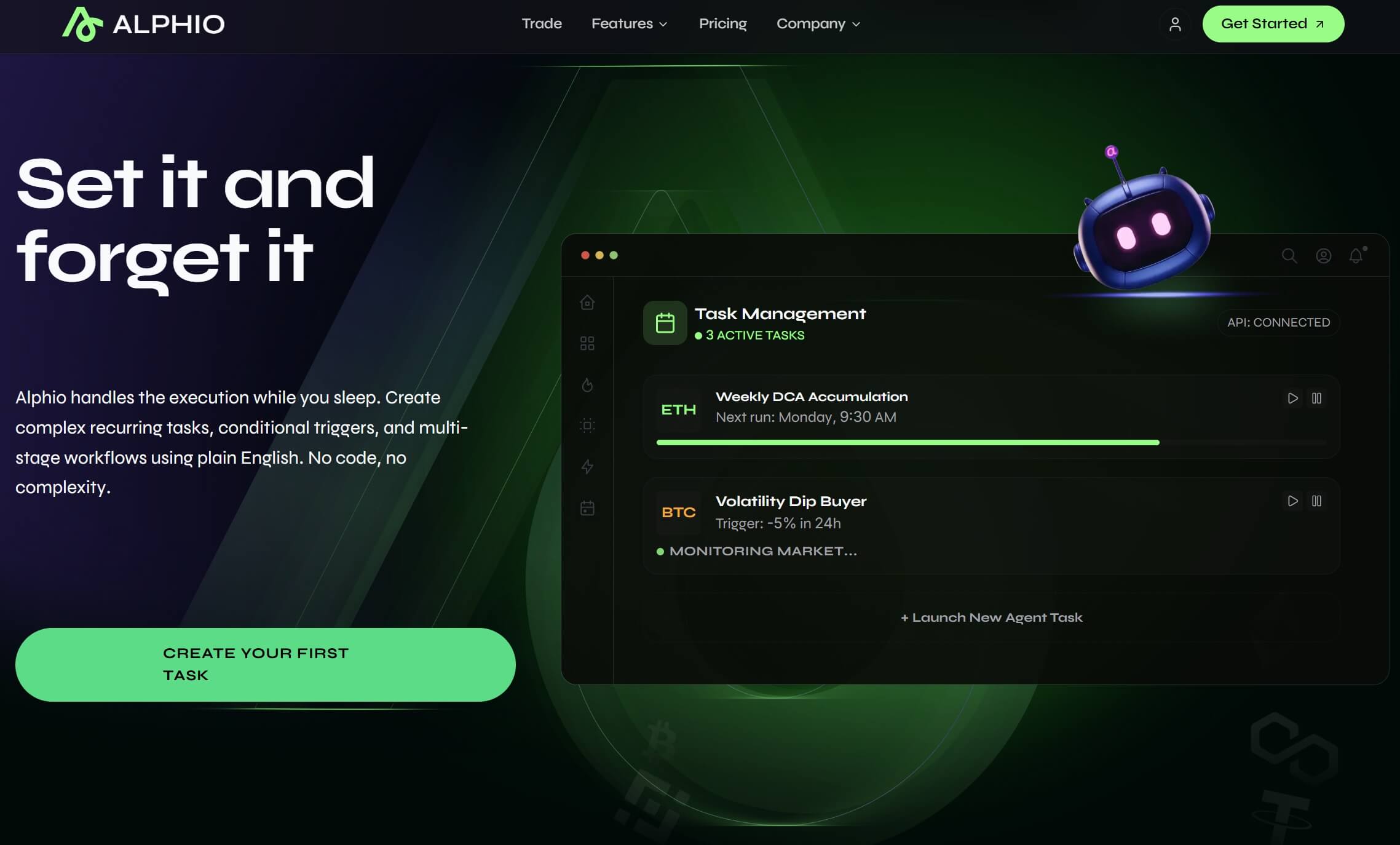
Rules are easy to write and hard to follow when screens are red. Alphio's Scheduled Task feature lets you set recurring checks, for example a daily review after the close that flags when a leveraged position has breached a drawdown limit, exceeded its planned holding period, or drifted above its target weight. Automating the review removes the temptation to stop looking when a trade goes wrong.
Alternatives to Leveraged ETFs in a Volatile Market
Plain index exposure with a larger allocation
For investors who believe the AI and semiconductor sell-off has gone too far, the simplest alternative is to own the unleveraged index fund and accept a larger position size. QQQ or a broad semiconductor ETF does not suffer volatility decay, does not reset daily, and does not require a precise exit plan. A rebound is captured fully, and if the decline continues, the drawdown is far more survivable.
Quality individual names with a valuation check
Another route is to buy the leaders directly when their valuations reset, rather than buying leverage on an entire sector. Nvidia, for example, has delivered strong quarterly results this season, yet its shares kept falling with the group. Looking at valuation and analyst sentiment for the company itself is more informative than a sector-wide 3x bet, and it lets an investor choose the specific risk they want to own.
Options with defined risk
Call options and call spreads provide leverage with a known maximum loss, which is the premium paid. They come with their own costs, including time decay and elevated implied volatility during sell-offs, but they do not compound daily losses the way a 3x ETF does. For a trader who wants to express a rebound view without risking a 50% drawdown, a modestly sized call spread is often the cleaner tool.
Building a Decision Checklist Before You Click Buy
Questions to answer in writing
Before buying any leveraged ETF, write short answers to a handful of questions. This is the one place where a list earns its keep:
- What specific catalyst am I trading, and on what date does it happen?
- How many trading days do I plan to hold, and what is my time stop?
- What daily index exposure am I really taking, measured at three times the dollars invested?
- What price or drawdown forces me out, and will I actually execute it?
- Would the unleveraged fund or a defined-risk option express the same view with less decay?
If you cannot answer all five clearly, the trade is probably a hope rather than a plan.
Use research tools as a sounding board
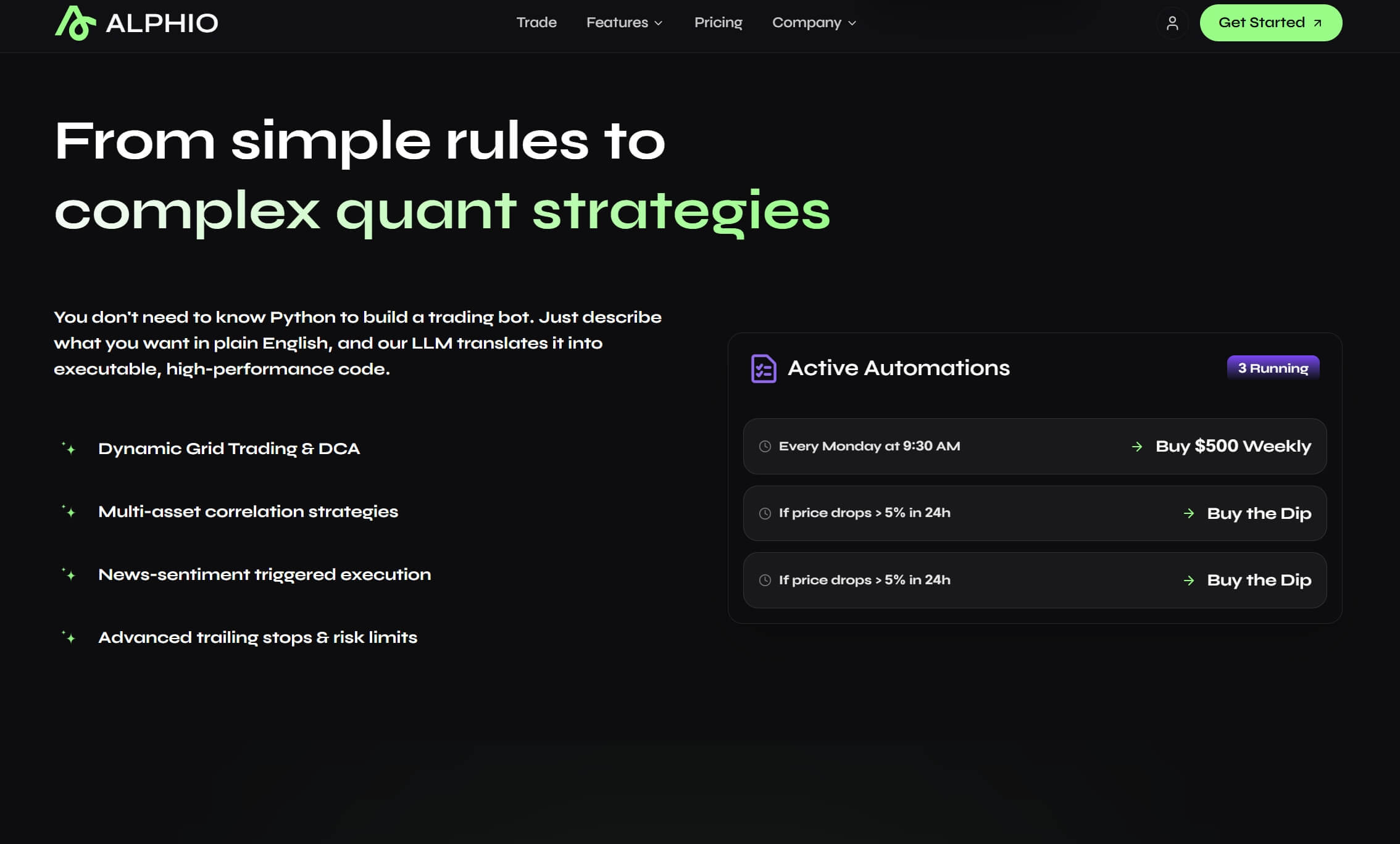
It helps to pressure-test a thesis before putting money behind it. With Alphio's Conversational Trading, you can ask plain-English questions, such as how a 3x fund would have performed over a given volatile stretch or how a position-size change would affect your downside, and then act on the answer in the same place. Treat the output as a second opinion that forces you to articulate the trade, not as a signal to follow blindly.
Track sentiment, not just price
Leveraged ETF flows are themselves a sentiment indicator. Large inflows into 3x long funds during a decline suggest that dip-buying conviction is still high, which historically has not marked durable bottoms by itself. Watching analyst ratings and revisions on the largest index constituents provides a cross-check on whether fundamentals are stabilizing or still deteriorating.
Conclusion
Leveraged ETFs are precision instruments for short-term views, and the 2026 sell-off has shown what happens when they are used as long-term bets on a rebound. October's flow data, with billions pouring into SOXL and TQQQ while those funds lost roughly 48% and 21% respectively, is a reminder that being right about direction is not enough. In a market that is falling, bouncing, and falling again, as the S&P 500's six-session losing streak through November 19 illustrates, daily resets and volatility decay can overwhelm even a correct long-term call.
The practical answer is not to fear these products but to respect their design. Size by the leveraged exposure, put a deadline on every trade, compare the trade against the unleveraged fund or a defined-risk option, and check whether the catalyst you are trading actually exists. Investors who want help enforcing that discipline can automate their review cadence with Scheduled Task, test their reasoning through Conversational Trading, or explore rules-based execution with Autonomous Trading. Whatever tools you use, the rule of thumb holds: with a 3x fund, time and volatility are working against you, so make sure your thesis is working faster.
FAQs
Why do leveraged ETFs lose value over time?
Leveraged ETFs reset their exposure every day, so their long-term return depends on the path the index takes, not just its ending level. In choppy markets, up-and-down moves compound against the holder, a process called volatility decay. Fees and swap financing costs add a further drag.
Can I hold TQQQ or SOXL long term?
You can, but the funds are designed to deliver three times the index's daily return, not its long-term return. FINRA has said daily-reset leveraged ETFs are typically unsuitable for retail investors holding longer than one session, especially in volatile markets. Long holds can work in steady uptrends but can suffer deep losses in volatile, sideways markets.
How much did leveraged ETFs lose in the October 2026 sell-off?
According to 24/7 Wall St., SOXL fell 47.89% in October 2026 and TQQQ fell 20.53%, even as investors added about $7.27 billion and $3.49 billion to them respectively. SOXL lost 58.50% from October 6 to November 2, compared with a 23.04% loss for the unleveraged SOXX.
Why are new leveraged ETFs mostly 2x instead of 3x?
The SEC's Rule 18f-4, adopted in October 2020, effectively limits new leveraged or inverse funds to a targeted daily return of 200% of their index. Existing funds above that level, such as many 3x products, were allowed to continue under conditions.
What is a safer alternative to leveraged ETFs?
Many investors simply hold a larger position in the unleveraged index ETF, which avoids daily reset and volatility decay. Others use call options or call spreads, which offer leverage with a defined maximum loss. Whatever the choice, sizing and a written exit plan matter more than the instrument.
Related articles
- Dividend Stocks vs 5% Treasury Yields: How Income Investors Should Adapt in 2026With 10-year Treasury yields above 5% and the S&P 500 yielding about 1.1%, here is how to judge dividend stocks, avoid yield traps, and build income in 2026.
- Roth Conversion in a Down Market: How to Use the 2026 Sell-Off Before December 31Stocks fell 8% from their high. Learn how a Roth conversion in a down market works, how to size it with 2026 tax brackets, and the traps to avoid by Dec 31.
- Airline Stocks in 2026: How Falling Jet Fuel and Thanksgiving Travel Are Driving the TradeAirline stocks are rallying as oil falls and Thanksgiving demand holds. See how jet fuel, Q3 earnings, fares and risks shape the trade for investors in 2026.
- NVIDIA Stock Analysis August 2026: Can AI Chip Demand Sustain NVDA's Growth Trajectory?Comprehensive NVIDIA stock analysis for August 2026. Explore NVDA's AI chip dominance, data center revenue growth, and investment outlook amid evolving market conditions.
- Fed Interest Rate Decision August 2026: Market Impact & Investment StrategyComprehensive analysis of the August 2026 Fed interest rate decision, market reactions, and investment strategies. Learn how rate changes affect stocks and portfolios.
- Best Value Stocks to Watch in 2026: A Comprehensive Investor's GuideDiscover the best value stocks to watch in 2026. Our expert analysis covers top undervalued companies, valuation metrics, and investment strategies for building wealth.