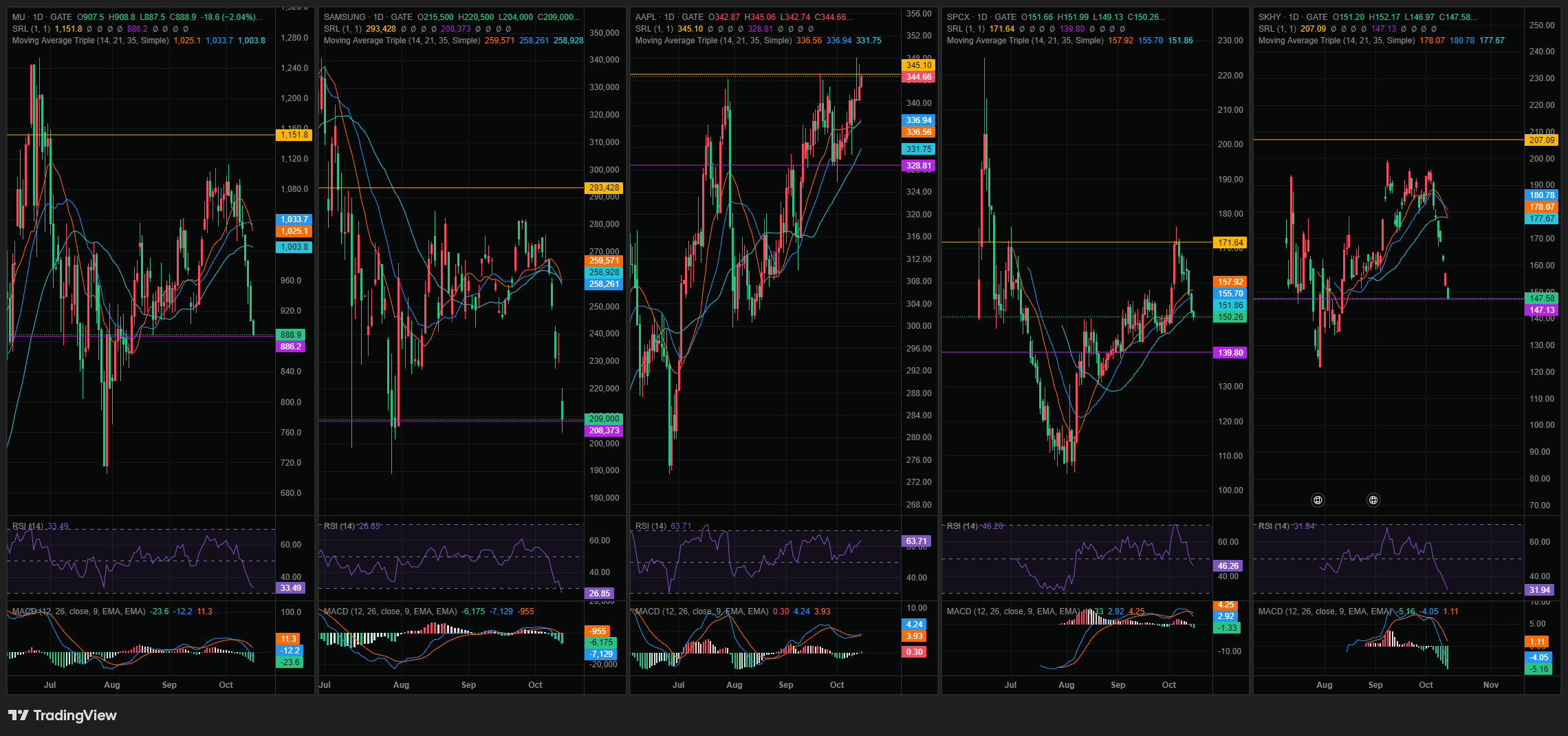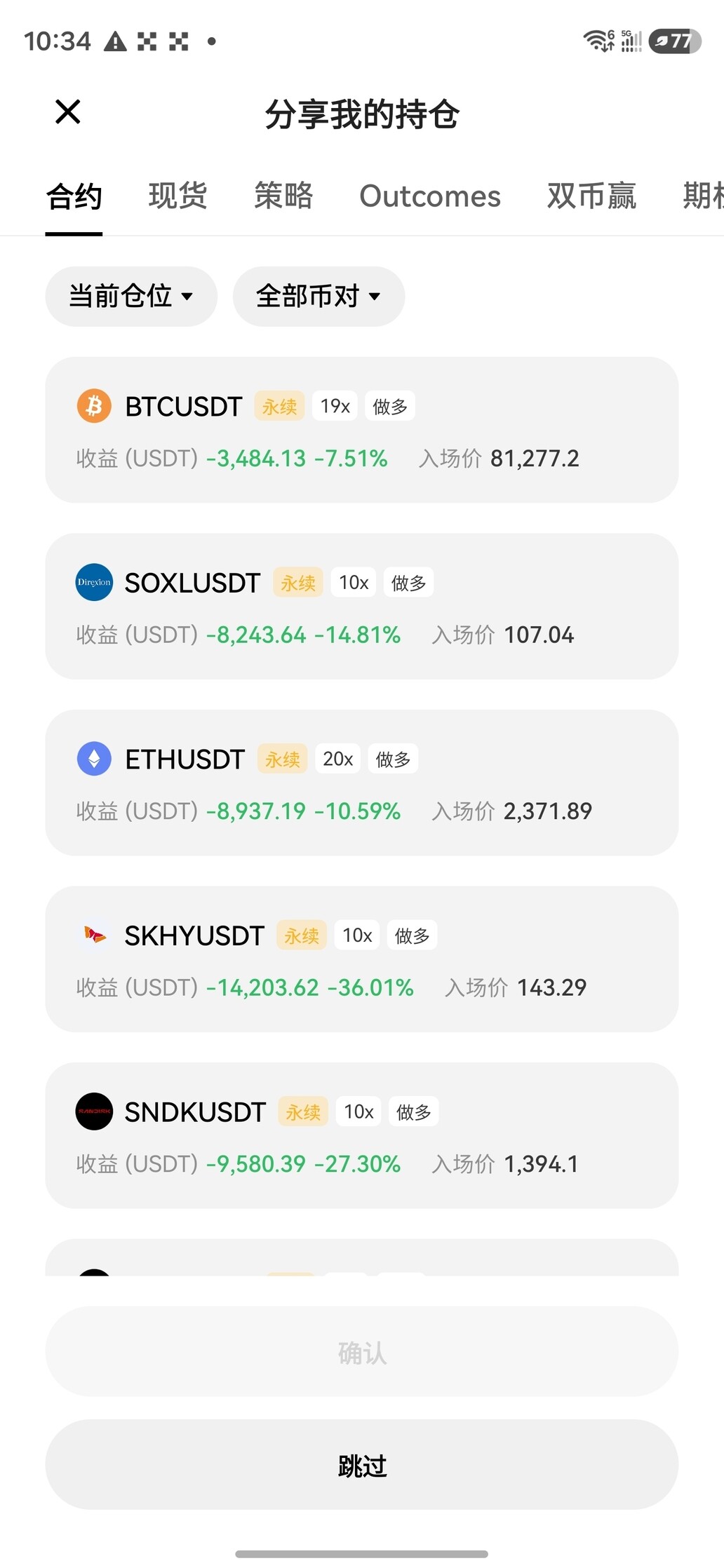
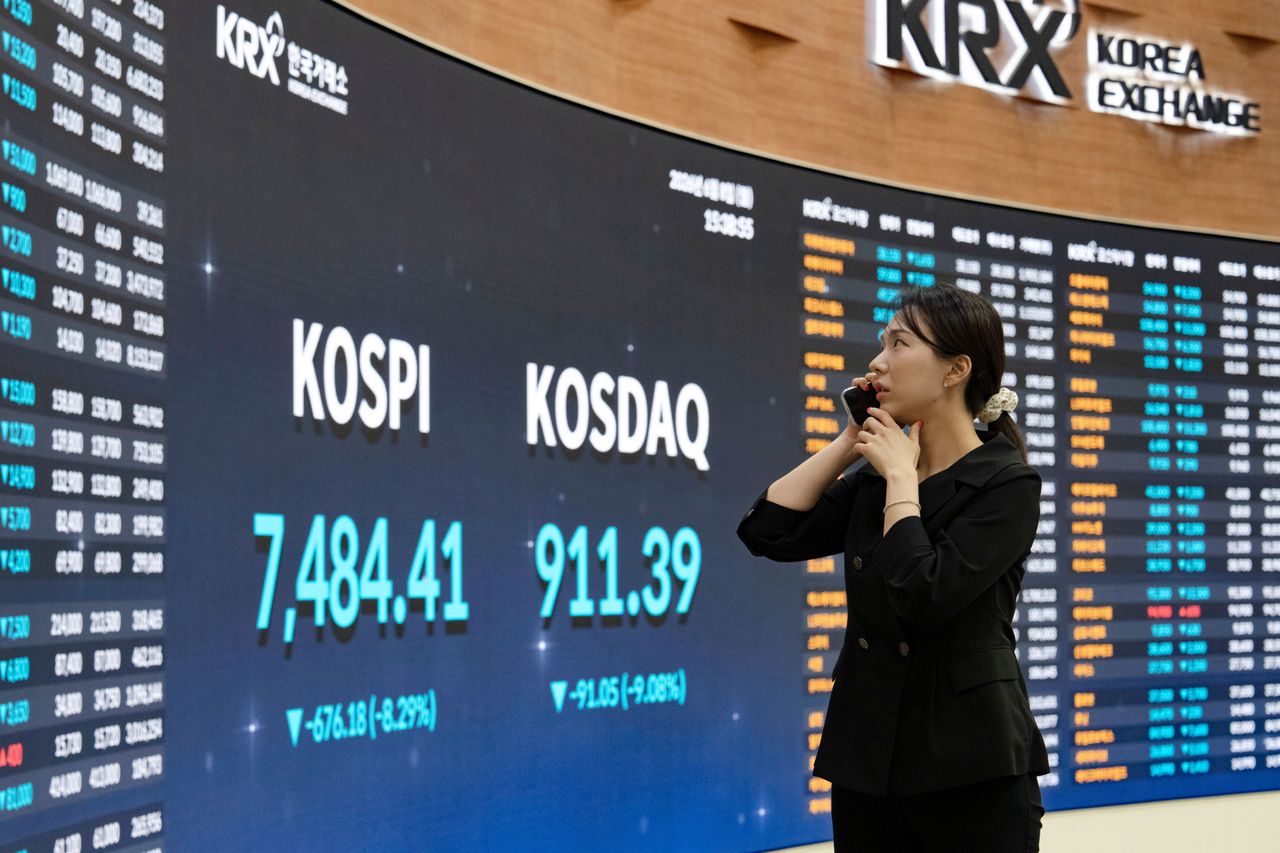


#WillYouBuyDipInKoreanStocks #ShareWeekly $SKHY $SAMSUNG Korea just halted trading for the first time in 78 days, and the question is simple: panic or a trend change? I think it is both, and the way to separate them is to look at price and flows separately. Here is how I am analyzing it. 1. Size of the drop At the 20-minute trading halt, KOSPI was down 8%, around 5,528 points. Samsung fell about 9-10% (roughly from ₩208,500 to ₩211,250), and SK Hynix fell about 10-11% (roughly from ₩1.26M to ₩1.28M). Foreign investors net sold about ₩3.4 trillion, now an 8th straight session of selling, while local investors bought about ₩2.9 trillion. At one point, these two stocks accounted for about 64% of the index decline, which is exactly the problem because they are about half the index weight. 2. It is 3 trading days, not 1 From Monday's close, my calculations show Samsung down about 17%, SK Hynix down about 21%, and KOSPI down about 13%. A 17% drop needs a 20% gain to recover, and a 21% drop needs about 27%. 3. 3 reasons stacking up First, China's CXMT said on October 10 that it plans to launch higher-density server DRAM by year-end, which triggered Tuesday's plunge. One strategist thinks the reaction was overdone because CXMT has not yet demonstrated yields. Second, hot U.S. CPI data revived rate-hike bets, and the Philadelphia Semiconductor Index fell 4.3% overnight. Third, JPMorgan's Korea strategist said the impact of the two companies' buybacks is over, so the market lost a steady buyer. He still expects these stocks to rise over the next 6 to 12 months. 4. What is not broken Samsung preliminarily reported Q3 operating profit of ₩107.4 trillion, a record, about 8.8x a year earlier and about 2.5x last year's full total. Full results will be released on October 29, and the stock has already fallen nearly one-fifth since the preliminary report. My rough math: ₩107.4 trillion × 4 = ₩429.6 trillion annualized profit, against a market cap near ₩124 trillion, about 2.9x. SK Hynix, on ₩77 trillion consensus, is about 3.0x. Low multiples on peak profit mean the market doubts the peak can last. Memory is cyclical, and that is the real bear case, not a China press release. 5. What my daily chart shows Samsung 209,000, SKHY 147.58, and MU 888.9 are all within 0.3% of their lower bands (208,373 / 147.13 / 886.2). RSI is 26.9, 31.9, and 33.5, and MACD histograms are all negative. Each stock is trading well below its 14/21/35-day moving averages: Samsung 23.6% to 24.2% below, SKHY 20.4% to 22.5% below, and MU 12.9% to 16.3% below. The upper bands are about +40%, +40%, and +30% from current prices. Meanwhile, AAPL (344.66, RSI 63.7) is just 0.1% below resistance, so money has not left all assets, just AI memory. 6. How I would handle this drop I would not call a bottom yet. I want to see foreign investors stop selling, the lower bands hold on a daily close, and RSI turn up from oversold. TSMC's results today and U.S. PPI are the next things to watch. Scale in gradually. My view: price panic, yes. But the buyer gap and 8 straight sessions of foreign selling are not panic, so I see this as a reset in peak-profit expectations, not a verdict on AI demand. A "trend reversal" needs these lower bands to fail on a close. Not financial advice. Would you buy Samsung or SK Hynix here, or wait for foreign investors to stop selling? Is the memory peak the real risk, or CXMT?
展开