

How to Invest in IPOs: What SpaceX, Cerebras and the Anthropic Debut Teach Investors in 2026
How to invest in IPOs as Anthropic lists: how retail allocations work, what IPO data show about returns, SpaceX and Cerebras lessons, lockups and index rules.

Key Takeaway
How to invest in IPOs is suddenly a mainstream question again. Anthropic is expected to price its initial public offering on the evening of Wednesday, November 18, and begin trading on Nasdaq under the ticker ANT on Thursday, November 19, according to CNBC. The amended filing sets a range of $70 to $78 for 825 million Class A shares, which CNBC calculated implies a fully diluted valuation of up to about $1.405 trillion. It follows SpaceX's record $75 billion IPO in June and caps a year in which US IPO proceeds have already topped the 2021 record, according to Renaissance Capital tallies.
The excitement is understandable, but the long-run data are sobering. University of Florida professor Jay Ritter's dataset shows that US IPOs from 1980 to 2025 rose 19.0% on average on their first day, yet investors who bought at the first-day close and held for three years trailed the broad market by 20.5 percentage points on average. The pop mostly goes to investors who receive allocations at the offer price. The open-market buyer on day one is often paying for the hype that created that pop.
This guide explains how IPOs actually reach individual investors, what 2026's biggest deals reveal about post-listing volatility, how to read a prospectus, which calendar events such as lockup expirations and index inclusion tend to move new stocks, and how to size an IPO position sensibly. Market data are as of November 16, 2026 (America/New_York) unless noted, IPO terms are reported plans that can change, and nothing here is personalized investment advice.
The 2026 IPO Market: Record Dollars, Fewer Deals
Proceeds broke the record, but the count fell
The headline number for 2026 is enormous. Renaissance Capital's running tally put US IPO proceeds near $148 billion by late October, above the prior full-year record of $142.4 billion set in 2021. Yet the number of companies going public has not kept pace. By Renaissance's count, around 118 companies had priced US IPOs as of October 23, roughly a third fewer than at the same point in 2025. In other words, this is a market of a few giant deals rather than a broad wave of listings, and that distinction matters for anyone trying to judge how "hot" IPOs really are.
A handful of mega deals did the heavy lifting
SpaceX alone raised $75 billion in its June offering, excluding the overallotment option, nearly three times the previous record set by Saudi Aramco in 2019. SK hynix followed with a $26.5 billion US listing of American depositary shares in July, and AI chipmaker Cerebras raised $5.55 billion in May. Strip out those deals and the picture looks far more ordinary. Renaissance noted that without SK hynix, third-quarter proceeds were about half the ten-year average for that quarter, and several companies, including smart-ring maker Oura, postponed offerings late in the quarter.
Anthropic arrives in a shaky tape
Anthropic's debut lands in a nervous market. On Monday, November 16, the S&P 500 fell about 1.9% to 7,416.59 and the Nasdaq Composite dropped about 2.5%, according to coverage from CNN and The Motley Fool, as AI-related stocks sold off ahead of Nvidia's fiscal third-quarter results on Tuesday evening and a new US rule restricting advanced AI chip exports. Declining stocks outnumbered advancers on the NYSE by roughly 3.45 to 1, and the VIX jumped about 19%. Big IPOs are usually priced to sell into confident markets, so this backdrop raises the odds of a volatile first week whichever way the stock opens.
What History Says About Buying IPO Stocks
The first-day pop belongs mostly to allocations
Ritter's statistics cover 9,345 US IPOs from 1980 through 2025. The equal-weighted average first-day return was 19.0%, with a median of 7.0%, and he estimates that roughly $250 billion was "left on the table" by issuers over that period. In 2025 alone, the 90 IPOs in his sample averaged a 29.3% first-day gain. Those numbers measure the move from the offer price to the first close. An individual who buys at the open on listing day does not earn that return; they buy after much of it has already happened.
Three-year returns tell a different story
The more useful statistic for most investors is what happens after day one. Across 9,253 IPOs from 1980 to 2024, Ritter found an average three-year buy-and-hold return of 19.1% measured from the first-day close. That sounds fine until you compare it with the market: the same stocks underperformed a broad US total market index by 20.5 percentage points on average, and trailed companies of similar size and book-to-market by 8.9 points. Newly public companies, as a group, have been mediocre long-term holdings when bought after the initial pop.
Size and profitability change the odds
The average hides a wide spread. Ritter's data show that IPOs of companies with less than $100 million in annual sales underperformed the market by 34.3 points over three years, while those with $100 million or more in sales trailed by only 3.2 points. Larger, more established issuers with real revenue have historically behaved much more like ordinary stocks. That is relevant in 2026, because the year's headline deals are among the largest companies ever to list, which puts them in the more favorable bucket even if their valuations are demanding.
Two Ways to Buy an IPO, and Why Retail Access Is Changing
Getting an allocation at the offer price
The SEC's investor bulletin on IPOs describes two routes. The first is to receive shares at the offer price through a brokerage that participates in the underwriting syndicate or distributes shares to its clients. Allocations are discretionary, popular deals are usually oversubscribed, and requests are often filled only in part or not at all. The bulletin also warns that underwriters may limit future allocations to clients who "flip" shares immediately, and FINRA Rule 5130 bars certain industry insiders and their immediate families from buying new issues at all.
Buying in the open market on day one
The second route is to buy once the stock starts trading. This is how most individuals end up owning IPO shares, and it carries specific risks. The opening print is set by an auction of pent-up orders, so it can be far above the offer price. The SEC notes that underwriters may support the price in the first days of trading and that the stock may fall once that support ends. Using limit orders rather than market orders is a basic protection, because a market order placed before the open can fill at a price far above what you expected.
The 20% retail allocation trend
The share of IPOs reserved for individuals is rising. SpaceX directed about 20% of its shares to retail investors, below the roughly 30% that had been anticipated, according to Renaissance Capital. Anthropic is expected to allocate up to 20% of its offering to retail investors in the US and other countries, CNBC reported, compared with a typical 5% to 10%. Brokerages such as Robinhood have built dedicated IPO access programs to distribute those shares, which widens access but also means more individuals are buying at the same moment, with the same information.
Case Studies From 2026: SpaceX and Cerebras
SpaceX: a strong debut, then a round trip
SpaceX priced at $135 per share on June 11, valuing the company at roughly $1.7 trillion, according to Renaissance Capital. The stock opened at $150 and closed its first day up about 19%. Dealroom's tracking shows the market value briefly peaked near $2.66 trillion on June 16 before shares fell to about $108 in late July, below the offer price. The stock recovered above $160 by early October, but market reports showed it trading back around its $135 offer price at the end of October. Day-one buyers have spent much of the past five months under water.
Cerebras: from a 68% pop to below the offer price
Cerebras is an even sharper lesson. The AI chipmaker priced at $185 on May 13, above two raised ranges, and closed its first day at $311, a 68% gain, according to Dealroom. Shares then slid below the offer price after the company's first earnings report in late June, when its outlook disappointed. Reports in early October tied a further decline to the end of insider lockups and filings by insiders to sell, with the stock touching a post-IPO low near $147 on October 12. A buyer at the first-day close had lost more than half of their money within five months.
What the two deals have in common
Both companies were large, well-known, and tied to powerful themes, and both were bought aggressively by individuals on day one. Both also showed that the first earnings report and the first lockup expiry tend to be the moments when enthusiasm meets fresh supply and real numbers. The Renaissance IPO ETF, which holds a basket of recent US listings, is one way to see how unevenly that cohort trades as a group.
How to Read an IPO Prospectus Before You Buy
Revenue, losses, and what drives them
The registration statement, filed as an S-1 and amended as terms are set, is the single most important document for an IPO investor. Anthropic's filing shows nine-month revenue through September 30 of $33.24 billion, up roughly 1,200% from a year earlier, and a run-rate revenue of about $81 billion at the end of October, according to CNBC's reading of the amended filing. The same period produced a net loss of $104 billion, which CNBC reported was mostly driven by changes in the fair value of convertible notes and derivative liabilities. Separating accounting items like that from operating losses is exactly the kind of work the prospectus allows, and skipping it means trading on a headline.
Governance and share classes
Read who controls the company after the listing. Reports on Anthropic's filing, including analysis by Morningstar, describe a special share class that gives the seven co-founders a combined 50.1% of voting power on most matters, with no extra economic rights. Public buyers of Class A shares will therefore own an economic stake with limited say over strategy, a structure similar in spirit to Palantir's founder shares and to the high-vote structures at Meta and SpaceX. Dual-class structures are not automatically bad, but they reduce the ability of outside shareholders to force change if results disappoint.
Who is buying alongside you, and on what terms
The prospectus also reveals strategic investors and side deals. Anthropic is selling $26 billion of separate Class N shares at the IPO price to AMD, Broadcom, Google, Micron, Microsoft, Nvidia, and TSMC, and the company said those shares are not subject to lockup agreements with the underwriters, according to CNBC. Strategic buyers signal commercial ties, but they also create circular relationships, since several of them are suppliers whose own results depend on AI spending. Nvidia, which reports quarterly results on Tuesday evening, is a good example of how closely the AI supply chain and the IPO pipeline are linked.
Lockups, Index Inclusion, and Other IPO Catalysts
The lockup expiry
Most insiders and pre-IPO investors agree not to sell for a period after the listing. The SEC's IPO bulletin says these lockups typically last 180 days and warns that the stock price may decline significantly when they expire. Academic work supports the caution: a study by Laura Field and Gordon Hanka in the Journal of Finance, covering nearly 2,000 lockup expirations, found an average abnormal return of about -1.5% over the three days around expiry and a permanent 40% increase in trading volume, with larger effects for venture-backed companies. Lockup dates are disclosed in advance, so they belong on every IPO investor's calendar.
Nasdaq-100 fast entry
Index inclusion can create forced demand. Nasdaq introduced a fast-entry rule effective May 1, 2026, under which a new listing whose full market capitalization ranks within the top 40 current Nasdaq-100 members is ranked on its seventh trading day, announced on its tenth, and added after the close of its fifteenth, according to Nasdaq's 2026 methodology FAQ. Smaller new listings still face a three-month seasoning period. A company of Anthropic's expected size would appear to clear the size threshold if it lists as planned, though inclusion depends on Nasdaq's own review.
The S&P 500 still makes IPOs wait
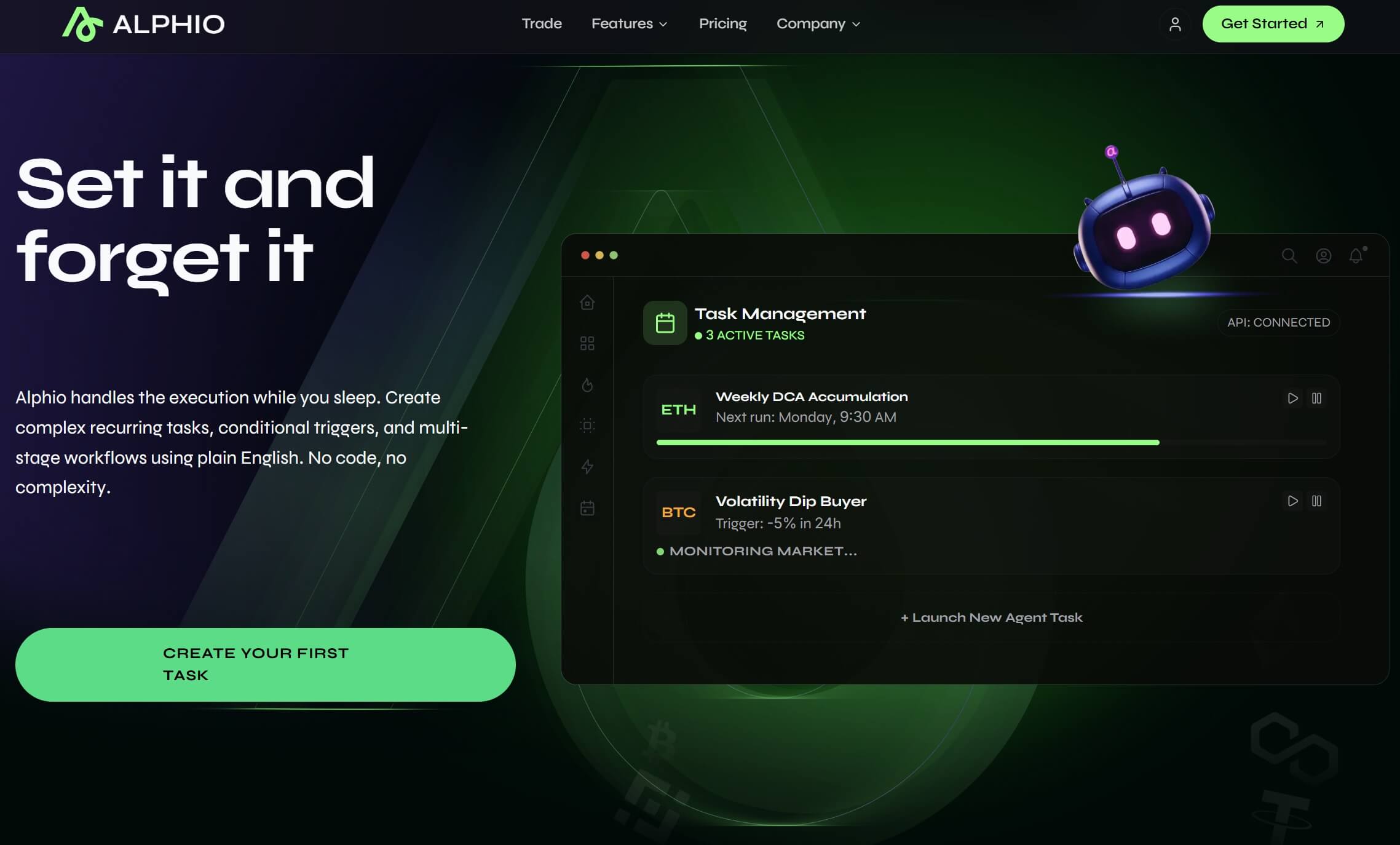
The S&P 500 is slower. S&P Dow Jones Indices said on June 4, 2026 that, after consulting the market, it would keep its 12-month seasoning requirement for IPOs rather than cut it to six months, and would keep its profitability screens unchanged. Companies reporting large GAAP losses would not qualify on that screen. Investors who buy a new listing expecting immediate S&P 500 demand may be early by a year or more. Tracking lockups, earnings dates, and index windows is tedious, and Alphio's Scheduled Task can turn those dates into recurring alerts and check-ins so a catalyst does not slip past you.
Building an IPO Strategy That Fits Your Portfolio
Size the position like a speculation
Because the range of outcomes for a new stock is wide, many disciplined investors treat an IPO purchase as a satellite position rather than a core holding. A small starting stake leaves room to add after the company has published a couple of quarterly reports as a public company, after the first lockup has passed, and after the stock has found a trading range. Waiting costs the chance of catching an early run, but the 2026 record shows that patience has often been rewarded with a lower price and more information.
A practical checklist before you place an order
Before buying any IPO, it helps to answer a short set of questions in writing:
- What does the business earn today, and how much of the reported loss is operating versus accounting?
- Who controls voting power, and which insiders or strategic holders can sell, and when?
- What valuation am I paying relative to revenue and to listed peers?
- What is my maximum position size, my limit price, and the event that would make me sell?
If you cannot answer these from the prospectus, the trade is driven by headlines rather than analysis.
Funds as an alternative to single deals
Investors who want IPO exposure without picking individual deals can use a fund. The Renaissance IPO ETF holds newly public US companies weighted by float-adjusted market capitalization with a 10% cap per holding, adds new IPOs at quarterly rebalances, and removes holdings three years after listing, with a 0.60% expense ratio, according to the fund's website. A fund will not deliver the first-day pop either, but it spreads the risk of any single disappointment. For investors who prefer to think out loud, Alphio's Conversational Trading lets you ask how a new listing compares with peers or how a position would change your portfolio before you place a limit order.
Conclusion
Learning how to invest in IPOs comes down to knowing who captures which part of the return. The average first-day gain of 19.0% in Ritter's data mostly accrues to investors who receive shares at the offer price, while buyers at the first-day close have historically lagged the market by about 20 percentage points over three years. 2026 has made that pattern vivid: SpaceX and Cerebras both soared on debut and later traded at or below their offer prices. Anthropic's listing, expected on November 19 at a valuation of up to about $1.4 trillion and with an unusually large retail allocation, will test the same dynamics at a larger scale and in a weaker market.
The investors most likely to do well are those who read the prospectus, use limit orders, size positions modestly, and plan around the calendar of earnings, lockups, and index decisions rather than the excitement of opening day. If you want rules to be executed consistently once you have set them, Alphio's Autonomous Trading can carry out a defined strategy, and Alphio Copy Trade lets you study how experienced investors are positioning around new listings. Whatever route you choose, decide what you will pay and what you will risk before the stock starts trading.
FAQs
How can individual investors buy shares in an IPO?
There are two routes. You can request an allocation at the offer price through a brokerage that distributes shares in the deal, though popular offerings are often oversubscribed, or you can buy in the open market once the stock begins trading. Most individuals end up buying in the open market, where using a limit order is an important safeguard.
Do IPO stocks outperform the market?
On average, not after the first day. Jay Ritter's data show US IPOs from 1980 to 2024 returned 19.1% over three years from the first-day close, which was 20.5 percentage points less than the broad market. Larger companies with at least $100 million in sales performed much closer to the market than small ones.
When is the Anthropic IPO and what is the price range?
CNBC reported that Anthropic plans to price its IPO on the evening of November 18, 2026 and begin trading on Nasdaq under the ticker ANT on November 19. The amended filing sets a range of $70 to $78 per share for 825 million Class A shares. These are reported plans, and the final price and timing can change.
What is an IPO lockup period and why does it matter?
A lockup is an agreement that stops insiders and pre-IPO investors from selling for a set period, typically 180 days according to the SEC. When it expires, new supply can hit the market, and research has found average abnormal returns of about -1.5% around expiry. Lockup dates are disclosed in advance, so investors can plan for them.
Is an IPO ETF a better way to invest in new stocks?
An IPO ETF spreads risk across many recent listings instead of relying on one deal. The Renaissance IPO ETF, for example, holds newly public US companies for up to three years and charges a 0.60% expense ratio. It will not capture first-day pops, so it suits investors who want diversified exposure rather than a single bet.
Related articles
- Is the Stock Market Overvalued? Why CAPE Says Yes and the Forward P/E Says Not So FastIs the stock market overvalued? The CAPE is near 39 but the forward P/E is 17.7. What each measure says, the bond yield test, and how to invest in late 2026.
- High Yield Bonds in 2026: What CCC Credit Stress Means for Income Investors and StocksHigh yield bonds pay about 8% in 2026, but CCC spreads have blown out. Learn what credit spreads signal for stocks and how to invest in junk bonds wisely.
- How to Trade Earnings Season: Implied Moves, Guidance and Risk Control for Stock InvestorsLearn how to trade earnings season in 2026: read the options implied move, focus on guidance, size positions before Nvidia and retail reports, and avoid traps.
- Bitcoin Price Analysis June 2026: Navigating the Fed's Hawkish Turn and $65K Support TestBitcoin faces pressure after June FOMC meeting signals potential rate hikes. Analysis of BTC's $65K support level, market sentiment, and trading strategies for investors.
- Semiconductor Stocks June 2026: Navigating the Chip Sector Amid Fed UncertaintySemiconductor stocks face headwinds in June 2026. NVDA trades at $200, down 26% from highs. Explore chip sector outlook, Fed impact, and investment strategies.
- Crypto Market Outlook June 2026: Navigating Bitcoin and Ethereum's Critical Price ZonesExplore the crypto market outlook for June 2026. Bitcoin trades at $65,800 with neutral RSI at 43.85, while Ethereum faces bearish pressure near $1,750.