
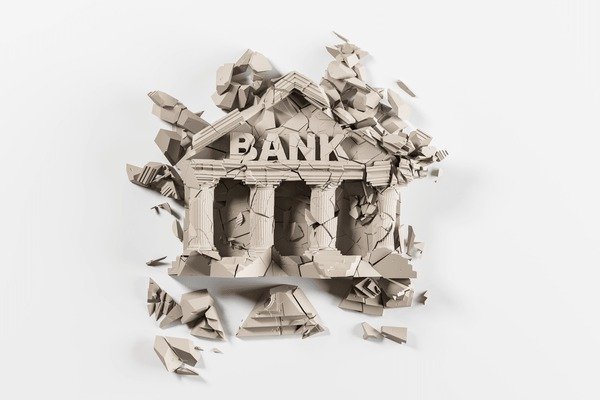
Which banks will fail by end of 2026?
Core Summary
According to the latest prediction market data for the query “Which banks will fail by end of 2026?”, traders have formed a strong consensus.
Currently, Goldman Sachs is dominating the market with an overwhelming 13.5% chance of winning. KeyBank follows in second place at 7%, while US Bank sits in third with 3.4%. The betting volume for this specific market has already reached $78.8K, reflecting intense industry interest.
Breakdown of Competitive Tiers
To better assess where each potential outcome stands, the market can be segmented into three distinct trading tiers based on implied probability and contract pricing:
🥇 Tier 1: The Dominant Leader
- Goldman Sachs (13.5%): Currently commanding the highest probability, Goldman Sachs is heavily favored by the order book. Traders looking to back this outcome face a “Buy Yes” contract price of 13¢, signaling a high degree of market conviction. This contract alone has generated $654 in volume.
🥈 Tier 2: The Primary Challengers
- KeyBank (7%): Positioned as the most viable alternative, KeyBank maintains a 7% chance of resolving true. Its “Buy Yes” shares currently trade at 7¢.
- US Bank (3.4%): Sitting in third place with a 3.4% probability, the market shows measured skepticism toward US Bank, treating it as an outside wildcard unless momentum shifts.
🥉 Tier 3: The Long-Tail Options (Combining for ~76.2%)
Beyond the top three choices, a wide field of macro variables and long-shot outcomes are being tracked. While their individual probabilities hover low, they represent crucial hedges for speculative traders:
- Alternative Options: This includes RBC (3.4%), BNP Paribas (2.9%), and Wells Fargo (2.9%).
- Speculative Volume: Despite low statistical likelihood, certain long-tail contracts like Truist are still attracting notable interest.
Comprehensive Order Book & Pricing Dashboard
The table below outlines the full breakdown of contract prices, probabilities, and market depth for all listed outcomes in this prediction pool:
| Rank | Predicted Outcome | Win Probability | Trading Volume | Buy Yes (Cost) | Buy No (Cost) |
|---|---|---|---|---|---|
| 1 | Goldman Sachs | 13.5% | $654 | 13¢ | 87¢ |
| 2 | KeyBank | 7.0% | $9.6K | 7¢ | 93¢ |
| 3 | US Bank | 3.4% | $9.3K | 3¢ | 97¢ |
| 4 | RBC | 3.4% | $539 | 3¢ | 97¢ |
| 5 | BNP Paribas | 2.9% | $646 | 3¢ | 97¢ |
| 6 | Wells Fargo | 2.9% | $6.9K | 3¢ | 97¢ |
| 7 | Truist | 2.9% | $10.4K | 3¢ | 97¢ |
| 8 | BMO | 2.9% | $1.4K | 3¢ | 97¢ |
| 9 | HSBC | 2.4% | $2.0K | 2¢ | 98¢ |
| 10 | Santander | 2.4% | $3.4K | 2¢ | 98¢ |
| 11 | Scotiabank | 2.4% | $4.0K | 2¢ | 98¢ |
| 12 | Citigroup | 2.4% | $3.1K | 2¢ | 98¢ |
| 13 | Morgan Stanley | 2.3% | $606 | 2¢ | 98¢ |
| 14 | BNY | 2.3% | $3.4K | 2¢ | 98¢ |
| 15 | Bank of America | 2.2% | $640 | 2¢ | 98¢ |
| 16 | JPMorgan Chase | 1.9% | $839 | 2¢ | 98¢ |
| 17 | Lloyds | 1.7% | $9.2K | 2¢ | 98¢ |
| 18 | Deutsche Bank | 1.5% | $10.3K | 2¢ | 99¢ |
| 19 | UBS | 1.3% | $2.1K | 1¢ | 99¢ |
Result Rules
This market will resolve to “Yes” if the listed bank fails between market creation and December 31, 2026, 11:59 PM ET. Otherwise, this market will resolve to “No.”
For the purposes of this market, the listed bank will be considered to have “failed” if any of the following occurs under the bank’s applicable legal or regulatory framework, within the listed date range:
- The listed bank’s primary banking regulator formally declares the institution insolvent or non-viable, or withdraws or revokes the bank’s license or authorization, and such determination initiates or directly results in resolution, liquidation, wind-down, or transfer actions.
- The listed bank enters a court-ordered liquidation, statutory resolution regime, or regulator-mandated wind-down, including the use of resolution tools such as bail-ins, forced asset transfers, or the establishment of a bridge bank.
- A government or resolution authority intervenes in a manner that wipes out or subordinates existing equity of the listed bank and transfers effective control of the bank to the state or a designated resolution authority, with continued operations dependent on official intervention.
- The listed bank publicly defaults on a payment obligation, including derivatives margin, repo, or physical commodity delivery, and such default is formally acknowledged by the bank’s primary regulator or resolution authority and directly results in the initiation of resolution, liquidation, license withdrawal, or regulator-mandated transfer of the bank.
- The listed bank is subject to a compulsory merger, acquisition, or transfer of all or substantially all of its assets and liabilities ordered or directed by its primary banking regulator or resolution authority due to the bank’s financial condition or to prevent failure, regardless of whether a formal insolvency declaration or immediate equity wipeout is publicly announced at the time of transfer.
If there is a potential failure of the listed bank within this market’s date range and a qualifying regulatory or court action has occurred but has not yet been fully published by the relevant authority, this market may remain open until April 30, 2027, 11:59 PM ET to allow for confirmation. If no qualifying failure is confirmed by that date, this market will resolve to “No.”
The primary resolution source for this market will be official statements, filings, or actions by the listed bank’s primary banking regulator or resolution authority; however, a consensus of credible reporting may also be used.
AI Valuation Analysis: Finding Market Mispricings & EV Gaps
While human consensus and speculative volume shape the broader prediction market, our quantitative algorithms offer a data-driven counter-perspective. By analyzing fundamental signals, underlying trends and historical distributions, our AI Valuation model calculates an independent “Fair Value” probability for each outcome.
Comparing this Fair Value against the current Trade Value uncovers major disparities — known as the Expected Value (EV) Gap. Contracts with a positive EV Gap represent statistically underpriced outcomes, whereas a negative EV Gap flags a potential market overreaction.
Top AI Alpha & Mispriced Arbitrage Opportunities
Based on the latest data model run, several key contracts stand out with significant deviations:
- The Most Overvalued Outcome Goldman Sachs currently trades at 13.5%, but our AI places its Fair Value at just 1.8%. This creates a large negative EV Gap of -11.7%, suggesting the crowd may be overhyping this outcome and driving the premium too high.
- The Best Value Play (Highest EV) Our model identifies RBC as the premium value opportunity on the board. While the market only assigns it a 3.4% trading probability, our AI’s Fair Value assessment sits at 19.7% — yielding an impressive +16.3% EV Gap.
- Under-the-Radar Dark Horses Other notable discrepancies include Scotiabank (EV Gap: +12.4%) and BMO (EV Gap: +10.1%). These long-tail opportunities are heavily discounted by the live order books despite stronger statistical backing from our predictive model.
| Market | Trade Value | Fair Value | EV Gap |
|---|---|---|---|
| Goldman Sachs | 13.5% | 1.8% | -11.7% |
| KeyBank | 7.0% | 4.3% | -2.7% |
| US Bank | 3.4% | 11.6% | +8.2% |
| RBCBest EV | 3.4% | 19.7% | +16.3% |
| BNP Paribas | 2.9% | 8.1% | +5.2% |
| Wells Fargo | 2.9% | 8.3% | +5.4% |
| Truist | 2.9% | 8.6% | +5.7% |
| BMO | 2.9% | 13.0% | +10.1% |
| HSBC | 2.4% | 3.5% | +1.1% |
| Santander | 2.4% | 4.2% | +1.8% |
| Scotiabank | 2.4% | 14.7% | +12.4% |
| Citigroup | 2.4% | 3.6% | +1.2% |
| Morgan Stanley | 2.3% | 10.0% | +7.7% |
| BNY | 2.3% | 10.1% | +7.8% |
| Bank of America | 2.2% | 7.5% | +5.3% |
| JPMorgan Chase | 1.9% | 6.8% | +4.9% |
| Lloyds | 1.7% | 8.3% | +6.7% |
| Deutsche Bank | 1.5% | 4.5% | +3.0% |
| UBS | 1.3% | 5.0% | +3.7% |
Trade Activities
Here is the trade activities for this event.
Oct 4, 2026
- 01:52 PM0X0x4b5e1a3f027a77C6Ac5bE217CFe0d11c9fcDAc11-1768052940723$10.01
Bought 10.111181 No for Will Goldman Sachs fail by end of 2026? at 0.99
- 11:09 AMMUMusk5$29.40
Bought 30 No for Will KeyBank fail by end of 2026? at 0.98
- 11:07 AMMUMusk5$188.16
Bought 192 No for Will KeyBank fail by end of 2026? at 0.98
- 11:05 AMAJAJSV$1.60
Bought 40 Yes for Will KeyBank fail by end of 2026? at 0.04
- 11:05 AMMUMusk5$9.60
Bought 10 No for Will KeyBank fail by end of 2026? at 0.96
- 11:04 AMAJAJSV$5.00
Bought 100 Yes for Will Goldman Sachs fail by end of 2026? at 0.05
- 08:13 AMAJAJSV$0.25
Bought 5 Yes for Will KeyBank fail by end of 2026? at 0.05
- 07:39 AMAJAJSV$2.25
Bought 56.24 Yes for Will KeyBank fail by end of 2026? at 0.04
Oct 3, 2026
- 10:47 PMAJAJSV$0.79
Bought 39.67 Yes for Will Lloyds fail by end of 2026? at 0.02
- 01:35 PMTHThingol$2.00
Bought 8 Yes for Will Goldman Sachs fail by end of 2026? at 0.25
Oct 2, 2026
- 11:10 PMNUNumitus1994$1.02
Bought 25.58 Yes for Will KeyBank fail by end of 2026? at 0.04
- 03:58 PMMUMusk5$0.00
Sold 27.36 Yes for Will Goldman Sachs fail by end of 2026? at 0
Whales Wallets That Are Betting on This Event
Frequently Asked Questions
What is the current market consensus on "Which banks will fail by end of 2026?"?
As of the latest update, Goldman Sachs leads the field as the frontrunner with a 13.5% win probability, followed by KeyBank at 7% and US Bank at 3.4%. Total trading volume for this pool has reached $78.8K, indicating deep liquidity and high trader engagement.
How does the AI Fair Value differ from the live Market Trade Value?
The live Market Trade Value reflects public sentiment, order-book momentum and speculative capital. Our AI Fair Value is computed independently with quantitative models that strip out hype to focus on underlying data. When the two diverge, it creates an EV Gap, flagging where the market may be mispricing an outcome.
Which outcome represents the highest Expected Value (EV) right now?
Our latest run flags RBC as the most significant mispricing. While the market trades it at a 3.4% implied probability, our AI calculates a Fair Value of 19.7% — an Expected Value gap of +16.3%, making it the premium value play in this pool.
Is the market consensus overreacting to any specific outcome?
Yes — our data suggests a notable overreaction around Goldman Sachs. The crowd has pushed its live Trade Value up to 13.5%, yet our Fair Value assessment puts its real likelihood at just 1.8%, a negative EV Gap of -11.7% that signals the contract is overpriced.
Are there any high-value dark horse options hidden in the long-tail data?
Absolutely. Beyond the headline outcomes, our model highlights under-the-radar potential in lower-ranked options. Scotiabank holds a positive EV Gap of +12.4%, and BMO shows +10.1%. These contracts are discounted by live order books despite stronger quantitative backing.