

Tesla Robotaxi Hits 380K Unsupervised Miles: TSLA Stock Analysis for August 2026
Tesla's Robotaxi hits 380K unsupervised miles across 7 US markets. Analyze TSLA stock outlook as Cybercab production ramps and FSD revenue potential unfolds.

Key Takeaway
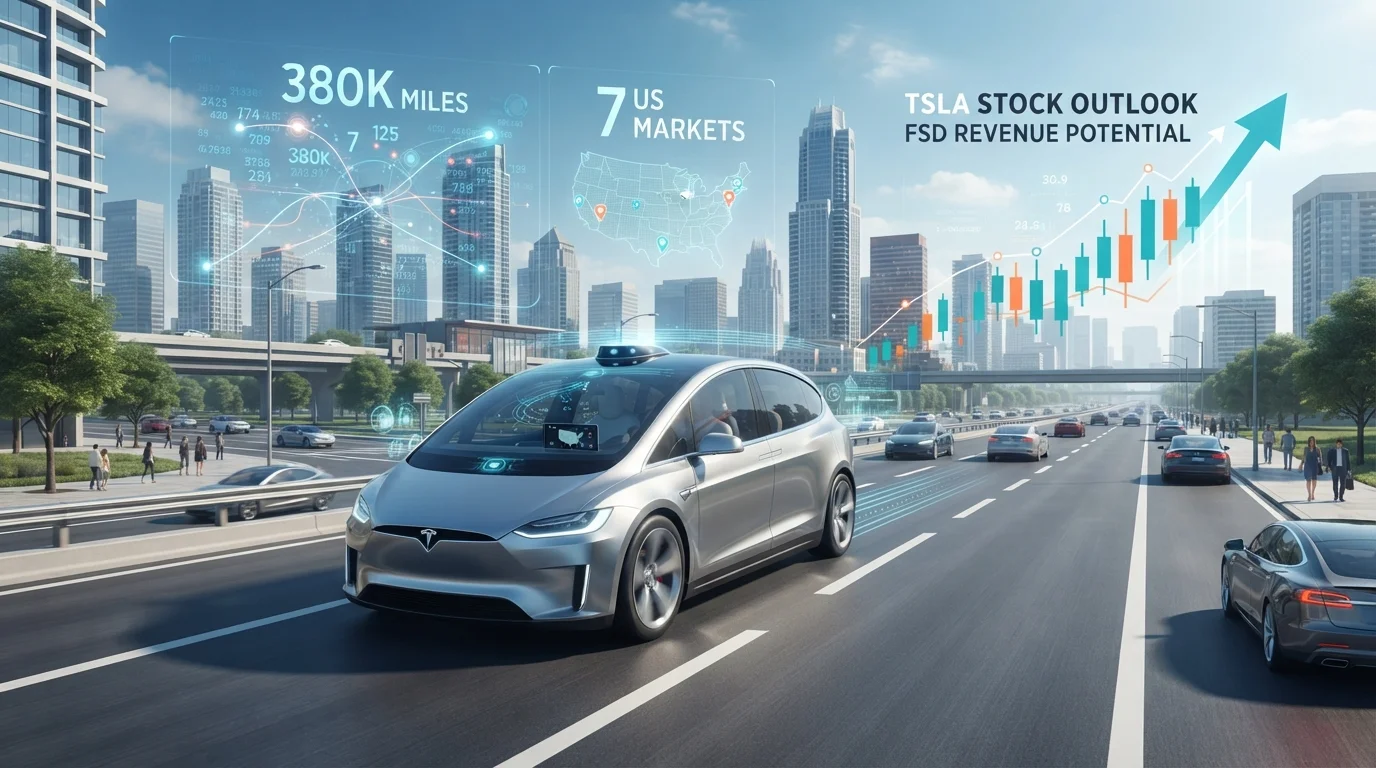
Tesla's autonomous vehicle ambitions have reached a critical inflection point in August 2026, with the company's Robotaxi fleet accumulating over 380,000 unsupervised miles across seven US markets and cumulative paid mileage approaching 2.5 million. This progress represents more than just technological validation. It signals the potential transformation of Tesla from a traditional automaker into a mobility-as-a-service platform with recurring revenue streams that could fundamentally reshape its valuation model.
For investors evaluating TSLA stock at current levels, the Robotaxi narrative has evolved from speculative promise to measurable execution. The company has expanded from three markets at the start of 2026 to seven active cities including Austin, Dallas, Houston, Miami, Orlando, Tampa, and the San Francisco Bay Area. This geographic expansion, combined with the commencement of Cybercab pilot production at Giga Texas, suggests Tesla is methodically building the infrastructure and data foundation necessary for scaled autonomous ride-hailing operations. However, significant questions remain about the pace of fleet expansion, regulatory approvals for unsupervised operations in additional markets, and the timeline for generating meaningful revenue contributions from the Robotaxi business.
Tesla's Robotaxi Progress: By the Numbers
Tesla's second-quarter 2026 earnings call revealed several metrics that demonstrate tangible progress in the company's autonomous vehicle program. The most significant milestone was the disclosure of 380,000 unsupervised Robotaxi miles driven across six cities in Texas and Florida, with Vice President of AI Ashok Elluswamy emphasizing that the fleet is achieving week-over-week growth in unsupervised miles at double-digit rates. This compound growth trajectory, if sustained, could see Tesla accumulate millions of additional autonomous miles before year-end.
The cumulative paid Robotaxi mileage figure of approximately 2.5 million miles represents a broader dataset that includes both fully unsupervised operations and rides conducted with safety monitors present in the vehicle. This distinction matters because it demonstrates Tesla's staged approach to autonomy deployment, gradually expanding the operational domain while maintaining safety oversight during the validation phase. The company reported zero notable incidents across its unsupervised miles, a claim that, while self-reported, suggests the FSD (Full Self-Driving) software is performing reliably within its current operational design domain.
From a market penetration perspective, Tesla's Robotaxi service is currently active in seven US metropolitan areas, representing a doubling of active markets during the second quarter with the addition of Miami, Orlando, and Tampa in Florida. The geographic diversity of these markets, spanning Texas highways, Florida's unique driving conditions, and California's complex urban environments, provides Tesla with valuable training data across varied road types, weather conditions, and traffic patterns. This data diversity is crucial for developing a generalizable autonomous driving system that can operate safely across the United States and eventually internationally.
The Cybercab: Purpose-Built for Autonomous Ride-Hailing
While Tesla's current Robotaxi operations utilize modified Model 3 and Model Y vehicles equipped with FSD hardware, the company's long-term vision centers on the Cybercab, a purpose-built autonomous vehicle designed specifically for ride-hailing services. The Cybercab represents a fundamental departure from traditional automotive design, featuring no steering wheel or pedals and optimized for passenger comfort and operational efficiency rather than driver ergonomics.
Tesla commenced pilot production of the Cybercab at Giga Texas in February 2026, with CEO Elon Musk confirming on the first-quarter earnings call that initial output would be deliberately slow before ramping later in the year. This measured production approach reflects both the technical complexity of manufacturing a vehicle without traditional driver controls and Tesla's desire to validate the design through real-world testing before committing to volume production. The Cybercab's unique architecture requires entirely new manufacturing processes, supply chain relationships, and quality assurance protocols compared to Tesla's existing vehicle lineup.
Analyst estimates from Morgan Stanley and Visible Alpha suggest Cybercab revenues could reach $1 billion in 2026, representing approximately 1.3% of Tesla's total automotive sales. While this figure appears modest in the context of Tesla's projected $105-106 billion in total revenue for fiscal year 2026, it represents the foundation of what analysts project could become a $75 billion business by 2035. The long-term revenue potential stems from the unit economics of autonomous ride-hailing, where ARK Invest and other analysts estimate each Cybercab could generate $200-400 per day in gross revenue depending on utilization rates and pricing dynamics.
The Cybercab's commercial viability depends on achieving sufficient scale to amortize the substantial upfront investments in vehicle manufacturing, charging infrastructure, and fleet management systems. Tesla's advantage lies in its vertical integration capabilities. The company can manufacture vehicles, develop autonomous software, deploy charging networks, and operate the ride-hailing platform without relying on third-party partnerships. This integration potentially enables better unit economics compared to competitors like Waymo, which must source vehicles from external manufacturers and partner with ride-hailing platforms for consumer access.
FSD Revenue: The Hidden Growth Driver
Tesla's Full Self-Driving software represents a significant and often underappreciated revenue stream within the company's automotive segment. While FSD revenue is currently buried within automotive sales in Tesla's financial reporting, the company's shift to subscription-only pricing at $99 per month in the United States suggests a strategic pivot toward recurring revenue models that could dramatically improve customer lifetime value and revenue predictability.
The progression from supervised FSD to unsupervised operation in customer vehicles represents the critical unlock for Tesla's autonomous vehicle strategy. During the Q2 2026 earnings call, Tesla indicated that unsupervised FSD in customer cars would begin a gradual rollout in the fourth quarter of 2026, starting in validated geographies where the system has proven its safety performance. This transition marks a fundamental shift from Tesla bearing the operational costs of Robotaxi fleet operations to enabling millions of customer vehicles to participate in ride-hailing networks, potentially creating a distributed autonomous fleet without the capital intensity of traditional taxi or ride-hailing business models.
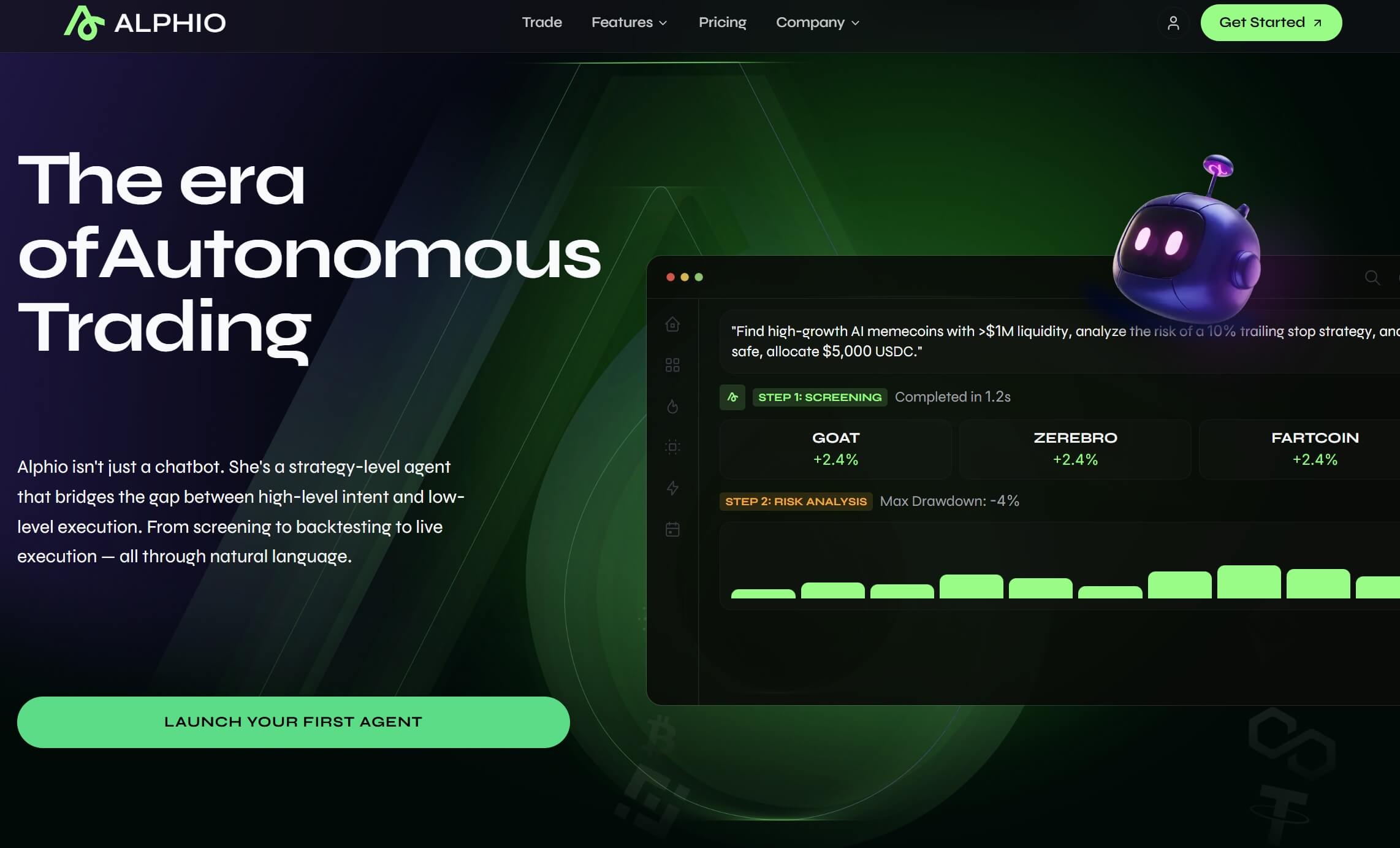
For investors seeking to automate their trading strategies and capitalize on emerging trends in autonomous mobility, consider using Alphio AI's copy trading feature to mirror successful traders who are positioning for the robotaxi revolution.
The financial implications of widespread FSD adoption extend beyond direct software revenue. If Tesla successfully deploys unsupervised FSD across its installed base of millions of vehicles, the company could capture a percentage of ride-hailing revenue generated by customer-owned vehicles participating in the Robotaxi network. This platform business model, similar to how Apple monetizes its App Store or Amazon leverages third-party marketplace sellers, could generate high-margin revenue with minimal incremental capital investment.
Competitive Landscape: Tesla vs. Waymo
The autonomous vehicle market has consolidated around two primary approaches: Tesla's camera-based vision system and Waymo's sensor-fusion approach utilizing LiDAR, radar, and cameras. While Waymo currently operates the largest commercial robotaxi fleet with tens of thousands of vehicles planned for production at its Arizona facility, Tesla's advantage lies in the sheer scale of its data collection infrastructure. With millions of vehicles equipped with FSD hardware collecting real-world driving data, Tesla's neural networks train on orders of magnitude more miles than any competitor.
Waymo's partnership with Uber and its planned expansion through the Lyft platform provides established distribution channels that Tesla must build independently. However, Tesla's direct-to-consumer brand recognition and existing customer relationships create a potentially more efficient customer acquisition pathway. The company can market Robotaxi services directly to the millions of Tesla owners who already trust the brand and understand the technology, rather than competing for ride-hailing customers through third-party platforms.
The regulatory environment represents another competitive variable. Tesla's approach of gradually expanding supervised FSD to unsupervised operations in specific geographies allows for regulatory engagement at the state and local level, building precedent and trust before seeking broader approvals. This incremental approach contrasts with Waymo's strategy of securing comprehensive regulatory approval in limited geographic areas before expanding. Both approaches have merit, but Tesla's method may prove more scalable across diverse regulatory environments globally.
TSLA Stock Valuation: Pricing the Autonomous Future
Tesla's current market capitalization of approximately $1.3 trillion reflects a valuation that cannot be justified by traditional automotive cash flows alone. At trailing earnings multiples exceeding 300x, the stock price embeds substantial optionality value attributable to FSD, Robotaxi services, Optimus humanoid robots, and AI infrastructure initiatives. This valuation structure makes TSLA fundamentally different from traditional automotive investments and more comparable to high-growth technology platforms.
The investment thesis for TSLA stock in August 2026 hinges on the company's ability to convert its autonomous vehicle progress into commercially viable services at scale. If Tesla successfully deploys unsupervised FSD across its customer fleet and ramps Cybercab production to meaningful volumes, the revenue and profit potential could justify current valuations and potentially drive significant upside. However, delays in regulatory approvals, technical setbacks, or competitive pressures could result in substantial downside as the optionality premium deflates.
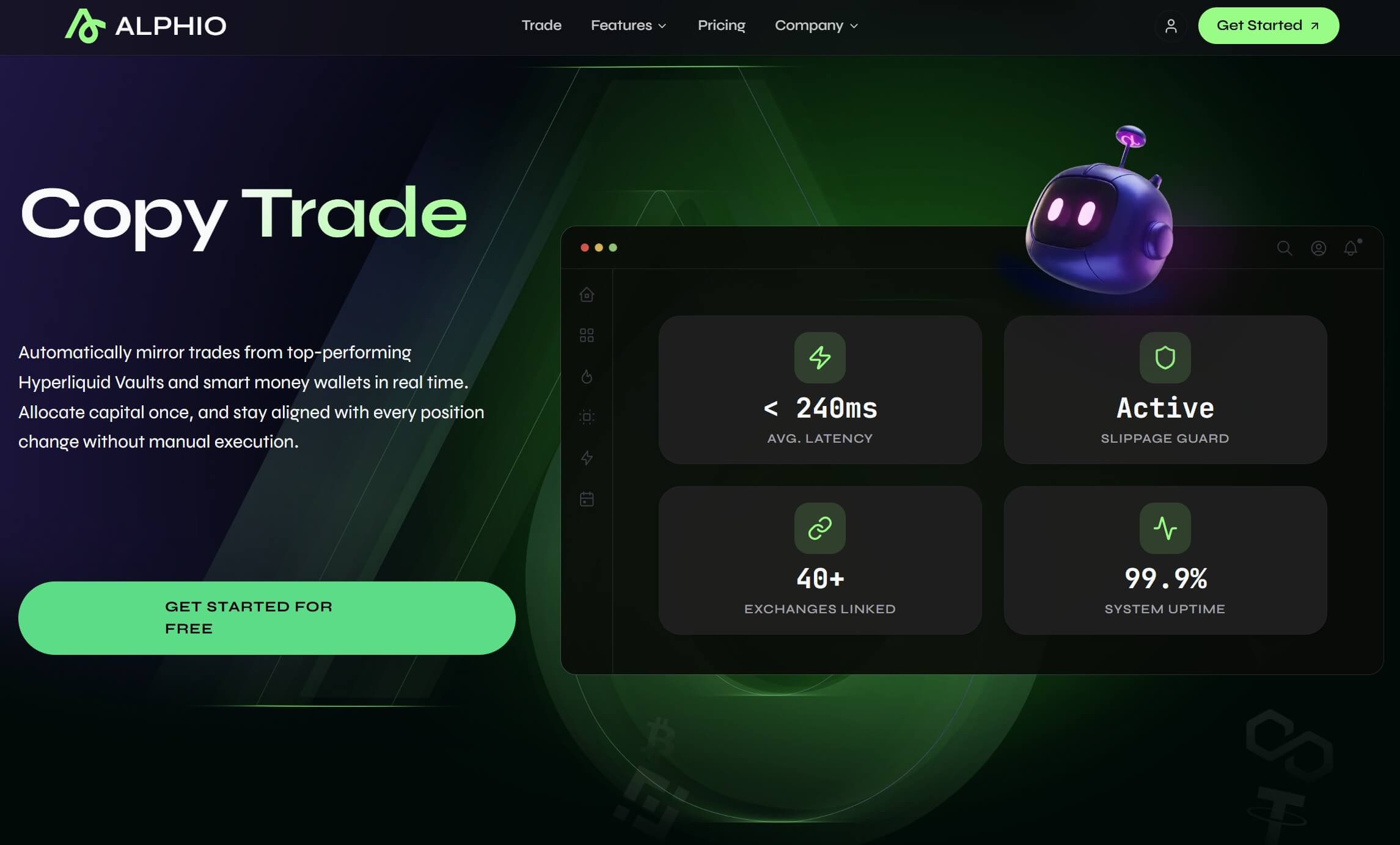
For investors looking to automate their portfolio management and capitalize on the AI-driven transformation of transportation, explore Alphio's agentic trading capabilities to implement sophisticated trading strategies without constant manual oversight.
Analyst price targets for TSLA reflect this binary outcome distribution, with bullish scenarios pricing the stock above $400 based on Robotaxi and AI revenue contributions, while bearish cases see downside to $150-200 if autonomous vehicle timelines slip or competitive dynamics shift unfavorably. The wide dispersion of analyst opinions underscores the uncertainty inherent in valuing transformative technologies before they achieve commercial scale.
Financial Performance and Operating Metrics
Tesla's second-quarter 2026 financial results revealed both strengths and challenges as the company navigates the transition from pure automotive sales to a diversified technology and services platform. Revenue exceeded $100 billion on a trailing twelve-month basis for the first time in company history, representing an 11% year-over-year increase driven primarily by new product ramps and energy storage deployments. However, operating margins compressed to 1.4% from 4.1% in the prior year period, reflecting a 47% increase in operating expenses to $4.35 billion.
The margin compression stems from Tesla's aggressive investment in AI infrastructure, autonomous vehicle development, and new product categories including the Cybercab and Optimus humanoid robot. These investments are necessary to maintain technological leadership but create near-term earnings pressure that has concerned some investors. The company's balance sheet remains strong with substantial cash reserves, providing runway to fund these initiatives without external financing.
From a capital allocation perspective, Tesla appears committed to the autonomous vehicle strategy despite the near-term earnings impact. The company has indicated that FSD and Robotaxi development remain top priorities, with R&D spending concentrated on AI training infrastructure, simulation capabilities, and validation testing. This focus suggests that margin pressure may persist until autonomous vehicle services achieve sufficient scale to generate meaningful revenue contributions.
Risks and Challenges
Tesla's Robotaxi ambitions face several significant risks that could derail the timeline or limit the commercial opportunity. Regulatory approval represents the most immediate concern, as unsupervised autonomous vehicle operations require explicit permission from state and local authorities in each market. While Tesla has successfully navigated the regulatory process in its current seven markets, expansion to additional cities and states may encounter resistance from safety advocates, competing transportation interests, or cautious regulators.
Technical challenges also persist despite the impressive unsupervised mileage accumulation. Autonomous driving systems must handle edge cases, unusual scenarios that occur rarely but require correct responses to ensure safety. Tesla's camera-only approach, while cost-effective and scalable, may struggle with certain environmental conditions or complex traffic scenarios that LiDAR-based systems handle more reliably. The company must demonstrate consistent performance across diverse conditions before regulators and consumers will fully trust the technology.
Competition from established ride-hailing platforms and emerging autonomous vehicle companies could limit Tesla's market share and pricing power. Uber and Lyft have established customer relationships and driver networks that will be difficult to displace, while Waymo's technological lead in certain markets may prove durable. Tesla's success depends on delivering a superior autonomous ride-hailing experience at competitive prices, a challenge that requires flawless execution across technology, operations, and customer service.
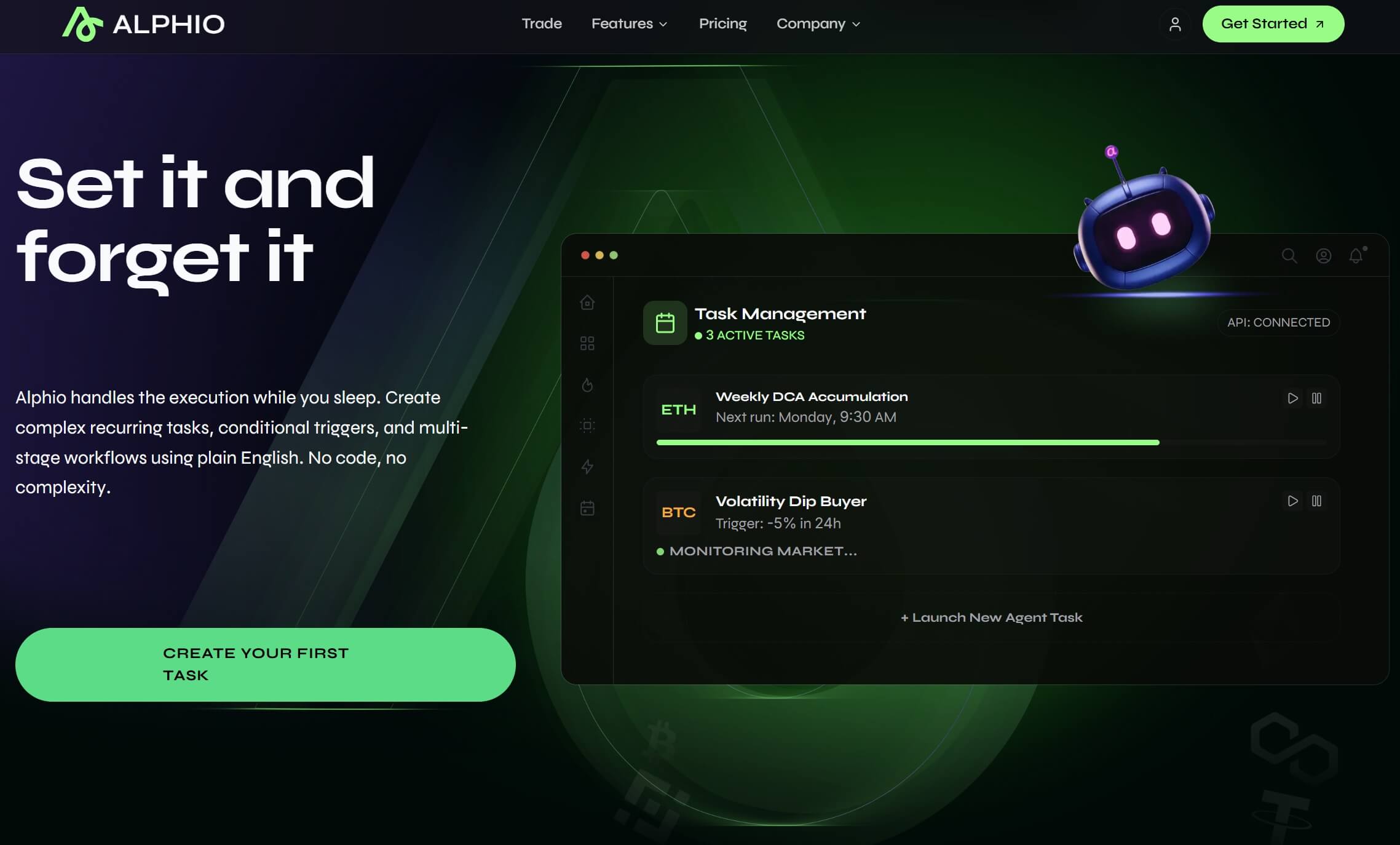
For traders seeking to set up conditional workflows and automated responses to market movements, Alphio's automation features provide powerful tools for executing sophisticated trading strategies.
Investment Outlook and Strategy
Tesla's Robotaxi progress through August 2026 validates the company's autonomous vehicle strategy while highlighting the substantial work remaining before commercial scale. The 380,000 unsupervised miles and 2.5 million cumulative paid miles demonstrate technical feasibility, but the path to meaningful revenue contribution requires regulatory approvals, fleet scaling, and consumer adoption that may take years to materialize fully.
For investors considering TSLA stock positions, the current valuation reflects substantial optimism about autonomous vehicle and AI revenue potential. This creates an asymmetric risk-return profile where successful execution could drive significant upside, while delays or setbacks could result in painful corrections as optionality premiums deflate. Position sizing should reflect this risk profile, with most investors likely best served by modest allocations within diversified portfolios rather than concentrated bets.
The upcoming Robotaxi unveiling event scheduled for August 2026 represents a potential catalyst that could provide additional clarity on Tesla's commercialization timeline, partnership strategy, and revenue projections. Investors should watch for announcements regarding additional market expansions, Cybercab production ramp schedules, and any guidance on FSD revenue recognition as indicators of near-term execution momentum.
Conclusion
Tesla's Robotaxi program has progressed from experimental testing to limited commercial operations with measurable metrics and expanding geographic coverage. The 380,000 unsupervised miles driven across seven US markets, combined with Cybercab pilot production and planned unsupervised FSD rollout to customer vehicles in Q4 2026, suggests the company is methodically building toward scaled autonomous ride-hailing services. However, significant challenges remain in regulatory approval, fleet scaling, and competitive positioning that will determine whether Tesla can capture the multi-trillion-dollar mobility-as-a-service opportunity.
For TSLA stock investors, the Robotaxi narrative has evolved from speculative promise to execution story with tangible milestones. The current valuation embeds substantial expectations for autonomous vehicle success, creating both opportunity and risk as the company navigates the transition from development to commercialization. Investors should monitor upcoming catalysts including the August Robotaxi unveiling, Q3 earnings results, and any updates on unsupervised FSD rollout timelines for signals about execution momentum.
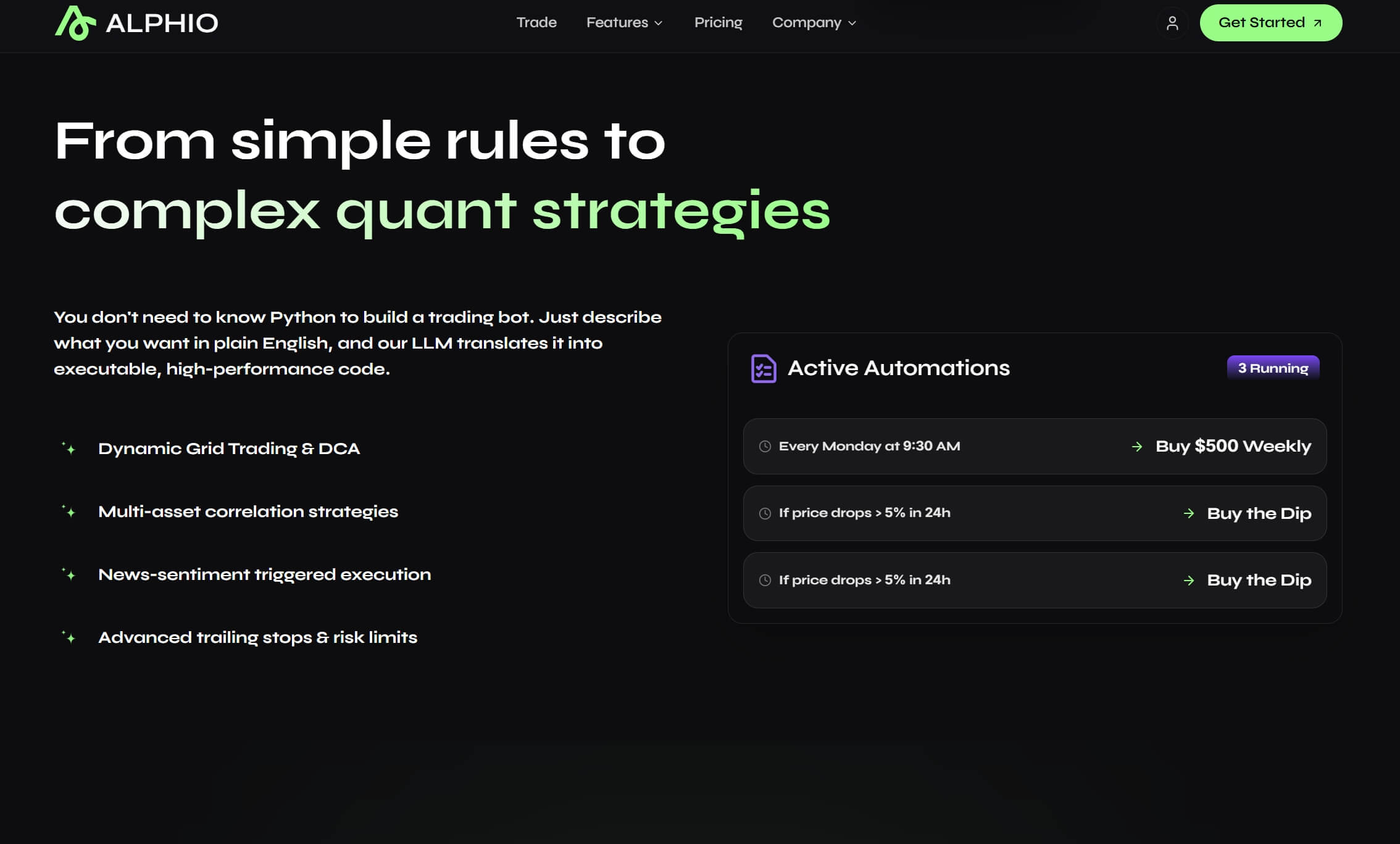
To execute trades seamlessly and stay on top of market developments, try Alphio's conversational trading interface that lets you manage positions through natural language commands.
Whether Tesla ultimately succeeds in transforming transportation through autonomous vehicles remains uncertain, but the company's progress through August 2026 demonstrates that the technology is advancing from science fiction toward commercial reality. For investors with appropriate risk tolerance and time horizons, TSLA stock offers exposure to this transformation alongside the company's established automotive and energy storage businesses.
FAQs
How many unsupervised miles has Tesla's Robotaxi driven?
As of Q2 2026, Tesla's Robotaxi fleet has driven over 380,000 unsupervised miles across six cities in Texas and Florida. The company reports achieving double-digit week-over-week growth in unsupervised miles, with cumulative paid Robotaxi mileage approaching 2.5 million miles including both supervised and unsupervised operations.
What is the Tesla Cybercab and when will it be available?
The Tesla Cybercab is a purpose-built autonomous vehicle designed specifically for robotaxi services, featuring no steering wheel or pedals. Tesla commenced pilot production at Giga Texas in February 2026, with initial output deliberately slow before ramping later in the year. Analysts project Cybercab revenues could reach $1 billion in 2026 and grow to $75 billion by 2035 if scaled successfully.
In which cities is Tesla Robotaxi currently operating?
Tesla Robotaxi is currently active in seven US markets: Austin, Dallas, Houston, Miami, Orlando, Tampa, and the San Francisco Bay Area. The company expanded from three markets at the start of 2026 to seven by Q2 2026, with Florida markets (Miami, Orlando, Tampa) added during the second quarter.
When will Tesla offer unsupervised FSD in customer vehicles?
Tesla has indicated that unsupervised FSD in customer cars will begin a gradual rollout in Q4 2026, starting in validated geographies where the system has demonstrated sufficient safety performance. This marks the transition from Tesla-operated robotaxi fleets to a distributed network of customer-owned autonomous vehicles.
What is the investment outlook for TSLA stock in 2026?
TSLA stock trades at a significant premium to traditional automakers, reflecting embedded optionality value from FSD, Robotaxi, and AI initiatives. Analyst price targets range from $150-200 (bear case) to over $400 (bull case) depending on autonomous vehicle execution. The stock offers exposure to transportation transformation but carries substantial risk given the uncertainty of commercialization timelines and competitive dynamics.