

NVIDIA Stock Analysis August 2026: Can AI Chip Demand Sustain NVDA's Growth Trajectory?
Comprehensive NVIDIA stock analysis for August 2026. Explore NVDA's AI chip dominance, data center revenue growth, and investment outlook amid evolving market conditions.


Key Takeaway
NVIDIA remains the undisputed leader in AI chip technology as we enter August 2026, with its data center revenue continuing to drive exceptional growth. The company's strategic positioning in the generative AI boom has transformed it from a gaming-focused GPU manufacturer into the backbone of the artificial intelligence revolution. Investors considering NVDA shares should weigh the company's dominant market position against increasing competition from AMD and custom silicon solutions being developed by major cloud providers.
The stock's valuation remains a topic of intense debate among analysts. While some argue that NVIDIA's price-to-earnings multiple reflects unsustainable expectations, others point to the company's ability to consistently exceed revenue forecasts as evidence that the market has yet to fully price in the long-term AI opportunity. Recent quarterly results demonstrated that demand for NVIDIA's Hopper and emerging Blackwell architectures continues to outstrip supply, suggesting the growth story has further to run despite macroeconomic headwinds affecting other technology sectors.
Understanding NVIDIA's AI Dominance
The Data Center Transformation
NVIDIA's evolution over the past three years represents one of the most dramatic business model shifts in semiconductor history. What began as a company primarily serving gamers with high-performance graphics cards has become the essential infrastructure provider for the AI revolution. This transformation accelerated dramatically in 2023 with the ChatGPT phenomenon and has only deepened as enterprises across every industry race to implement generative AI solutions.
The numbers tell a compelling story. Data center revenue, which barely registered compared to gaming just four years ago, now accounts for the vast majority of NVIDIA's total sales. This segment has grown at a compound annual rate exceeding 100% as cloud providers, enterprises, and sovereign nations build out AI infrastructure at an unprecedented pace. The transformation reflects not just volume growth but a fundamental shift in product mix toward higher-margin AI accelerators that command premium pricing.
Competitive Moat Analysis
NVIDIA's competitive position in AI chips extends far beyond hardware superiority. The company's CUDA software ecosystem, developed over more than a decade, has created powerful switching costs that make it extraordinarily difficult for competitors to gain meaningful market share. Data scientists, researchers, and engineers have built their workflows around NVIDIA's tools, creating a self-reinforcing cycle where the platform becomes more valuable as its user base expands.
This ecosystem advantage manifests in tangible business results. While competitors like AMD have made strides in raw performance metrics with their MI300 series accelerators, NVIDIA maintains pricing power that reflects the total cost of ownership advantages its integrated hardware-software stack provides. Customers consistently report that the time and expense of porting workloads to alternative platforms outweighs any potential hardware cost savings, particularly for mission-critical AI applications where reliability and support matter enormously.
For investors seeking exposure to the AI infrastructure buildout, NVIDIA represents the purest play available in public markets. The company's comprehensive platform approach spanning chips, systems, networking, and software creates multiple layers of competitive defense that would take years for rivals to replicate. This positioning explains why NVIDIA continues to command valuation premiums that seem extravagant by traditional semiconductor standards.
Financial Performance Deep Dive
Revenue Growth and Mix Evolution
NVIDIA's financial results over the past several quarters have consistently exceeded even the most optimistic analyst projections. The company's ability to ramp production in the face of overwhelming demand has demonstrated operational excellence that matches its technological leadership. Revenue growth has accelerated through multiple product cycles, with each new architecture generation commanding higher average selling prices than its predecessor.
The geographic distribution of revenue reveals important insights about AI infrastructure deployment patterns. While North American hyperscalers remain the largest customers, revenue from Asia-Pacific markets has grown rapidly as regional cloud providers and sovereign AI initiatives accelerate their buildouts. European markets have lagged somewhat due to regulatory uncertainties and energy constraints, though recent policy clarity around AI investment is beginning to unlock demand in this region.
Margin Dynamics and Capital Allocation
Gross margins have expanded dramatically as the product mix shifts toward data center accelerators, which carry significantly higher margins than the company's historical gaming business. Operating leverage has amplified these gains, with revenue growth far outpacing the necessary increases in research and development spending. The result is a business generating cash flow at rates that would have seemed impossible just a few years ago.
Management's capital allocation strategy has evolved alongside the business transformation. Share repurchases have accelerated as cash generation has increased, though the company maintains substantial cash reserves to fund strategic investments and potential acquisitions. The balance sheet strength provides optionality for entering adjacent markets or defending market position through strategic deals, though regulatory scrutiny of large technology transactions has complicated the M&A landscape.
Market Challenges and Risk Factors
Competitive Pressures Intensifying
While NVIDIA's leadership position remains secure in the near term, competitive threats are multiplying. AMD has committed enormous resources to challenging NVIDIA in the data center accelerator market, with its MI300 series representing a credible alternative for certain workloads. Though CUDA ecosystem advantages limit AMD's near-term impact, sustained investment from a well-capitalized competitor cannot be ignored over longer time horizons.
More significant perhaps is the custom silicon threat posed by major cloud customers developing their own AI chips. Google's TPUs, Amazon's Trainium and Inferentia processors, and Microsoft's Maia accelerators all represent attempts to reduce dependence on NVIDIA for AI workloads. These internal solutions currently address specific use cases rather than general-purpose AI training and inference, but their evolution could gradually erode NVIDIA's addressable market over time.
Supply Chain and Geopolitical Risks
NVIDIA's dependence on Taiwan Semiconductor Manufacturing Company for advanced chip production creates concentration risk that investors must monitor carefully. Any disruption to TSMC's operations, whether from natural disasters, geopolitical conflict, or other factors, would have immediate and severe impacts on NVIDIA's ability to meet customer demand. The company has begun diversifying its manufacturing base, but leading-edge process nodes remain concentrated in Taiwan.
Geopolitical tensions between the United States and China have already affected NVIDIA's business through export restrictions on advanced AI chips to Chinese customers. These restrictions have forced product modifications that reduce performance to comply with regulations, potentially ceding market share in China to domestic competitors like Huawei. Further escalation of technology restrictions could impact an increasingly significant portion of NVIDIA's revenue base.
For traders looking to navigate these complex market dynamics, consider using Alphio AI's copy trading feature to mirror strategies from experienced semiconductor investors who have successfully traded through previous technology cycles.

Investment Outlook and Valuation Considerations
Analyst Sentiment and Price Targets
Wall Street analysts remain overwhelmingly bullish on NVIDIA despite the stock's substantial appreciation. The median price target implies meaningful upside from current levels, reflecting confidence that AI infrastructure spending will continue growing rapidly through at least 2027. Bull case scenarios envision NVIDIA becoming the world's most valuable company as AI adoption penetrates every sector of the economy.
However, valuation concerns have become more prominent as the stock has appreciated. Forward price-to-earnings multiples, while down from peak levels, remain well above historical averages for semiconductor companies. Bears argue that current prices already discount many years of exceptional growth and that any slowdown in AI demand would trigger significant multiple compression. The stock's volatility reflects these competing narratives playing out in real-time.
Long-Term Growth Vectors
Beyond the immediate AI training market that has driven recent results, NVIDIA is positioning for several emerging growth opportunities. The inference market, where trained AI models are deployed to make predictions, represents a potentially larger long-term opportunity as AI applications proliferate. Autonomous vehicles, robotics, and industrial automation all represent substantial markets where NVIDIA's AI expertise could create new revenue streams.
The company's Omniverse platform for industrial digital twins and simulation represents a bet on the metaverse concept finding practical enterprise applications. While consumer metaverse enthusiasm has waned, industrial applications of virtual simulation for manufacturing, logistics, and design continue to gain traction. NVIDIA's graphics expertise positions it well to capture value from these applications as they mature.
Investors interested in automating their exposure to these emerging technology trends might explore Alphio's agentic trading capabilities, which can help maintain optimal portfolio allocation as market conditions evolve.

Technical Analysis and Trading Considerations
Chart Patterns and Key Levels
From a technical perspective, NVIDIA's stock has established clear support and resistance levels that traders monitor closely. The 50-day and 200-day moving averages have provided dynamic support during pullbacks, with violations of these levels often signaling broader risk-off sentiment in growth stocks. Volume patterns around earnings releases reveal institutional positioning changes that can presage sustained directional moves.
Relative strength comparisons against the broader semiconductor sector and technology indices help assess whether NVIDIA is leading or lagging the market. Periods of underperformance against peers sometimes signal that the market is rotating toward value plays or that competitive concerns are gaining traction. Conversely, outperformance often coincides with product announcements or earnings beats that reaffirm the company's competitive position.
Options Market Implications
The options market provides additional insights into sentiment and positioning. Implied volatility levels around earnings releases reflect uncertainty about results and guidance, with elevated levels sometimes creating opportunities for income-generating strategies. Unusual options flow can signal informed positioning ahead of catalysts, though interpreting these signals requires sophisticated analysis.
Institutional ownership patterns reveal how sophisticated investors are positioning. Changes in hedge fund holdings, as disclosed in quarterly filings, sometimes presage significant price movements. Tracking these flows alongside insider transaction data provides context for assessing whether smart money is accumulating or distributing shares.
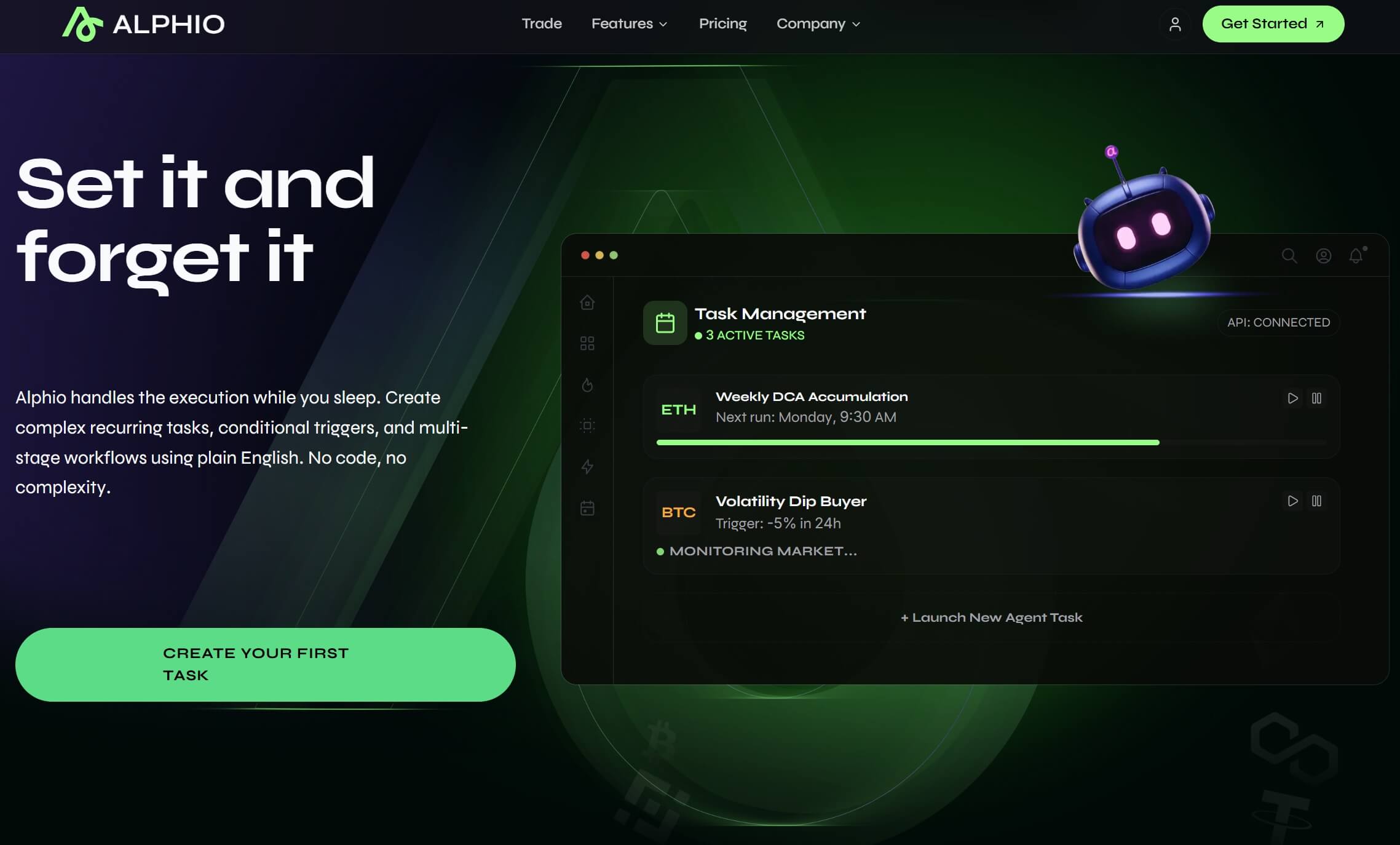
To streamline your trading workflow around earnings events and technical breakouts, consider setting up automated trading conditions through Alphio to execute your strategy without constant market monitoring.
Conclusion
NVIDIA stands at the center of the artificial intelligence revolution, having successfully transformed from a gaming GPU company into the essential infrastructure provider for the AI age. The company's technological leadership, reinforced by its CUDA software ecosystem, has created competitive advantages that competitors struggle to overcome. Financial results have consistently exceeded expectations, with data center revenue growth demonstrating the structural nature of AI demand.
However, investors must remain cognizant of the risks that accompany these opportunities. Valuation levels, while somewhat moderated from peak multiples, still discount many years of exceptional growth. Competitive threats from AMD and custom silicon initiatives by major cloud customers require ongoing monitoring. Supply chain concentration and geopolitical tensions add layers of uncertainty that can impact the business in unpredictable ways.
For long-term investors who believe that artificial intelligence will fundamentally reshape the global economy, NVIDIA offers the purest exposure to this transformation among large-cap technology stocks. The company's comprehensive platform spanning hardware, software, and services positions it to capture value across the entire AI stack. While volatility is likely to remain elevated given the stock's popularity and valuation, the fundamental business trajectory appears firmly positive.
Traders and investors looking to capitalize on NVIDIA's momentum while managing risk should consider leveraging AI-powered trading tools. Alphio's conversational trading interface allows you to execute complex strategies through natural language commands, making sophisticated trading accessible to investors at any experience level. Whether you're looking to establish a core position, trade earnings volatility, or set up automated risk management, Alphio provides the tools needed to navigate NVIDIA's dynamic market environment.

The AI revolution is still in its early stages, and NVIDIA's role as the picks-and-shovels provider for this transformation suggests that the growth story has room to run. Investors who can look through near-term volatility and focus on the multi-year opportunity may find that current prices, while not cheap by traditional metrics, represent a reasonable entry point for exposure to one of the most important technology trends of our time.
FAQs
Is NVIDIA stock a good investment in August 2026?
NVIDIA remains a compelling investment for those bullish on AI infrastructure growth, though valuation concerns suggest position sizing should reflect individual risk tolerance. The company's dominant market position and consistent execution support a positive long-term outlook, though near-term volatility is likely given elevated expectations.
What are the main risks facing NVIDIA stock?
Key risks include increasing competition from AMD and custom silicon initiatives by cloud providers, supply chain concentration with TSMC, geopolitical tensions affecting China revenue, and valuation compression if AI demand growth slows. Any of these factors could pressure the stock price independently of company execution.
How does NVIDIA make money from AI?
NVIDIA generates AI revenue primarily through sales of data center GPUs used for training and running AI models, along with related networking equipment and software subscriptions. The company's H100, H200, and emerging Blackwell architectures command premium pricing due to their superior performance and the extensive CUDA software ecosystem.
What is NVIDIA's competitive advantage in AI chips?
NVIDIA's moat extends beyond hardware to include the CUDA software platform developed over 15 years, creating powerful ecosystem lock-in. The company's comprehensive data center solutions, developer tools, and optimization libraries make switching to competitors costly and time-consuming for AI practitioners.
What is the price target for NVIDIA stock?
Analyst price targets vary widely based on assumptions about AI demand sustainability and competitive dynamics. Bullish analysts see significant upside based on continued data center growth and new market expansion, while more cautious observers worry that current prices already discount exceptional performance for years to come.