

Top 5 Best AI Stock Trading Bots in 2026
Discover the top 5 best AI stock trading bots in 2026. Compare Trade Ideas, Alphio AI, TrendSpider, Tickeron, StockHero, and Kavout for automated trading and analysis.


Key Takeaway
AI trading bots have transformed the stock trading landscape, making sophisticated market analysis and automated execution accessible to retail traders. The top platforms in 2026 combine powerful data analysis, machine learning algorithms, and user-friendly interfaces to help traders identify opportunities and execute strategies more efficiently. Trade Ideas leads the market with its comprehensive AI-powered scanning capabilities, while Alphio AI stands out for its innovative natural language trading interface. TrendSpider excels in automated technical analysis, Tickeron provides probability-based forecasts, StockHero offers accessible no-code automation, and Kavout delivers quantitative stock rankings for research-focused investors.
What is an AI Trading Bot?
An AI trading bot is software that uses artificial intelligence to analyse market data and either recommend trades or execute them automatically. Unlike traditional automated systems that follow fixed rules, AI trading bots can learn from historical and real-time data to identify patterns, adapt to changing market conditions, and improve their decision-making over time.
Most AI trading bots operate through three main stages. First, data collection involves gathering information from sources such as price movements, trading volume, financial news, and market sentiment. Second, data analysis uses machine learning algorithms to process the data and identify trends, opportunities, or unusual market activity. Third, trade execution allows the bot to either send trading signals to the user or place trades automatically through a connected brokerage account.
Some AI trading platforms provide a complete end-to-end solution, from market analysis to trade execution. Others focus on specific functions, such as generating trading signals or scanning the market for opportunities, leaving the final trading decision to the user. Understanding these differences is crucial when selecting the right platform for your trading style.
AI Trading Bot VS Manual Trading
AI trading bots can help traders analyse markets, identify opportunities, and automate parts of the trading process. However, they are not a complete replacement for human judgment. Understanding the strengths and limitations of both approaches can help you decide which method best suits your trading style.
AI trading bots excel in several areas. They can analyse large amounts of market data and execute trades within seconds, far faster than human traders. They can monitor thousands of stocks and markets simultaneously, providing coverage that would be impossible for individual traders. Bots follow predefined rules and strategies without emotional bias, eliminating the fear and greed that often lead to poor trading decisions. They can operate 24/7 without breaks, ensuring no opportunities are missed due to human limitations.
However, human traders maintain advantages in certain areas. They can interpret unexpected events and changing market narratives that fall outside historical patterns. Human judgment is better equipped to assess qualitative factors and unusual situations that AI might not recognize. Traders can understand broader market sentiment and respond to complex news events with nuance that machines cannot replicate.
The most effective approach is often a combination of both: using AI to improve efficiency and analysis while applying human judgment before making trading decisions.
Top 5 Best AI Stock Trading Bots
AI trading tools come in different forms. Some focus on scanning the market for trading opportunities, while others help automate technical analysis, generate trade signals, or execute trades based on predefined strategies. The right platform depends on your experience level, trading style, and the degree of automation you are looking for.
1. Trade Ideas - Best for AI-Powered Market Scanning
Trade Ideas is one of the most widely recognised AI trading platforms for stock traders, particularly those seeking AI-powered market scanning and trade signals. Its proprietary AI engine continuously analyses thousands of stocks, identifying potential opportunities based on factors such as momentum, volume, and price action.
Rather than automatically executing trades, Trade Ideas focuses on generating actionable trading ideas and alerts that traders can evaluate before making a decision. This makes it suitable for active traders who want AI-assisted analysis while maintaining control over their trades.
Key features include AI-powered stock scanner, real-time trade alerts, customisable watchlists, simulated trading environment, and advanced market analysis tools. The platform offers extensive stock market coverage and powerful scanning capabilities, making it ideal for active traders. However, premium pricing can be a barrier, and the interface may overwhelm beginners.
2. Alphio AI - Best for Natural Language Trading
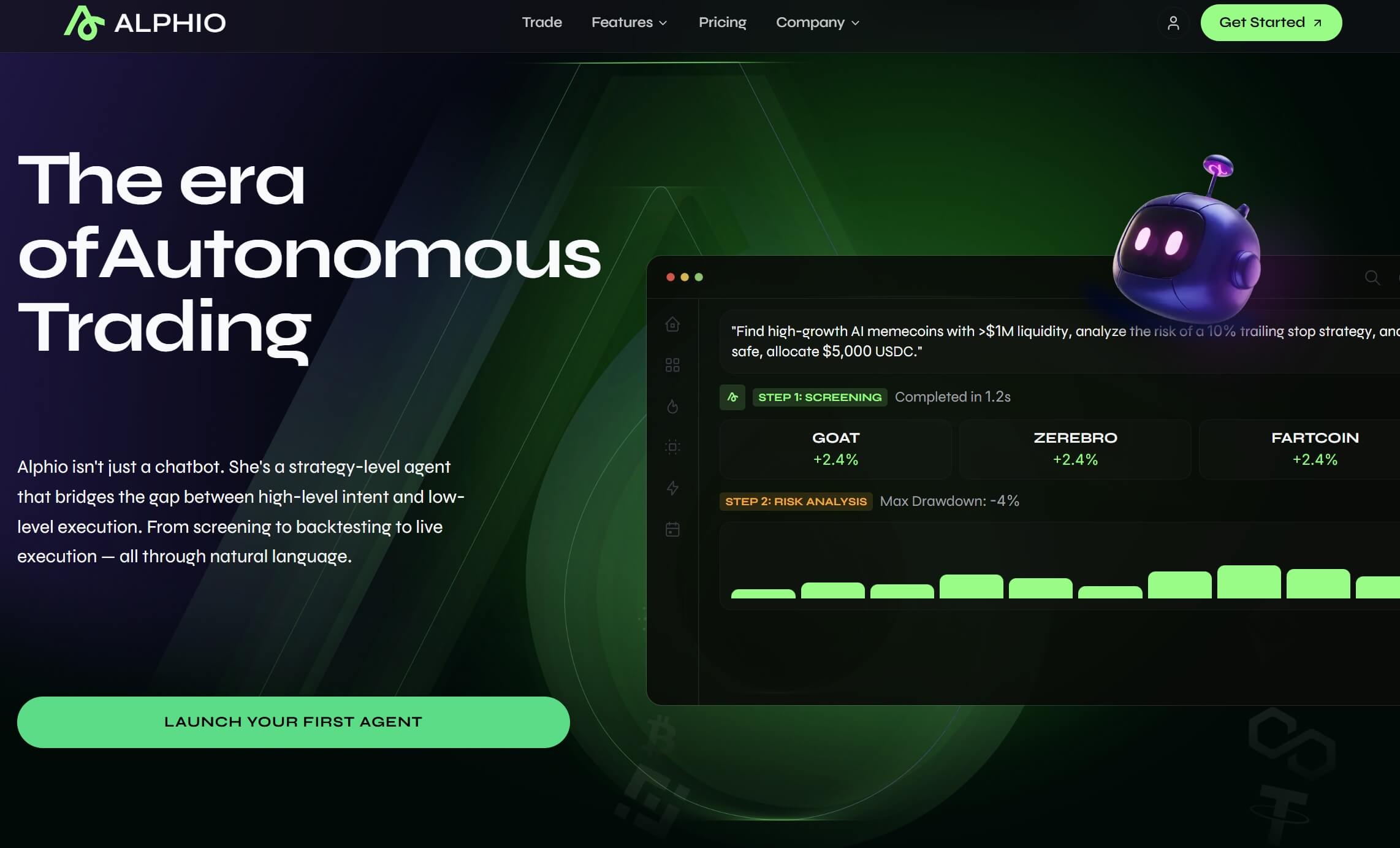
Alphio AI represents a breakthrough in AI trading technology, offering traders the ability to execute trades using natural language commands. This innovative approach eliminates the complexity traditionally associated with automated trading systems, making sophisticated strategies accessible to traders of all experience levels.
The standout feature of Alphio AI is its conversational trading capability. Instead of navigating complex menus and configuring numerous parameters, traders can simply type commands like "Buy 100 shares of AAPL if it breaks above $180" or "Set a stop loss at 5% below entry for all my tech positions." The AI interprets these instructions and translates them into executable trading strategies.
This natural language approach dramatically reduces the barrier to entry for automated trading. Beginners who might be intimidated by traditional bot builders can start automating their strategies within minutes rather than days. The platform also supports more complex conditional workflows, allowing traders to set up sophisticated multi-step strategies through simple conversational prompts.
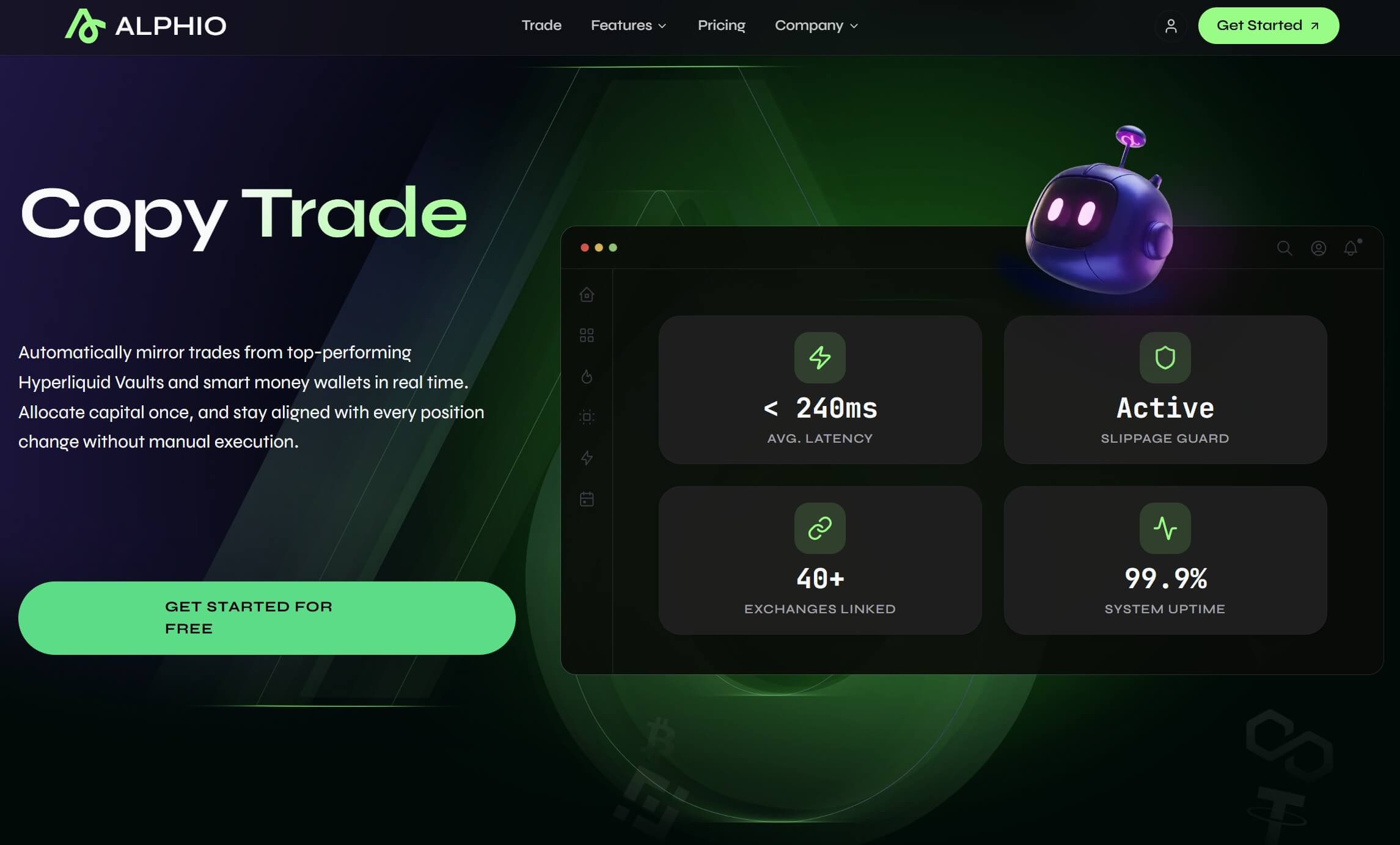
Beyond natural language trading, Alphio AI offers powerful copy trading features that allow users to mirror the strategies of successful traders and smart money wallets. This social trading component provides an additional layer of strategy discovery for users who prefer to follow proven approaches rather than developing their own from scratch.
For traders seeking to automate their strategies with cutting-edge AI technology, consider exploring Alphio AI's agentic trading features to streamline your portfolio management.
3. TrendSpider - Best for Automated Technical Analysis
TrendSpider is an AI-powered technical analysis platform designed to automate many of the charting tasks that traders traditionally perform manually. The platform can automatically identify trendlines, support and resistance levels, chart patterns, and technical indicators across multiple stocks and timeframes.
Its automation features help traders save time while maintaining a structured approach to technical analysis. TrendSpider is particularly useful for traders who rely heavily on charts and data-driven strategies.
Key features include automated trendline detection, pattern recognition tools, strategy backtesting, multi-timeframe analysis, and smart alerts. The platform reduces manual chart analysis and offers strong technical analysis capabilities with comprehensive backtesting tools. However, it may be less useful for fundamental investors, and new users may face a learning curve.
4. Tickeron - Best for AI-Generated Forecasts
Tickeron combines artificial intelligence and machine learning to generate stock predictions, trading signals, and market insights. The platform analyses large amounts of historical and real-time data to identify patterns and provide probability-based forecasts for traders and investors.
Rather than focusing solely on automation, Tickeron aims to support decision-making through AI-generated research and analytics. This makes it suitable for users who want additional market insights before placing trades.
Key features include AI-generated stock forecasts, pattern recognition technology, trading signal generation, portfolio analysis tools, and market screening capabilities. The platform offers a beginner-friendly interface with clear AI-driven insights that support both traders and investors. However, signals still require human evaluation, and performance may vary across market conditions.
5. StockHero - Best for No-Code Automation
StockHero is an automated trading platform that allows users to create, test, and deploy trading bots without extensive coding knowledge. The platform offers a range of pre-built bot templates while also allowing traders to customise strategies based on their own preferences.
Its straightforward interface makes automation more accessible to retail traders who want to reduce manual trade execution and maintain a disciplined approach to trading.
Key features include no-code bot builder, automated trade execution, strategy marketplace, paper trading functionality, and performance tracking dashboard. The platform provides beginner-friendly setup with easy strategy deployment and supports automated execution. However, it offers limited advanced AI capabilities, and broker compatibility may vary.
6. Kavout - Best for Quantitative Stock Rankings
Kavout is an AI-driven investment research platform that uses machine learning to analyse stocks and rank them based on their potential performance. Its proprietary scoring system evaluates large datasets to help traders and investors identify stocks that may warrant further research.
Unlike platforms focused on trade execution, Kavout is primarily designed as a stock selection and research tool. It is often used by investors looking to incorporate quantitative analysis into their investment process.
Key features include AI-powered stock rankings, quantitative market analysis, predictive analytics, portfolio screening tools, and research-focused insights. The platform offers strong stock screening capabilities with a data-driven research approach that is useful for long-term investors. However, it has limited automation features and is less suitable for active day traders.
Risks to Consider
AI trading bots can help improve efficiency and automate parts of the trading process, but they are not risk-free. Before relying on any platform, it is important to understand the potential drawbacks.
Past Performance Does Not Guarantee Future Results
Even the most sophisticated AI trading bot cannot predict the market with complete accuracy. A strategy that performs well during backtesting or in a specific market environment may struggle when conditions change. Always treat historical performance as a reference point rather than a guarantee of future returns.
Subscription and Trading Costs Can Add Up
Many AI trading platforms charge monthly or annual subscription fees, and these costs can reduce overall profitability, particularly for traders with smaller account balances. Before committing to a platform, consider whether the potential benefits justify the cost. In addition to subscription fees, remember to factor in trading costs such as spreads, commissions, and overnight financing charges where applicable.
Over-Reliance on Automation Can Be Risky
While automation can reduce emotional decision-making, relying entirely on a trading bot without monitoring its performance can create additional risks. Market conditions can change rapidly, and strategies that once performed well may become less effective over time. Regular reviews and adjustments are essential to ensure the strategy remains aligned with current market conditions.
Not Every "AI" Tool Uses Advanced AI
The popularity of artificial intelligence has led many providers to market their products as AI-powered, even when they rely on relatively simple automation or predefined rules. When evaluating a platform, look for transparent methodology, historical testing data, risk management features, and the ability to evaluate the system before committing real capital.
How to Start Trading Stocks with an AI Bot
Getting started with AI-powered trading does not require advanced programming skills or a large investment. The key is to take a structured approach and test your strategy before committing real capital.
Choose the Right AI Trading Tool
Different platforms are designed for different types of traders. Some focus on stock scanning and trade signals, while others specialise in technical analysis, portfolio management, or automation. Active traders may prefer tools such as Trade Ideas or TrendSpider. Investors seeking AI-powered insights may find Tickeron or Kavout more suitable. Traders looking for automation may consider platforms such as StockHero or Expert Advisors on MT4 and MT5. Choose a solution that matches your trading goals, experience level, and preferred level of automation.
Consider Automated Trading with Expert Advisors
Many AI trading platforms focus on analysing markets, identifying opportunities, and generating trade signals. However, traders still need a trading platform to execute those strategies. Expert Advisors (EAs) on platforms like MetaTrader 4 and MetaTrader 5 can automate trading based on predefined rules.
An Expert Advisor is a trading program that automatically analyses market conditions and executes trades based on predefined rules. Instead of manually monitoring charts and placing orders, traders can use an EA to automate part or all of their trading strategy. EAs can be used with a wide range of trading approaches, including trend-following, breakout, scalping, swing trading, and indicator-based strategies.
Start Small and Scale Gradually
Begin with an amount you are comfortable risking. Monitor performance closely during the early stages and make adjustments where necessary. As confidence and consistency improve, you can gradually increase your position sizes while maintaining appropriate risk management practices.
Conclusion
AI trading bots have become essential tools for modern traders, offering capabilities that range from market scanning and technical analysis to fully automated trade execution. Trade Ideas leads the field with its powerful AI scanning engine, while Alphio AI revolutionizes the user experience with natural language trading commands.
For traders ready to embrace AI-powered automation, Alphio AI offers an innovative approach that simplifies complex trading operations through conversational interfaces. Whether you're looking to mirror successful strategies through copy trading or automate your portfolio with agentic AI, the platform provides tools that adapt to your trading style rather than forcing you to adapt to the software.
TrendSpider excels in automated technical analysis, Tickeron provides valuable probability-based forecasts, StockHero makes automation accessible to beginners, and Kavout offers quantitative insights for research-focused investors.
Remember that AI trading tools should augment your decision-making process rather than replace it entirely. The most successful traders use these platforms to enhance their analysis and execution while maintaining ultimate control over their trading decisions. Start with thorough research, test extensively in simulated environments, and scale your automation gradually as you build confidence in your chosen strategies.
The future of trading lies in the effective combination of artificial intelligence and human judgment. By understanding the strengths and limitations of each platform, you can select the tools that best complement your trading style and help you achieve your financial goals.
FAQs
Can AI trading bots guarantee profits?
No. AI trading bots cannot guarantee profits or eliminate market risk. While they can help analyse data, identify opportunities, and automate trading decisions, market conditions can change unexpectedly, and losses remain possible.
Do I need coding skills to use an AI trading bot?
Not necessarily. Many modern AI trading platforms offer no-code or low-code solutions that allow traders to build strategies, receive trading signals, or automate trades without programming knowledge. However, coding skills may be useful for advanced customisation and strategy development.
How much money do I need to start using an AI trading bot?
The amount required depends on the platform, subscription costs, and your trading objectives. In addition to trading capital, traders should consider expenses such as platform subscriptions, commissions, spreads, and other trading-related fees when evaluating overall costs.
Are AI trading bots suitable for beginners?
Some AI trading bots are designed with beginners in mind and offer user-friendly interfaces, pre-built strategies, and educational resources. However, new traders should take time to understand how the platform works, test strategies where possible, and avoid relying solely on automation when making trading decisions.
How do I use an AI trading bot?
Using an AI trading bot typically involves selecting a platform, configuring a trading strategy, and connecting it to a brokerage account if trade execution is required. Many AI tools focus on market analysis and trade signals, while others can automate parts of the trading process.