

Nvidia Earnings August 2026: Record Q2 Results Beat Wall Street as AI Demand Surges
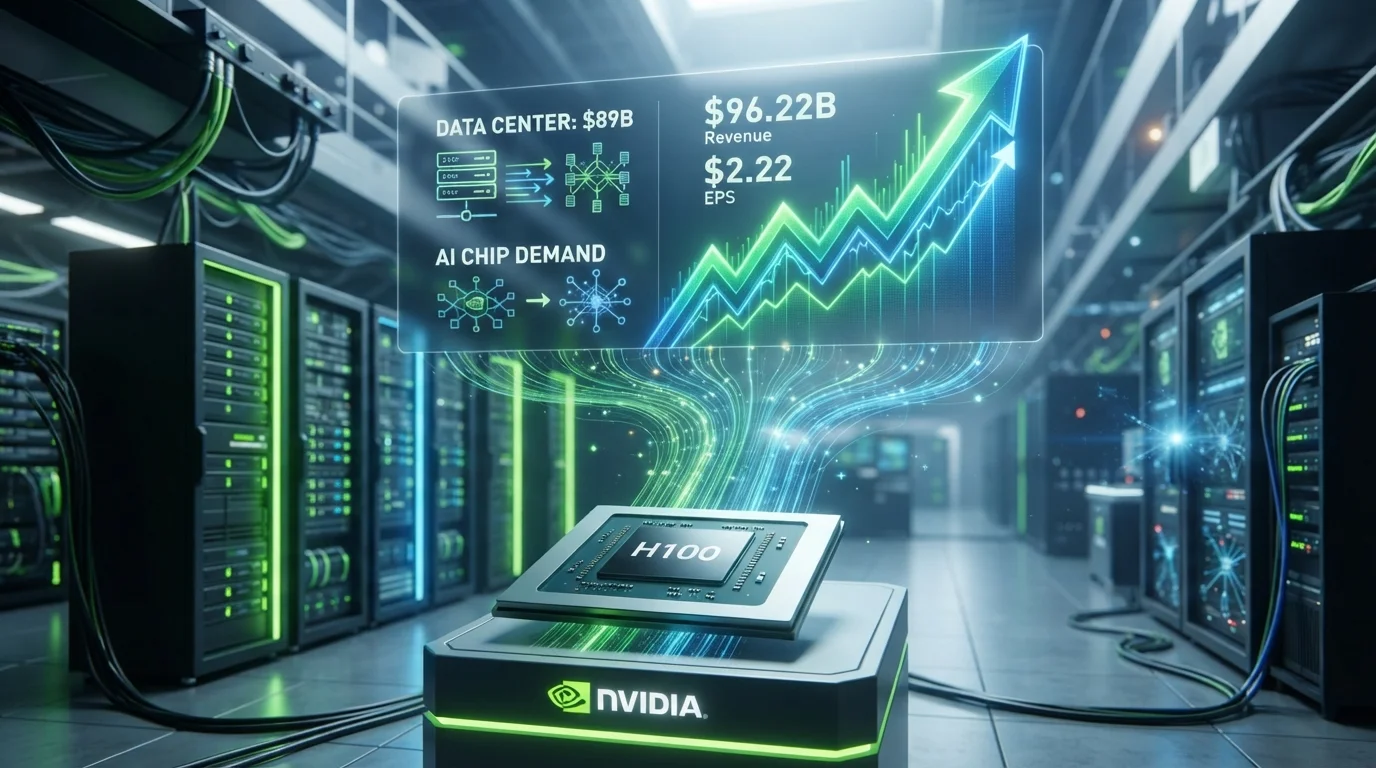
Nvidia's Q2 2026 earnings exceeded Wall Street expectations with $96.22B revenue and $2.22 EPS. Data center sales hit $89B as AI chip demand accelerates globally.

Key Takeaway
Nvidia delivered another spectacular quarterly performance on August 26, 2026, reporting fiscal Q2 2027 revenue of $96.22 billion and adjusted earnings per share of $2.22, both comfortably exceeding Wall Street consensus estimates. The semiconductor giant's data center segment emerged as the primary growth engine, generating $89 billion in revenue and representing nearly 93% of total sales. This represents more than a twofold increase from the year-ago period, underscoring the unprecedented demand for AI infrastructure that continues to reshape the technology landscape.
The results validate Nvidia's dominant position in the AI chip market while raising important questions about sustainability and competition. With the stock trading around $215-$219 in late August, up approximately 17% year-to-date despite a 9% pullback from May highs, investors are weighing whether the current valuation adequately reflects future growth potential or if the AI boom is approaching a saturation point. Management's guidance for Q3 revenue of approximately $108 billion suggests continued momentum, though the pace of growth may moderate as comparisons become more challenging.
Breaking Down Nvidia's Q2 2026 Earnings Beat
Nvidia's fiscal second quarter, which ended July 27, 2026, demonstrated the company's ability to maintain its extraordinary growth trajectory even as the law of large numbers begins to apply. The reported revenue of $96.22 billion surpassed analyst expectations that had clustered in the $93-95 billion range, while adjusted EPS of $2.22 beat consensus by nearly 7%. This marks the 23rd time in the past 24 quarters that Nvidia has exceeded Wall Street earnings estimates, a remarkable track record that has earned the company a reputation for conservative guidance and consistent execution.
The magnitude of these figures becomes even more impressive when viewed in historical context. Just three years ago, Nvidia's quarterly revenue hovered around $6-7 billion. The current quarterly run rate represents a nearly fourteen-fold increase, driven almost entirely by the explosion in generative AI adoption across enterprises, cloud providers, and governments worldwide. This transformation has elevated Nvidia from a gaming-focused graphics card manufacturer to the essential infrastructure provider for the AI revolution.
Data Center Dominance: The $89 Billion Engine
The data center segment has become Nvidia's overwhelming revenue driver, accounting for $89 billion of the $96.22 billion total in Q2. This represents 92.7% of company sales and marks a stunning transformation from just a few years ago when gaming graphics cards represented the majority of revenue. The data center business grew more than 100% year-over-year, fueled by insatiable demand from hyperscale cloud providers including Amazon Web Services, Microsoft Azure, Google Cloud, and Meta Platforms.
Management highlighted several emerging demand drivers beyond the traditional hyperscaler market. Sovereign AI initiatives, where governments build domestic AI infrastructure, have emerged as a significant growth vector. The NeoCloud category, representing specialized AI cloud providers, continues to expand rapidly. Enterprise adoption is accelerating as companies move from AI experimentation to production deployment. Networking revenue, which includes the InfiniBand and Ethernet products essential for connecting AI clusters, nearly doubled to $7.25 billion, demonstrating that Nvidia's moat extends beyond GPUs to the entire AI data center ecosystem.
For investors seeking exposure to the AI infrastructure buildout, understanding these demand dynamics is crucial. The diversification beyond hyperscalers suggests that Nvidia's growth may prove more durable than skeptics anticipate, even if spending from the largest cloud providers moderates. The company's Blackwell architecture, which began shipping during the quarter, represents the next generation of AI accelerators and should support continued market share gains against emerging competition.

For investors looking to capitalize on the AI infrastructure boom, consider using Alphio AI's copy trading feature to mirror successful traders who are positioning for the continued expansion of data center spending. Copy trading allows you to automatically replicate the trades of experienced investors who have demonstrated success in navigating the semiconductor and AI sectors.
AI Chip Demand: Broadening Beyond Hyperscalers
One of the most significant developments in Nvidia's Q2 report was evidence that AI demand is broadening well beyond the initial wave of hyperscale cloud providers. While Amazon, Microsoft, Google, and Meta remain the largest customers, management emphasized growth in three emerging categories that could sustain the company's expansion for years to come.
Sovereign AI represents perhaps the most underappreciated opportunity. Countries worldwide are recognizing that AI infrastructure represents strategic national capability, leading to massive investments in domestic AI computing clusters. From Saudi Arabia to Japan, from France to India, governments are allocating billions to build sovereign AI capabilities. Nvidia is positioning itself as the preferred partner for these initiatives, offering not just hardware but complete software stacks and reference architectures.
The NeoCloud category encompasses specialized cloud providers focused specifically on AI workloads. These companies, including CoreWeave, Lambda Labs, and emerging players globally, are building infrastructure specifically optimized for AI training and inference. Unlike general-purpose cloud providers, NeoClouds can optimize every aspect of their infrastructure for AI workloads, creating compelling value propositions for AI-native companies and enterprises with specialized requirements.
Enterprise adoption is perhaps the most important long-term driver. While the initial AI boom was driven by tech companies building large language models, the next phase involves enterprises deploying AI across their operations. From financial services to healthcare, from manufacturing to retail, companies are moving AI from pilot programs to production deployment. This transition requires substantial infrastructure investment and represents a multi-year growth opportunity.
Stock Performance and Valuation Analysis
Nvidia's stock has experienced significant volatility in 2026, reflecting the market's ongoing debate about AI infrastructure spending sustainability. After reaching record highs above $236 in May 2026, the stock retreated to around $215 by late August, representing a decline of approximately 9% from peak levels. Despite this pullback, NVDA remains up roughly 16-17% year-to-date, substantially outperforming the broader semiconductor sector and major market indices.
The post-earnings reaction provided insight into investor sentiment. Despite beating estimates, the stock's after-hours movement was relatively muted, suggesting that much of the good news was already priced in. This reflects a broader market dynamic where Nvidia's exceptional performance has become the baseline expectation rather than a positive surprise. Going forward, the stock may require not just good results but evidence that growth can continue at elevated levels for longer than currently anticipated.
Analyst price targets cluster between $275 and $325, with an average around $305, implying potential upside of 25-45% from late August trading levels. These targets assume continued dominance in AI accelerators, successful execution of the Blackwell transition, and expansion into new markets including automotive and robotics. However, the valuation remains demanding by traditional metrics, requiring investors to have conviction in the durability of AI infrastructure spending.

To automate your portfolio management in the fast-moving semiconductor sector, explore Alphio AI's agentic trading capabilities. Agentic trading uses AI-powered strategies to automatically adjust your positions based on market conditions, earnings announcements, and technical indicators.
Competitive Landscape and Market Position
Nvidia's dominance in AI accelerators remains formidable, but competition is intensifying from multiple directions. AMD has gained traction with its MI300 series accelerators, securing wins at major cloud providers and offering competitive performance at attractive price points. Intel is attempting to reenter the market with Gaudi accelerators, though traction has been limited to date. Most significantly, hyperscale cloud providers including Amazon, Google, and Microsoft are developing their own custom silicon, potentially reducing their reliance on Nvidia over time.
Despite these competitive pressures, Nvidia maintains several durable advantages. The CUDA software ecosystem, developed over more than a decade, represents a significant switching cost for AI developers. The company's networking portfolio, including InfiniBand and the recently acquired Mellanox technologies, creates ecosystem lock-in as AI clusters require high-speed interconnects. Nvidia's full-stack approach, offering everything from chips to systems to software, provides customers with integrated solutions that competitors struggle to match.
The Blackwell architecture, which began shipping in Q2, extends Nvidia's technology lead. Offering substantial performance improvements over the previous Hopper generation, Blackwell should support continued pricing power and market share retention. Management indicated that demand for Blackwell exceeds supply, suggesting that the product transition will drive growth for multiple quarters.
Forward Guidance and Growth Outlook
Management's guidance for fiscal Q3 2027 calls for revenue of approximately $108 billion, representing continued sequential growth and approximately 85% year-over-year growth. This guidance suggests that Nvidia expects the current demand environment to persist, though the pace of growth will moderate from the triple-digit rates seen in recent quarters. The guidance also implies that supply constraints, which have limited Nvidia's ability to meet demand, are gradually easing.
The full-year fiscal 2027 outlook implies revenue approaching $400 billion, a figure that would have seemed inconceivable just two years ago. Achieving this target will require continued execution on the Blackwell transition, expansion in networking and software, and resilience in the face of emerging competition. Management emphasized that the company is investing aggressively in research and development to maintain its technology leadership, with R&D spending increasing proportionally with revenue.
Long-term growth drivers extend beyond the current AI training boom. Inference workloads, where trained AI models are deployed to make predictions, represent a potentially larger market opportunity as AI applications proliferate. The automotive segment, while currently small, could become significant as autonomous driving technology matures. Robotics represents another frontier where Nvidia's AI capabilities could create substantial value.
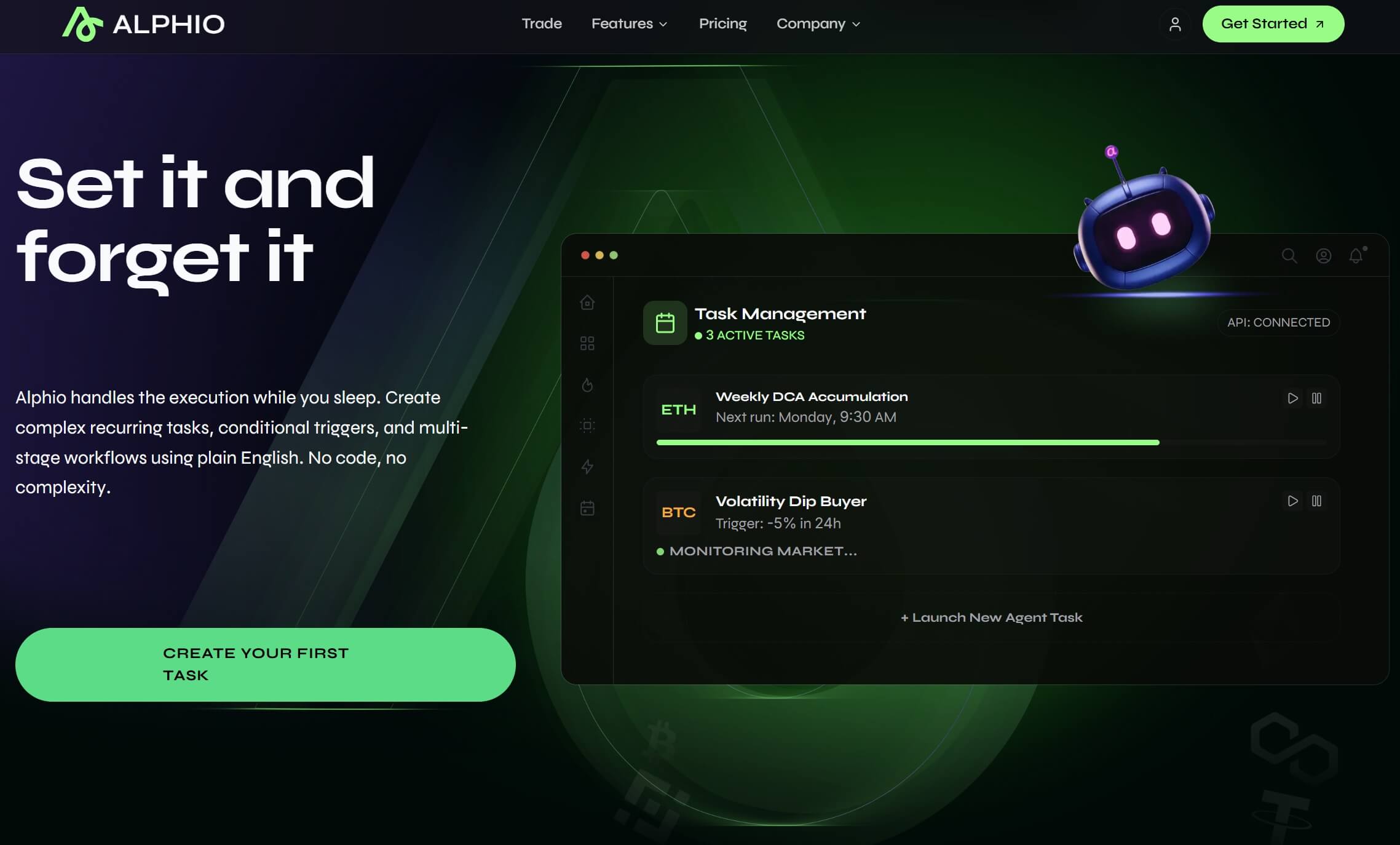
Set up conditional workflows to monitor your semiconductor investments with Alphio AI's automation features. Automations allow you to create rules that trigger trades, alerts, or portfolio adjustments based on earnings announcements, price movements, or technical indicators.
Risks and Challenges Ahead
While Nvidia's Q2 results were undeniably impressive, investors should remain cognizant of risks that could challenge the growth narrative. The most significant concern is the sustainability of AI infrastructure spending at current levels. Hyperscale cloud providers have collectively committed hundreds of billions to AI data centers, but at some point, the buildout will approach saturation and capital expenditure growth will moderate.
Geopolitical tensions represent another material risk. The U.S.-China technology competition has already resulted in export restrictions on advanced AI chips to China, limiting Nvidia's addressable market. Further escalation could expand these restrictions or impact supply chains. Conversely, any relaxation of tensions could reopen the Chinese market, providing upside to current estimates.
Competition will inevitably intensify. AMD's MI300 series is gaining traction, custom silicon from cloud providers is improving, and new entrants are targeting specific segments of the AI market. While Nvidia's ecosystem advantages provide protection, market share erosion over time is likely as the market matures and customers seek to diversify their supplier base.
Valuation remains demanding even after the recent pullback. Trading at elevated multiples of earnings and revenue, the stock requires continued execution and growth to justify current prices. Any disappointment on guidance, market share, or margins could result in significant multiple compression.
Conclusion
Nvidia's Q2 2026 earnings demonstrated that the AI infrastructure boom remains in full force, with the company delivering results that would have seemed impossible just a few years ago. The $96.22 billion in revenue and $2.22 in adjusted EPS represent not just financial achievements but validation of Nvidia's central role in the AI revolution. The data center segment's $89 billion in revenue confirms that AI demand continues to broaden beyond initial hyperscaler adoption to encompass sovereign AI initiatives, specialized cloud providers, and enterprise deployment.
For investors, the key question is whether current valuations adequately reflect the durability of this growth. Management's guidance for Q3 revenue of approximately $108 billion suggests continued momentum, though the pace of growth will inevitably moderate as comparisons become more challenging. The competitive landscape is intensifying, but Nvidia's ecosystem advantages, particularly the CUDA software platform and networking portfolio, provide meaningful protection against share loss.
The stock's 17% year-to-date gain, despite a 9% pullback from May highs, reflects ongoing optimism tempered by valuation concerns. Analyst price targets suggesting 25-45% upside imply continued confidence in Nvidia's growth trajectory, though achieving these targets will require flawless execution and favorable market conditions.

To execute trades and manage your portfolio through an intuitive chat interface, try Alphio AI's conversational trading. Conversational trading allows you to place orders, check positions, and receive market insights through natural language interactions, making it easier to react quickly to earnings announcements and market movements.
For those seeking exposure to the AI infrastructure buildout, Nvidia remains the purest play on this transformative trend. However, position sizing should reflect the inherent volatility and valuation risks. The company's Q2 results confirm that the AI boom is far from over, but prudent investors will monitor competitive dynamics, capital expenditure trends at major customers, and geopolitical developments that could impact the growth trajectory. As always, diversification across the AI value chain-from semiconductor equipment to cloud infrastructure to enterprise software-may provide more balanced exposure than concentration in any single name, even one as dominant as Nvidia.
FAQs
What were Nvidia's Q2 2026 earnings results?
Nvidia reported fiscal Q2 2027 revenue of $96.22 billion and adjusted earnings per share of $2.22, both exceeding Wall Street consensus estimates. The data center segment generated $89 billion in revenue, representing 92.7% of total sales and more than doubling year-over-year.
How has NVDA stock performed in 2026?
NVDA stock is up approximately 16-17% year-to-date as of late August 2026, despite a 9% pullback from record highs above $236 reached in May. The stock trades around $215-$219, with analyst price targets clustering between $275 and $325.
What is driving Nvidia's data center revenue growth?
Data center growth is driven by demand from hyperscale cloud providers (Amazon, Microsoft, Google, Meta), sovereign AI initiatives by governments worldwide, specialized AI cloud providers (NeoClouds), and accelerating enterprise AI adoption. Networking revenue nearly doubled to $7.25 billion.
What is Nvidia's guidance for Q3 2026?
Management guided for fiscal Q3 2027 revenue of approximately $108 billion, representing continued sequential growth and approximately 85% year-over-year growth. This implies full-year fiscal 2027 revenue approaching $400 billion.
What are the main risks facing Nvidia?
Key risks include potential saturation in AI infrastructure spending, intensifying competition from AMD and custom silicon by cloud providers, geopolitical tensions affecting China market access, and demanding valuations that require continued flawless execution to justify current prices.