
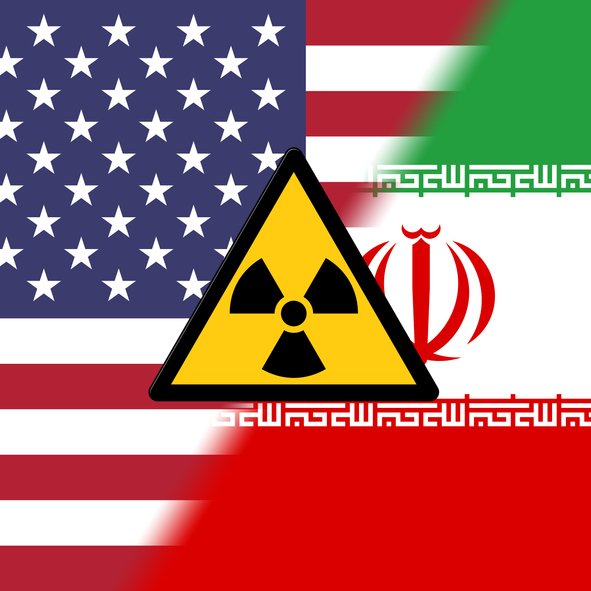
US-Iran Final Nuclear Deal by…?
Core Summary
According to the latest prediction market data for the query “US-Iran Final Nuclear Deal by…?”, traders have formed a strong consensus.
Currently, December 31 is dominating the market with an overwhelming 14.5% chance of winning. November 30 follows in second place at 6.5%, while October 31 sits in third with 1%. The betting volume for this specific market has already reached $19.9M, reflecting intense industry interest.
Breakdown of Competitive Tiers
To better assess where each potential outcome stands, the market can be segmented into three distinct trading tiers based on implied probability and contract pricing:
🥇 Tier 1: The Dominant Leader
- December 31 (14.5%): Currently commanding the highest probability, December 31 is heavily favored by the order book. Traders looking to back this outcome face a “Buy Yes” contract price of 14¢, signaling a high degree of market conviction. This contract alone has generated $3.5M in volume.
🥈 Tier 2: The Primary Challengers
- November 30 (6.5%): Positioned as the most viable alternative, November 30 maintains a 6.5% chance of resolving true. Its “Buy Yes” shares currently trade at 7¢.
- October 31 (1%): Sitting in third place with a 1% probability, the market shows measured skepticism toward October 31, treating it as an outside wildcard unless momentum shifts.
Comprehensive Order Book & Pricing Dashboard
The table below outlines the full breakdown of contract prices, probabilities, and market depth for all listed outcomes in this prediction pool:
| Rank | Predicted Outcome | Win Probability | Trading Volume | Buy Yes (Cost) | Buy No (Cost) |
|---|---|---|---|---|---|
| 1 | December 31 | 14.5% | $3.5M | 14¢ | 86¢ |
| 2 | November 30 | 6.5% | $148.7K | 7¢ | 94¢ |
| 3 | October 31 | 0.9% | $953.2K | 1¢ | 99¢ |
Result Rules
On June 14, 2026, the United States and Iran announced a written diplomatic agreement, including a 60-day extendable period in which both countries committed to negotiate toward a “final deal” regarding Iran’s nuclear program and other topics.
This market resolves to “Yes” if a qualifying written diplomatic instrument between the United States and Iran has been mutually signed or adopted by the specified date, 11:59 PM ET. Otherwise, this market resolves to “No.”
Unless the written instrument is formally adopted without signature as described below, the instrument must be signed by both the United States and Iran. Both parties must either sign the same document or sign individual documents that substantively and directly indicate acceptance of the same underlying instrument, regardless of minor formatting, wording, or translation differences between the signed versions. Both physical signatures and officially-issued electronic signatures will qualify as signatures.
If the written instrument is recognized by the United States and Iran as not requiring signature for execution, formal adoption of the instrument by both countries without signature will qualify. Formal adoption may be established by official actions, including:
(i) an official joint statement announcing that the United States and Iran have adopted, approved, executed, concluded, or otherwise finalized the instrument;
(ii) mutual official confirmation that the same published instrument has been agreed to, adopted, approved, executed, or concluded by both countries;
(iii) adoption, approval, or endorsement through an official resolution, ministerial decision, executive decision, or equivalent institutional act, where that act is the mechanism by which the relevant country adopts the instrument; or
(iv) an exchange of official diplomatic notes or letters confirming acceptance of the same instrument.
A qualifying written diplomatic instrument must:
(i) Be identified as the final deal contemplated by the June 14, 2026, memorandum of understanding, either in official United States or Iranian communications, or by a consensus of credible reporting;
(ii) Establish at least one specific obligation limiting Iran's nuclear program through a concrete, measurable benchmark against which compliance could be tested, which may take the form of a defined limit, prohibition, or quantity (e.g., a specific cap on the purity level to which Iran may enrich uranium, or an explicit commitment for Iran to surrender, destroy, or dilute its enriched uranium stockpile). Non-specific or vague restrictions, with no defined metric (e.g., a pledge not to pursue nuclear weapons, a commitment to maintain the status quo, or an agreement to abide IAEA monitoring or inspections requirements that do not specifically restrict Iran’s nuclear program) will not qualify.
The content of the qualifying instrument must be expressed as an agreed obligation to be implemented. The following do not qualify:
(i) a provision the substantive obligation of which remains explicitly subject to a future agreement, negotiation process, or mutually agreed follow-on instrument;
(ii) a provision explicitly framed as a minimum requirement for a future negotiation, rather than a present obligation;
(iii) a floor, placeholder, or minimum standard established explicitly for the purpose of structuring ongoing or future talks.
A definite and unconditional obligation may qualify, even if technical or procedural details, including the exact implementation date, timeframe, or sequencing, remain subject to future arrangements, provided that the obligation still establishes a concrete, measurable benchmark against which compliance could be tested. Conditional obligations do not qualify.
Whether an instrument qualifies will be primarily determined by its officially released text. A qualifying instrument must be signed or formally adopted by both the United States and Iran by the specified date, 11:59 PM ET. If such an instrument is signed or formally adopted by that time, but the complete text has not been released, and genuine material ambiguity remains as to whether it satisfies this market’s requirements, this market may remain open for up to 28 calendar days after the specified date pending release of the text. If the text has still not been released after 28 calendar days, official and definitive announcements from the United States or Iran, and a consensus of credible reporting, will be used to determine whether the instrument qualifies.
An instrument to which parties other than the United States and Iran are also party will qualify, provided that both the United States and Iran are parties to the instrument and all other requirements are satisfied.
Once a diplomatic instrument has been signed or formally adopted without signature by both the United States and Iran and confirmed to satisfy the requirements of a qualifying written diplomatic instrument, this market’s condition is met, regardless of whether the instrument later enters into force, is ratified, receives legislative or treaty consent, or is subsequently repudiated, withdrawn from, or not implemented by the United States or Iran.
The primary resolution sources for this market will be official communications from the governments of the United States and Iran, or their authorized representatives. A consensus of credible reporting from major news agencies of record may also be used.
AI Valuation Analysis: Finding Market Mispricings & EV Gaps
While human consensus and speculative volume shape the broader prediction market, our quantitative algorithms offer a data-driven counter-perspective. By analyzing fundamental signals, underlying trends and historical distributions, our AI Valuation model calculates an independent “Fair Value” probability for each outcome.
Comparing this Fair Value against the current Trade Value uncovers major disparities — known as the Expected Value (EV) Gap. Contracts with a positive EV Gap represent statistically underpriced outcomes, whereas a negative EV Gap flags a potential market overreaction.
Top AI Alpha & Mispriced Arbitrage Opportunities
Based on the latest data model run, several key contracts stand out with significant deviations:
- The Best Value Play (Highest EV) Our model identifies November 30 as the premium value opportunity on the board. While the market only assigns it a 6.5% trading probability, our AI’s Fair Value assessment sits at 13% — yielding an impressive +6.5% EV Gap.
- Under-the-Radar Dark Horses Other notable discrepancies include October 31 (EV Gap: +0.1%). These long-tail opportunities are heavily discounted by the live order books despite stronger statistical backing from our predictive model.
| Market | Trade Value | Fair Value | EV Gap |
|---|---|---|---|
| December 31 | 14.5% | 16.6% | +2.1% |
| November 30Best EV | 6.5% | 13.0% | +6.5% |
| October 31 | 0.9% | 1.0% | +0.1% |
Trade Activities
Here is the trade activities for this event.
Oct 14, 2026
- 07:37 PMKMkmw3u6ro0qhe$0.16
Sold 0.18 No for US-Iran Final Nuclear Deal by December 31, 2026? at 0.87
- 07:37 PMMEMerhabaKardesim$389.28
Sold 3244 Yes for US-Iran Final Nuclear Deal by December 31, 2026? at 0.12
- 06:56 PMJIJin-2026$176.00
Bought 200 No for US-Iran Final Nuclear Deal by December 31, 2026? at 0.88
- 06:02 PMKMkmw3u6ro0qhe$1.28
Sold 1.47 No for US-Iran Final Nuclear Deal by December 31, 2026? at 0.87
- 06:02 PMGRGreed.$2,050.85
Sold 15775.79 Yes for US-Iran Final Nuclear Deal by December 31, 2026? at 0.13
- 04:56 PMSHShampooo$2.56
Bought 255.555556 Yes for US-Iran Final Nuclear Deal by October 31, 2026? at 0.01
- 02:36 PMGDgdfgre3$81.83
Bought 82.66125 No for US-Iran Final Nuclear Deal by October 31, 2026? at 0.99
- 02:31 PMMAmathacec$13.20
Sold 101.54 Yes for US-Iran Final Nuclear Deal by December 31, 2026? at 0.13
- 02:31 PMKMkmw3u6ro0qhe$0.36
Sold 0.42 No for US-Iran Final Nuclear Deal by December 31, 2026? at 0.85
- 02:31 PME5e58xukrsmqza$0.21
Sold 1.58 Yes for US-Iran Final Nuclear Deal by December 31, 2026? at 0.13
- 02:31 PMVIvinii$869.50
Sold 6688.47 Yes for US-Iran Final Nuclear Deal by December 31, 2026? at 0.13
- 02:31 PM——$1.74
Sold 13.36 Yes for US-Iran Final Nuclear Deal by December 31, 2026? at 0.13
Whales Wallets That Are Betting on This Event
Frequently Asked Questions
What is the current market consensus on "US-Iran Final Nuclear Deal by…?"?
As of the latest update, December 31 leads the field as the frontrunner with a 14.5% win probability, followed by November 30 at 6.5% and October 31 at 1%. Total trading volume for this pool has reached $19.9M, indicating deep liquidity and high trader engagement.
How does the AI Fair Value differ from the live Market Trade Value?
The live Market Trade Value reflects public sentiment, order-book momentum and speculative capital. Our AI Fair Value is computed independently with quantitative models that strip out hype to focus on underlying data. When the two diverge, it creates an EV Gap, flagging where the market may be mispricing an outcome.
Which outcome represents the highest Expected Value (EV) right now?
Our latest run flags November 30 as the most significant mispricing. While the market trades it at a 6.5% implied probability, our AI calculates a Fair Value of 13% — an Expected Value gap of +6.5%, making it the premium value play in this pool.
Are there any high-value dark horse options hidden in the long-tail data?
Absolutely. Beyond the headline outcomes, our model highlights under-the-radar potential in lower-ranked options. October 31 holds a positive EV Gap of +0.1%. These contracts are discounted by live order books despite stronger quantitative backing.